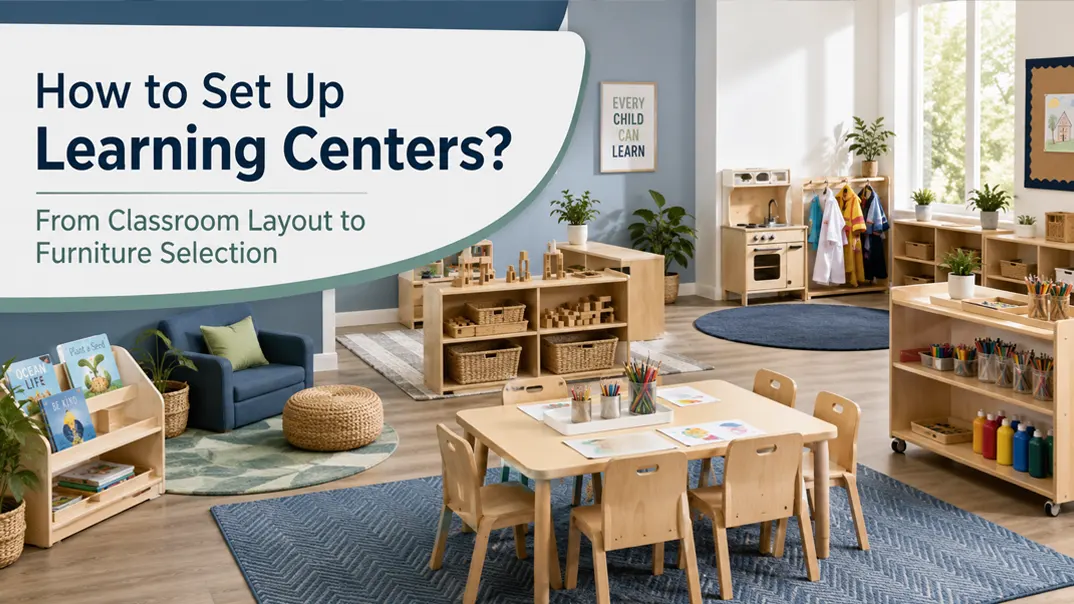
Is your daycare center ready to open? Before the start of the school year, you’ll need to set up learning centers in your classroom to enhance its functionality and provide children with more learning experiences. However, many factors can affect the setup of these centers, such as location and material selection.
To help you avoid these factors and simplify the setup process, this article provides detailed steps and instructions to help you easily set up your classroom’s learning centers before the start of the school year.
What is a Learning Center?
A Learning Center is not a single area; it’s a collective term for many activity centers. It’s a dedicated area designed to help children focus on exploration and learning skills, and to deepen their understanding of learning.
Preliminary Preparations
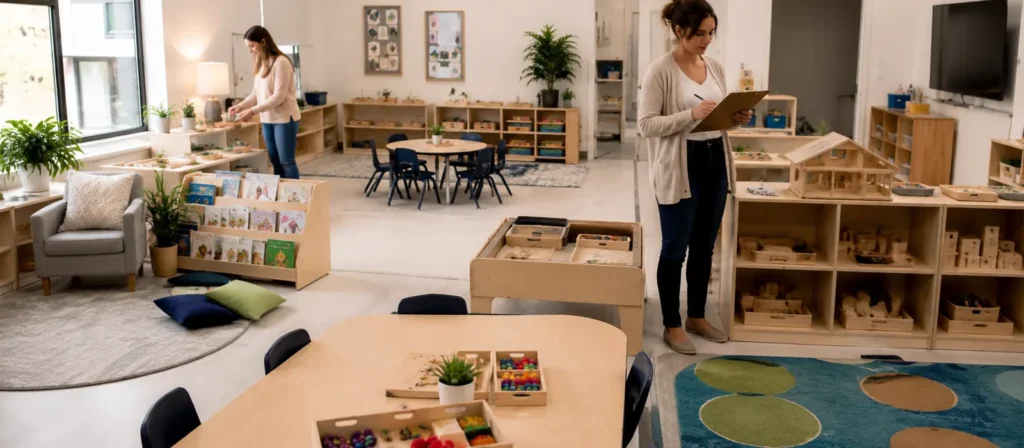
Before creating a learning center, you need to thoroughly understand the existing conditions of the classroom. Don’t jump straight into implementation, otherwise your great ideas may prove difficult to implement or fail to achieve the desired results.
Student Age
First, you need to determine the age distribution of your students. A learning center isn’t a single area; it’s a collective term for many activity centers. You need to create learning centers tailored to different age groups, which will also determine the types of materials and supplies you’ll need. For example, toddlers are suitable for centers with building blocks or sensory activities, while perschools are better suited for math, science, and role-playing centers.
Classroom Space Size
Based on the classroom size, plan how many learning centers you should place in your classroom to avoid overcrowding and chaos. If you want many centers but have limited classroom space, you can group some activity centers suitable for the same age group together, but ensure that materials can be easily replaced when changing activities.
Learning Types
Based on student age and classroom size, you can first determine the type of learning center you need. More learning centers in the classroom are not necessarily better; rather, the choice should be based on your teaching style and the children’s needs.
How to Set Up Learning Centers in Classroom?
You can directly use the following methods to create your own learning center.
1. Preparing Materials for Your Learning Center
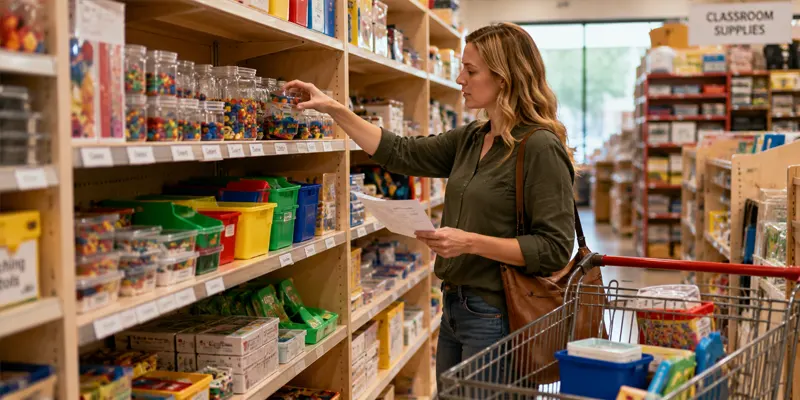
The materials you choose must be appropriate for the type of learning center you are planning. When purchasing materials, consider items that can be reused or used multiple times to reduce costs. Don’t buy too much at once. Just make sure you have enough of each material for at least a month, and then replenish as needed.
2. Classroom Setup
A well-planned classroom layout ensures safety and order, and reflects your professionalism and parents’ trust in the school.
Step 1: Choosing the Right Location
After preparing the materials, you need to choose suitable locations in the classroom to set up the learning centers. This step is crucial; an inappropriate location will affect the overall learning effect, and changing locations will be more troublesome.
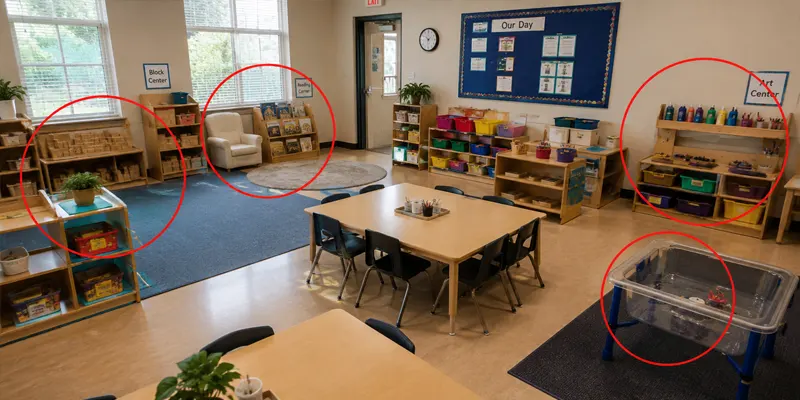
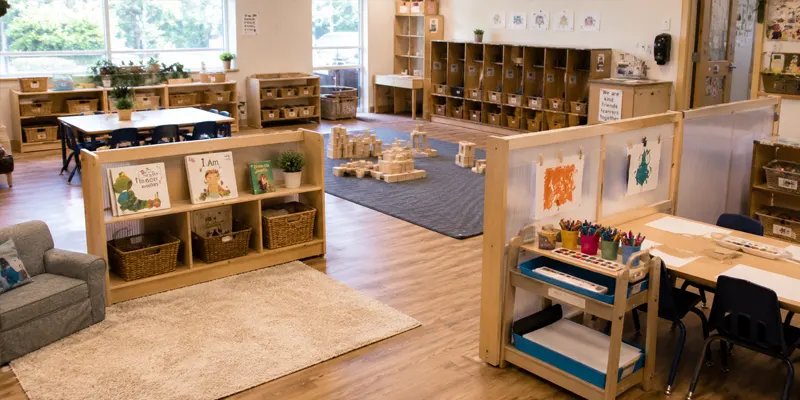
Most classrooms place learning centers around the perimeter rather than in the center to ensure unimpeded flow. If your space is limited, you can use modular furniture for easy setup and removal.
Step 2: Seating Arrangement
You need to arrange seating according to the number of children in each learning center. Generally, each learning center should have 4-5 children. Too many children will affect concentration and make supervision more difficult for teachers. A variety of seating options are possible, such as using rugs, beanbag chairs, and children’s sofas in combination.
After arranging the seating, you can proceed to group children for learning. There are many ways to do this; you can group children with similar learning levels or those with similar interests. You can also group children according to the educational philosophy of mixed-age classrooms, allowing more capable children to help their group members learn together.
Step 3: Plan Your Storage
You’ll need to prepare space or furniture for storing materials. You can purchase storage cabinets, baskets, trolleys, and folders to organize materials. Let the children put their materials away themselves, ensuring your classroom doesn’t become cluttered after each learning session.
If your classroom space is limited, choose portable and wall-mounted storage cabinets to maximize space utilization.
Step 4: Furniture Selection
When purchasing furniture, consider the children’s usage and space arrangement. Don’t choose furniture that you think is good and plentiful, only to find the children uncomfortable, the classroom cramped, and ultimately, you’ve spent a lot of money without achieving your desired results.
You can start by purchasing some frequently used furniture suitable for the children’s age group, and then add new furniture as needed.
If you are buying furniture for a mixed-age classroom, you don’t need to buy every size. Choose height-adjustable tables and modular storage cabinets so your learning center can be easily adjusted.
3. Dividing Learning Centers
You need to ensure that each child can easily identify the location and function of each learning center. Use low bookshelves, lockers, rugs, or partitions to divide each area. Ideally, use furniture that reflects the character of each area, making each center feel more natural and easier for children to understand its function.
4. Establishing Rules
You need to establish rules for each center before the children begin activities, and it’s crucial to consider the children’s feelings and experiences, not yours. For example, you need to set limits on the number of children in each center. If a center has too many children, chaos may occur, materials and props may be insufficient, and some children may not have anything to use. These rules can be displayed on a bulletin board or blackboard.
When establishing rules, you can use a rotating group system to avoid the problem of too many people at once. However, this requires you to set time limits for each group’s activity. Each group’s activity time can be limited to about 20-30 minutes, and timers or indicator lights can be used to remind the children.
5. Introducing the Learning Center
After establishing the rules, be sure to take the time to explain the rules and purpose of each center to the children. Don’t let the children feel confused and unsure of what to do when they enter the center.
You need to personally demonstrate and explain each learning center to the children. Some schools will select a representative child to demonstrate the operation, which makes it easier for the other children to understand and imitate.
You should tell the children where the materials are located in each center and the purpose of each activity. You can ask them to put the materials and tables and chairs back in their original places after each activity.
Don’t try to make the children memorize all the rules at once. Guide them to remember the rules in each activity. You can use visual aids to help them understand and remember the rules more quickly.
Different Types of Learning Centers
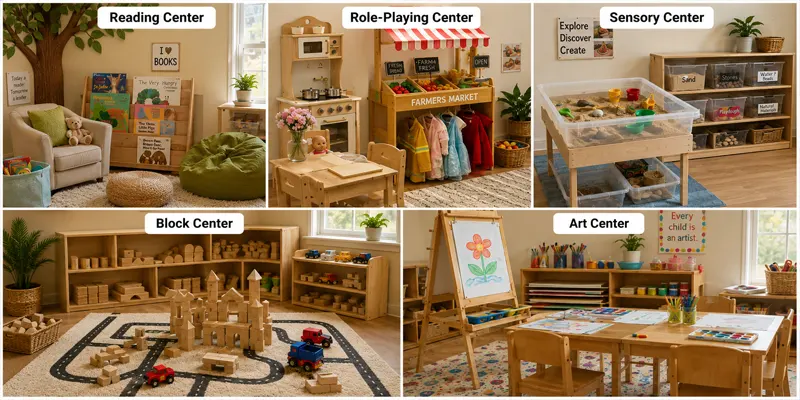
Reading Center
A reading center is a warm and inviting area, ideally located in a quiet setting. It allows children to comfortably and peacefully read.
Common furniture and supplies in a reading center include:
- Reading tree
- Bookshelves
- Children’s sofa
- Plump rug
- Cushions or beanbag chairs
Role-Playing Centers
Role-playing centers are often one of the most attractive areas for parents during visits. Children role-play different characters to imitate everyday scenarios.
Common furniture and supplies in role-playing centers include:
- Kitchen toys
- Dolls
- Role-playing costumes
- Market stalls or themed play furniture
Sensory Center
You need to ensure that the sensory center is easy to supervise and clean. Children promote sensory development through sensory materials such as sand, playdough, stones, and water.
Common furniture and supplies for a sensory center:
- Sensory table
- Sand and water table
- Storage box
- Tool tray
- Various sensory materials
Block Center
To set up a block center, you’ll need a relatively open floor space for children to build. A block center can stimulate children’s hand-eye coordination and creativity, and teach them teamwork.
Common furniture and supplies for a block center:
- Open shelves
- Floor mats or carpets
- Various types of building blocks
- Toy cars
Art Center
The art center provides children with a space to unleash their ideas and creativity. All you need to do is prepare the materials, and they can create the images in their hearts.
Common furniture and supplies in the art center:
- Art tables and chairs
- Easels
- Clothes racks
- Art supply cabinets and paper storage
- Rugs
- Watercolor paints and brushes
FAQs
How many learning areas should a kindergarten classroom have?
Most kindergartens will have 5-7 areas, such as a reading area, a block area, a role-playing area, an art area, and a math or manipulative area. If your classroom space is larger, you can set up more subdivided learning centers.
What’s the best way to divide a learning center?
The best approach is to use furniture, such as low shelves, rugs, lockers, and child-height partitions. This prevents your classroom from feeling like a series of small rooms without obstructing staff’s view.
Should quiet and activity areas be separated?
Yes. Reading, writing, and quiet corners should be kept away from building blocks, role-playing games, and music. This helps reduce noise and makes the room easier to manage.
How to budget for learning center furniture?
First, distinguish between essential furniture and optional accessories. Essential furniture typically includes tables, chairs, low shelves, bookshelves, block shelves, art supply shelves, and role-playing furniture. Other supplies can be added gradually based on usage; there’s no need to buy everything at once, otherwise your classroom will become cluttered and crowded, and many supplies will end up unused.
Which materials should be kept out of children’s reach?
Scissors, glue, small parts, cleaning supplies, and other potentially hazardous items should be kept out of children’s reach. Children can use them normally during activities, but you need to supervise them.
How big should each learning center be?
There is no fixed standard for the size of each activity center. The size should match the type of activity. For childcare operators, the more important question is not “how big,” but “can children play safely and comfortably in this area without feeling crowded?”
How often should learning centers be rotated?
Normally, learning centers do not need to be rotated. Furniture and layout can remain the same; only some supplies need to be changed. Relocation is possible if you have limited space and need a new learning center.
Should all learning centers be open at the same time?
This depends on your learning schedule. If you have enough staff, you can open them simultaneously. If you don’t have enough staff, it may be impossible to care for or supervise the children in each learning center, and the final cleaning and tidying will be very troublesome.
Conclusion
No matter the size of your classroom or your educational philosophy, your classroom should have a learning center. Establishing a learning center not only provides a better experience for children but also transforms your classroom into a clearly defined and welcoming environment. Having a learning center can even increase enrollment and popularity.
West Shore is a preschool furniture manufacturer with over 20 years of experience. We not only understand the layout of each classroom and the learning philosophy behind our products, but we can also help you easily set up each learning center.