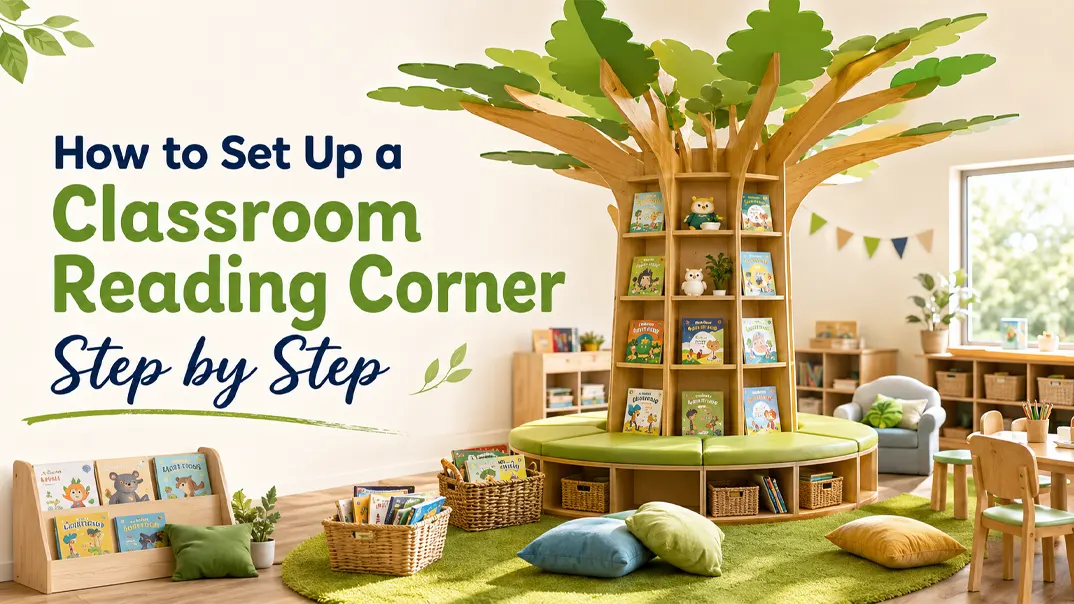
A well-designed classroom reading corner can do much more than store books. It creates a dedicated space where children can develop early literacy skills, build concentration, and foster a lifelong love of reading.
In today’s early childhood education environment, educators are constantly seeking ways to create calm and engaging spaces and encourage children’s independent learning. The reading corner helps achieve this goal. It gives children a comfortable place to explore books at their own pace while supporting teachers in creating a literacy-rich classroom environment.
However, setting up an effective reading corner is not as simple as placing a bookshelf in an empty corner. During discussions with kindergarten directors and teachers, we often observe some questions:
- What makes a reading corner attractive to young children?
- How many books should be displayed?
- Which furniture is essential?
- What design elements encourage children to read more often?
In this step-by-step guide, we’ll explore everything you want to know—from choosing the right location and furniture to designing age-appropriate reading spaces and creating engaging themes that keep children coming back to books every day.
What Is a Classroom Reading Corner?
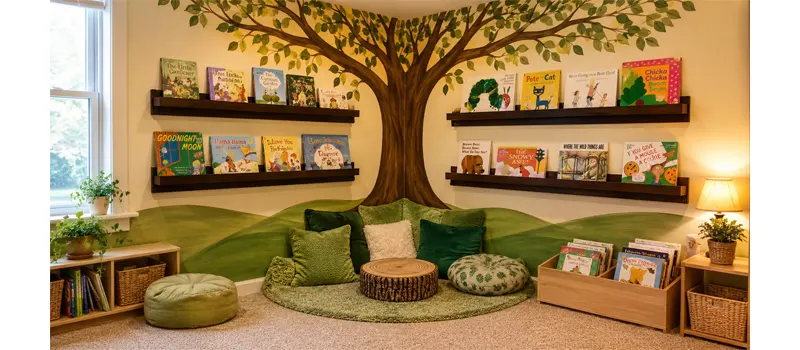
A classroom reading corner is a clearly defined learning space within an early childhood classroom that is specifically designed to support children’s reading and pre-literacy activities. It is typically a small, dedicated area where books, soft seating, and child-friendly furniture are organized in a way that encourages independent or guided reading.
In practical classroom design, we define a reading corner not by its size or location, but by its function. Based on our experience working with early education environments, a true classroom reading corner always includes three essential characteristics:
- First, it provides easy access to reading materials, allowing children to independently select and return books without adult assistance.
- Second, it creates a visually distinct and structured zone within the classroom, so children can clearly recognize it as a quiet, focused activity area.
- Third, it supports a comfortable reading posture, using appropriately sized furniture such as low bookshelves, cushions, or reading chairs designed for young children.
Unlike general classroom storage for books, a reading corner is intentionally designed as a learning environment rather than a display area. It serves as a behavioral cue for children, signaling a shift into a quieter, more focused activity mode.
In early childhood education settings, this space is commonly integrated into preschool classrooms, daycare centers, and kindergarten learning environments as part of literacy development zones.
Why Is a Reading Corner Important in Preschool Classrooms?
The early years are critical for language and literacy development. Research consistently shows that children who are regularly exposed to books and reading experiences are more likely to develop strong communication, comprehension, and learning skills later in life.
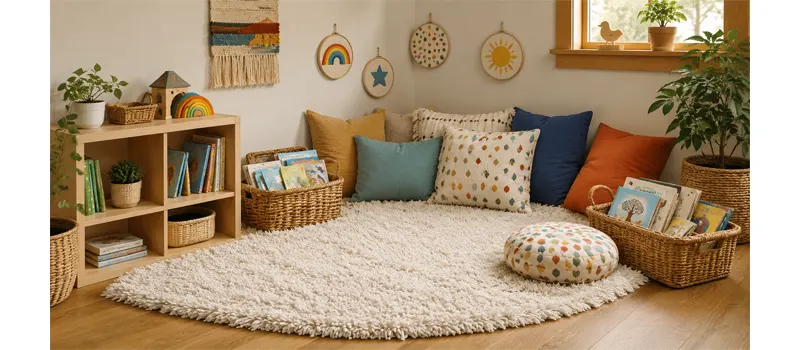
Encourages Early Literacy Development
Children gain exposure to new words, sentence structures, sounds, and storytelling patterns through daily interactions with books. This foundation supports future reading success.
Promotes Independent Learning
A reading corner empowers children to make their own book choices and engage with materials independently, helping build confidence and decision-making skills.
Creates a Calm Learning Environment
Preschool classrooms can be busy and stimulating. A cozy reading corner provides a quieter space where children can relax, self-regulate, and focus.
Supports Social and Emotional Growth
Stories help children understand emotions, relationships, and different perspectives. Shared reading experiences also encourage communication and empathy.
Increases Engagement with Books
When books are displayed attractively and within easy reach, children are naturally more inclined to explore them. The environment itself becomes an invitation to read.
How to Set Up an Effective Classroom Reading Corner?
In a daycare environment, the reading corner must support children’s reading interest, classroom routines, safety, supervision, comfort, and daily management at the same time. The best reading corners are simple, clear, and easy for children to understand. Children should know where to sit, where to find books, how to return them, and how to use the space appropriately.
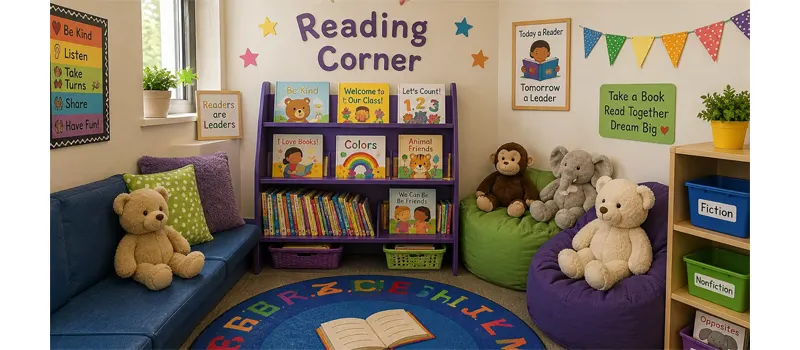
1. Decide the Purpose of Your Reading Corner
In early childhood settings, reading corners can serve slightly different roles depending on teaching goals. Some classrooms use it primarily for independent reading, while others integrate it into guided literacy activities or quiet time.
From a practical planning perspective, defining the purpose helps determine:
- The number of children who will use the space at one time
- The type of books that should be included (picture books, early readers, themed books)
- Whether adult supervision is required or if the space should support independent use
- The level of comfort and seating needed for extended reading time
In our experience, unclear purpose is one of the most common reasons reading corners become underused. When the function is not clearly defined, the space often turns into general storage rather than an active learning area.
2. Choose the Right Location
The location of a classroom reading corner has a direct impact on how often children use it and how well it functions. In a preschool classroom, the reading area should be placed where children can focus, but teachers can still supervise easily.
A good location is usually away from high-noise and high-movement areas. Try not to place the reading corner directly beside block play, dramatic play, classroom entrances, sinks, bathrooms, or busy walkways. These areas often create distractions, traffic, and noise, which can make it difficult for children to settle into reading.
At the same time, the reading corner should not be hidden from view. Teachers should be able to see the space while supervising the rest of the classroom. Safety and visibility are priorities.
Natural light can make the reading corner feel more pleasant, but avoid placing books and soft furnishings where they will be exposed to strong direct sunlight all day. Too much sunlight may cause glare, discomfort, or fading on books, rugs, and cushions. If the classroom has limited natural light, choose a location where soft classroom lighting can support comfortable reading.
The location should also fit the flow of the classroom. Children should be able to enter and leave the area without stepping over other children, blocking shelves, or interrupting nearby activities.
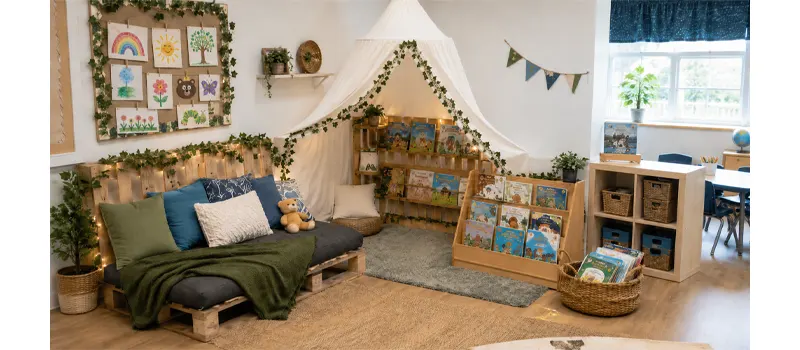
A suitable location should be:
- Quiet enough for children to focus
- Visible enough for teacher supervision
- Easy for children to access independently
- Away from heavy traffic and noisy play areas
- Safe, open, and not blocking exits or emergency routes
- Comfortable in terms of light, temperature, and classroom flow
Based on classroom project experience, reading corners placed near calm transition zones tend to achieve higher engagement because children are naturally drawn to quieter environments when they need rest or individual activity time.
3. Define the Reading Corner Boundary
Young children need visual and physical cues to understand where one classroom area begins and ends. A clear boundary helps children recognize that the reading corner has a different purpose from active play areas.
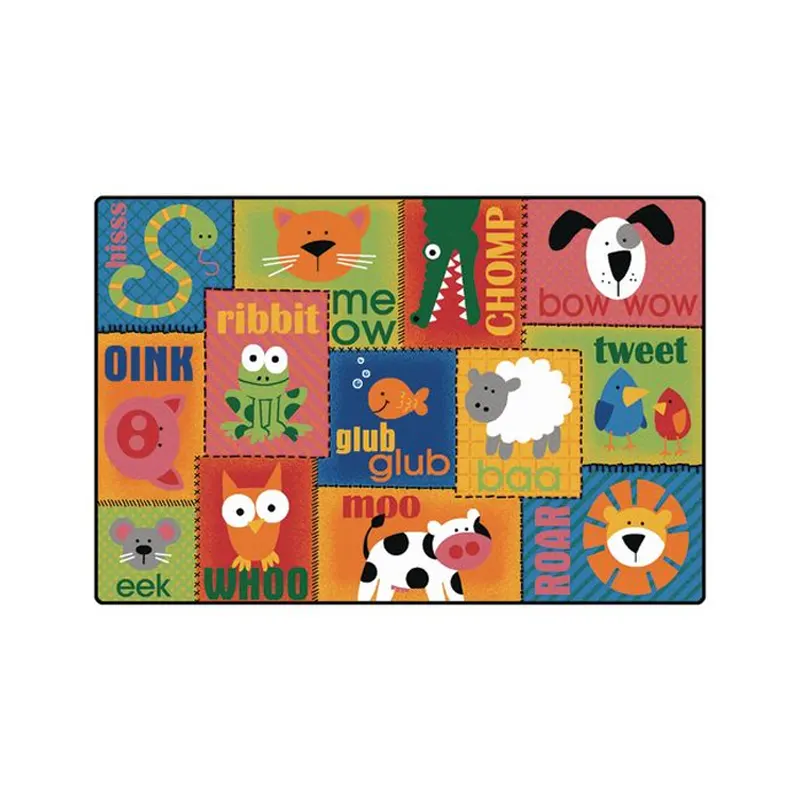
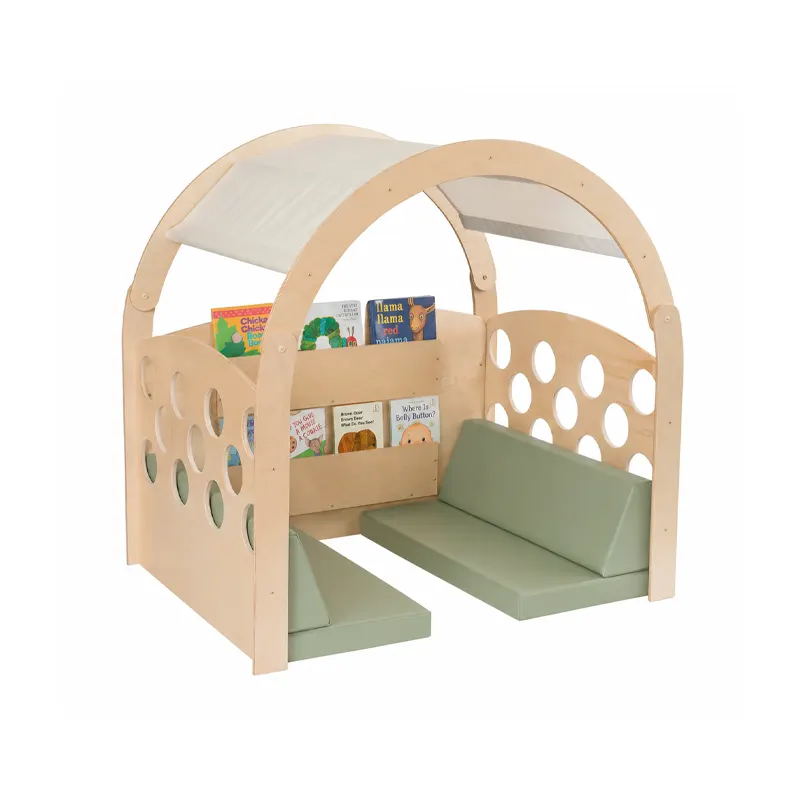
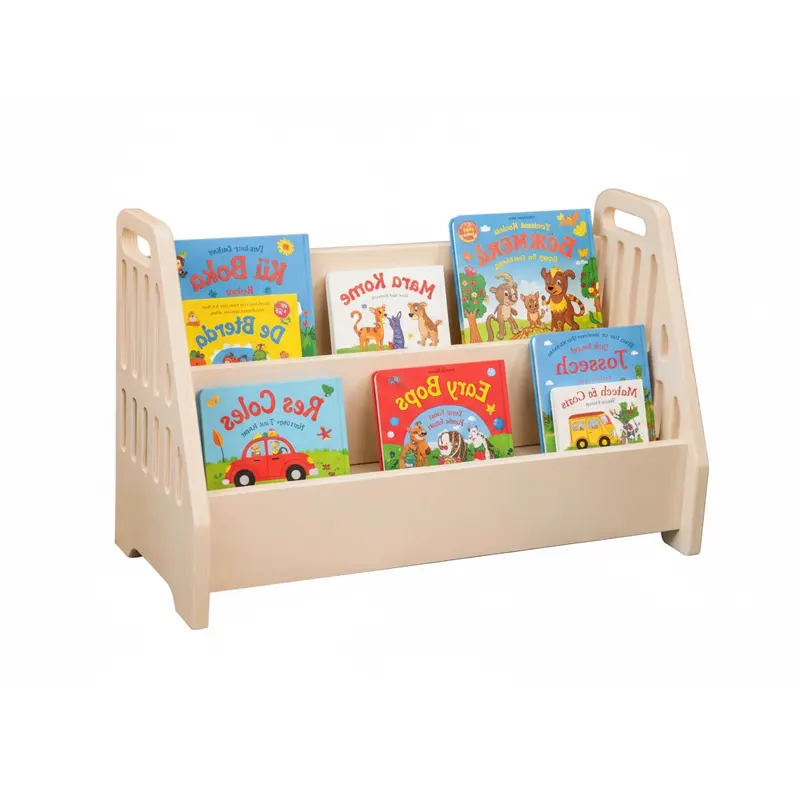
Common ways to define the space include:
- Visual markers like wall colors, decals, or themed panels
- Low-height bookshelves to create natural separation
- Soft flooring such as carpets or foam mats
- Modular furniture placement to form a semi-enclosed zone
- Use a reading nook, cube, or canopy
The boundary should follow a simple principle: open enough for accessibility, structured enough for recognition.
4. Reading Corner Layout Based on Classroom Size
In real classroom planning, the design of a classroom reading corner is strongly influenced by the available space. Different classroom sizes require different layout strategies to ensure the reading area remains functional, accessible, and comfortable for children.
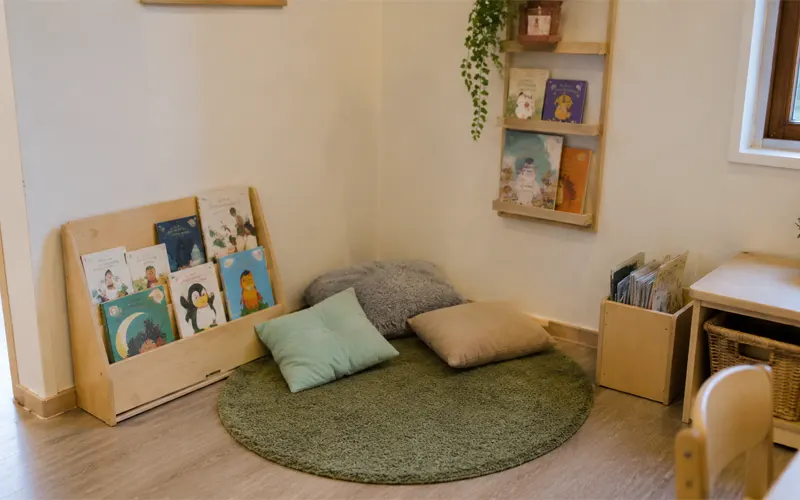
Small Classroom Layout
For small preschool classrooms, a simple wall-side layout often works best. A low front-facing book display, a small rug, and two or three floor cushions can create a clear reading area without taking too much space. Avoid bulky sofas, large tables, or too many decorative items. In a limited space, vertical wall displays, narrow book racks, and book bins can help save floor space while still keeping books visible and accessible.
Medium Classroom Layout
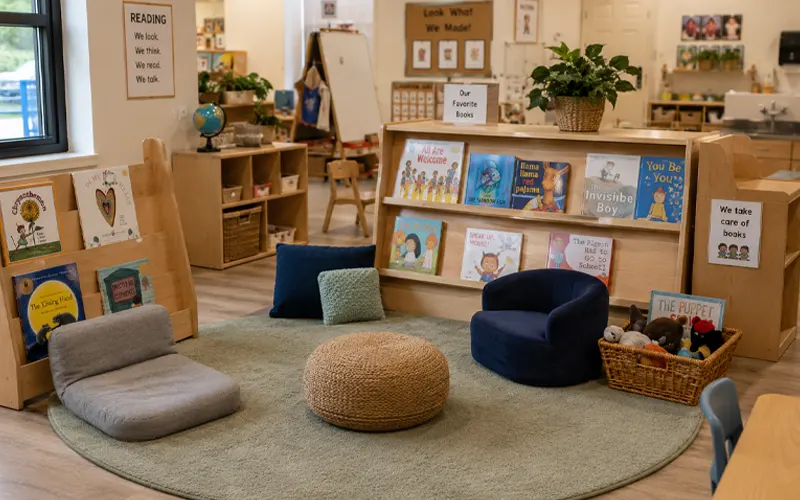
For medium-sized classrooms, the reading corner can be designed as a semi-open area. You may use a rug to define the area, a low bookshelf as a soft boundary, multiple seating options for individual or small group reading, and a small storage basket for reading props. This type of layout can support both independent reading and small-group storytelling.
Large Classroom Layout
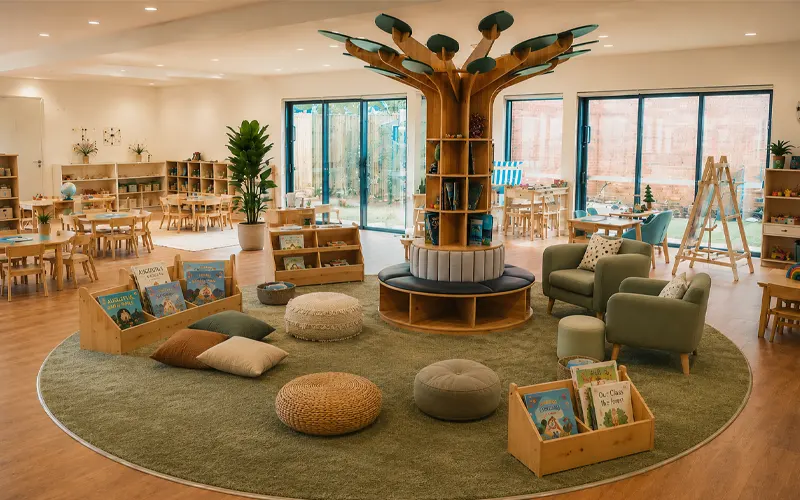
For large or open-plan classrooms, the main challenge is to make the Classroom Reading Corner feel like a clearly defined learning zone instead of an empty or loosely arranged area. Add A feature piece, such as a reading tree bookshelf, which will be especially effective. A reading tree can act as both a book display and a visual focal point, helping children immediately recognize the area as a special place for reading. Around it, you can arrange a soft reading rug, low bookshelf, child-sized chairs, and cushions. This layout works well for schools that want the reading corner to become a visible, attractive, and purposeful part of the classroom environment.
5. Select Essential Reading Corner Furniture
Start with book storage. Low bookshelves and front-facing display shelves are ideal for young children. Children should be able to see, reach, and return books without help. This encourages independence and makes the reading corner easier to manage.
Next, choose comfortable seating. Soft seating helps children relax and stay engaged with books. Depending on the classroom size and age group, suitable options may include:
- Child-sized reading chairs
- Small sofas
- Floor cushions
- Soft mats or rugs
- Bean bags
- Reading benches with storage
The seating should be comfortable but not too loose or difficult to clean. In a daycare setting, removable washable covers, wipe-clean surfaces, and durable materials are especially useful.
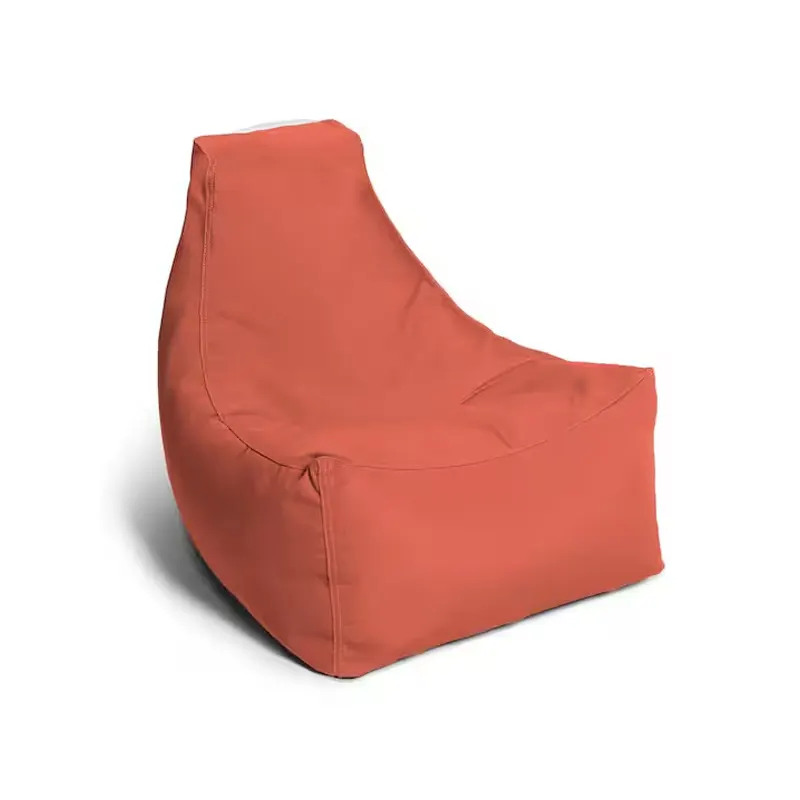
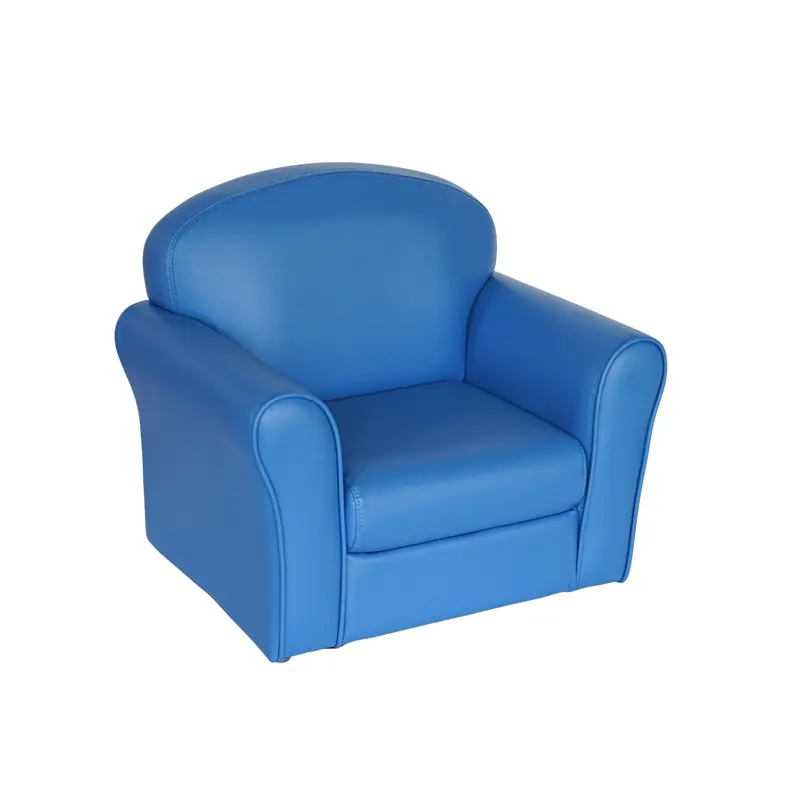
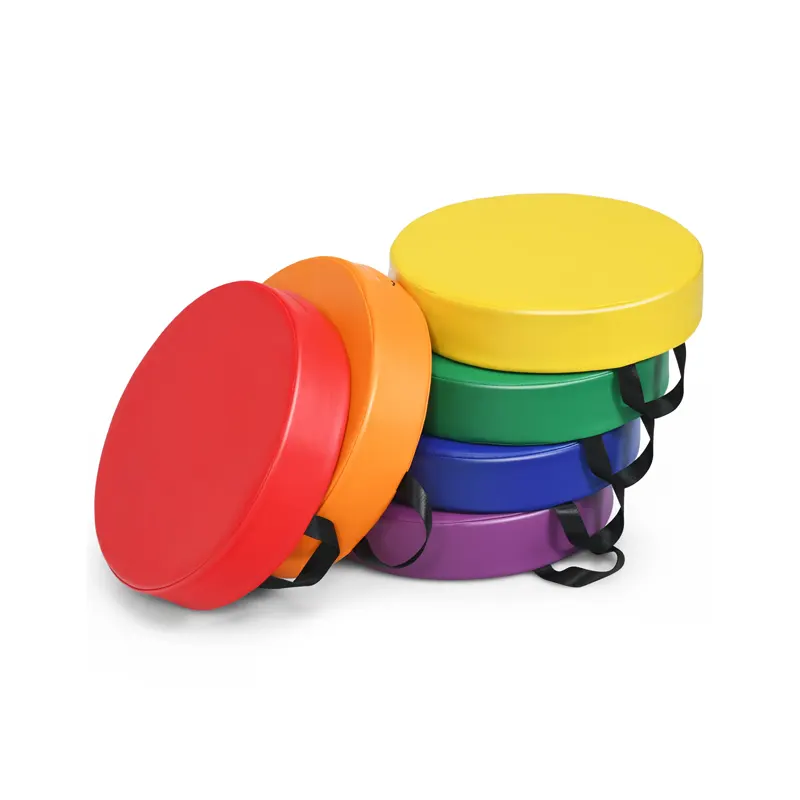
A soft rug or floor mat can help define the space and make the area more comfortable. Choose a rug that is non-slip, easy to vacuum, and suitable for heavy use. Avoid rugs with long fibers that trap dust, crumbs, or small objects.
You may also include a small table if the reading corner supports literacy activities such as drawing story scenes, matching letters, using puppets, or looking at picture cards. However, avoid adding too much furniture. Too many pieces can make the corner feel crowded and reduce children’s ability to move independently.
Safety should guide every furniture choice. Furniture should have rounded edges, stable construction, non-toxic finishes, and no small detachable parts. Shelves should not tip easily, and heavy furniture should be secured according to local safety requirements.
6. Make the Reading Corner Feel Cozy
Creating a cozy atmosphere helps increase the time children naturally spend in the reading area. In practice, this is achieved through a combination of sensory and visual elements:
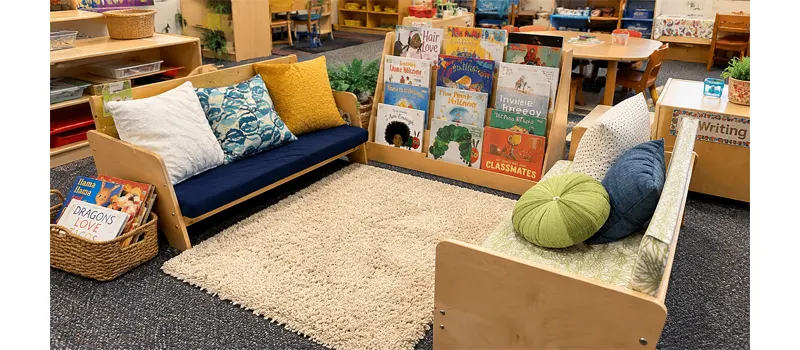
- Soft textures such as cushions, rugs, or fabric seating
- Warm and non-distracting color schemes
- Gentle lighting where possible, avoiding harsh overhead brightness
- Simple decorative elements that support storytelling themes
- Add puppets or soft toys related to specific books.
- include simple emotional cues, such as a small sign that says “Reading Corner,” or a display of children’s artwork
From classroom observation, children are more likely to return to reading corners that feel calm and welcoming rather than overly structured or visually crowded.
But coziness should never reduce safety or supervision. Avoid long curtains, heavy decorations, or items that block the teacher’s view. The reading corner should feel sheltered, but it should still remain open, safe, and easy to observe.
7. Keep the Reading Corner Easy to Manage
An effective Classroom Reading Corner should be easy for both children and teachers to maintain. If the space becomes messy, crowded, or difficult to supervise, it will lose its value quickly.
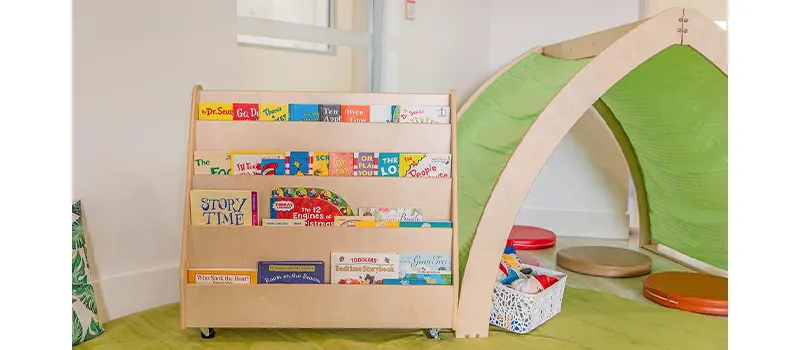
Start by setting simple rules. Preschool children need clear and visual expectations. Rules may include:
- Use quiet voices
- Turn pages gently
- Read while sitting
- Put books back after use
- Keep cushions in the reading corner
Use picture-based rule cards so children can understand expectations even before they can read. Review the rules during circle time or before introducing the reading corner.
Limit the number of children who can use the space at one time. A small sign, name card system, or visual marker can help children understand when the area is full. This prevents overcrowding and keeps the reading corner calm.
Book organization should also be simple. Too many categories can confuse young children. Use broad themes, color labels, or picture labels. For example, you might organize books into animals, feelings, transportation, family, nature, and favorite stories. The easier the system is, the more likely children are to use it correctly.
Regular maintenance is essential. Check the reading corner daily for damaged books, misplaced items, loose furniture parts, or hygiene issues. Books with torn pages should be repaired or removed. Soft furnishings should be cleaned regularly.
It is also helpful to observe how children actually use the space. If children rarely visit the reading corner, the books may not match their interests, the seating may not be comfortable, or the area may be too noisy. If children run, jump, or play roughly in the space, the layout may need clearer boundaries or fewer distracting items.
A good Classroom Reading Corner should grow with the classroom. As children’s interests, abilities, and routines change, update the books, seating, labels, and activities. When the space is easy to manage, teachers are more likely to maintain it, and children are more likely to use it independently and respectfully.
Design Tips for Different Age Groups
A classroom reading corner should be designed around the age, behavior, and developmental needs of the children who will use it. Toddlers, preschoolers, and kindergarten children’s physical abilities, attention span, and reading interests can vary significantly, so the furniture, book selection, layout, and level of supervision should also be different.
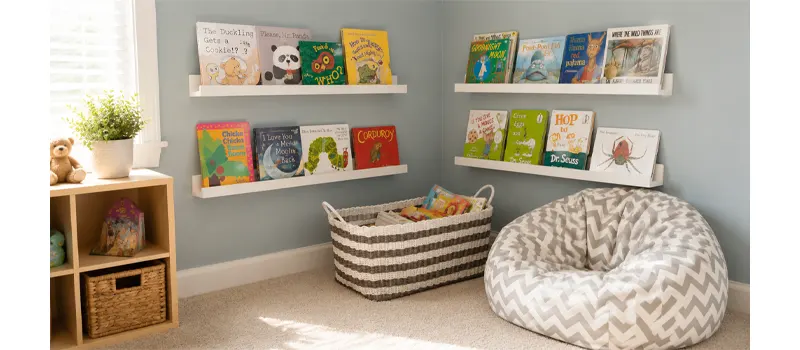
For Toddlers: Focus on Safety, Simplicity, and Sensory Comfort
For toddlers, the reading corner should be simple, soft, and highly supervised. At this age, children may chew books, pull items from shelves, climb on furniture, or move quickly from one activity to another. Choose durable board books, cloth books, and large picture books that can withstand frequent handling. Furniture should be very low, stable, and easy for children to use without climbing. A soft mat, washable rug, or padded floor area is often more practical than chairs, because toddlers usually prefer sitting, crawling, or leaning while exploring books.
Keep the setup minimal. Too many books, cushions, decorations, or props can overwhelm toddlers and make the area harder to manage. A small book bin, a low display shelf, and a few soft seating options are usually enough. The goal is to help toddlers build early interest in books through touching, looking, listening, and simple shared reading.
For Preschoolers: Encourage Independence and Imagination
For preschool-aged children, the Classroom Reading Corner can become a more independent and interactive space. Children at this stage are beginning to recognize book covers, follow simple stories, talk about pictures, and choose books based on personal interests. Front-facing book displays, labeled book bins, child-sized seating, and a clearly defined rug area can help them use the space with less teacher support.
Preschool reading corners can also include storytelling props such as puppets, felt-board pieces, soft toys, or picture cards. These materials help children retell stories, build vocabulary, and connect reading with imaginative play. However, props should be limited and organized so the area remains focused on books rather than turning into a general play zone.
For this age group, the reading corner should feel cozy but structured. Children need enough freedom to choose books and seating, but they also need clear visual rules for how to use the space, how many children can enter at one time, and where books should be returned.
For Pre-K and Kindergarten: Support Early Literacy and Longer Engagement
For pre-K and kindergarten children, the reading corner can support more advanced early literacy skills. In addition to picture books, the space may include alphabet books, early readers, and rhyming books. Children at this age are more able to sit for longer periods, discuss stories, recognize letters and sounds, and participate in small-group reading activities.
The furniture can also be slightly more structured. Child-sized chairs, a small reading bench, a low bookshelf, and a literacy activity table may all work well if the classroom has enough space. A small table can be used for drawing favorite story scenes, matching letters, sorting picture cards, or completing simple book-related activities.
For older preschool and kindergarten children, organization becomes more important. Books can be sorted by theme, author, topic, or reading level using picture and word labels. This helps children make independent choices and learn to care for classroom materials. The reading corner can include more purposeful literacy tools that prepare children for more formal reading experiences.
For Mixed-Age Classrooms: Create Flexible Zones
In mixed-age classrooms, the reading corner should serve children with different abilities at the same time. A good approach is to divide the space into simple zones. Lower shelves or bins can hold board books and sturdy picture books for younger children, while higher but still child-accessible shelves can display more detailed picture books or early readers for older children.
Seating should also be flexible. Floor mats and soft cushions work well for toddlers, while small chairs, benches, or reading stools may be better for older children. Keep small props, loose cards, or delicate books out of reach of younger children unless a teacher is supervising.
Creative Themes for Classroom Reading Corner
The visual theme of a classroom reading corner plays a crucial role in shaping children’s emotional response to the space. While layout and furniture determine functionality, the theme helps create an attractive and engaging reading area for young children.
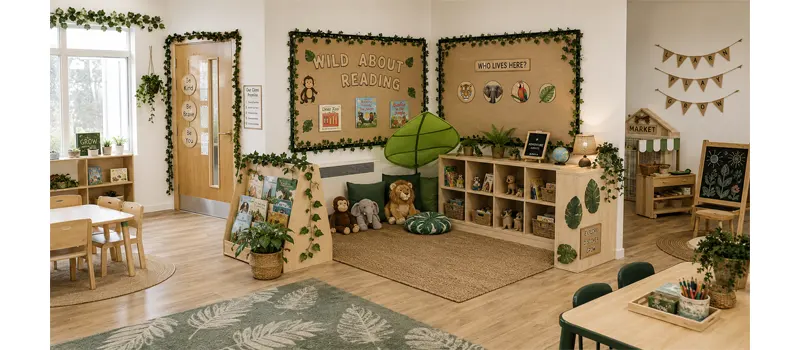
Nature and Forest Theme
A nature or forest theme can create a peaceful reading environment while also supporting children’s curiosity about the world. Use natural colors, wooden furniture, leaf patterns, animal book bins, or a simple forest wall display to create the theme. This works well with books about plants, animals, weather, seasons, and outdoor adventures. This theme can also connect reading with science and observation. Teachers can rotate books based on seasonal topics, such as spring flowers, autumn leaves, winter snow, or summer insects.
Under the Sea Theme
An under-the-sea theme gives the reading corner a playful and imaginative feeling. A few clear theme elements, such as a blue rug, sea animal wall decals, and an ocean bookshelf, are usually enough. Blue tones, wave patterns, fish, shells, and sea animal decorations can help children feel like they are “diving into books.” This theme pairs well with books about ocean animals, water, adventure, and discovery.
Camping and Adventure Theme
A camping and adventure theme can turn the Classroom Reading Corner into a cozy story camp. Teachers can use elements such as a small open tent, mountain wall art, stars, trees, or campfire-style cushions to create a sense of adventure. Books about outdoor exploration, animals, travel, friendship, and problem-solving can be displayed in this area.
Space and Stars Theme
A space and stars theme is ideal for children who are curious about planets, rockets, the moon, and the sky. Soft dark blue, silver, yellow, and star-shaped decorations can create a special reading atmosphere. Teachers can display books about space, science, imagination, dreams, and discovery.
Around the World Theme
An around-the-world theme can help children explore different places, cultures, animals, foods, homes, and ways of life through books. Simple maps, travel signs, flags, or world landmark decorations can support the theme. Teachers can display books about families, festivals, transportation, traditional stories, and daily life in different countries. This theme is useful for encouraging curiosity, inclusion, and global awareness in an age-appropriate way.
Conclusion
Viewed from a broader early childhood development perspective, the reading corner becomes part of a larger classroom ecosystem, where space design, behavior guidance, and learning experience are closely interconnected. When reading is given a clear, comfortable, and meaningful place in the classroom, children are more likely to see books as something familiar, enjoyable, and worth returning to.
A classroom reading corner is not left unchanged. It should grow with the children, respond to their interests, and become a natural part of daily classroom life. The real value of this space appears when children begin to choose books on their own, return to favorite stories, talk about what they see, and feel that reading is something enjoyable rather than forced.
You do not need to redesign the entire room at once. Start by improving one area, replacing one piece of furniture, or making books easier for children to see and choose.
FAQs
How do you keep a reading corner organized?
A reading corner stays organized when books are displayed clearly, grouped by theme or age level, and limited to a manageable number. Teachers can use picture labels, book baskets, and front-facing shelves to help children return books to the right place. Rotating books regularly also keeps the area fresh without making the shelves too crowded.
Can a reading corner be used as a quiet area?
Yes, a classroom reading corner can also work as a quiet area when it is planned carefully. Soft seating, a clear boundary, gentle colors, and fewer distractions can help children slow down and relax. However, the space should still focus on books and calm reading activities, rather than becoming a general play area.
How often should a Classroom Reading Corner be updated?
A Classroom Reading Corner can be updated every few weeks or whenever the classroom theme changes. Teachers do not need to redesign the whole space each time. Rotating books, changing labels, adding seasonal displays, or introducing a small theme can make the area feel new while keeping it easy to manage.
What types of books should be placed in a preschool reading corner?
Preschool reading corners should include picture books, board books, rhyming books, alphabet books, simple nonfiction books, and stories related to children’s interests. Books about animals, families, emotions, seasons, transportation, and daily routines are especially useful. Rotating books regularly keeps the reading corner fresh and encourages children to return.
How many children should use the reading corner at one time?
This depends on the size of the space and the purpose of the reading corner. A small reading corner may be best for one to three children, while a larger area can support small-group storytelling. Limiting the number of children helps keep the space calm, organized, and focused on reading.
What safety factors should I consider when choosing reading corner furniture?
Reading corner furniture should be stable, child-sized, and free from sharp edges. Shelves should be low and tip-resistant, seating should be firm and safe, and rugs should have non-slip backing. Materials should also be non-toxic, durable, and easy to clean, especially in preschool and daycare environments.
How do I choose books for different ages?
For toddlers, choose board books, cloth books, simple picture books, and books with familiar objects or routines. For preschoolers, include picture books, rhyming books, emotion books, animal stories, and simple nonfiction. For kindergarten children, add alphabet books, early readers, word books, and books that support discussion and storytelling.