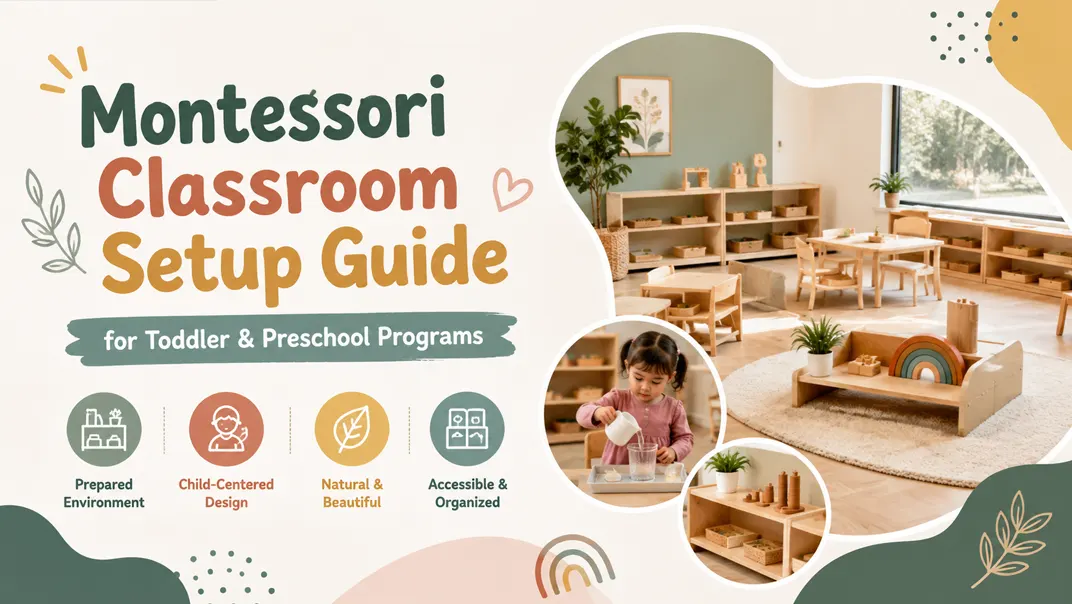
Setting up a Montessori classroom is not simply about placing shelves, tables, chairs, and learning materials in a room. A Montessori classroom is a prepared environment where children can move freely, choose work independently, and build confidence through daily hands-on activities.
Many daycare centers and early learning programs want to create a Montessori environment but are not sure where to begin. Some struggle with classroom layout planning. Others are unsure which furniture is actually necessary, how much storage is needed, or how to divide the room into meaningful learning areas without making the space feel crowded.
This guide will detail the key elements of a Montessori classroom setup, with the goal of helping you create a beautiful, functional, and easy-to-use classroom for children.
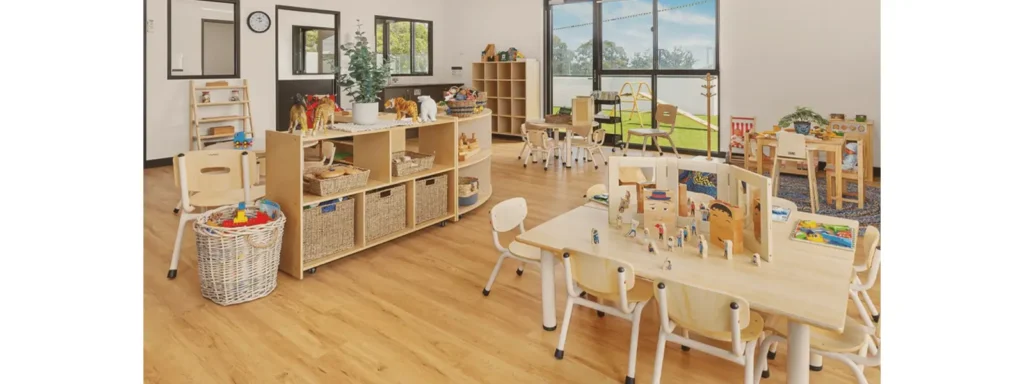
What Is a Montessori Classroom Setup?
A Montessori classroom setup is the way a classroom is planned, furnished, and organized to support children’s independence, concentration, movement, and hands-on learning. It is often called a prepared environment because the room is carefully arranged before children enter it.
In a Montessori classroom, children are not expected to rely on adults for every small action. The environment is designed so they can choose materials, carry work to a table or floor mat, complete an activity, and return everything to its place.
The Philosophy Behind Montessori Classroom Arrangement
- Support Independence
Low shelves, child-sized furniture, and accessible materials help children complete daily activities without constant adult assistance. - Create a Sense of Order
Clearly defined learning areas and organized shelves help children understand routines and maintain a calmer classroom environment. - Encourage Hands-On Learning
Open layouts and accessible materials allow children to explore, practice, and learn through direct interaction. - Improve Classroom Flow
Well-planned furniture placement reduces crowding, improves movement between areas, and makes supervision easier for teachers. - Build a Calm Learning Environment
Natural materials, neutral colors, and uncluttered spaces help children focus more easily and feel comfortable in the classroom.

Core Principles of a Montessori Classroom Setup
A Montessori classroom can look simple at first, but every part of the environment has a reason behind it. The setup should help children become more independent, focused, and responsible in their daily learning.
Child-Sized Furniture
Tables, chairs, shelves, and storage units are designed at a height that children can comfortably use without adult assistance. This helps children develop confidence and independence during daily activities.
Open and Accessible Shelving
Montessori classrooms typically use low open shelves instead of tall cabinets. Materials are displayed clearly so children can see available activities and return items to the correct place after use.
Clearly Defined Learning Areas
The classroom is usually divided into organized spaces such as:
- Practical life area
- Sensorial area
- Math area
- Art area
- Cultural Area
- Language Area
This structure helps children understand where activities belong and creates a stronger sense of order in the classroom.
Calm and Organized Environment
Montessori classrooms are intentionally designed to reduce visual clutter. Furniture layouts, color choices, and material organization all help create a quieter and more focused learning atmosphere.
Freedom of Movement
Children are not expected to remain seated for long periods. A Montessori classroom setup allows children to move between shelves, tables, rugs, and activity areas naturally throughout the day.
Essential Areas in a Montessori Classroom
A Montessori classroom is usually divided into multiple learning areas, with each space supporting a different type of activity and child development goal. Organizing the classroom into clear zones helps children navigate the environment more independently and makes the room easier to manage throughout the day.
The exact setup may vary depending on classroom size and age group, but most Montessori classrooms include the following core areas.
Practical Life Area
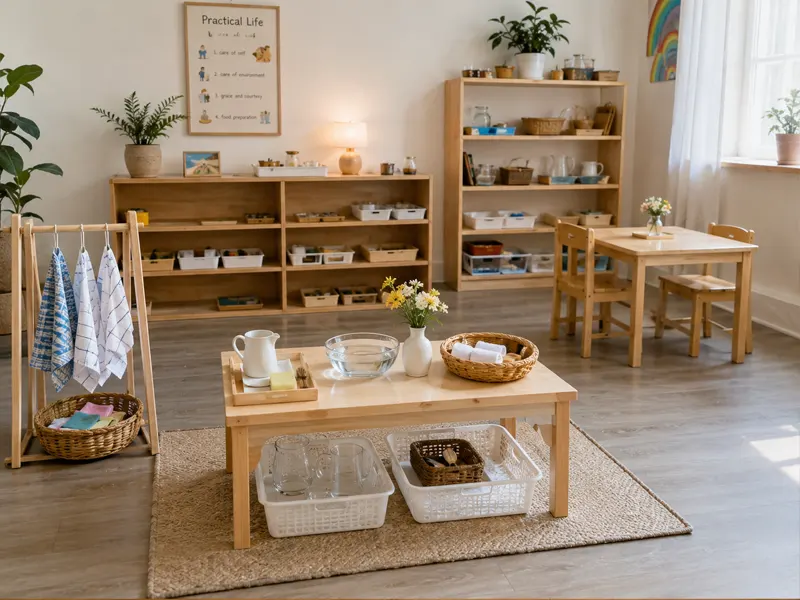
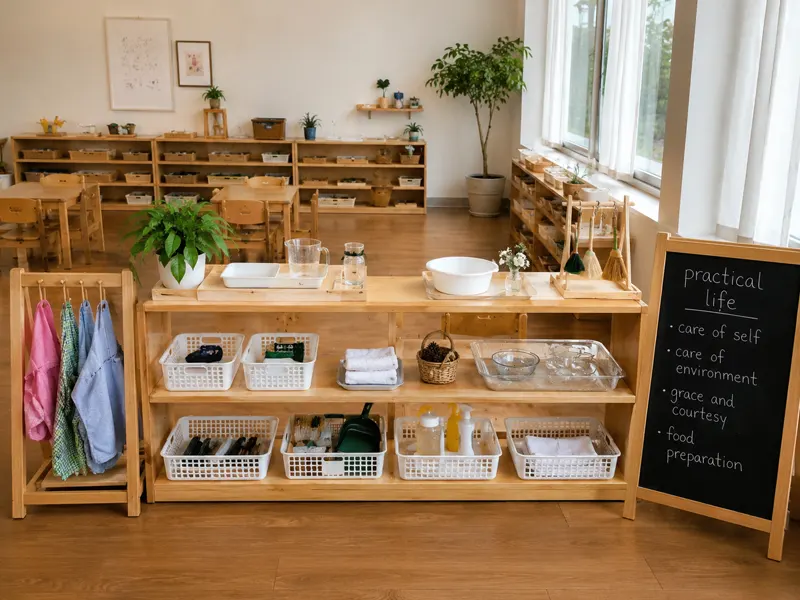
The Practical Life Area helps children develop independence, concentration, coordination, and daily living skills through real-world activities.
Common activities include:
- Pouring and transferring
- Cleaning and wiping
- Dressing practice
- Food preparation
- Hand washing and care routines
This area should be arranged with low open shelves so children can see and reach the materials easily. Trays, baskets, small pitchers, child-sized cleaning tools, and dressing frames should each have a clear place.
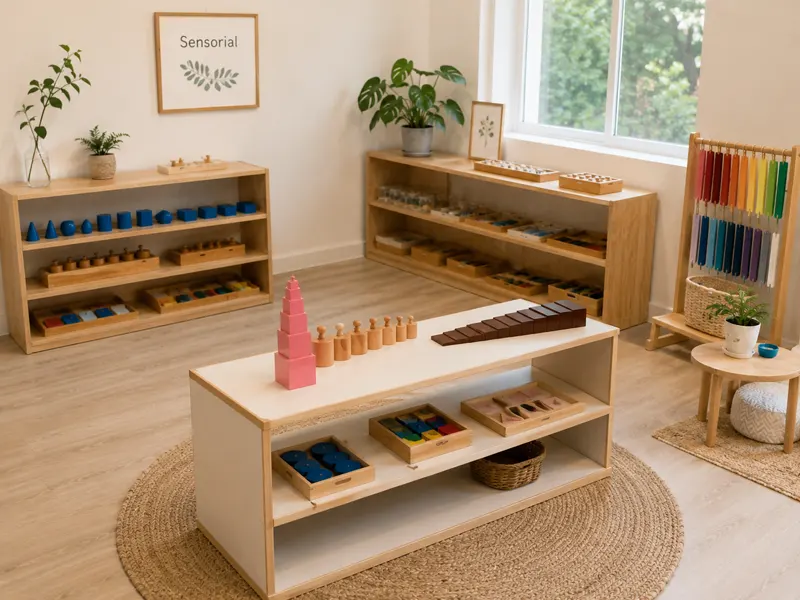
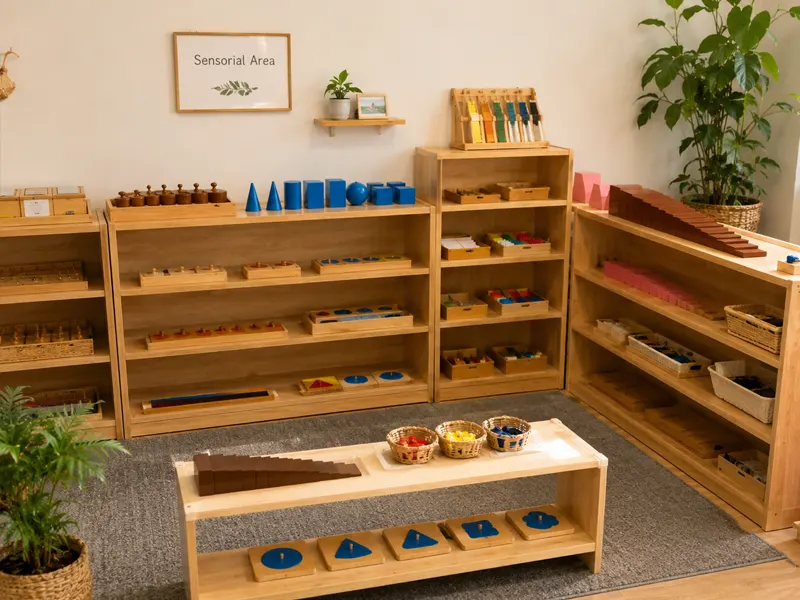
Sensorial Area
The Sensorial Area allows children to explore size, shape, color, texture, sound, weight, and dimension through hands-on materials. It supports observation, comparison, classification, and early problem-solving.
This area should be calm and tidy. Sensory materials are typically placed on low shelves, with ample space between each set. Children should be able to clearly see these materials and take them to a table or floor mat.
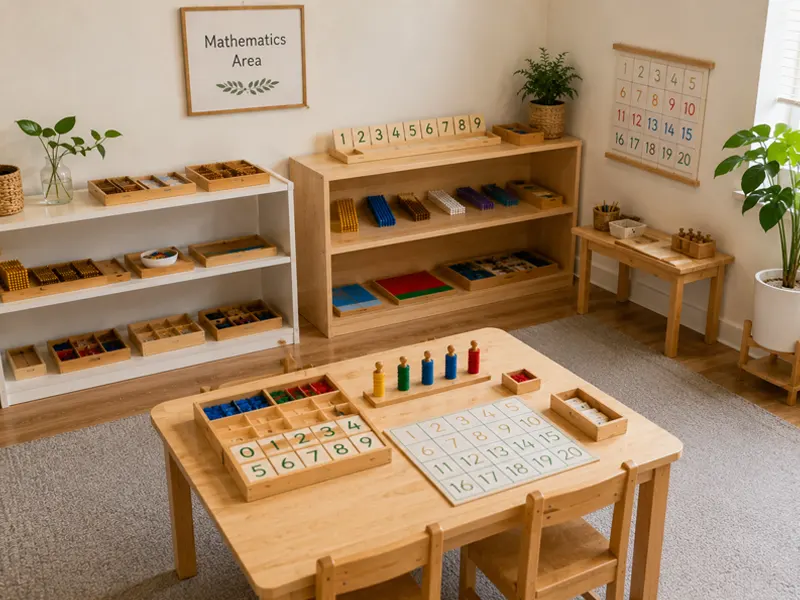
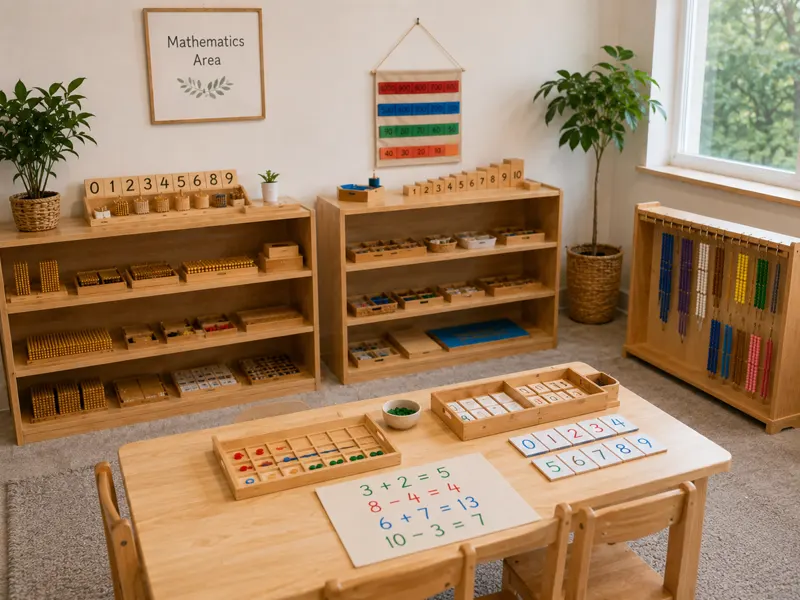
Mathematics Area
The Mathematics Area introduces children to numbers, counting, quantity, patterns, sequencing, and early operations through concrete materials. Instead of learning math only through worksheets, children use hands-on materials to understand abstract concepts step by step.
This area often includes:
- Counting materials
- Number rods
- Bead activities
- Sorting and sequencing work
- Manipulative learning tools
This area should be equipped with sturdy low shelves, and teaching aids can be arranged in order from simple to complex so that children can learn step by step.
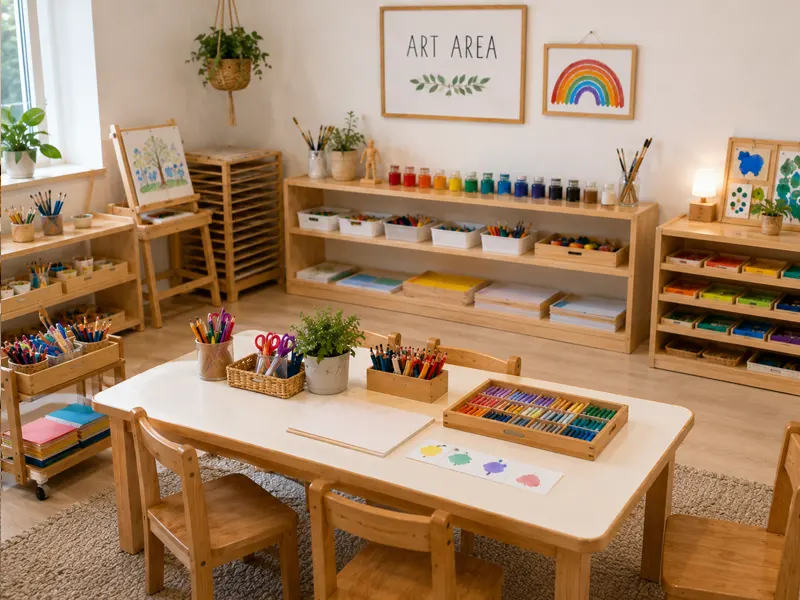
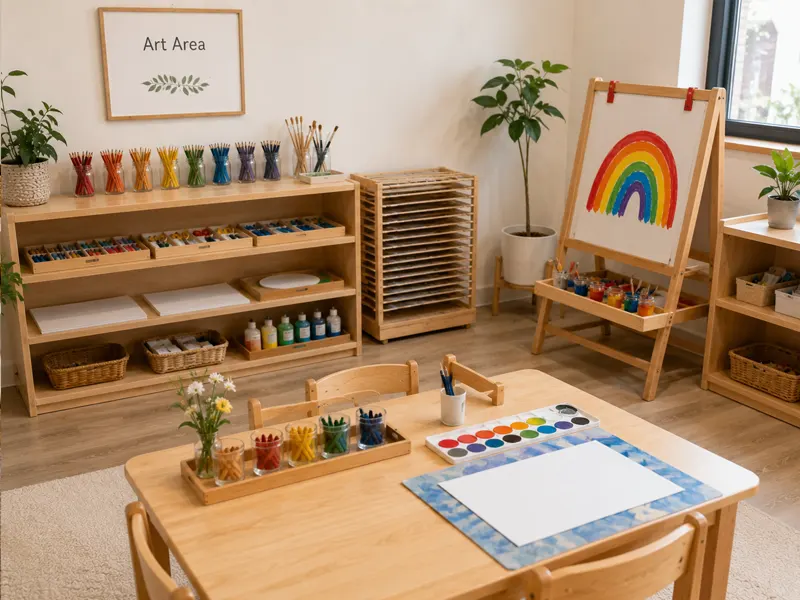
Art Area
The Art Area gives children space to draw, paint, cut, paste, model, and create with different materials. It supports fine motor development, creativity, self-expression, and visual exploration.
This area should be practical and easy to clean. A durable drawing table, washable chairs, paper organizers, material racks, and other art furniture and supplies will help maintain the area’s functionality.
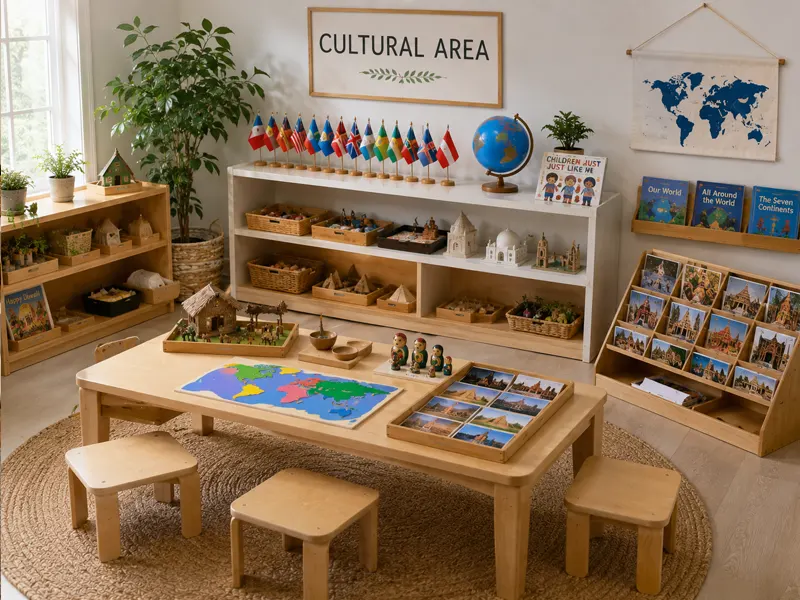
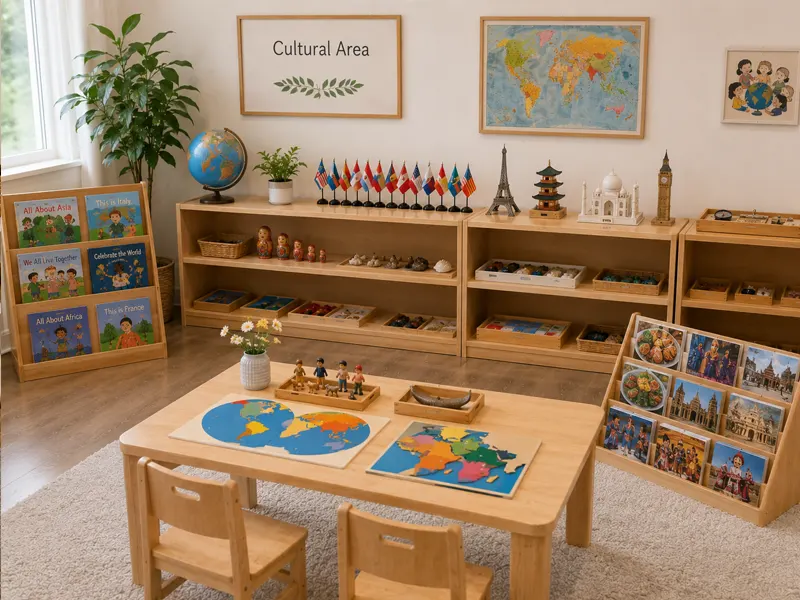
Cultural Area
The Cultural Area helps children explore geography, science, nature, animals, plants, history, cultures, maps, and the world around them. It encourages curiosity and helps children make connections between classroom learning and real life.
This area can be arranged with display shelves, nature trays, map materials, classification cards, puzzles, observation tools, and small science materials. Some classrooms also include a nature table where children can observe leaves, stones, shells, plants, or seasonal objects.
The Cultural Area should have enough space for children to observe, sort, compare, and discuss materials. It can be placed near natural light if plants or nature observation activities are included.
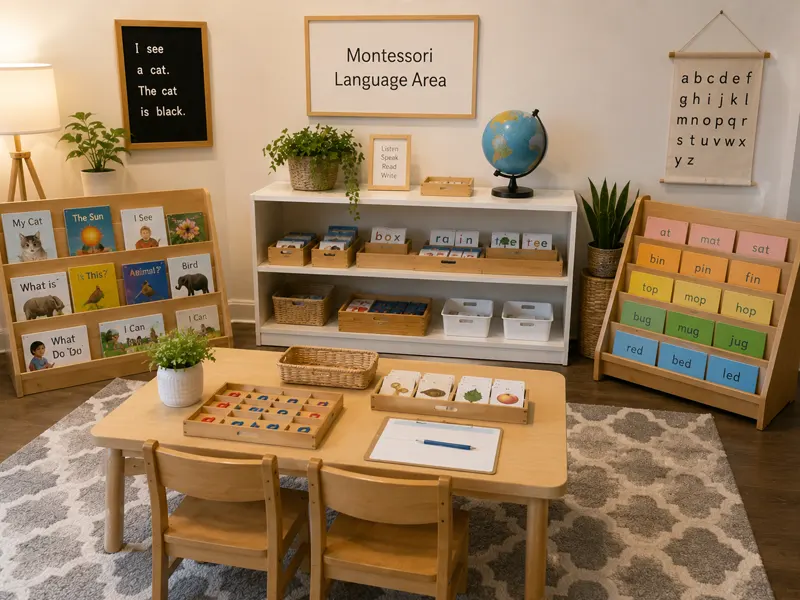
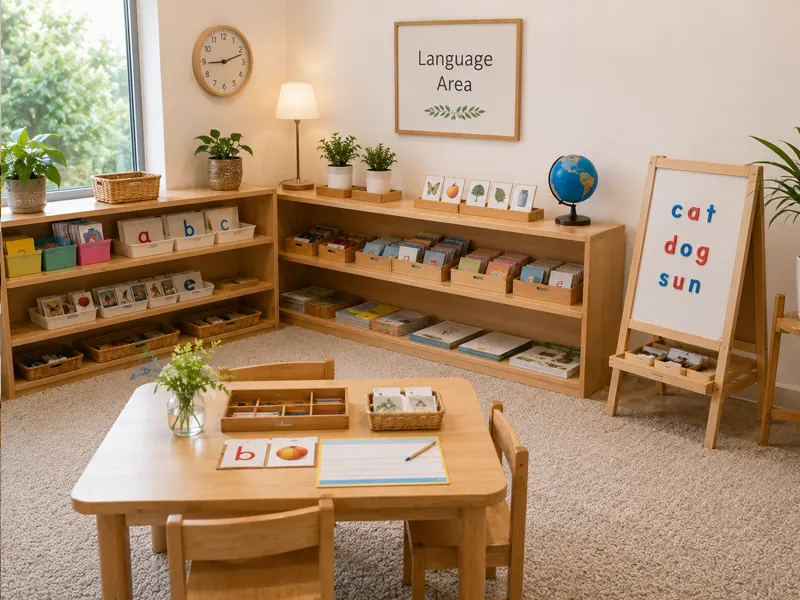
Language Area
The Language Area supports vocabulary development, phonetic awareness, letter recognition, early reading, storytelling, pre-writing skills, and communication. It helps children build the foundation for reading and writing through hands-on materials and meaningful language experiences.
This area can include sandpaper letters, movable alphabets, picture cards, matching materials, books, writing trays, and early literacy activities.
A strong Language Area helps children connect spoken language, visual symbols, and fine motor practice. With the right setup, children can explore language naturally instead of feeling pushed into formal reading and writing too early.
Montessori Classroom Furniture Checklist
Choosing furniture for a Montessori classroom is not only about filling the room. Each piece should help children move independently, choose materials easily, and work comfortably throughout the day.
A good Montessori classroom furniture checklist should focus on accessibility, safety, organization, and age-appropriate use.
| Furniture Type | Main Purpose | Key Features to Look For |
|---|---|---|
| Low Open Shelves | Display learning materials | Child-height, stable, open design |
| Child-Sized Tables | Individual and group work | Correct height, durable surface, easy cleaning |
| Child-Sized Chairs | Independent seating | Lightweight, stable, age-appropriate size |
| Work Mats | Floor-based learning | Easy to roll, clear personal work space |
| Storage Cabinets | Extra material storage | Organized, safe, not visually cluttered |
| Book Displays | Reading and language area | Low height, front-facing design |
| Practical Life Furniture | Daily life skill practice | Accessible, safe, realistic use |
| Art Tables | Creative activities | Easy-clean surface, durable structure |
How to Set Up a Montessori Classroom?
Setting up a Montessori classroom becomes much easier when the process is planned step by step. Instead of buying furniture first, it is better to start with the classroom space, age group, activity needs, and daily routines.
The steps below can help preschool owners, daycare directors, and teachers create a classroom that is easier to use in real daily teaching.
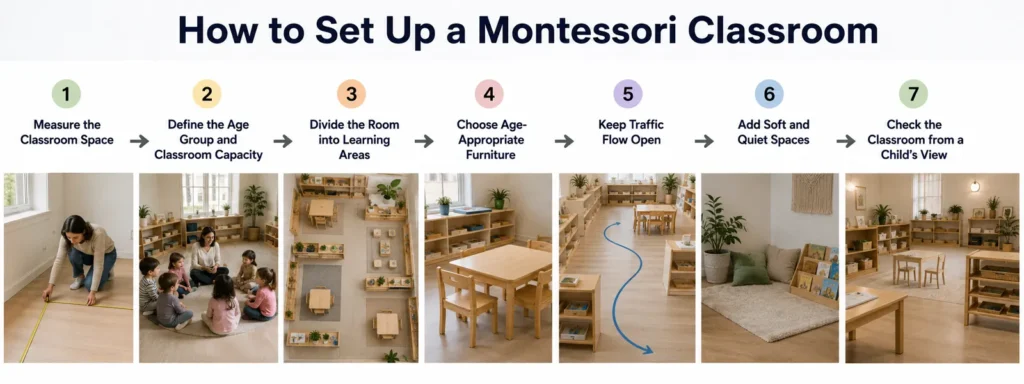
Step 1: Measure the Classroom Space
Start by measuring the full classroom. Mark the location of doors, windows, sinks, fixed cabinets, electrical outlets, and any areas that cannot be changed.
This helps avoid buying furniture that is too large or placing learning areas in the wrong position.
Check before planning:
- Room size
- Door and window position
- Natural light
- Sink or water access
- Existing storage
- Number of children
- Teacher supervision points
Step 2: Define the Age Group and Classroom Capacity
Confirm the age of use of the classroom. Younger children need lower shelves, simpler materials, more open movement space, and stronger safety controls. Older preschool children can use more advanced materials, larger work areas, and more clearly divided learning zones.
Before planning the classroom, ask:
- What age group will use this room?
- How many children will be in the classroom?
- Will it be a single-age or mixed-age group?
- What daily routines will happen in the room?
Step 3: Divide the Room into Learning Areas
After measuring the room, divide the classroom into clear learning areas. The six main areas can include Practical Life, Sensorial, Mathematics, Art, Cultural, and Language.
Each area should have a clear purpose. Children should be able to understand where materials belong and what kind of work happens in each area.
Step 4: Choose Age-Appropriate Furniture
Furniture should match the children’s body size and daily use habits. If furniture is too high, too heavy, or too difficult to access, children will depend more on adults.
Choose furniture that supports independent movement and long-term classroom use.
Step 5: Keep Traffic Flow Open
Children should be able to move between areas without bumping into furniture or disturbing others. Good traffic flow also helps teachers supervise the classroom more easily.
Avoid placing large furniture in the middle of natural walking paths. Leave enough space between shelves, tables, rugs, and activity areas.
A good layout should reduce:
- Crowding near shelves
- Blocked walkways
- Children walking through quiet work areas
- Furniture that limits teacher visibility
Step 6: Add Soft and Quiet Spaces
A Montessori classroom should include a calm space where children can read, rest, or regulate emotions.
This area does not need to be large. A small corner with soft seating, a low bookshelf, and a simple rug can make the classroom feel more balanced.
Useful items include:
- Floor cushions
- Soft rugs
- Low book displays
- Small sofa or bench
- Calm sensory materials
Step 7: Check the Classroom from a Child’s View
Before the classroom opens, review the full layout from a child’s perspective. Check whether children can reach materials safely, move independently, and use furniture comfortably.
Also consider daily cleaning, teacher movement, and how the room will function during busy routines.
This final check is very important. A classroom may look good from an adult’s view but still be difficult for children to use.
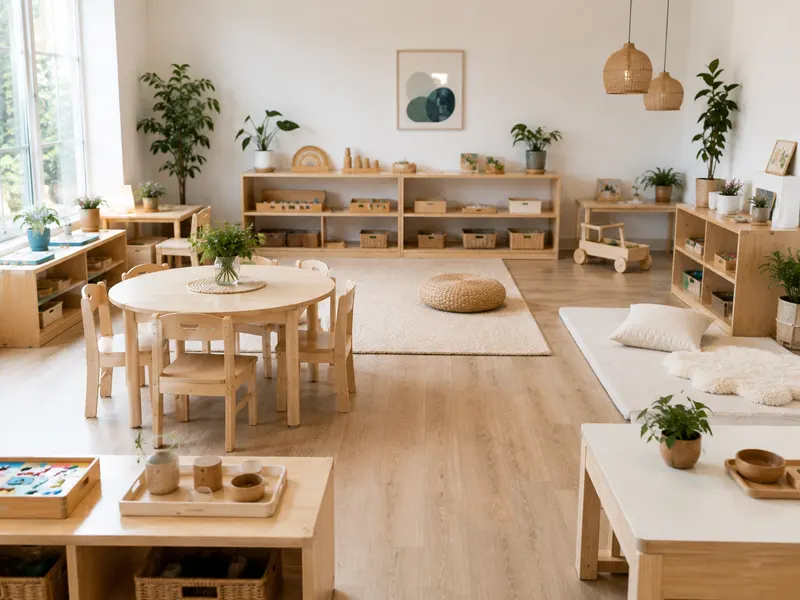
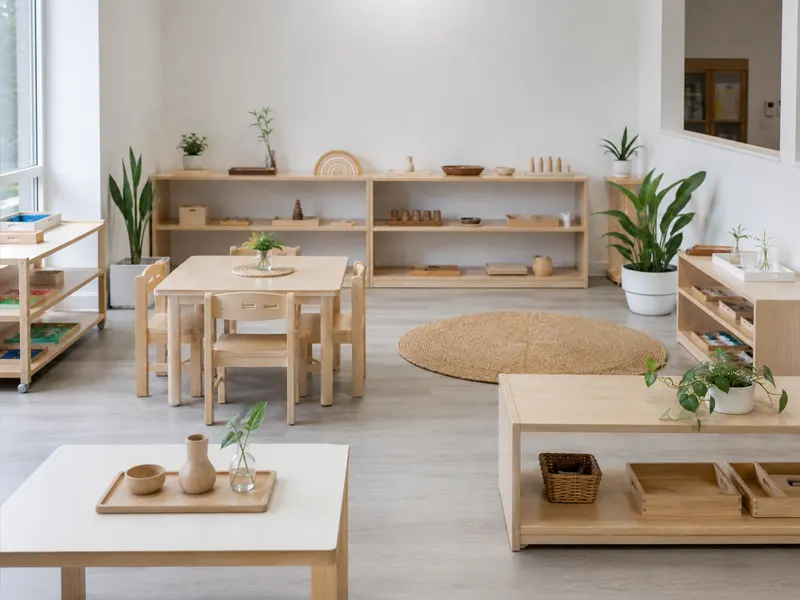
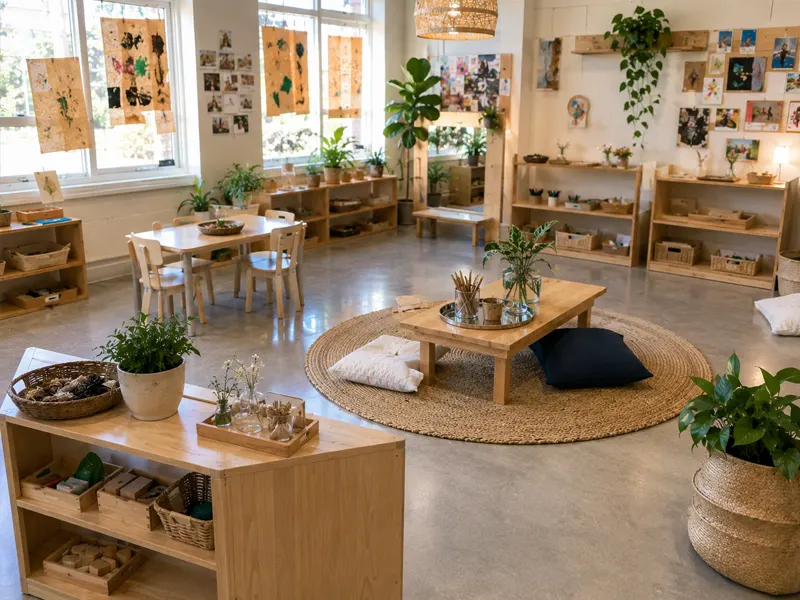
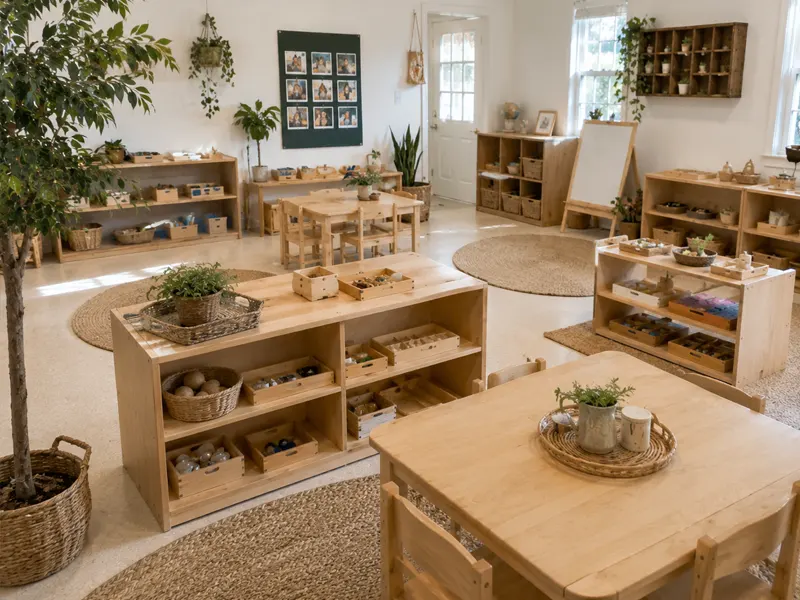
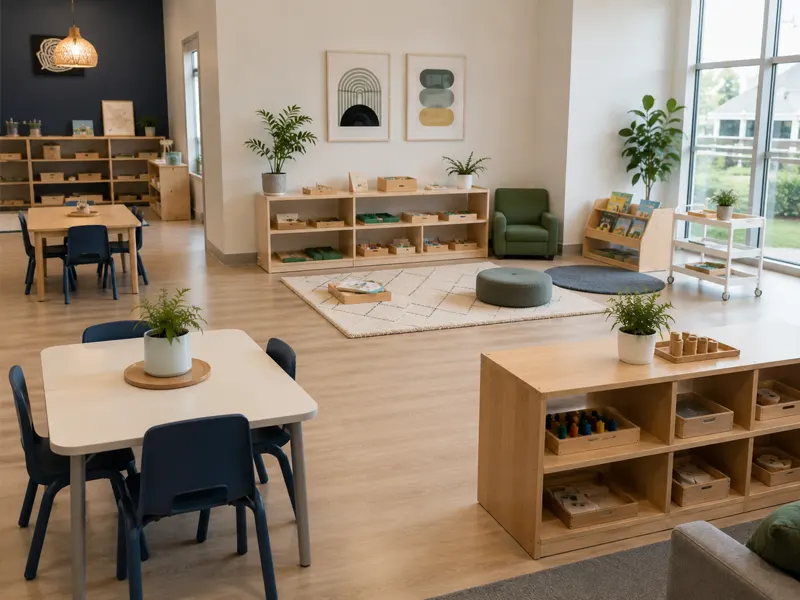
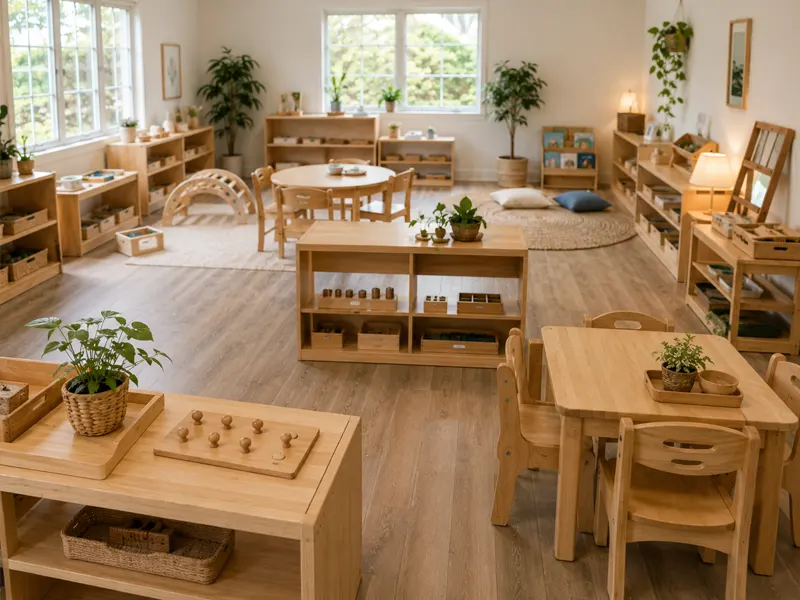
Montessori Classroom Setup Ideas and Examples
The following Montessori classroom setup ideas can help schools, daycare centers, and early learning programs plan a more practical learning environment.
How We Help Schools Create Montessori Classrooms
Creating a Montessori classroom can feel difficult when schools need to consider layout, furniture size, learning areas, storage, and classroom flow at the same time. We help preschools, daycare centers, and Montessori programs plan practical classroom layouts tailored to their space, age group, and daily teaching needs.
Classroom Layout Planning
We help plan classroom layouts based on room size, children’s age, number of students, and activity needs. This helps schools create clearer learning areas and avoid crowded or confusing spaces.
Montessori Furniture Selection
We can help schools choose furniture for different Montessori areas, including Practical Life, Sensorial, Mathematics, Art, Cultural, and Language areas. This makes the purchasing process easier and more organized.
Custom Size and Color Options
For schools with specific layout or design requirements, we support custom furniture sizes, colors, materials, and finishes. This helps create a more consistent classroom style.
2D and 3D Layout Support
For larger projects, we can provide 2D or 3D classroom layout references. This allows schools to see how the furniture will fit before placing an order.
One-Stop Classroom Furniture Solution
We support complete classroom furniture projects, including shelves, tables, chairs, storage, reading furniture, art furniture, and other classroom items. This helps schools save time and keep the overall classroom setup consistent.
FAQs
What furniture is essential for a Montessori classroom?
The most essential Montessori classroom furniture includes low open shelves, child-sized tables, child-sized chairs, work rug storage, cubbies or lockers, book displays, storage cabinets, and furniture for practical life and art activities.
How should Montessori shelves be arranged?
Montessori shelves should be low, open, and easy for children to reach. Materials should be arranged neatly with enough space between items. Each material should have a clear fixed place.
Avoid filling every shelf with too many materials. A crowded shelf makes it harder for children to choose work and return items correctly. It is better to display fewer materials and rotate them when needed.
How much space does a Montessori classroom need?
The space needed depends on the number of children, age group, furniture plan, and program requirements. A Montessori classroom should have enough room for shelves, tables, floor work, group activities, storage, and safe movement.
Can a small room be used as a Montessori classroom?
Yes, a small room can be used as a Montessori classroom if the setup is carefully planned. Use fewer shelves, choose multi-use tables, rotate materials, keep floor space flexible, and store extra items in closed cabinets.
What colors are best for a Montessori classroom?
Montessori classrooms often use natural wood tones, soft neutrals, warm whites, light greens, soft blues, and other calm colors. These colors help create a peaceful environment and allow children to focus on the materials.
Where should the Practical Life Area be placed?
The Practical Life Area is often best placed near a sink, cleaning station, or easy-clean flooring. Many practical life activities involve water, pouring, washing, cleaning, or food preparation, so the area should be convenient to maintain.
How do I know what furniture size to choose?
Furniture size should be based on children’s age and height. Tables, chairs, and shelves should allow children to sit, stand, reach, and move independently. For school projects, it is better to confirm age groups and classroom capacity before ordering furniture.
Can one classroom support both Montessori work time and group activities?
Yes. A Montessori classroom can support both independent work and group activities if the layout is flexible. Movable chairs, open floor space, lightweight tables, and clear storage can help the classroom adapt to different daily routines.
Conclusion
A successful Montessori classroom setup should support independence, movement, order, and hands-on learning. It is not about using more furniture, but about choosing the right furniture and placing it in the right way.
The best Montessori classrooms feel calm, purposeful, and easy to understand. Children know where materials belong. Teachers can observe the room clearly. Parents can see that the environment has been planned with care.
Whether you are planning a new Montessori classroom, redesigning an existing preschool room, or preparing a complete school furniture project, careful layout planning can help reduce purchasing mistakes and create a more functional learning space.
If you need help with Montessori classroom furniture, layout planning, or complete classroom setup, working with suppliers from West Shore Groups can make the whole process much easier.