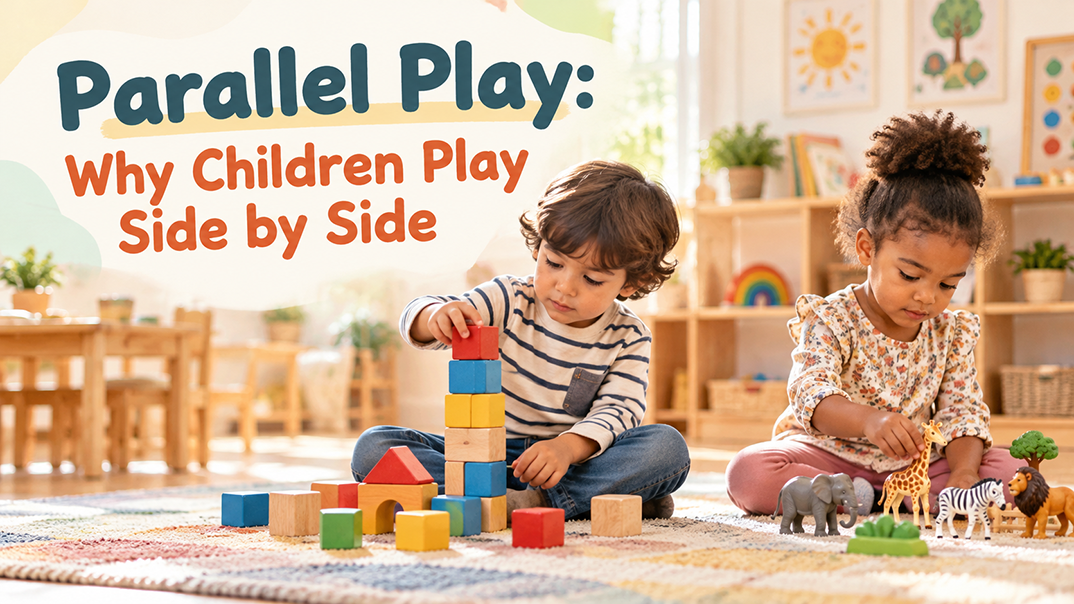
Parallel Play is easy to miss in a busy classroom. Two children may choose the same table and similar toys, yet each is busy with a different idea. They are playing near each other without making one game together. This guide explains when that pattern commonly appears, what children may practice through it, how to tell it from other kinds of play, and how you can support it in a toddler or preschool room.
What Is Parallel Play?
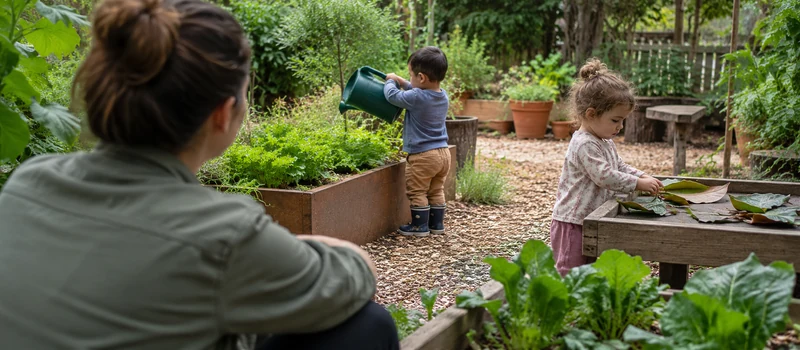
Parallel play is a type of play in which children play near one another while each focuses on their own activity. They share the same space and may use similar materials, but they do not actively organize their play around a shared idea or goal. Each child decides what to do, how to play, and when to change activities, without needing to agree with or follow another child’s plans.
This does not mean children are unaware of each other. They may watch their peers, notice what they are doing, or occasionally interact. However, simply being interested in another child’s activity does not mean they are playing together. The key difference is whether their actions remain separate or become coordinated around something they want to do together. In parallel play, children can be aware of their peers while still directing their own play.
When Does Parallel Play Typically Emerge?
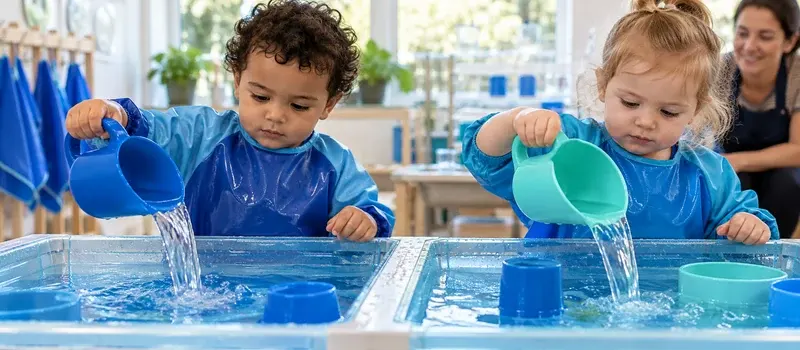
Parallel play often begins around age two and can continue throughout the preschool years. At this age, children may enjoy playing near other children without yet joining their activities or organizing a shared game.
Children do not all move toward more interactive play at the same pace. A child may seek a friend’s attention during one activity but prefer to focus on their own materials during another. Rather than expecting parallel play to stop at a particular age, look at how your child communicates and participates across different situations.
What Skills Can Children Practice Through Parallel Play?
Parallel play gives children room to explore their own interests while experiencing what it is like to play around other children. It does not guarantee that a particular skill will develop, but it offers opportunities for children to learn through their everyday activities.
Making Independent Choices
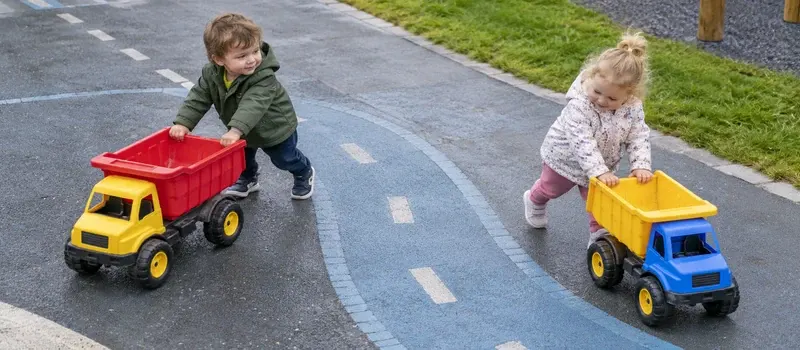
When children play side by side, they do not have to agree on what to make or follow someone else’s plan. Your child can decide whether to build a tower, sort blocks by shape, or start something completely different. These small decisions give children opportunities to try their own ideas and work out how they want to use the materials.
Learning by Watching Others
Children sometimes pick up ideas simply by noticing what another child is doing. For example, your child might see a classmate place a wide block at the bottom of a tower and decide to try the same thing. They can then test the idea in their own way and see whether it works for them.
Becoming Comfortable Around Peers
If your child is not ready to join a group activity, playing alongside other children can be a comfortable way to take part in the classroom environment. They can become familiar with other children’s voices, movements, and routines while continuing to do something they enjoy. There is no need to expect every child to start conversations or share a game just because they are sitting together.
Parallel Play vs. Associative Play
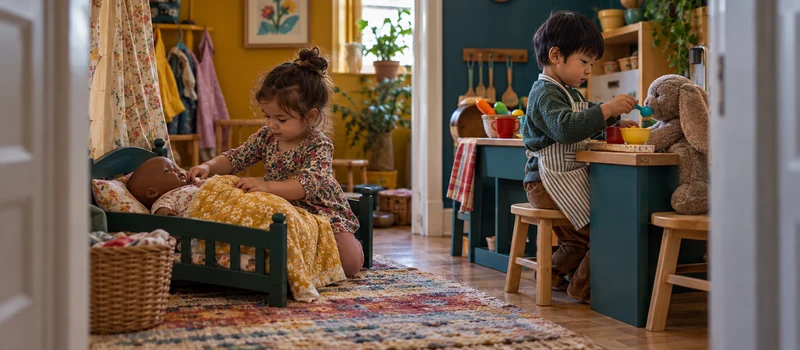
Parallel play and associative play can look similar because children may sit close together and use the same materials. The key difference is how much they interact with each other during play. In parallel play, each child mainly focuses on their own activity. In associative play, children begin talking, sharing materials, and responding to what others are doing, even though they are not working toward a shared goal.
| What to Look At | Parallel Play | Associative Play |
|---|---|---|
| Interaction | Children mainly focus on their own activities, with little direct interaction. | Children talk to each other and respond to one another during play. |
| Use of Materials | Children usually choose and use materials for their own activities. | Children may exchange toys, share materials, or borrow items from each other. |
| Response to Peers | A child may watch another child but continue with their own activity without engaging. | A child may respond to a peer’s comment, join a conversation, or react to what the other child is doing. |
| Purpose of Play | Each child follows their own ideas. | Children interact during play, but they do not necessarily plan or work toward the same result. |
The difference is not simply whether children talk or share materials. What matters is whether they begin responding to each other as part of their play, rather than continuing with separate activities.
How Can You Set Up a Classroom for Parallel Play?
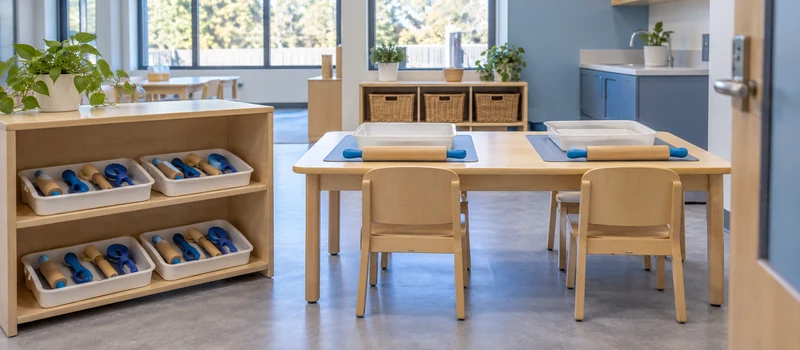
You do not need a special area for parallel play. What matters is whether your classroom gives children enough room to follow their own ideas while playing near others. A few thoughtful choices in furniture placement, materials, and storage can make it easier for children to share a space without getting in each other’s way.
Give Children Room to Play Side by Side
Arrange tables, floor mats, and activity areas so children can sit or work near one another without crowding each other. For example, a block area should have enough space for several children to build separate structures without having to compete for one small spot. If your classroom is limited in size, use low shelves or rugs to define activity areas while keeping walkways clear.
Choose Materials That Support Different Ideas
Open-ended materials such as blocks, playdough, and drawing supplies work well because children can use them in different ways. One child might build a house while another creates a road, even though they are using the same type of material. You do not need a separate set of every toy for each child, but having extra pieces of popular materials can reduce waiting and conflicts.
Keep Toys and Supplies Within Reach
Place frequently used materials on low, accessible shelves so children can choose what they need without constantly asking an adult for help. Keep similar items together and give them consistent storage places, making it easier for children to find materials and return them after play. If you are planning a construction area, our guide to setting up a preschool block area offers more ideas for organizing building materials and storage.
How Should Teachers Respond to Parallel Play?
When you see children playing side by side, you do not need to turn their activities into a group game. Your role is to notice what they need and offer help when necessary, while allowing them to decide how they want to play.
Give Children Time to Explore
Before stepping in, take a moment to observe what the children are doing. If they are interested in their activities and seem comfortable around their peers, there may be no reason to interrupt. You can stay nearby and remain available without asking them to share, talk, or work together. Children do not have to interact constantly for their play to be worthwhile.
Let Interaction Develop Naturally
If children begin showing interest in each other’s activities, give them room to decide whether they want to interact. You might make a simple comment about what you notice, but avoid directing the children to combine their activities or start a group game. If they begin exchanging ideas and working toward a shared goal, their play may be moving toward cooperative play. If they return to their own activities, allow that too. Your aim is to make interaction possible, not to make it happen.
Know When to Offer More Support
Parallel play itself is not a reason for concern. However, if a child repeatedly becomes distressed around peers, struggles to participate in activities they enjoy, or has difficulty communicating their needs across different situations, it is worth paying closer attention. You can help with the immediate difficulty and observe whether the same challenges continue. If you remain concerned, discuss what you have noticed with the child’s family and, where appropriate, an early childhood professional. Focus on understanding what the child needs rather than expecting them to play in a particular way.
FAQs
1. Is Parallel Play Considered Social Play?
Yes. Although children are not working together, they are playing in the presence of others and may notice or respond to their peers. Parallel play is different from direct cooperation, but it can still be part of a child’s early social experiences.
2. Does Parallel Play Mean a Child Is Shy?
No. A child may prefer parallel play because they enjoy focusing on their own activities, feel comfortable playing independently, or are not interested in joining a particular game at that moment. You should not assume a child is shy based on their play style alone.
3. Can Children of Different Ages Engage in Parallel Play?
Yes. Children do not need to be the same age or have the same abilities to play alongside each other. They can explore different materials at their own level while sharing the same play space.
4. Can Parallel Play Happen at Home?
Yes. You may notice parallel play when siblings or visiting children play in the same room but choose different activities. They can enjoy being near one another without needing to share a game or agree on what to do.
5. Do Children Need to Be Friends to Engage in Parallel Play?
No. Parallel play can happen between children who know each other well and those who are still getting acquainted. They do not need an established friendship to feel comfortable playing alongside one another.
Conclusion
Parallel play is one way children take part in a shared classroom while keeping control of their own ideas. You can understand it by watching their actions, not by measuring them against a fixed age or asking every child to join a group game. If your room makes nearby independent play difficult, West Shore can help you review the classroom layout and furniture that affect access, usable space, and supervision.