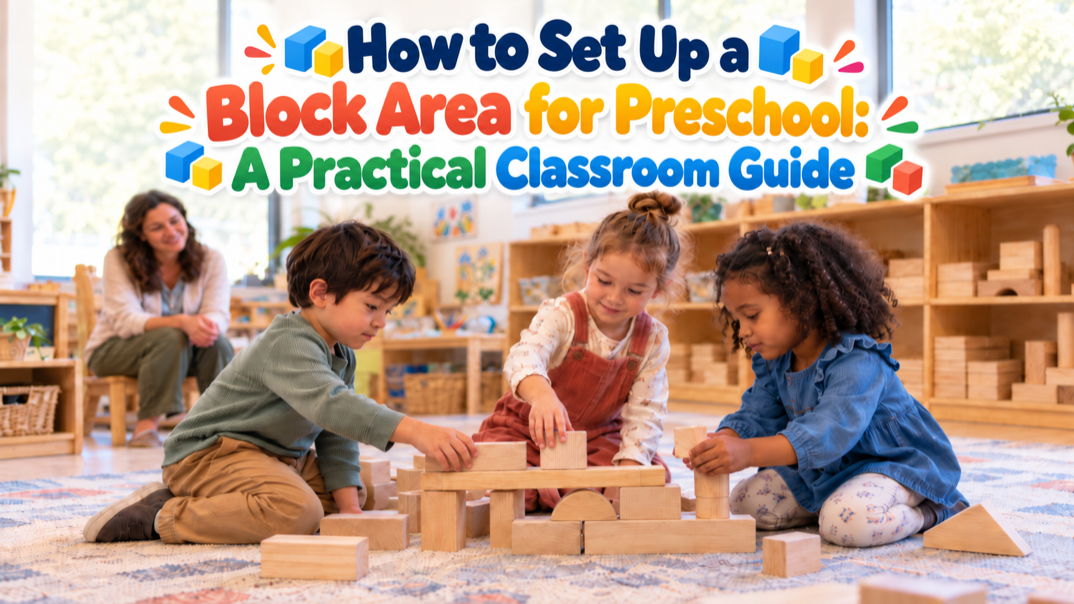
A well-planned preschool block area gives children space to build, experiment, and solve problems independently. To make yours work, consider how children will use the space, which materials they need, and how you will manage storage and safety. This guide walks you through the key decisions to help you create a practical block area for your classroom.
What Is a Block Area for Preschool?
A block area is a designated space where children use blocks and related materials to build structures, explore ideas, and solve problems through hands-on play. Unlike a general play corner, it needs open building space, accessible materials, and enough room for children to work without disrupting other activities.
You do not need a separate room to create one. A clearly defined corner can work well if children have enough room to build and can reach their materials independently. Your setup should reflect the children’s ages and interests, with larger blocks for younger children and more varied construction materials for older preschoolers and kindergarten children.
What Can Children Learn in a Preschool Block Play Area?
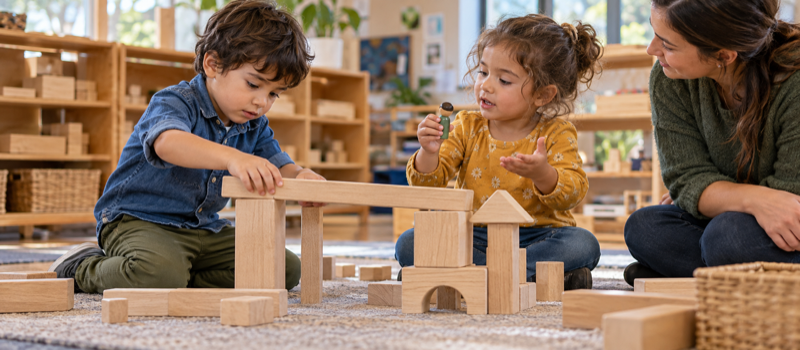
Block play helps children develop early math skills, problem-solving abilities, creativity, and social skills through hands-on exploration.
Math and Spatial Awareness
Children learn to recognize shapes by handling blocks with different geometric forms, such as squares, rectangles, and triangles. As they stack and arrange blocks, they explore height, length, patterns, and spatial relationships. Building taller structures also helps them discover balance and stability through direct experience. These activities support the development of early mathematical thinking through block play.
Problem-Solving Skills
When a tower falls or a bridge cannot support a toy car, children begin to understand cause and effect. They try different block arrangements, test their ideas, and adjust their designs based on the results. Through repeated attempts, they learn to identify problems and find solutions independently.
Creativity and Imagination
Children use blocks to represent objects and places from their imagination or everyday experiences. A simple arrangement can become a house, a shop, or a road. Because blocks can be used in many ways, children learn to develop ideas, make design choices, and change their plans as their constructions evolve.
Language and Cooperation
When children build together, they learn to express ideas, listen to others, and negotiate decisions. They may need to explain what they want to build, agree on how to share materials, or work through different opinions. These interactions help them develop communication skills and learn to cooperate toward a shared goal.
How Should the Location and Layout of a Block Play Area Be Planned?
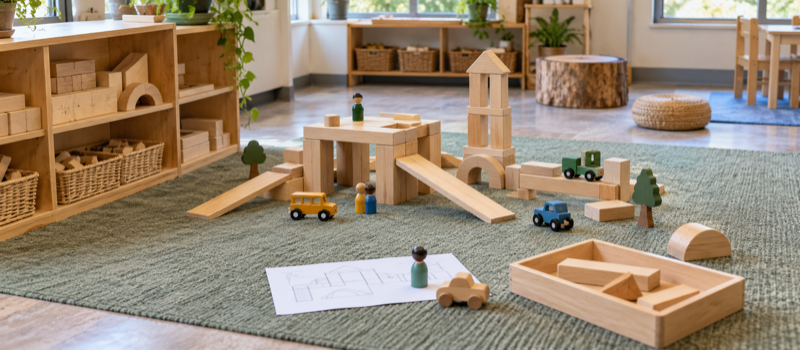
A well-planned block area needs enough room for children to build, easy access to materials, and a layout that fits the rest of your classroom. The best arrangement depends on your available space, the number of children using the area, and how they typically play.
Choose a Suitable Location
Place the block area away from classroom entrances and main walkways to reduce the risk of children accidentally knocking over structures as they pass. Make sure teachers can easily see the area without tall cabinets or large furniture blocking their view. If your classroom has a reading corner or rest area, keep some distance between these spaces to minimize noise and disruption.
Allocate Space Based on Classroom Size
If your classroom is large, you can set up a dedicated block play area with storage, floor space for building, and a table for smaller construction activities. Keeping these elements together makes it easier for children to access materials and move between activities.
If your classroom is small, a flexible layout may work better. Store blocks in low cabinets along the wall, then move lightweight tables and chairs to one side when children need floor space for building. After playtime, return the furniture to its usual position and put the blocks away so the area can be used for other activities.
Arrange Storage and Building Materials
Place low, open storage cabinets along the wall so children can access and return blocks easily without losing valuable building space. Teachers can organize blocks by type and frequency of use, keeping commonly used materials within easy reach and storing less frequently used items elsewhere. In smaller classrooms, limit the number of block types available at one time and rotate materials according to activity needs. This keeps storage manageable and prevents shelves from becoming overcrowded.
Keep the Route Between Storage and Building Areas Clear
Position storage close to the building area so children do not have to walk through other learning areas to collect blocks. Leave enough room in front of the shelves for children to take out and return materials, and keep the main walkways clear. Once the layout is in place, check that children can move easily between the building area and storage without disrupting other classroom activities.
Adjust the Layout Based on How Children Use the Space
After the area is in use, observe whether children frequently knock over one another’s structures, crowd around the storage shelves, or struggle to find enough room to build. If these problems occur regularly, adjust the storage position, the size of the building area, or the number of materials available at one time.
If children often need several sessions to complete larger structures, decide in advance where these projects can be kept temporarily without interfering with other classroom activities. When reviewing the overall arrangement of your preschool learning centers, make sure the block area fits naturally into the classroom without obstructing other activities. The layout should reflect your class size, children’s ages, and actual play habits rather than follow a fixed area requirement.
What Types of Blocks and Materials Should Be Provided in a Kindergarten Block Play Area?
When choosing materials for your block area, start with blocks children can use in different ways, then add a few accessories to extend their play. Your selection should reflect what your children enjoy building, their ages, and the space you have available.
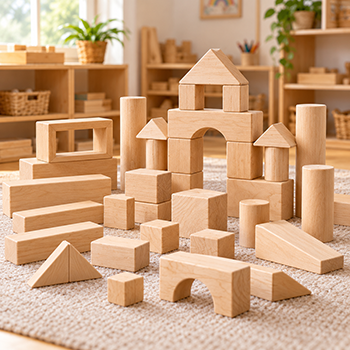
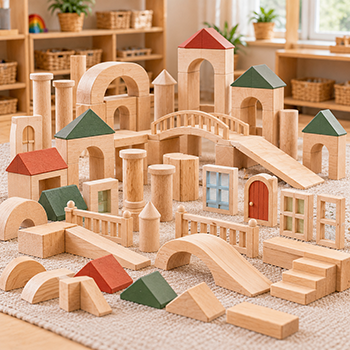
1. Wooden Unit Blocks
- Columns and cylindrical blocks
- Rectangular blocks
- Square blocks and cubes
- Triangular blocks
- Arches and curved blocks
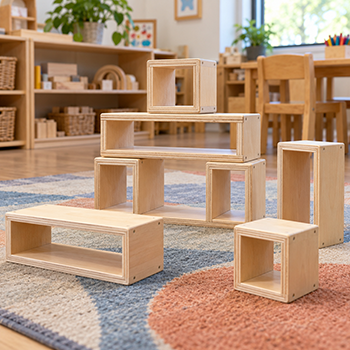
2. Large and Hollow Blocks
- Large foam blocks
- Hollow wooden blocks
- Large cardboard building blocks
- Oversized plastic building blocks
3. Interlocking Construction Blocks
- Magnetic building blocks
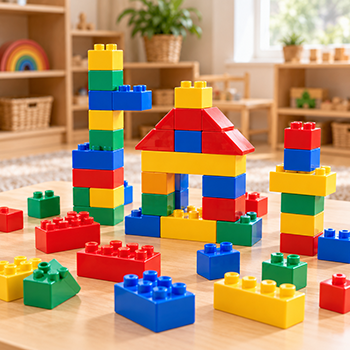
- Large interlocking blocks
- Plastic construction bricks
- Interlocking building sets with connectors
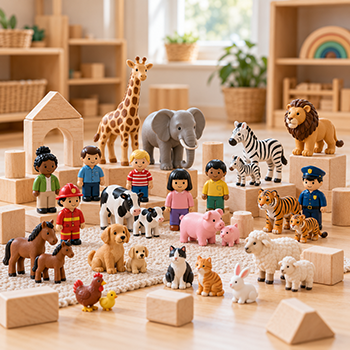
4. People and Animals
- Pets and zoo animals
- Community helper figures
- Family and everyday people figures
- Farm animals
- Forest animals
- Dinosaurs
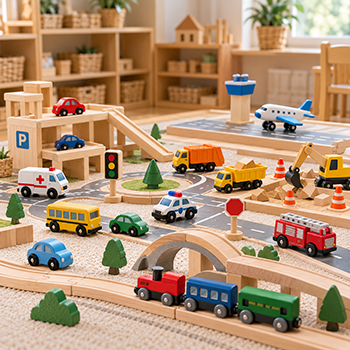
5. Vehicles and Transportation Accessories
- Cars and trucks
- Buses and trains
- Fire trucks and ambulances
- Construction vehicles, such as excavators and bulldozers
- Airplanes and boats
- Road signs and traffic lights
- Railway tracks and road pieces
6. Architectural and Building Accessories
- Bridges and ramps
- Fences and gates
- Columns and decorative architectural pieces
- Roof pieces
- Doors and windows
- Connectors and linking pieces
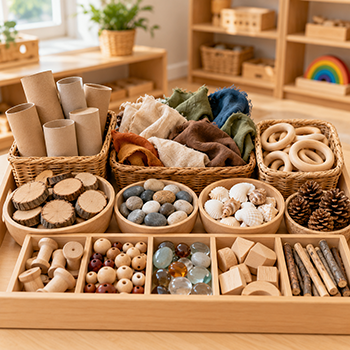
7. Loose Parts and Creative Materials
- Cardboard tubes and boxes
- Wooden discs and rings
- Fabric pieces
- Craft sticks
- Smooth, appropriately sized natural materials
- Recycled materials suitable for children’s use
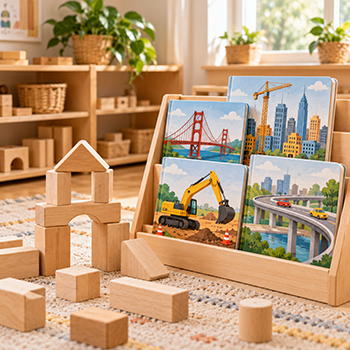
8. Books and Building Inspiration
- Simple building photographs for reference
- Picture books about buildings and architecture
- Books about bridges, roads, and transportation
- Books about houses and community buildings
- Picture cards showing different structures
You don’t need every material on this list. Start with a versatile collection of blocks, then add accessories based on what your children enjoy building. Consider your storage space, too, so children can reach materials easily and return them without overcrowding the shelves.
How Should Materials in the Block Play Area Be Stored?
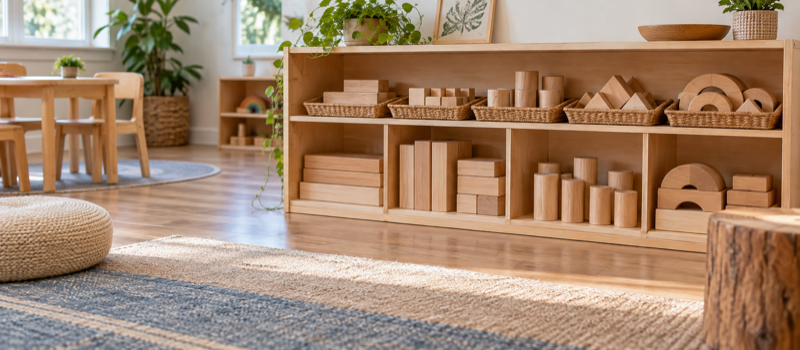
Storage in a block play area should make materials easy to manage, access, and put away after activities. Organize storage according to block size, type, and frequency of use rather than keeping everything together.
Organize Blocks by Size and Type
Keep different types of blocks separate. For example, store basic wooden unit blocks in designated shelf compartments, interlocking blocks in separate containers, and large hollow blocks in a suitable open storage space. This makes it easier for teachers to check supplies and find materials when planning activities.
Small accessories, such as people, animals, and toy vehicles, can be stored in separate containers so they do not get mixed in with larger blocks. Keep the organization simple and adjust it to the materials available in your classroom.
Choose Suitable Storage Furniture
Low, open classroom storage cabinets work well for frequently used blocks because children can reach the materials easily. Smaller blocks and accessories can be kept in labeled containers, while large hollow blocks need enough room to be stored without being forced into narrow compartments.
When choosing storage furniture, consider its stability, height, and ease of access. Heavier blocks should be stored on lower shelves to reduce the risk of materials falling when children reach for them.
Make Room for Unfinished Structures
Children may need several play sessions to complete a structure. If your classroom has enough space, set aside an area where unfinished constructions can remain without blocking walkways or interfering with other activities. This allows children to return to their work instead of having to rebuild everything at the next session.
If space is limited, use a sturdy, flat tray to hold smaller constructions so teachers can move and store them temporarily. Make sure the tray supports the entire structure and that the blocks are stable before moving it.
How Can Teachers Support Children During Block Play?
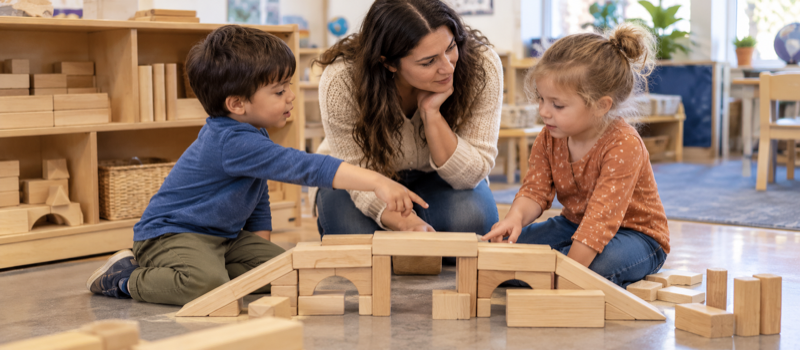
Your role is to help children develop their ideas without taking over the building process. Observe what they are trying to achieve, then offer support when a question, a new material, or a small challenge could help them move forward.
Ask Questions Instead of Giving Answers
If a tower keeps falling, ask, “What could make the bottom more stable?” If children disagree about a shared construction, help them explain their ideas and consider possible solutions. These prompts encourage children to think through problems rather than wait for you to fix them.
Adjust Materials Based on What You Observe
Notice which materials children use regularly and which ones remain untouched. If several children want the same blocks, you may need more pieces of that type or a different selection of materials.
If children repeatedly abandon unfinished projects, consider whether they have enough space to continue building later. Sometimes a small change to the environment is more useful than adding another activity.
How Can You Keep Block Play Materials Safe and Well-Maintained?
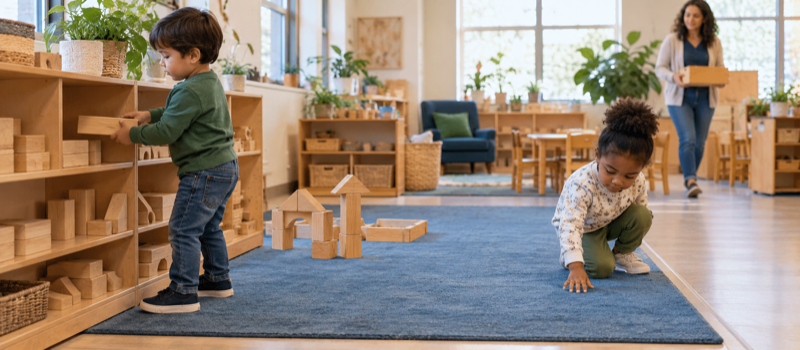
Children use blocks every day, so the materials need to stay safe and clean as they wear with use. When choosing products, check that they meet the safety standards required in your country or region. Once the block area is in use, regular checks and simple cleaning routines help keep everything in good condition.
Choose Products That Meet Local Safety Standards
Safety standards differ between countries, so before buying blocks and accessories, check the requirements that apply where your preschool or kindergarten operates, including relevant toy safety standards. Your supplier should be able to provide product information to help you confirm that the materials meet those requirements. It is also worth checking that the products are suitable for the ages of the children who will use them.
Check for Damage During Regular Use
Blocks can get chipped, cracked, or worn after repeated use. Wooden blocks may develop rough edges, while plastic accessories can break or lose small parts. These issues can make materials unsafe for children, so damaged items should be taken out of use until they can be repaired or replaced.
Clean and Put Materials Away Each Day
Blocks are handled by many children throughout the day, so dust and dirt can build up on their surfaces. Clean them according to the manufacturer’s instructions, as too much moisture or unsuitable cleaning products can damage some materials. Let the blocks dry before putting them back on the shelves, and return each type to its usual place so the area is ready for the next day.
FAQs
1. Does a Preschool Block Area Need a Table?
No. A floor-based setup is usually more practical because children need room to build towers, roads, and large structures. A table is useful if you want children to work with smaller building pieces or draw plans for their constructions. If you have limited space, prioritize an open floor area and use a table only when your activities require one.
2. How Can You Encourage Children Who Rarely Play With Blocks?
Start with a simple setup that connects with children’s interests. You could add toy vehicles, animal figures, or people to encourage them to build roads, homes, or other familiar places. Let children explore at their own pace rather than asking them to complete a specific structure.
3. What Block Sizes Are Suitable for Different Age Groups?
Younger children need larger blocks that are easy to grip and stack, with fewer small pieces that could pose a choking risk. As children grow and develop better hand control, you can introduce smaller blocks that allow them to build more detailed and complex structures.
4. Should You Display Pictures or Building Ideas in the Block Area?
Yes, a few pictures can give children ideas when they are unsure what to build. You could display photos of bridges, houses, or other structures at children’s eye level, where they can look at them while playing. Keep the pictures on a nearby wall rather than on the floor or building surface. Children can use them for inspiration without needing to copy the designs exactly.
5. Should the Block Area Be Near the Dramatic Play Area?
Placing these two areas near each other can help children combine building and pretend play. For example, children can build a house in the block area and use toy people to act out everyday activities. Keep the materials for each area in their own storage spaces, so dramatic play toys do not spread across the floor and leave less room for building.
Conclusion
A successful block area starts with understanding how your children use space, materials, and storage. When these elements work together, you create an environment that encourages independent building and makes classroom management easier. West Shore can help you plan your classroom layout, select suitable furniture, and coordinate learning materials. Share your floor plan or room dimensions to get started.