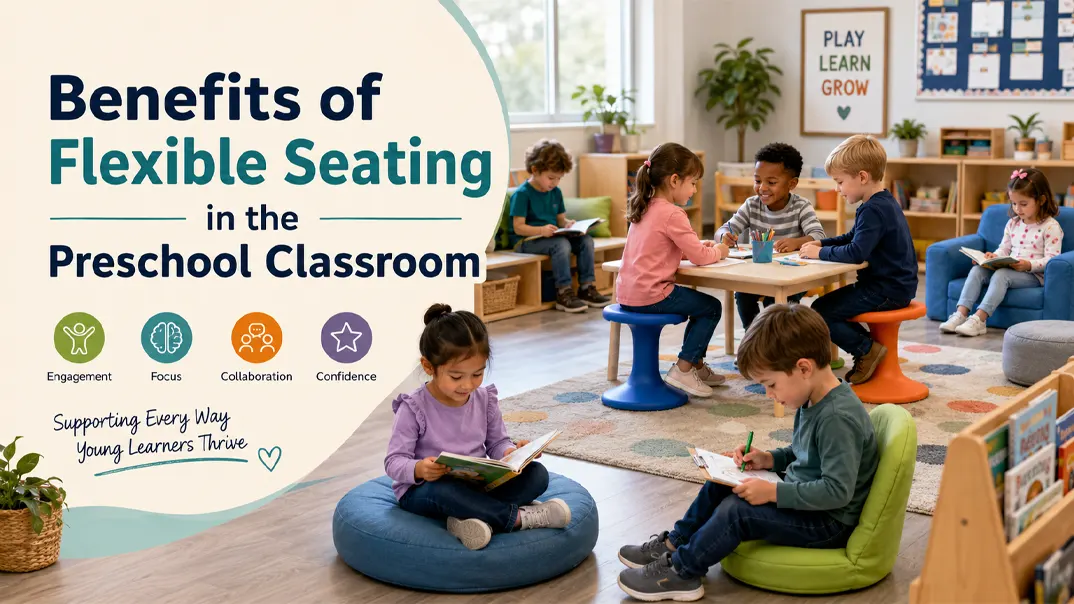
Traditional seats are rigid and fixed, failing to account for the diverse needs of children. Flexible seating provides different options to support children’s comfort, movement, and participation. However, as a preschool director, you need to consider more than the educational benefits. You may wonder whether flexible seating will make the classroom harder to manage, take up too much space, and deliver enough value to justify the cost.
Keep reading; we will explain the benefits of flexible seating and help you assess whether flexible seating is necessary to incorporate into your classroom environment.
What Is Flexible Seating?
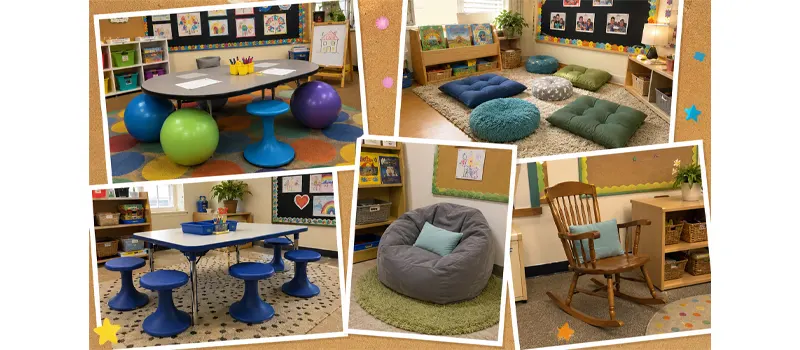
Flexible seating refers to providing children with a variety of seating options in the classroom, rather than relying solely on fixed desks and chairs. You can provide wobble stools, floor mats, beanbag chairs, and balance balls. Children can choose suitable seats based on activities and their own comfort, which helps them move naturally, stay focused, and cooperate more easily with others.
What Are the Benefits of Flexible Seating in Preschool Classroom?
Flexible seating can improve the way your classroom functions throughout the day. It allows you to offer children seating and movement options that better suit their needs. When you choose the right seating types, you can also make better use of your classroom budget and avoid purchasing furniture that serves only one purpose.
Helps Children Stay Focused
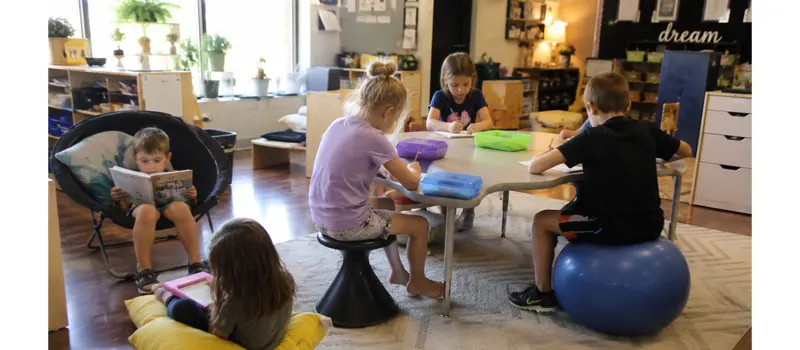
Young children often find it difficult to remain in one fixed position for long periods. Flexible seating allows children to change posture or choose a seat that feels more comfortable, which can reduce restlessness.
When you introduce flexible seating, children may leave the crowded table and sit on a floor mat or rocking chair. They may choose a place that you think doesn’t look comfortable, but trust them; they know where they feel best. Once you allow children to make their own choices, you may find they engage in activities more quickly and stay focused for longer.
Supports Healthy Movement and Posture
Maintaining the same posture for extended periods can negatively impact a young child’s health. Flexible seating allows them to shift their weight, change positions, or make small movements. This improves blood circulation and reduces restlessness.
Encourage Independence and Responsible Choice
At first, children may choose a seat simply because it looks different or is fun. After using flexible seating for a while, they begin to understand which option helps them read, draw, or learn more comfortably.
You can use these seating choices to build independence and guide this process by asking simple questions such as, “Is this seat helping you work?” Over time, children learn that choosing a seat is also about making a responsible decision.
Supports Different Activities
A classroom rarely uses the same setup all day. You may need individual seating for table work, a circle for group discussion, and open floor space for movement activities.
With lightweight stools, cushions, and movable chairs, you can change the setup easily without rearranging the entire classroom. Children can also move their own seats, which makes transitions quicker.
Encourage Collaboration
When children are working together, fixed tables and chairs can sometimes limit how they communicate. Flexible seating allows them to move closer. You will find that children begin forming groups more naturally. This supported the development of their teamwork skills.
Makes Classroom Management Easier
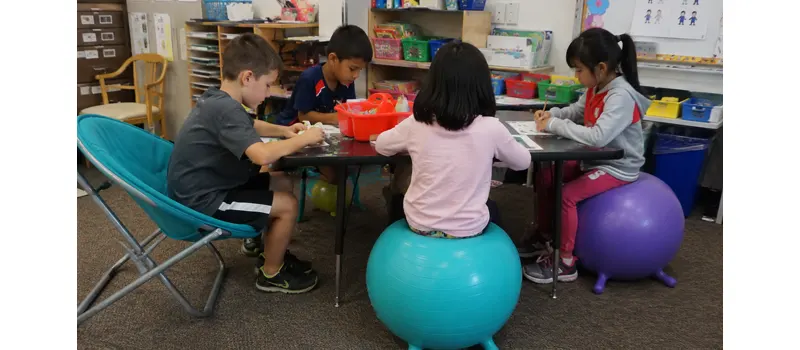
Flexible seating gives you more ways to respond when children become restless, distracted, or uncomfortable. You can adjust a child’s seat, reorganize a small group, or change the activity setup without disrupting the entire class. This helps you keep children involved, manage transitions more smoothly, and reduce the time you spend correcting seating-related behavior.
At the same time, you need to understand that flexible seating arrangements don’t mean children can sit anywhere without any rules. You still need to show them where each seat is used, how to move seats, and the maximum number of people allowed in the same area at a time. Clear rules make management easier and more orderly.
Uses Classroom Space More Efficiently
Traditional tables and chairs can take up a large amount of permanent floor space. Flexible seating gives you more ways to use smaller classrooms. You may place a floor cushion beside a book display, use Yoga balls for exercise and as a seat, or use a bench as seating and a boundary between areas.
Help Create a More Inclusive Classroom Environment
A well-planned mix of flexible seating can make your classroom feel more inclusive and child-centered. During a school tour, you can show families how your environment supports different activities and individual needs. This can help you communicate your educational approach through the classroom itself, thereby gaining parents’ trust more effectively.
Reduce Replacement and Reconfiguration Costs
A fixed classroom layout may become difficult to use when your enrollment, room function, or teaching approach changes. Flexible seating gives you more options to reuse existing furniture instead of replacing it. You can move suitable pieces into another learning area. This reduces your procurement costs.
Offers Better Long-Term Value
If you are just about to try introducing flexible seating, you do not need to replace all of your classroom chairs at once. You can begin with a few flexible seating options and observe how children use them before purchasing more. Durable flexible seating can support several activity areas, which helps you reduce unnecessary purchases and gain more value from each piece.
What Should You Consider When Choosing Flexible Seating for Your Classroom?
Whether the advantages of flexible seating can be fully realized in your classroom depends on whether your choice is suitable for your children and classroom activities. Before adding a new seat, you need to focus on some practical factors that affect safety, daily management, and long-term value.
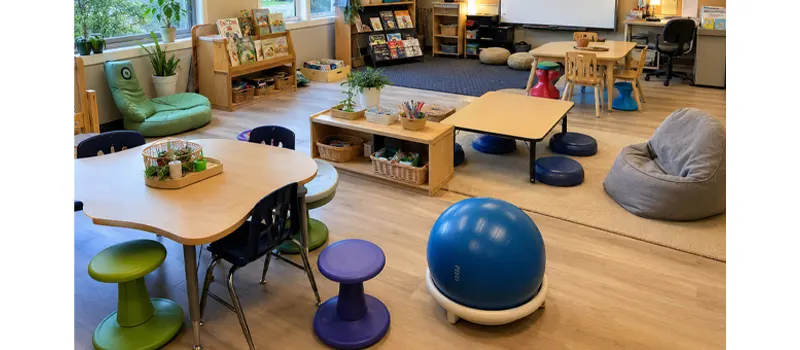
- Choose each seating option according to the activity and classroom area where you plan to use it.
- Make sure the seat height, depth, and level of support suit the age group in your classroom.
- Look for stable bases, rounded edges, non-slip feet, and designs that do not create climbing or tipping risks.
- Select surfaces that you can clean and disinfect easily during daily use.
- Choose commercial-grade seating that can withstand frequent movement, cleaning, and long-term classroom use.
- Prioritize lightweight, stackable, or multi-purpose options that you can move and store without crowding the room.
- Start with a few useful options so you can evaluate their value before expanding your investment.
FAQs
Is flexible seating suitable for preschool classrooms?
Yes. Preschool children move between reading, play, group work, and hands-on activities throughout the day, so flexible seating can make these transitions easier.
What are the disadvantages of flexible seating?
Without rules, flexible seating can lead to children fighting for popular seats, constantly moving furniture, or using them unsafely. It may also make the classroom feel cluttered if you add too many options. You can reduce these problems by limiting the number of seats, assigning each one a clear location, and teaching children how to choose and return them.
Why is flexible seating good for students with ADHD?
For students with ADHD, being able to gently move or change positions during study can help them concentrate. Rocking chairs, standing chairs, or other movable seats can help them better control restlessness and avoid frequently leaving their study area.
Is flexible seating that expensive?
It doesn’t have to be expensive. You can keep the existing tables and chairs and then gradually add cushions, stools, beanbag chairs, or portable benches. Starting small will help you understand which facilities your children will actually use, thus reducing costs.
How to introduce flexible seating?
Begin with two or three seating options instead of changing the whole classroom at once. Show children how each seat should be used and give every item a fixed return location. After a few weeks, you can keep the options that support focus and participation and remove those that create unnecessary distractions.
Conclusion
Flexible seating works best when you treat it as part of your classroom plan, rather than as a collection of different chairs. You need to solve real problems in the room with flexible seating, such as limited space, difficult transitions, restless children, or seating that has only a single purpose.
If you are planning a new classroom or updating an existing one, West Shore can help you select suitable seating, match it with your classroom layout, and create a practical furniture plan based on your space, age group, and budget.