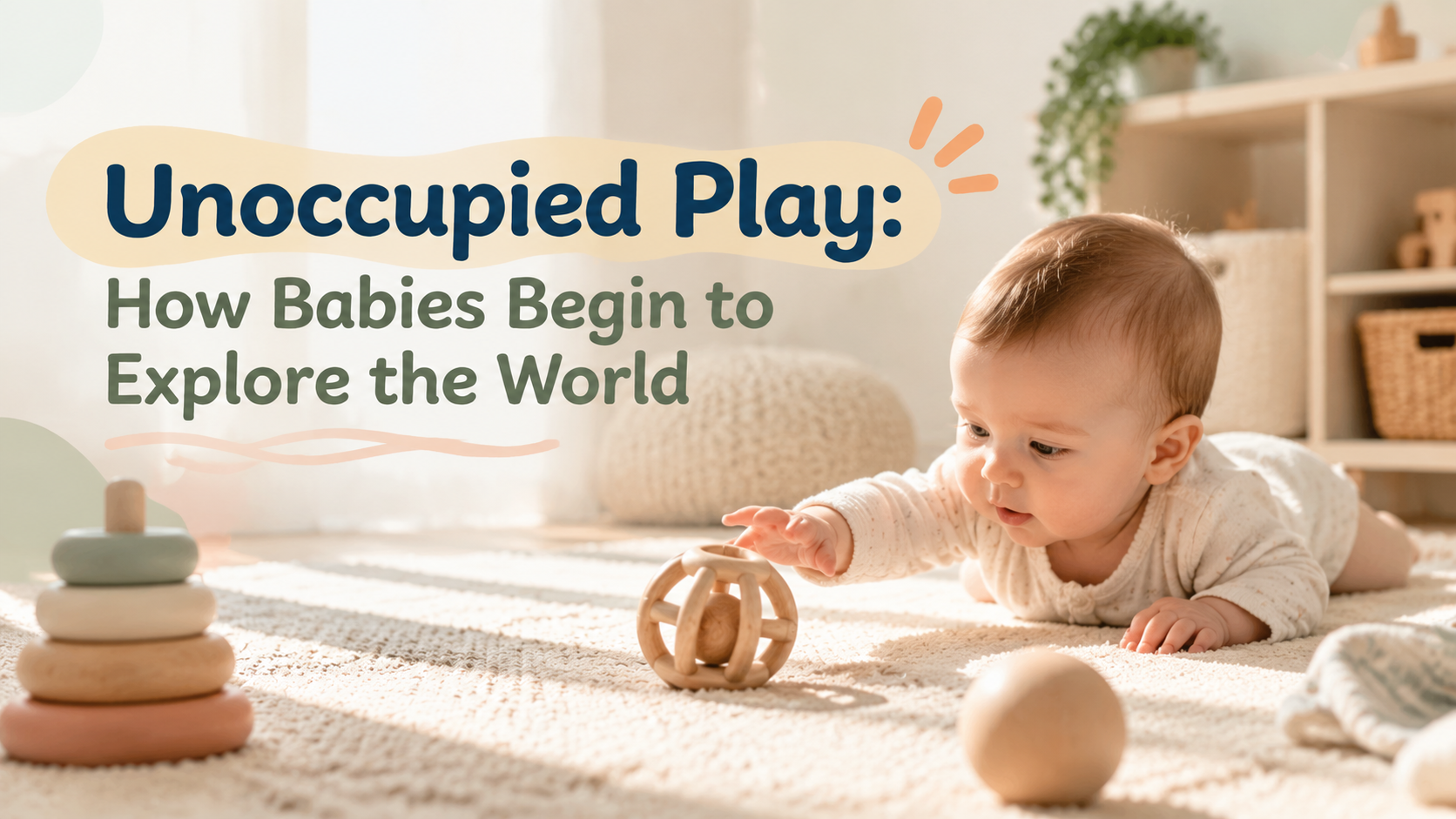
Unoccupied play may look like a baby doing very little, but watch closely and you may notice them moving their hands, watching light, or responding to sounds around them. This guide explains what unoccupied play looks like, what babies experience during these moments, and how you can support it in your infant classroom.
What Is Unoccupied Play?
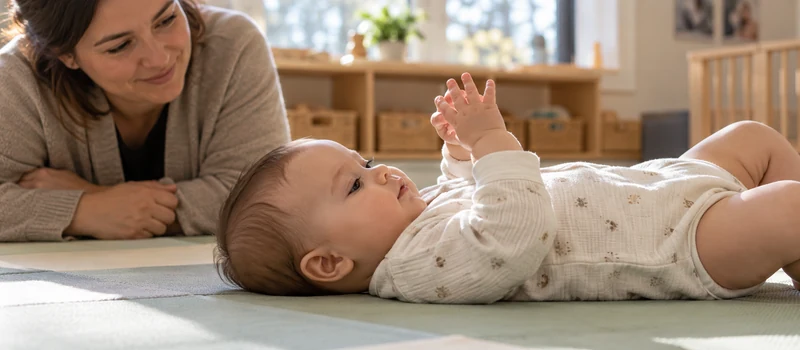
Unoccupied play is a type of play in which babies move, observe, and respond to their surroundings without following a specific activity or trying to achieve a particular goal. Their attention may shift naturally between different sights, sounds, and movements.
Unoccupied play is the first stage in researcher Mildred Parten’s six stages of play. It is particularly common in infancy, when babies are becoming more aware of their bodies and the world around them. Through early play and exploration, babies begin discovering how their surroundings respond to their movements and attention. They do not need a structured activity or a specific toy to begin engaging with their surroundings.
What Does Unoccupied Play Look Like in Babies?
Unoccupied play can take many forms in babies’ daily lives. Rather than following a planned activity, babies may move their bodies, observe their surroundings, or respond to things that catch their attention. Here are some examples you may notice.
Moving Their Bodies Spontaneously
Your baby may kick their legs while lying on a play mat, wave their arms, or repeatedly open and close their fingers without reaching for a particular toy. They might repeat these movements for a short time before stopping or trying something different. These moments can be part of how babies become more aware of their bodies and their movements.
Watching Things Around Them
You may notice your baby looking at the ceiling, watching sunlight move across a wall, or following shadows with their eyes. They might focus on something briefly before turning their attention elsewhere. Even without touching or playing with an object, babies can spend time observing changes in their surroundings.
Responding to Sounds Nearby
A familiar voice, birds singing outside, or a door opening may catch your baby’s attention. They might pause their movements, turn their head toward the sound, or look around to see what has changed. Afterward, they may return to moving their arms or observing something else. These responses are common during infancy, although a response to sound alone does not necessarily mean the baby is engaged in play.
Shifting Their Attention Between Different Things
Your baby might look at their hands for a few seconds, turn toward a nearby sound, and then start kicking their legs again. Their attention can move quickly from one thing to another, especially during early infancy. You do not need to keep introducing toys or activities whenever this happens. Instead, provide a safe space, and give your baby time to observe and move at their own pace.
These behaviors may occur separately or overlap during everyday moments. Not every spontaneous movement is necessarily unoccupied play, so focus on observing your baby’s behavior rather than trying to label every action.
What Are Babies Exploring During Unoccupied Play?
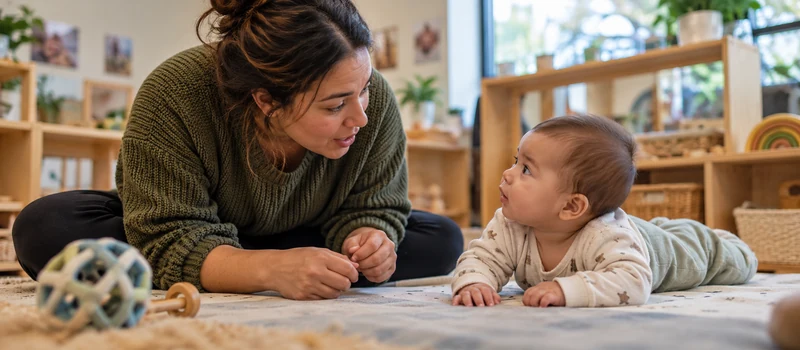
During unoccupied play, babies begin exploring their bodies, senses, and the world around them. They may not have a clear goal, but their movements and observations give them opportunities to notice new sensations, changes in their surroundings, and how things respond to their actions. These early experiences connect with how babies learn through sensory exploration and discovery.
- Their own bodies: Babies begin noticing how their arms, legs, hands, and fingers move. Repeated movements help them become more familiar with their bodies and gradually develop greater control over them.
- Sight and sound: Light, shadows, moving objects, and nearby voices can catch a baby’s attention. By looking around and turning toward sounds, babies experience different sights and sounds and begin noticing changes in their environment.
- Their surroundings: Babies may observe the movement of curtains, the shifting shadows on a wall, or the leaves of a nearby plant. These everyday experiences allow them to encounter different colors, shapes, movements, and textures without needing a structured activity.
- Cause and effect: When babies move their arms or kick their legs, they may notice changes in their own position or the way their clothing moves. As they grow, they may also discover that touching or pushing an object makes it move. These early experiences can help them begin noticing connections between their actions and what happens next.
Babies do not need to explore all these things at once, and they may not be aware of what they are learning. The goal is not to turn every moment into a learning activity, but to give babies a safe environment where they can move freely, observe what interests them, and discover their surroundings at their own pace.
How Can You Support Unoccupied Play in an Infant Classroom?
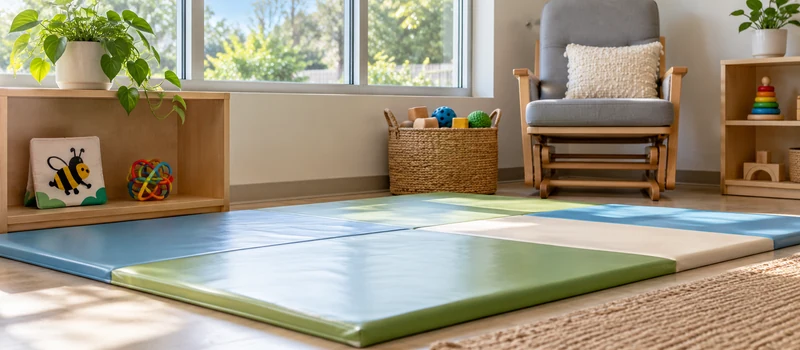
Unoccupied play does not need to be planned or directed by teachers. Instead, teachers can support it by providing a safe environment, allowing babies enough time to explore freely, and staying nearby to respond when needed. The aim is to make spontaneous exploration a natural part of the classroom routine rather than turning it into another structured activity.
Create a Safe Environment
Provide a clean, open space where babies can move comfortably and observe their surroundings. Keep the floor free of choking hazards, secure furniture, and check that all materials are appropriate for each baby’s age and development. Arrange the room so teachers can supervise babies easily without interrupting their exploration unnecessarily.
Allow Babies Time to Explore
Avoid filling every part of the day with planned activities or introducing toys whenever babies are not actively playing with something. Allow some unhurried time within the daily routine for babies to move and observe at their own pace. Their needs for feeding, sleeping, comfort, and interaction should still guide the schedule.
Observe Without Constantly Intervening
Stay close enough to supervise and respond to babies’ needs, but avoid directing their attention at every opportunity. Teachers do not need to demonstrate what to do or encourage a particular response. Instead, observe quietly when babies are comfortable and engaged, and step in when they need comfort, assistance, or protection.
Supporting unoccupied play is less about teaching babies how to play and more about knowing when to give them space and when to respond. With a safe environment, a flexible routine, and attentive supervision, teachers can allow spontaneous exploration to happen naturally throughout the day.
How Is Unoccupied Play Different From Solitary Play?
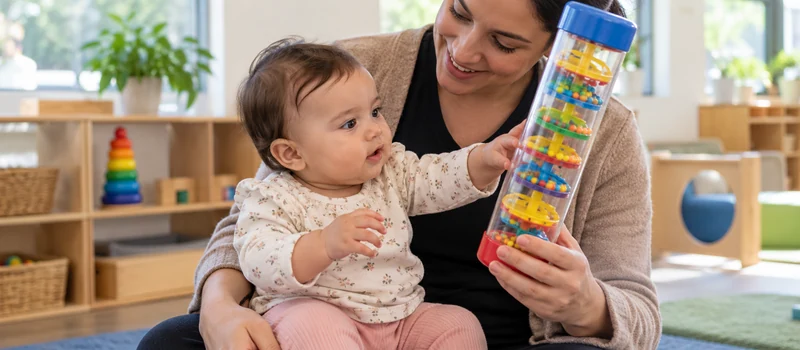
Unoccupied play and solitary play both involve a child playing independently, but the key difference is whether the child is engaged in a particular activity. In unoccupied play, the child may move, look around, or respond to their surroundings without focusing on a specific task. In solitary play, the child is occupied with their own play activity without actively involving other children.
| Comparison | Unoccupied Play | Solitary Play |
|---|---|---|
| What the child does | Moves, looks around, or responds to things in the environment without engaging in a specific activity. | Plays independently with a toy, material, or activity. |
| Main focus | Attention may shift between different sights, sounds, and movements. | Attention is focused on the child’s own play activity. |
| Use of toys | Toys are not necessary. The child may simply move or observe. | Toys or other materials are often used, but they are not essential. |
| Example | A baby moves their arms, watches changing light on a wall, and turns toward a nearby sound. | A toddler stacks blocks, completes a puzzle, or plays with toy animals on their own. |
| Purpose of the activity | There may be no clear or sustained play activity. | The child is actively engaged in their own play, even if there is no specific end goal. |
The main difference is not simply whether a child is playing alone or using toys, but whether they are engaged in a particular play activity. A child can move between unoccupied and solitary play as their attention and interests change. These are descriptions of play behavior, not strict age categories.
When Should You Step In?
Giving babies room to explore does not mean ignoring their cues or leaving them unattended. Teachers should continue to supervise and respond when a baby needs care, comfort, or protection. The situations below can help distinguish when to wait and when to act.
When the Baby Needs Comfort or a Break
If a baby repeatedly turns away, closes their eyes, cries, stiffens, or becomes less engaged, check the basics first: comfort, feeding, fatigue, position, and the level of noise or activity nearby. You may need to hold the baby, quiet the surroundings, change position, or start the usual care routine. These cues are not a diagnosis. What helps is noticing the pattern and whether your response makes the baby more comfortable.
When Play Turns Into Sleep or Presents a Safety Risk
Active supervision continues even when a baby seems absorbed in their own movements. Check the floor area for objects that have fallen within reach and for changes as other children move nearby. If a baby becomes sleepy, move them to the designated sleep space. Supervised tummy play is for an awake baby; for sleep, place babies on their backs on a firm, flat, approved sleep surface under the rules that apply to your program. A play mat is not a substitute for an infant sleep space.
When a Concern Persists Beyond One Moment
A single quiet spell tells you very little about development. If you are concerned that a baby rarely responds to voices, faces, or changes in the environment across different days and routines, write down the specific observations and speak with the family. They can discuss ongoing concerns with a qualified health professional. Use the play label to organize what you saw, not to reassure or diagnose on its own.
FAQs
1. Is Unoccupied Play Limited to the First Few Months?
No. It is commonly used when talking about early infancy, but it is a description of behavior rather than an age deadline. A baby can move between looking, moving, responding to a caregiver, and handling an object during one day.
2. Does Tummy Time Count as Unoccupied Play?
Tummy time describes an awake, supervised position. Unoccupied Play describes how an infant appears to explore. The two can overlap, but they are not synonyms; a baby can also show open-ended looking and movement while lying comfortably on their back.
3. Can This Happen With Other Babies Nearby?
Yes. The baby does not have to be alone. In a shared infant room, make sure each child has safe space to move and that staff can supervise everyone, particularly when more mobile infants are near babies who cannot yet move away.
4. What Should You Tell Families About These Quiet Moments?
Share one or two things you actually saw: what caught the baby’s attention, how they moved, and how they responded when you spoke or came near. That is clearer than saying the baby “did nothing” or assigning a stage label without context.
5. Do You Need to Schedule a Separate Unoccupied Play Session?
No. It can happen during an ordinary, alert period between care routines. Offer safe floor opportunities that fit each baby’s needs, then observe what they choose to look at or do. A fixed session would tell you less than the baby’s own cues about when they are ready to explore.
Conclusion
Unoccupied Play is a useful name for the early looking and moving that can be easy to miss in an infant room. You can support it by giving babies safe awake space, noticing what holds their attention, and responding when their cues change. The label is less important than that daily practice. If you are planning an infant room, West Shore can help you review the classroom layout and choose age-appropriate furniture and materials that protect space for exploration and caregiver access.