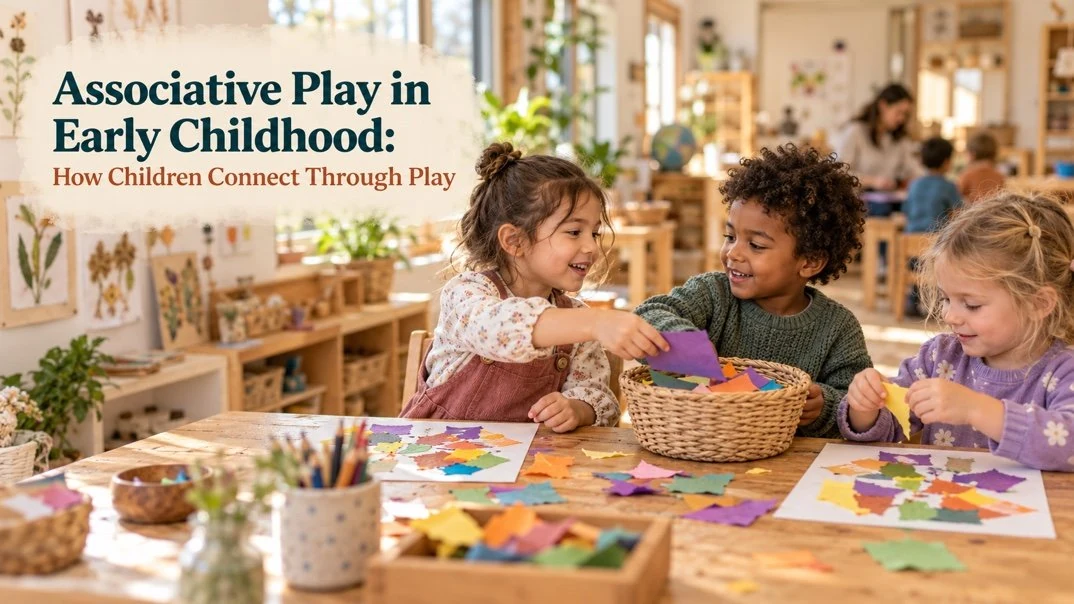
Two children are drawing at the same table. They talk about their pictures, exchange crayons, and comment on each other’s work, but each child is still creating their own drawing. This is an example of associative play. Associative play helps preschoolers connect with their peers without needing to work toward the same goal. Understanding what it looks like can help you recognize these interactions and create more opportunities for them in your classroom.
What Is Associative Play?
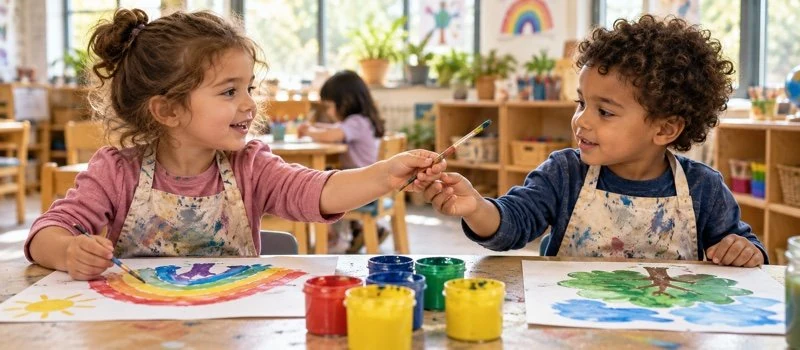
Associative play is a type of social play in which children interact with one another while following their own interests. They may comment on a classmate’s work, ask a question, respond to an idea, or exchange materials. The important sign is that the children are paying attention to one another and responding, rather than focusing only on their own activities.
Unlike cooperative play, associative play does not require children to plan or work toward a shared goal. For example, two children may talk about their drawings and pass crayons back and forth while each makes a separate picture. Their play is connected through interaction, but each child still decides what to create and how to continue.
Associative play is one of the six types of social play described by sociologist Mildred Parten in her classification of how children engage in play. It is commonly seen during the preschool years, although children develop at different rates and may engage in different types of play throughout early childhood.
How Does Associative Play Develop in Early Childhood?
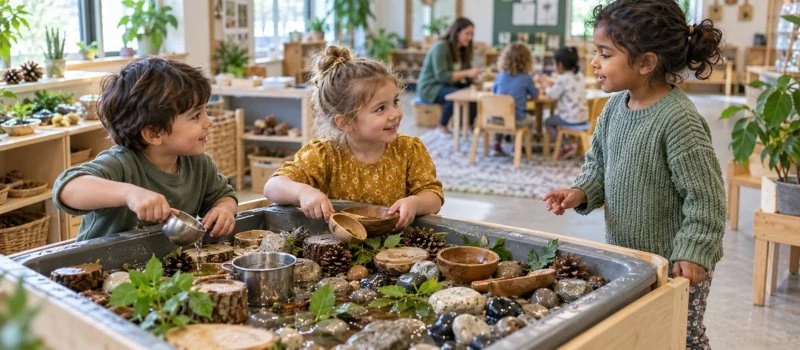
Associative play often develops as children become more interested in what their peers are doing. At first, a child may watch classmates play while continuing their own activity. Over time, they may begin asking questions, commenting on what others are making, or showing their work to a nearby child. These small interactions can gradually lead to more frequent exchanges during play. This change is part of the broader development of social play in early childhood.
As children become more comfortable interacting with their peers, they may start sharing materials, exchanging ideas, and responding to each other’s actions. For example, two children might build separate structures with blocks, talk about what they are making, and lend each other pieces. They enjoy playing together, but each child still follows their own ideas rather than working toward one shared goal.
This development does not follow the same pace or order for every child. Some children initiate interactions easily, while others communicate through gestures or need more time to feel comfortable. They may also interact with peers during one activity and prefer to play alone during another. What matters is giving children opportunities to connect with others without expecting every interaction to develop in the same way.
What Are the Benefits of Associative Play?
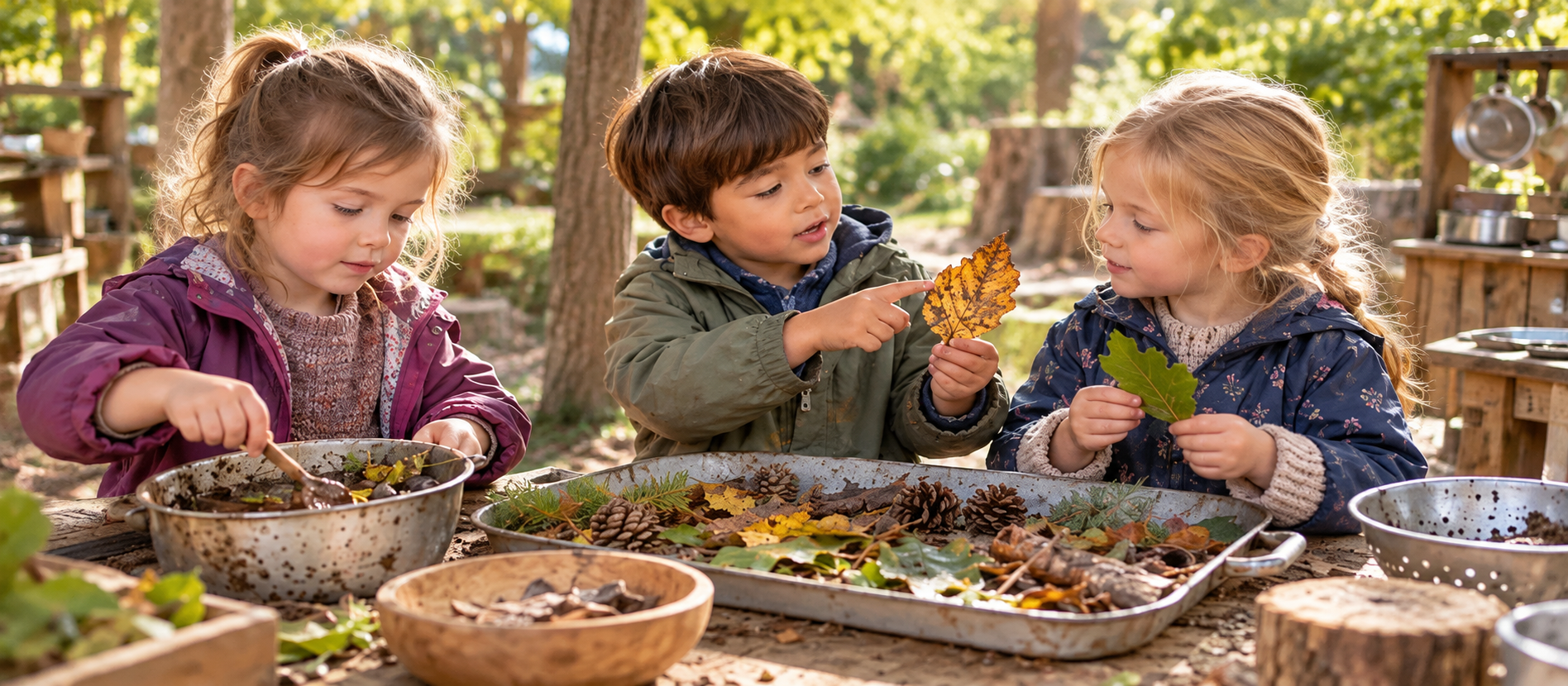
Associative play gives children opportunities to interact with their peers while following their own interests. As they play alongside other children, they learn to communicate, understand different perspectives, and develop relationships. These skills grow through everyday interactions, such as sharing materials, discussing ideas, and responding to classmates.
Children Learn to Express Their Ideas
During associative play, children have many natural opportunities to communicate. They may ask to borrow a crayon, explain what they are building, or tell a classmate how they made something. When another child asks a question or responds to their idea, they also learn how to keep a conversation going. These experiences help children become more comfortable expressing themselves and communicating with others.
Children Learn to Understand Other People’s Feelings and Preferences
Children gradually learn that their classmates may have different ideas, needs, and preferences. For example, one child may want a toy that another child is still using, or two children may have different ideas about how to use the same materials. These situations help children recognize that others do not always want the same things they do. With guidance from teachers, they can learn to wait, handle disappointment, and respect other people’s choices.
Children Build Relationships With Their Peers
Friendships often begin with small interactions. When children regularly play near the same classmates, they become more familiar with one another and may feel more comfortable starting contact. A child might begin by watching a classmate build with blocks, then gradually sit nearby, join the conversation, or choose to play in the same area. Over time, these repeated positive experiences can help children develop trust and form friendships naturally.
What Are Some Examples of Associative Play?
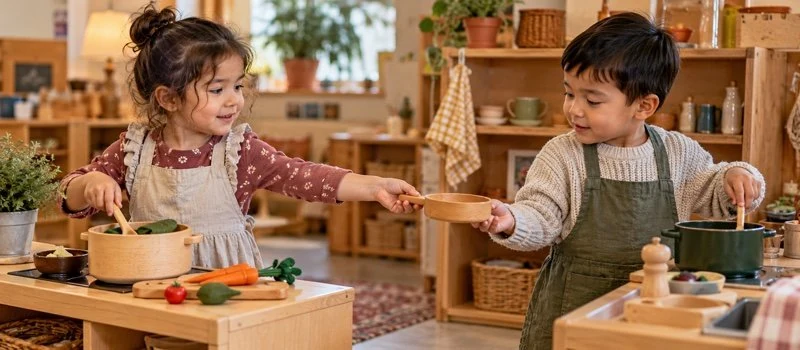
Associative play can happen during many familiar preschool activities. The important thing is not which toys children use, but how they interact while playing. When children talk, exchange materials, or respond to each other’s ideas while continuing their own activities, you may be seeing associative play.
Art Activities
Two children are drawing at the same table. One asks to borrow a blue crayon, and the other passes it over. They talk about their pictures and comment on each other’s drawings, but each child continues making their own artwork. They enjoy sharing the activity and interacting without needing to create one picture together.
Block Play
One child is building a tower while another makes a garage for toy cars. They exchange blocks, talk about what they are building, and look at each other’s creations. Each child still has their own idea, but their interaction connects their play. If you are setting up a preschool block area, leave enough room for children to build independently while making it easy for them to share materials and talk.
Pretend Play
At a play kitchen, one child pretends to prepare food while another arranges plates and cups. They pass utensils to each other and talk about what they are making, but they do not need to follow one shared storyline. Each child develops their own pretend activity while responding to the other.
These examples show why you should look at children’s interactions rather than the activity itself. Two children can use the same toys without engaging in associative play if they do not interact. What matters is whether they notice, respond to, or communicate with each other during play.
Associative Play vs. Cooperative Play
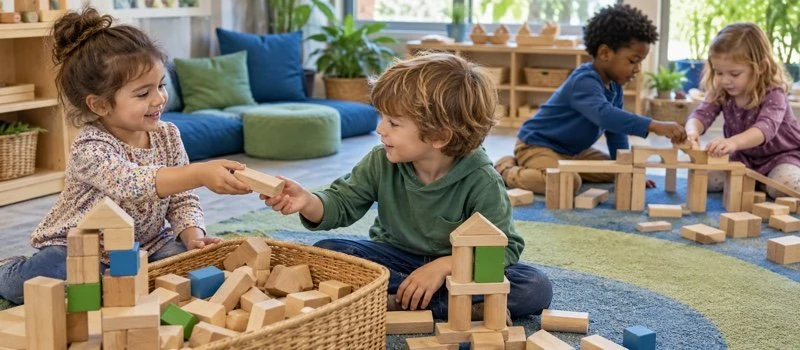
Associative play and cooperative play both involve children interacting with others, but the main difference is whether they work toward a shared goal.
During associative play, children interact by talking, exchanging materials, or commenting on each other’s activities, but each child still follows their own ideas. During cooperative play, children work together toward a shared goal, often by planning what to do and taking on different roles.
For example, two children may build separate houses with blocks while talking and lending each other pieces. This is associative play. If they decide to connect their houses, build a road between them, and create a neighborhood together, their play becomes cooperative.
| What to look at | Associative Play | Cooperative Play |
|---|---|---|
| Goal | Each child follows their own ideas. | Children work toward a shared goal. |
| Interaction | Children talk, respond to each other, or exchange materials. | Children discuss ideas and coordinate their actions. |
| Organization | No shared plan is needed. | Children make plans or organize the activity together. |
| Example | Two children build separate structures and exchange blocks. | Two children plan and build one structure together. |
Children can move between associative and cooperative play during the same activity. For example, they might begin by building their own structures, then decide to join them together. Neither type of play is better than the other. Children benefit from having opportunities to interact with peers while still making their own choices.. You do not need to encourage every interaction to become a group project. Both types of play have value, and children benefit from having opportunities to interact with others while also making their own choices.
How to Encourage Associative Play
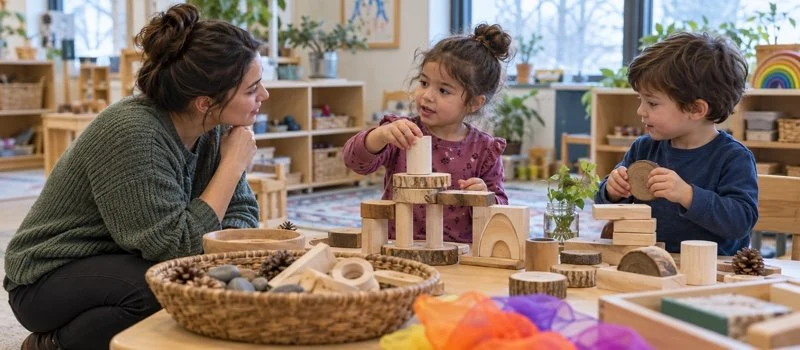
You do not need to organize special activities just to encourage associative play. Instead, focus on giving children opportunities to interact naturally during their usual playtime. The right materials, enough space, and time to explore can make it easier for children to approach one another, exchange ideas, and share their interests.
Provide Activities That Invite Interaction
Choose open-ended activities that children can enjoy in different ways. Blocks, art supplies, and sensory materials allow children to follow their own ideas while giving them reasons to talk or exchange materials with classmates. Avoid expecting everyone to make the same thing or follow the same steps. When children have room to make their own choices, interactions can develop naturally.
Make Materials Easy to Reach
Children can choose materials and exchange them more independently when they can see and reach what they need. Use low, open storage cabinets to keep frequently used toys and supplies within children’s reach, and organize materials so they can find what they need without constantly asking an adult for help. Provide enough materials to reduce unnecessary frustration, while leaving opportunities for children to ask for and exchange items.
Give Children Time to Interact
When children begin talking or exchanging materials, give them time to continue without directing every step. If a small disagreement occurs, pause and see whether they can respond to each other before stepping in, as long as everyone is safe. If a child struggles to express a need, you can suggest a simple phrase such as, “Can I use that when you’re finished?” Then allow the children to continue the interaction themselves.
Create a Classroom That Supports Different Ways of Playing
Your classroom layout can make a difference in how easily children interact. Arrange tables and play areas so children can work on their own activities while remaining close enough to see and talk to their classmates. Accessible storage also helps children choose materials independently and makes sharing easier. When planning your preschool classroom layout, consider how the furniture, activity zones, and available space can support both individual play and natural peer interaction.
FAQs
1. At What Age Does Associative Play Usually Appear?
You will often see it during the preschool years, roughly between ages three and five, but there is no exact age that marks success or delay. Notice how the child responds to peers across familiar and unfamiliar activities, rather than judging one play period against an age chart.
2. Do Children Need to Use the Same Toy?
No. They can use different materials and still play associatively if they respond to each other’s actions or ideas around the activity. Using identical toys without any exchange may be parallel play instead.
3. Can Associative Play Happen Outdoors?
Yes. The category describes the interaction, not the location. Children at an outdoor sand area may talk, offer a scoop and keep making their own shapes. An organized team game with agreed roles would be different.
4. Should Teachers Make Every Child Share?
No. Children need support in asking, waiting and considering others, but they also need some control over the materials they are using. Notice the actual conflict and help them find a workable response. Requiring a child to surrender every item on demand can end a useful activity without teaching them how to negotiate.
5. Is It a Concern If a Child Prefers Associative Play to Group Projects?
Not by itself. Children use different forms of play for different interests and settings. Look more closely if a child repeatedly wants to join but cannot, seems distressed, or has persistent difficulty connecting with peers across activities. Share specific observations with your team and family instead of treating a play label as a diagnosis.
Conclusion
Associative play helps children connect with their peers while exploring their own interests. Through everyday interactions, they have opportunities to express ideas, understand different preferences, and become more comfortable around other children. You do not need to turn every activity into a group task. Instead, give children the materials, space, and time to interact in their own way. If you are planning or improving a preschool classroom, West Shore can help you choose suitable furniture and plan learning spaces that support children’s play and everyday interactions.