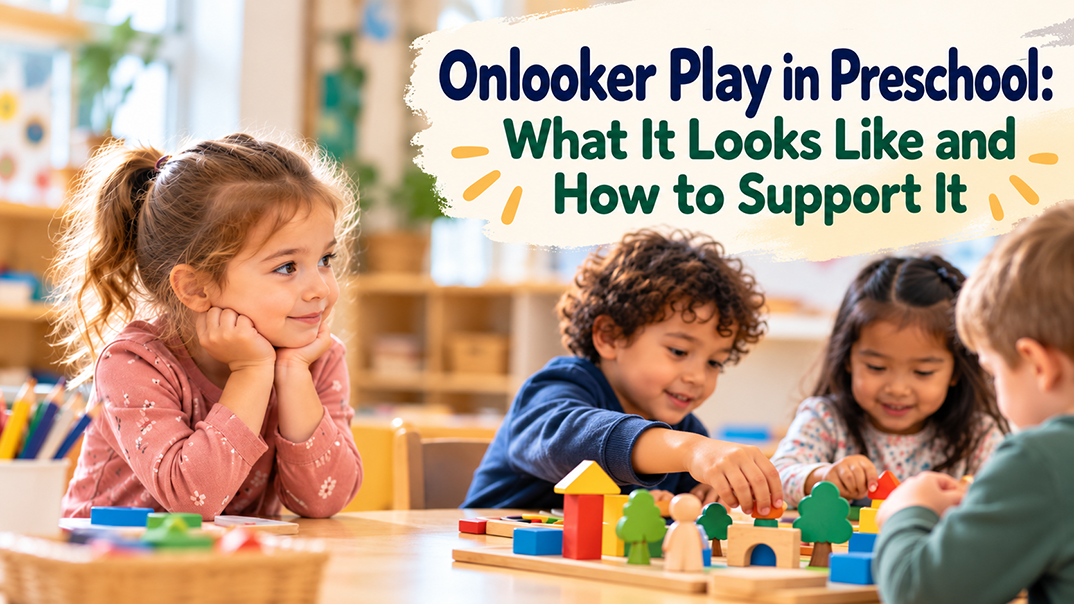
When a child watches other children play without joining, you may wonder what their behavior means and how you should respond. Onlooker play is one way children engage with the classroom around them. This guide explains how to recognize it, what children may gain from watching, and when they might need support.
What Is Onlooker Play?
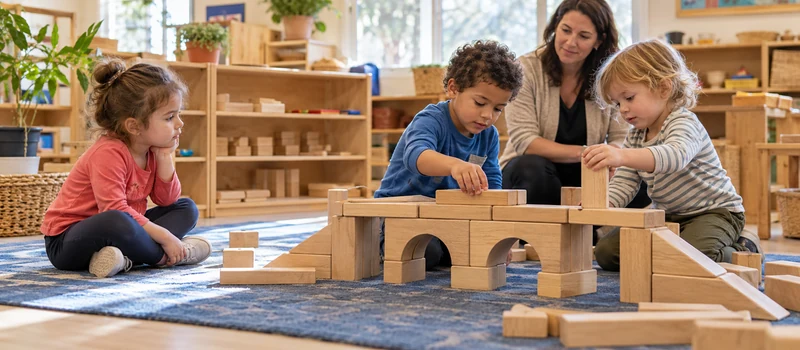
Onlooker play happens when a child watches other children’s play without taking an active part. They may smile, comment, or ask a question, but they mainly follow what others are doing rather than helping shape the game.
The important distinction is whether the child is choosing to watch or wants to join but cannot. These situations can look similar, so look at what happens over time and across different activities. One moment of watching does not tell you whether a child is shy or having difficulty with social interaction.
What Are Some Examples of Onlooker Play?
Look at where the child’s attention goes and what they do next. In each of these examples, the child is following the activity closely without taking an active role in it.
Watching Other Children Build With Blocks
A child stands near two classmates who are building a bridge with blocks. They watch as the children choose different pieces, place them together, and adjust the structure when it becomes unstable. When the bridge falls, the child follows their next attempt with interest. They may comment on what happened or look closely at how the new structure is built, but they do not handle the blocks or help with the construction. Their attention stays on the other children’s activity, making this a good example of onlooker play. In a well-planned preschool block area, there should be enough room for children to watch ongoing construction without getting in the way of those who are building.
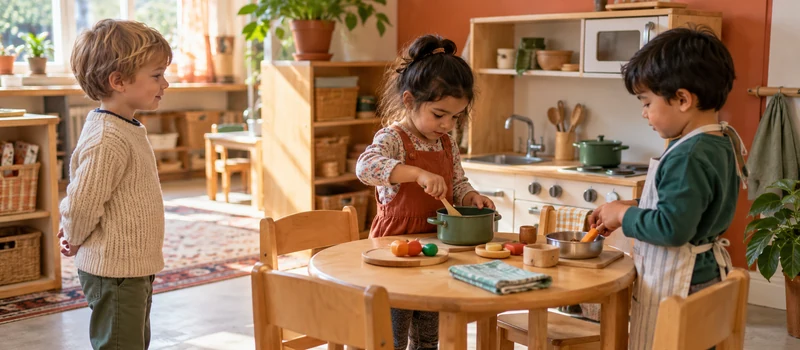
Observing Dramatic Play
At the play kitchen, a child watches classmates decide who will cook, who will serve the food, and what happens next in their pretend game. They follow the conversation and may smile at something a classmate says or react to an unexpected turn in the story. Although they do not take on a role, they are paying attention to how the children develop the game together. This is onlooker play because the child is observing the social interaction rather than participating in the pretend scenario. You may notice that different parts of the game catch their attention, from the conversation between classmates to the way they decide what to do next.
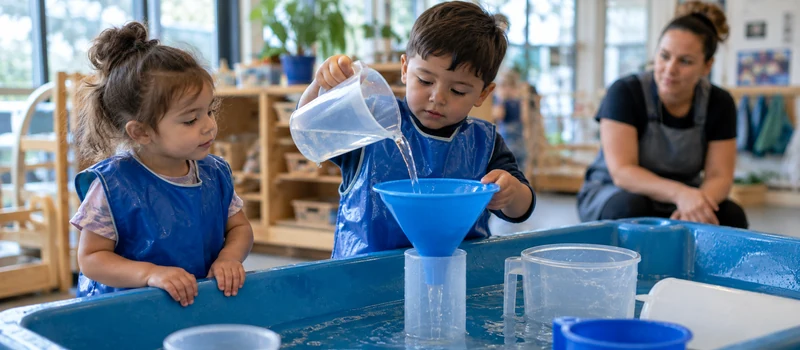
Watching Children Explore Sand and Water
At the sand and water table, a child watches classmates pour water through funnels and transfer it between containers. They follow the movement of the water, notice how the children use different tools, and watch what happens when the amount of water or the pouring method changes. They may lean closer to see the results or shift their position to get a better view. Their attention is focused on the activity and what their classmates are doing with the materials, even though they are not handling the tools themselves. This shows how onlooker play can happen during hands-on activities, with children observing the process and its results from nearby.
What Can Children Learn Through Onlooker Play?
Watching other children play can help children understand what is happening around them. They may notice how others use toys, solve small problems, or play together. What they take from these observations will depend on what interests them. Watching does not mean every child will learn the same thing, but it gives them a chance to see how an activity works before deciding what to do.
Learning New Skills Through Observation
When a child watches a classmate build a tower or pour water through a funnel, they can see how the materials are used and what happens next. They may notice that a wider base helps a tower stand or that pouring slowly keeps water from spilling. If they later try something similar, they have a chance to use what they noticed. They may also try their own way. The value of watching is that children can see different ways to do something before trying it themselves.
Understanding Social Cues and Group Interactions
Children also notice how their classmates talk and play together. They may hear children share ideas, decide what to play, or respond when someone suggests something different. Watching these moments can help children understand how play with others works. You can learn more about a child’s social interests by noticing how they interact with their peers, including what they pay attention to and how they respond.
Building Familiarity With New Activities
When children see an activity they have not tried before, they may watch to find out what the other children are doing. They can see how the materials are used and get a sense of how the game works. This may make the activity more familiar if they decide to try it later. Other children may prefer to keep watching, and that is fine too. Onlooker play gives children a chance to learn about an activity without having to take part themselves.
Onlooker Play vs. Parallel Play
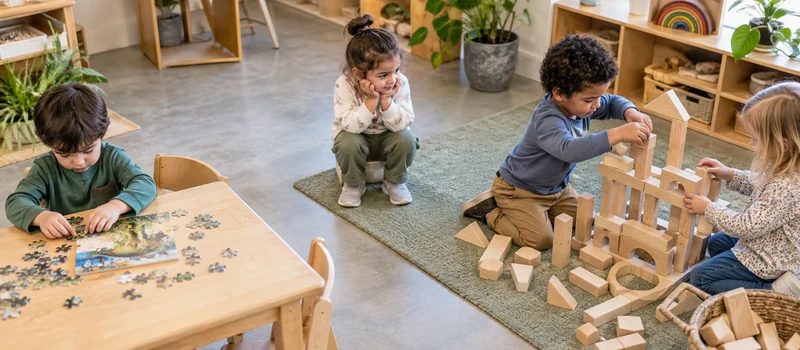
Onlooker play and parallel play both involve children being around their peers, but the main difference is whether they take part in their own activity. In onlooker play, children watch others without joining the game. In parallel play, they begin playing alongside their peers, but each child still follows their own ideas.
| What to Look At | Onlooker Play | Parallel Play |
|---|---|---|
| Main Activity | Watching other children play. | Playing independently near other children. |
| Attention | Focused mainly on another child’s activity. | Focused mainly on their own activity, although they may notice others. |
| Participation | Does not actively take part in the observed game. | Actively plays with their own toys or materials. |
| Interaction | May ask questions or comment on what others are doing. | May glance at, imitate, or briefly interact with nearby peers. |
The easiest way to tell them apart is to look at what the child is doing. If they are mainly watching another child’s game without starting their own activity, it is onlooker play. If they have started their own activity while playing near others, it is parallel play.e children themselves. A child’s way of playing can change during the same session, so focus on what they are doing rather than assigning them one label.
How Can Preschool Teachers Support Onlooker Play?
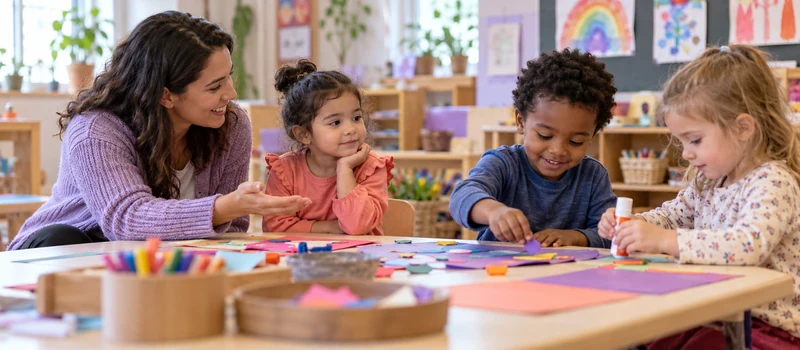
When children watch their classmates play, you can learn what catches their attention and how they respond to activities. You can use these observations to plan suitable materials, make activities easier to access, and arrange your classroom to support different ways of engaging.
Give Children Time to Observe
Give children time to follow an activity that interests them. They may be watching how materials are used, what their classmates are doing, or how a game develops. Notice what holds their attention instead of assuming that they need to move on to another activity. This can help you understand their interests and plan what to offer next.
Make It Easy for Children to Join When They Want To
If a child shows that they want to join, make sure there is room for them and that they can reach the materials. If they seem unsure how to begin, you can explain what is happening or help them find what they need. A little practical support can make it easier for them to take part.
Create Spaces Where Children Can Watch Comfortably
Think about what children can see and reach in your classroom. Low shelves and open activity areas can give them a clear view of their classmates without blocking pathways. When planning your preschool learning centers, leave enough space for children to watch nearby and approach the activity when they choose.
Notice What Each Child Finds Interesting
Pay attention to which activities children watch most often and what they seem interested in. This can help you choose materials and plan activities that match their interests. For more ideas, you can learn about observing children to guide your teaching.
When Might Onlooker Play Require Closer Attention?
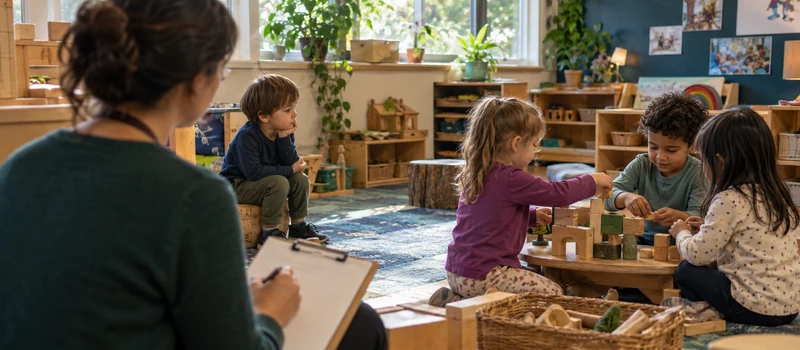
Onlooker play is not usually a concern on its own. However, there are times when you may need to look more closely at what a child is experiencing during play.
- The child wants to join but repeatedly cannot. If a child often approaches a group but is excluded by their peers or cannot find a way into the activity, they may need help with the situation.
- The child seems upset while watching others play. Notice whether they appear frustrated, withdrawn, or disappointed, especially if this happens repeatedly.
- The child has ongoing difficulties interacting with peers. If you notice persistent challenges with communication or social interaction across different activities, it is worth looking at the broader pattern rather than focusing on onlooker play alone.
In these situations, observe what happens over time and consider whether the difficulty comes from the classroom environment, peer interactions, or other challenges the child may be experiencing. You can discuss your observations with your teaching team and the family. If concerns persist across different settings, a qualified professional may help assess whether further support is needed.
FAQs
1. Is Onlooker Play Normal in Preschool?
Yes. Preschoolers may watch first when a game, group, or setting is unfamiliar. What matters is whether the child seems engaged and has a genuine chance to participate if they want to. Their behavior across the day tells you more than the label attached to one moment.
2. Does a Child Have to Be Silent While Watching?
No. A child can comment or ask a question and still be an onlooker if they are not taking part in the play. Pay attention to whether they begin using materials or influencing the group’s choices; that is when the interaction changes.
3. Is There a Set Amount of Time a Child Should Spend Watching?
No fixed number of minutes tells you whether watching is helpful or concerning. Consider the child’s interest, comfort, opportunity to join, and what happens across several play periods. A longer watch during a new activity can mean something different from repeatedly being shut out of familiar play.
4. Can Onlooker and Parallel Play Happen in One Session?
Yes. A child may watch two classmates build, take blocks to a nearby spot, and begin a separate structure. The first moment is onlooker play; the later activity is parallel play if they are building beside peers without a shared plan. Describe the change instead of forcing the whole session into one category.
5. Does Onlooker Play Always Lead to Active Participation?
No. Some children may eventually join the activity, while others may prefer to keep watching or move on to something else. Onlooker play does not have to lead to another type of play. What matters is whether the child is interested in what they are watching and has the freedom to choose how they spend their playtime.
Conclusion
Onlooker play is one way a child can take part in the life of a preschool classroom while keeping a little distance from the action. Your best guide is the child’s behavior over time: what interests them, whether they seem comfortable, and whether they can move closer when they choose. If you’re reviewing a classroom where children often watch but struggle to enter play, West Shore can help you consider the layout and furniture choices that make observation and participation easier to accommodate.