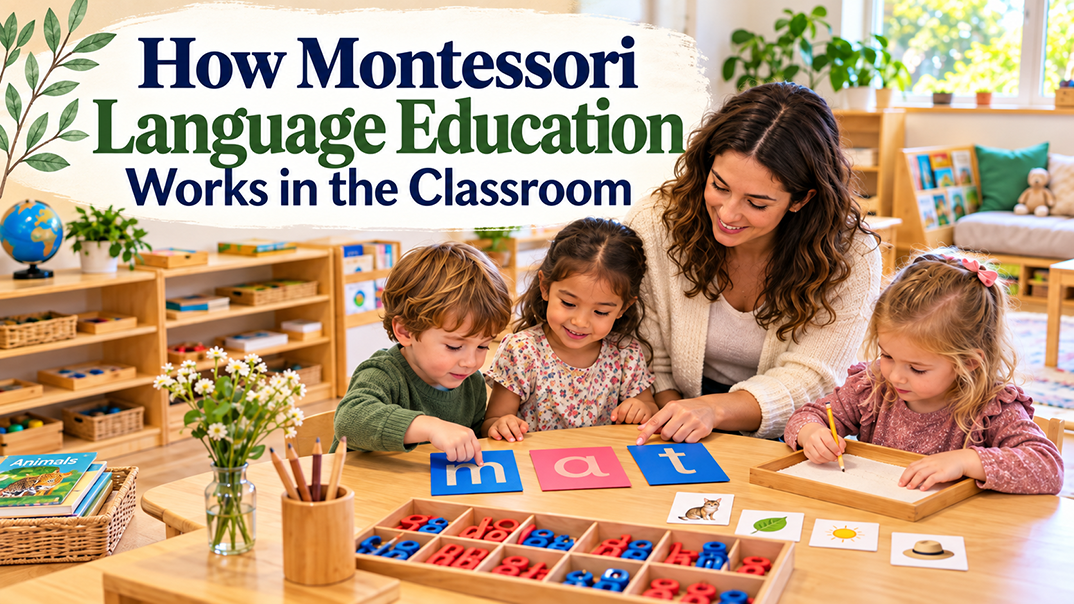
In Montessori education, children develop language skills through conversations, hands-on activities, and independent exploration. As a teacher, you can guide this process with appropriate materials and activities that match each child’s learning needs. In this guide, you’ll learn how Montessori language education works and how to apply it in your classroom.
What Is Montessori Language Education?
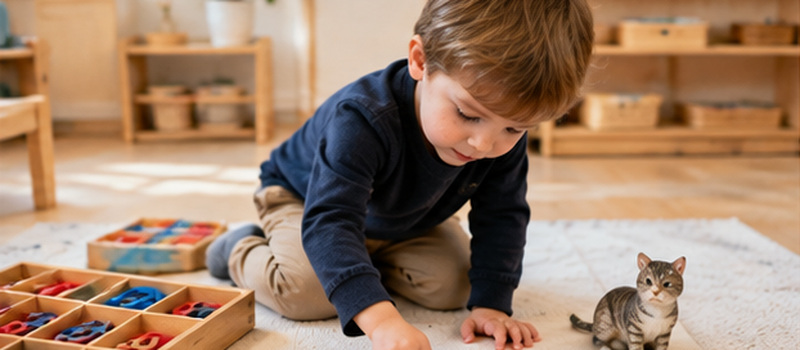
Montessori Language Education is an approach to helping children develop speaking, listening, writing, and reading skills through everyday communication, hands-on experiences, and purposeful activities. It follows a gradual learning process, beginning with spoken language and moving toward recognizing sounds, forming words, and reading.
A key part of this approach is helping children understand language through direct experience. Instead of memorizing letters and words alone, children explore sounds, connect them with written symbols, and gradually discover how words are formed. Montessori language materials make abstract concepts easier to understand by giving children something they can see, touch, and work with independently.
How Does Language Learning Progress in Montessori?

Montessori language learning follows a general progression from spoken language to writing and reading. Understanding this progression helps you introduce activities in a meaningful order, although children may develop different skills at the same time.
Developing Spoken Language and Vocabulary
Spoken language is the starting point for Montessori language education. Before introducing written words, you help children build the vocabulary they need to describe objects, express feelings, ask questions, and communicate with others.
You can introduce new words naturally during conversations, storytelling, and everyday classroom activities. For example, while children prepare fruit, you might use words such as “peel,” “slice,” and “smooth.” Connecting these words to something children can see and experience makes them easier to understand and remember. Shared reading experiences can also introduce vocabulary that children may not hear as often in everyday conversations.
Recognizing Sounds in Spoken Words
Once children become familiar with spoken language, you can help them pay attention to the sounds that make up words. This ability is called phonemic awareness, and it prepares children to understand how spoken sounds relate to written letters.
You can begin with simple listening games that ask children to identify the first sound in a familiar word. As they become more confident, they can explore ending sounds and sounds in the middle of words. Developing phonological awareness helps children understand how words can be broken into smaller sounds, which supports their later reading and spelling skills.
Connecting Letter Sounds with Symbols
When children can recognize individual sounds, you can begin introducing the letters that represent them. In traditional Montessori language lessons, children commonly learn letter sounds before focusing on letter names.
Sandpaper Letters are often used for this purpose. As children trace each textured letter, they hear and repeat its sound. This allows them to explore the shape of a letter through touch and movement while connecting it with spoken language.
You can introduce a small group of letters at a time and gradually expand the selection as children become familiar with their sounds and shapes.
Building Words and Preparing for Writing
After children have learned several letter sounds, they can begin combining them to form words. Montessori introduces word composition through materials such as the Movable Alphabet, allowing children to express written language before they can comfortably form every letter by hand.
At the same time, you can offer activities that develop the physical skills needed for handwriting. Metal Insets, tracing exercises, and drawing activities help children practice pencil movements and improve hand control.
These experiences develop different abilities that eventually work together. Children learn how to represent sounds with letters while gradually becoming more comfortable forming those letters themselves.
Developing Reading and Language Comprehension
As children become more familiar with written words, you can introduce reading activities that match their understanding of letter sounds and word patterns. Early materials often include phonetic word cards, matching activities, and short sentences before children move into more complex texts.
Reading also involves understanding the meaning behind the words. When children begin reading stories, you can encourage them to explain what happened, discuss unfamiliar words, or share their thoughts about the characters.
As their reading skills develop, they can explore a wider range of books and begin using written language to discover information independently.
What Teaching Methods Are Used in Montessori Language Education?

The way you introduce language activities can make a difference in how children understand and use them. Montessori teaching methods generally favor clear demonstrations, active participation, and opportunities for independent practice.
The Three-Period Lesson
The Three-Period Lesson is a familiar Montessori method for introducing new vocabulary, letter sounds, and other concepts. It helps you discover whether children can recognize and remember what they have learned.
The lesson follows three stages:
- Naming: You introduce the word or concept. “This is a triangle.”
- Recognition: You ask the child to identify it. “Can you show me the triangle?”
- Recall: You invite the child to name it independently. “What is this?”
You can spend more time on the recognition stage if a child needs additional practice. There is no need to complete all three stages in a single lesson. If the child is having difficulty remembering a word, you can return to an earlier stage and try again another day.
Sound Games and Phonetic Activities
Sound games are a simple way to help children focus on spoken sounds without introducing written letters immediately. Montessori teachers often use variations of the “I Spy” game, where children listen for a particular sound and identify something that matches it.
You can begin with a few familiar objects and gradually make the activity more challenging. Once children can confidently identify beginning sounds, you might ask them to listen for sounds at the end or in the middle of words.
Keep these games short enough to maintain children’s interest. When you notice that a child can complete an activity comfortably, you can introduce a new challenge rather than continuing with the same difficulty.
Individual Presentations and Independent Practice
Montessori language materials are usually introduced through individual or small-group presentations. You demonstrate how to use a material, explain what is necessary, and give children an opportunity to try it themselves.
After the presentation, children can choose to return to familiar activities during their work period. You do not need to repeat the same instructions each time. Instead, observe how they use the material and whether they can complete the activity independently.
If you notice that a child is struggling, you can offer another demonstration. When the child works confidently with the material, you can consider introducing the next activity.
What Materials Are Used for Montessori Language Learning?
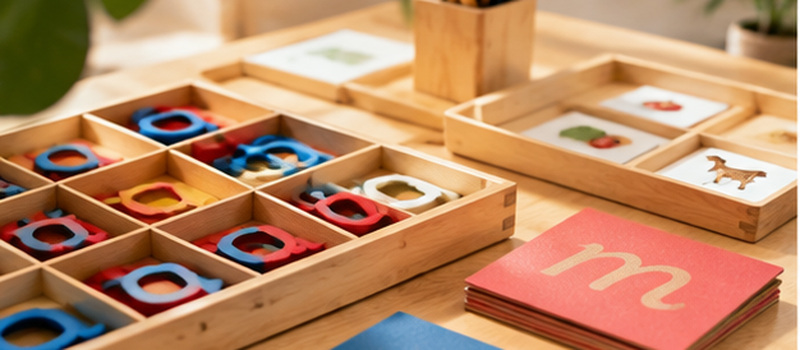
Montessori language materials help children explore different language skills through direct experience. When choosing materials for your classroom, it helps to understand what each one is designed to teach.
| Montessori Material | How It Supports Language Learning |
|---|---|
| Vocabulary Cards and Objects | Help children recognize, name, describe, and classify objects while developing vocabulary. |
| Sandpaper Letters | Help children connect letter shapes with their corresponding sounds through touch and movement. |
| Movable Alphabet | Allows children to compose words and sentences without needing to write letters by hand. |
| Metal Insets | Support pencil control and the hand movements needed for handwriting. |
| Phonetic Reading Materials | Help children practice reading words and gradually move toward longer written texts. |
| Grammar Symbols | Introduce the functions of different parts of speech through a visual system of shapes and colors. |
When preparing your materials, consider whether children can handle each component comfortably and complete the intended activity without unnecessary assistance. Materials with many small parts should have suitable containers, while letter cards and printed text should remain clear and easy to distinguish.
You can also adjust the range of materials according to the children in your classroom. A younger group may spend more time working with vocabulary objects and sound activities, while older children may be ready for word building, reading, and grammar. If you are preparing a mixed-age classroom, you can use an age-based approach to selecting learning materials to help you plan what the children will need.
How to Set Up a Montessori Language Area in the Classroom

Once you know which language activities you want to provide, you can plan a classroom area that makes them easy for children to access and use. The arrangement should support different types of language work while remaining practical for everyday teaching.
Choosing Shelving and Organizing Materials
Low, open shelves work well in a Montessori language area because children can see and reach the materials on their own. When choosing shelves, you should consider their height, depth, and how much space you need for different materials, from small vocabulary cards to larger Movable Alphabet boxes.
Once you’ve chosen the shelves, think about how to arrange the materials. You can group activities by what children are learning and place them in order of difficulty. Keep each activity in its own tray, basket, or box, and leave enough room for children to take materials out and put them back easily. This way, children can find what they need and keep the area organized with less help from adults.
Planning Table and Floor Workspaces
Different language activities require different workspaces. Small tables are suitable for tracing letters, using metal insets, and practicing writing, whereas floor mats offer a larger area where children can arrange word cards, use movable alphabets, or sequence materials.
You can provide both tabletop and floor-based activity areas, arranging the layout according to the number of children using the language zone at any one time. Tables and chairs should be appropriately sized for the children, allowing sufficient space for them to move their arms comfortably. The floor activity area also requires enough room for children to spread out their materials while keeping walkways clear so as not to disrupt the activities of other children.
Creating a Reading and Conversation Space
The reading area provides a space for children to enjoy reading, share ideas, and interact with one another. Consider using low bookshelves that allow children to easily access the books, paired with comfortable seating and appropriate lighting. For children who cannot yet read titles independently, bookshelves that display book covers facing outward make it easier for them to select books that interest them. You can offer a mix of picture books, storybooks, and non-fiction titles, rotating the selection periodically to provide fresh reading options while keeping the shelves tidy.
When positioning the reading area, try to choose a quiet corner away from noisy activity zones so that children can focus on reading, listening to stories, or interacting with peers. At the same time, consider the relationship between the reading area and other activity zones in the classroom to avoid mutual interference. If you are planning the overall classroom layout, you can refer to suggestions for arranging different zones in a preschool classroom to help integrate the reading area effectively into the daily learning environment.
How Can Teachers Support Children at Different Language Levels?

Children in the same Montessori classroom may have different language abilities. Some are still learning to express themselves, while others are beginning to write or read independently. You can support each child by helping them overcome specific difficulties, choosing activities that suit their abilities, and adjusting your teaching when necessary.
Help Children Overcome Language Difficulties
When children struggle with a language activity, try to find out which part they find difficult rather than repeating the entire lesson. This helps you give them more useful support.
For example, if a child has trouble remembering new words, you can introduce fewer words at a time and use them more often in everyday conversations. If they have difficulty recognizing letter sounds, return to familiar sound games before introducing new letters. Small adjustments like these allow children to work on the skills they need without losing confidence.
Choose Activities That Match Each Child’s Abilities
Children who are at different language levels need different activities. You can prepare a range of language materials so that each child has something suitable to work with, even when several children are using the language area at the same time.
For children who are still developing spoken language, you can provide vocabulary cards, picture books, and naming activities. Those who already recognize letter sounds may be ready to work with the Movable Alphabet or simple word-building activities. As children become more confident, you can gradually introduce more challenging work without requiring everyone to follow the same schedule.
Adapt Your Teaching to Different Learning Needs
Some children may understand new language concepts quickly, while others need more time or a different way of learning. You can keep instructions short, use pictures or real objects to explain unfamiliar words, and give children more time to respond. Small-group or individual lessons can also help when children need more attention.
If you teach children who are learning more than one language, encourage them to use their home languages while developing new vocabulary. You can connect unfamiliar words to objects and experiences they already know and communicate with families to understand how children use language outside the classroom.
FAQs
1. At What Age Do Children Start Montessori Language Activities?
Montessori language experiences begin in infancy through conversations, songs, and naming activities. More structured language materials, such as Sandpaper Letters, are commonly introduced during the 3 to 6 age range, depending on the child’s readiness.
2. Does Montessori Teach Letter Sounds or Letter Names First?
Traditional Montessori language teaching generally introduces letter sounds first. This helps children understand how sounds connect to written symbols and how letters can be combined to form words. Letter names are also introduced as part of literacy learning.
3. Can Montessori Language Education Support Bilingual Children?
Yes. You can adapt Montessori language activities to support children learning two or more languages. Conversations, familiar objects, and vocabulary activities can help children develop communication skills while continuing to use their home languages.
4. How Often Should Montessori Language Lessons Be Introduced?
There is no fixed schedule that suits every child. You can introduce new lessons when children demonstrate readiness and provide regular opportunities to revisit familiar activities during their work periods.
5. Do Children Need to Master Writing Before Learning to Read?
No. Children can develop early writing and reading skills alongside one another. The Movable Alphabet allows them to compose words before handwriting is fully developed, while reading activities help them recognize and understand written language.
Conclusion
As you become more familiar with Montessori Language Education, you will find that children often reveal their next learning needs through the way they speak, explore materials, and approach new activities. Paying attention to these everyday moments can help you make better teaching decisions and create more meaningful language experiences.
If you are planning a new Montessori classroom or improving an existing one, West Shore can help you with classroom layout planning, furniture selection, and customization to create a space that works for both your children and your teaching needs.