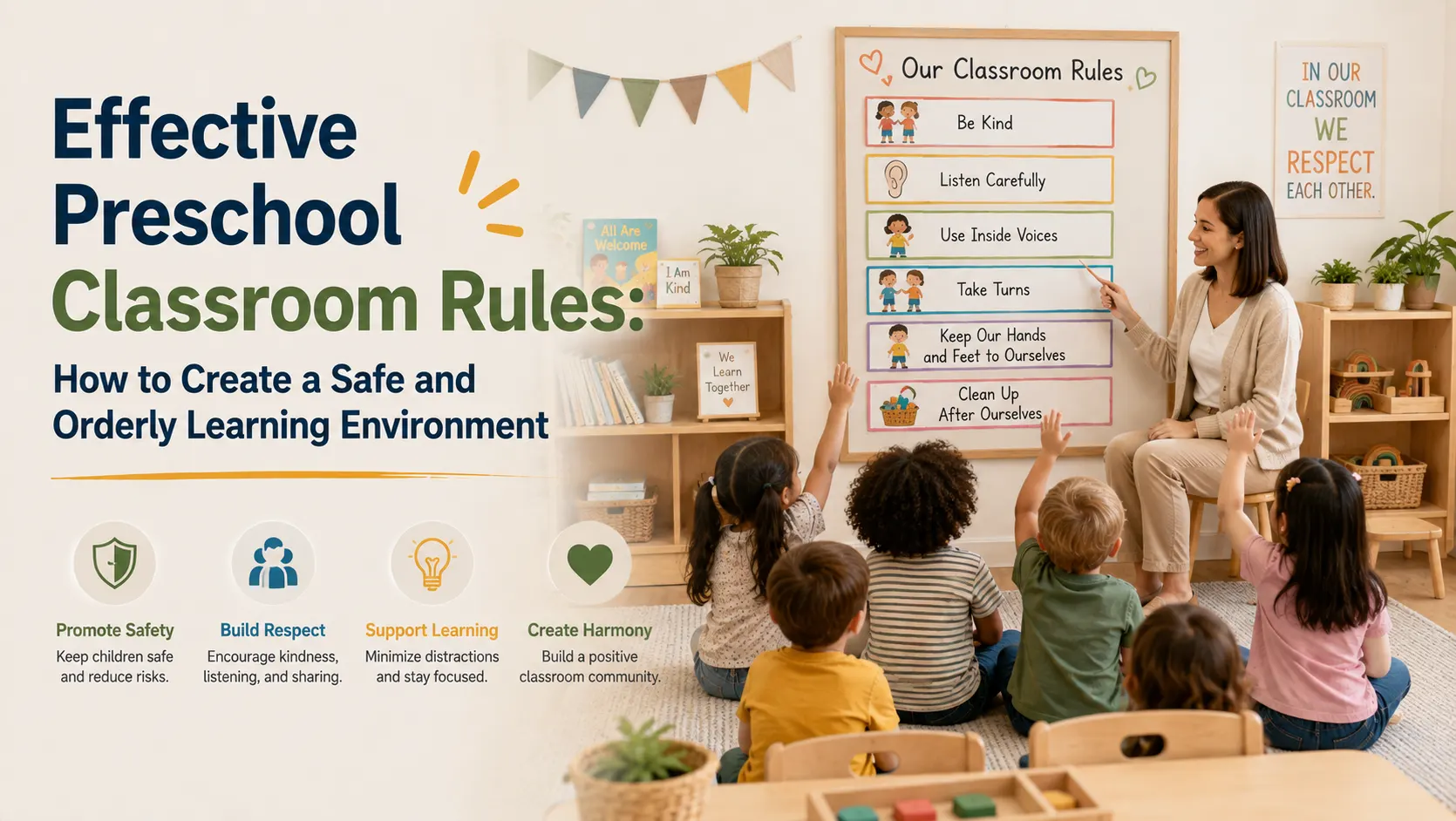
Clear preschool classroom rules create a safer, predictable learning environment. However, rules fail if your classroom environment doesn’t support them. This guide shows how to blend effective rules with smart furniture design to increase teacher efficiency and foster child independence.
Why Are Preschool classroom Rules Necessary in Preschool?
For a preschool owner or director, establishing clear preschool classroom rules is not simply about controlling behavior. They create a shared operating framework for children, teachers, and daily routines.
When expectations are clear, your teachers spend less time correcting the same behaviors, children understand what they are expected to do, and your classroom can move more smoothly from one activity to the next.
Good classroom rules should help you create a center that is safer, more consistent, easier to manage, and more supportive of children’s independence.
Maintain consistency in the teaching team’s style.
One of the greatest benefits of clear classroom rules is consistency.
Without shared expectations, one teacher might permit a certain behavior while another immediately corrects it. This confuses children and makes classroom management overly dependent on individual teaching styles.
When you establish a set of concise, clear rules and use consistent language across your team, children benefit from more predictable guidance. Well-defined rules allow for a relatively unified set of teaching standards and philosophies—creating harmony while still accommodating each teacher’s unique mindset.
This is where clear rules save the day—they keep your entire staff on the same page and cut down on constant back-and-forth communication.
Reduce Preventable Safety Problems
Safety rules help children understand how to move, use materials, and interact with others in a shared environment.
Expectations such as walking indoors, using gentle hands, keeping pathways clear, and listening during important instructions can reduce many preventable classroom problems.
For example:
- When walking: Keep hallways clear and avoid overly open routes, as these naturally encourage running.
- Clean Up After Play: Use low storage, clear compartments, and simple labels so children can return materials safely and independently.
- Listen and Stay Safe: Keep teacher sightlines open by using lower furniture between activity zones and placing taller storage along walls.
Rules and classroom design should reinforce the same behavior. When the space supports the expectation, children are more likely to follow it and teachers need fewer repeated reminders.
Make Daily Transitions More Efficient
Kindergarten classrooms are filled with constant transitions—whether shifting from lessons to playtime or moving from lunch to cleanup. Without clear expectations and rules, these transitions require repeated teacher guidance, which significantly hampers efficiency and impacts the teacher’s state of mind.
However, when children know where items belong, how to return them, where to wait, and how to move between activity areas, transitions become far more predictable.
This minimizes unnecessary waiting, chaos, and the need for constant reminders, thereby freeing up more time for genuine learning and interaction.
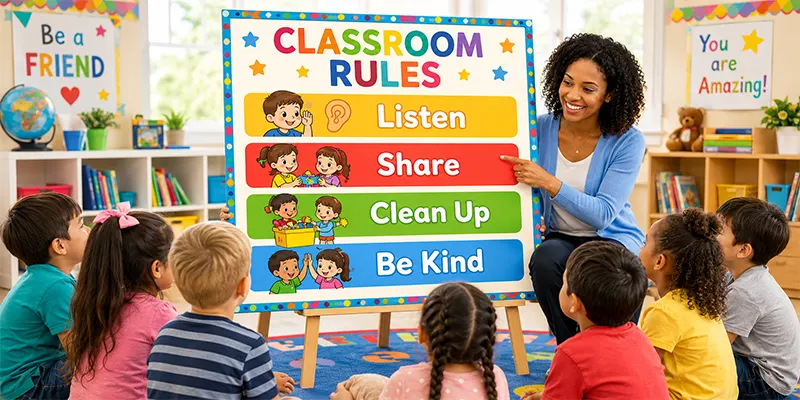
Support Independence and Responsibility
Good classroom rules should gradually reduce children’s dependence on adults.
When your children know how to return items, tidy up their belongings, move safely between different areas, and complete simple classroom tasks, they will begin to take more responsibility for their environment.
However, this only truly works if the classroom’s facilities support independence.
For example, if you want your children to be able to tidy up their belongings independently, then your shelves, storage compartments, baskets, and material storage areas need to be within their reach and easily understood. This allows children to gradually develop the ability to tidy up their belongings independently without even realizing it.
Create a More Predictable Environment for Children and Families
A predictable preschool environment helps children understand what happens next, where activities take place, and what they are expected to do in each part of the day.
You can make the classroom easier to understand by using:
- A simple visual daily schedule
- Fixed locations for common activities
- Clearly defined learning zones
- Consistent places for personal belongings and classroom materials
- Simple transition cues before meals, outdoor play, clean-up, and nap time
When children can anticipate the next step, transitions often become smoother and they rely less on repeated adult direction.
Predictability also helps families. You can share your daily routine, classroom expectations, drop-off procedures, meal and nap schedules, and transition routines during enrollment or orientation. This gives parents a clearer picture of how the day works and helps them prepare their children for the classroom routine.
Effective classroom rules create a well-organized environment that makes it easy for students to understand the day’s schedule before the teacher explains each step.
Kindergarten classroom rules should be simple and consistent.
The most effective classroom rules are usually the easiest ones for children and teachers to remember.
Keep Your Core Rules Limited
Try to keep your most important classroom rules to around four to six clear expectations. The rules should be short enough for young children to remember, but specific enough for them to understand what they are expected to do.
Instead of using broad words such as “Safety” or “Responsibility,” turn them into simple, action-based rules such as:
- Walk safely inside the classroom.
- Use kind hands and kind words.
- Listen when someone is speaking.
- Put materials back after you use them.
- Take turns and respect other people’s space.
- Take care of your belongings and classroom materials.
Each rule tells children what the expected behavior actually looks like.
You do not need a separate rule for every possible situation. A small set of clear rules can cover most daily classroom activities while remaining easy for your children and teaching team to remember.emember and for your teaching team to apply consistently.
Use the Same Rule Language Across Your Teaching Team
Use consistent, unchanging language within your teaching team.
For the same actions, your teachers should use clear and easily understood language.
For example, when tidying up, different teachers might say:
“Put the toys away.”
“Clean this area.”
“Put everything back where it belongs.”
“Time to tidy up.”
These instructions mean roughly the same thing, but using different wording every day can confuse children and make things unpredictable.
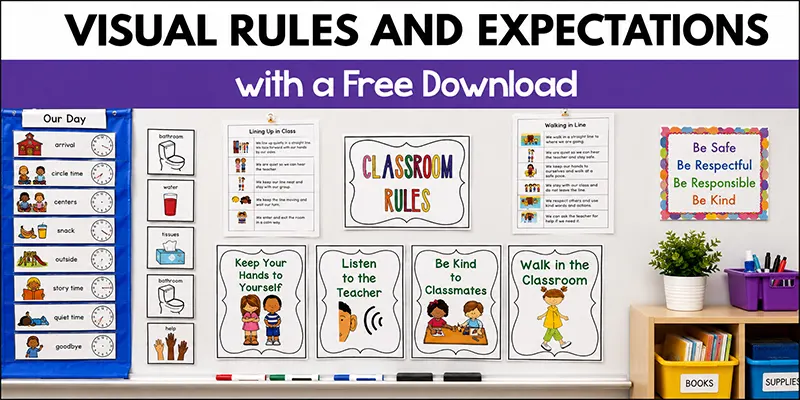
Instead of mixing up instructions, have your team stick to one simple command, like: ‘Put things back where they belong.’
The same approach applies to other common situations. For example, when children are grabbing at items, your teacher can consistently use:
“Please use politely, take turns.” Our goal is not for teachers to rigidly use the exact same language in most situations, but simply to standardize some frequently used phrases in the classroom so that children can respond more quickly and naturally, and it also makes it easier for new staff to follow classroom rules.
Apply the Rules Throughout the Daily Routine
Integrating Rules into Daily Activities
Classroom rules shouldn’t be confined to group activities or when problems arise. You need to integrate them into the daily activities that children repeat every day.
For example, if your rule is to take care of personal belongings, children can hang up their coats every morning, put their backpacks in their designated lockers, and leave their shoes or water bottles in the same place. Rules like sitting safely, using polite language, and maintaining personal hygiene can be integrated into mealtime activities. The key is repetition. When the same rule is repeatedly applied to the same daily situations, children gradually understand what to do without needing the teacher to explain it one by one.
Over time, classroom rules should naturally become part of daily life, rather than being mentioned only when children misbehave.
Essential Preschool Classroom Rules for a Safe Learning Environment
Although every preschool has its own teaching philosophy and daily routine, most classrooms face many of the same everyday challenges: children need to move safely, listen during important instructions, share materials, clean up after activities, respect others, and take responsibility for the space they use.
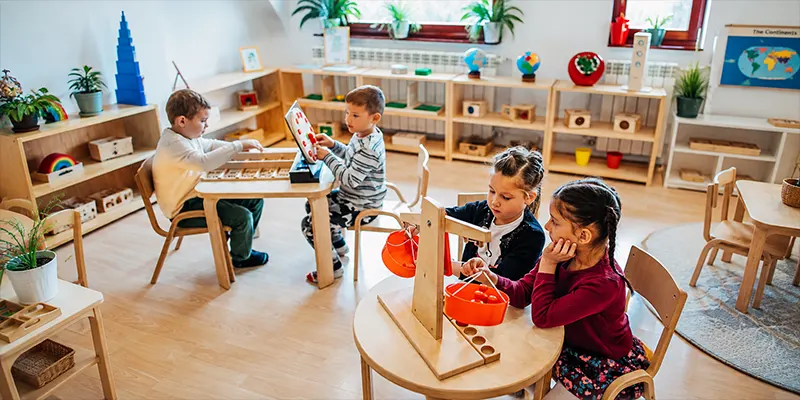
There’s a reason you see the same core rules in every successful preschool—they solve the challenges teachers face every single day. They address the behaviors that happen every day in almost every classroom, regardless of curriculum style or classroom size.
For preschool owners and directors, these common rules are especially useful because they help you:
- Reduce repeated teacher reminders
- Make transitions smoother
- Create clearer expectations across different classrooms
- Support safer use of shared spaces and materials
- Help children become more independent
- Protect more time for teaching and play
The goal is not to copy the exact same wording used by every other center. What matters is that your rules cover the core behaviors your classroom depends on every day.
The following are some of the most widely used and practical rules for preschool and kindergarten classrooms, along with why each one matters and how it can support your teaching, classroom management, and daily operations.
1. Walk Safely Indoors
Recommended rule:
“Use walking feet inside.”
This is more useful than simply saying “Be safe” because children immediately understand what action is expected.
The deeper purpose of this rule is not only to prevent running. It helps you control how children move through shared spaces such as:
- Classroom pathways
- Entrances
- Bathrooms
- Meal areas
- Transitions between learning zones
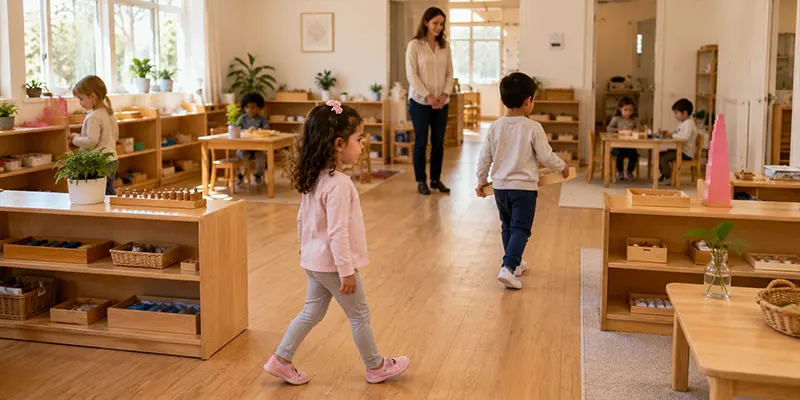
In a busy classroom, uncontrolled movement can quickly interrupt other activities. A child running through the block area may knock down another child’s work, while running near tables or storage units can increase the risk of collisions.
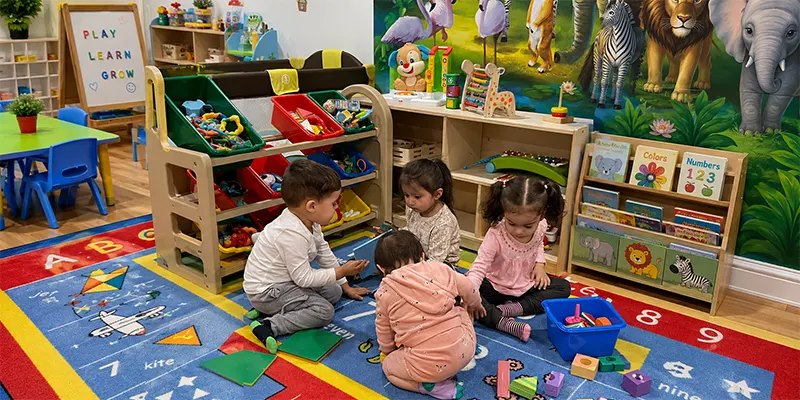
Support this rule with your layout. Keep major circulation paths clear, avoid long open routes that resemble running tracks, and use low furniture to define activity zones without blocking supervision.
When the environment naturally slows movement, your teachers need fewer repeated reminders.
2. Use Kind Hands and Kind Words
Recommended rule:
“Use kind hands and kind words.”
This is one of the most important classroom rules because it directly supports both safety and order in a preschool environment.
Young children are still learning how to manage frustration, wait for a turn, protect their own space, and communicate what they need. Without a clear expectation, common situations such as grabbing toys, pushing, shouting, or arguing can quickly interrupt the classroom and create safety concerns.
A simple rule such as “Use kind hands and kind words” gives your teachers a clear standard to return to whenever these situations occur.
It can help reduce behaviors such as:
- Pushing or hitting
- Grabbing toys or materials
- Shouting at classmates
- Hurtful language
- Rough physical play
- Conflicts during shared activities
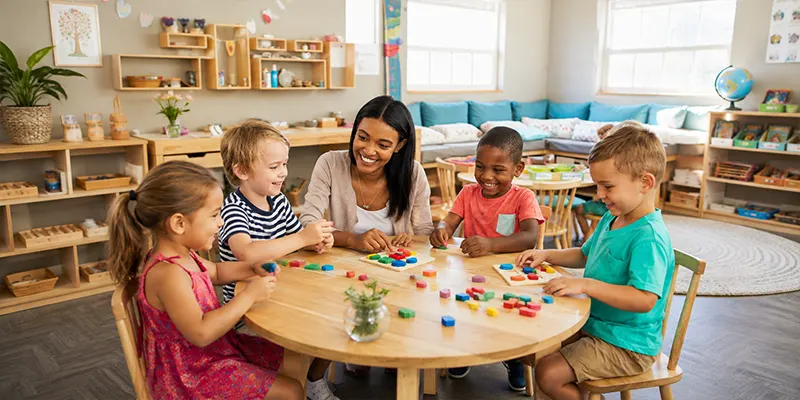
From a classroom management perspective, this rule helps create a calmer and more predictable environment. When children understand that physical aggression and hurtful language are not acceptable, your teachers can spend less time stopping repeated conflicts and more time supporting learning and play.
The rule also has an important educational purpose.
Children do not automatically know how to express frustration, negotiate with others, or solve disagreements. They need opportunities to practice these skills.
Over time, these experiences can support self-regulation, empathy, communication, and social confidence.
This matters because a safe and orderly classroom is not only one where children avoid conflict. It is also one where they gradually learn how to handle conflict in a more appropriate way.
Do not stop at simply telling children to “be kind.” Show them what kind behavior looks like during real classroom situations. Use the same language during play, clean-up, shared activities, and conflict resolution so the rule becomes part of your daily classroom culture.
When this rule is taught consistently, it helps you build a classroom that is not only physically safer and easier to manage, but also more supportive of children’s social and emotional development.
3. Listen When Someone Is Speaking
Recommended rule:
“Listen when someone is speaking.”
This rule is especially important during:
- Group time
- Safety instructions
- Activity demonstrations
- Classroom transitions
- Emergency situations
The goal is not to demand silence throughout the day. A preschool classroom should naturally include conversation, play, questions, and movement.
Instead, this rule helps children recognize moments when listening is necessary.
For teachers, this can significantly improve instructional efficiency. If you need to repeat every direction several times before an activity begins, valuable teaching time is lost.
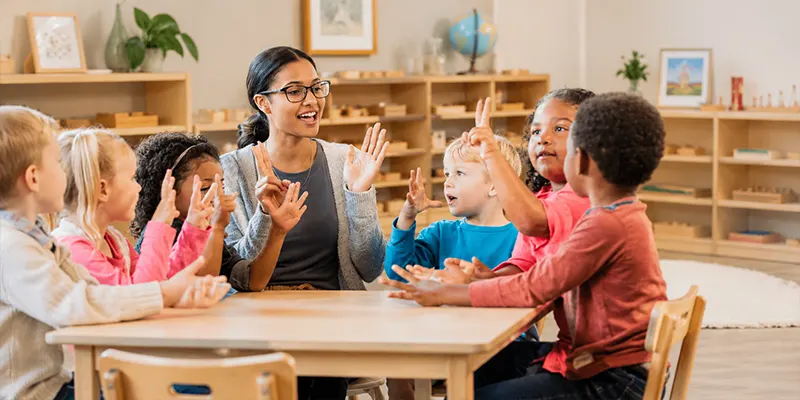
Keep instructions short and establish a predictable signal before important directions. This could be a short phrase, visual cue, or classroom signal that tells children it is time to stop and listen.
The clearer the signal, the less your teachers need to raise their voices or repeat instructions.
4. Put Materials Back After Use
Recommended rule:
“Put materials back where they belong.”
This is more than a clean-up rule. It teaches children that the classroom is a shared environment and that they have a role in maintaining it.
It also has an important operational benefit.
When materials are returned to predictable locations:
- Teachers spend less time reorganizing the classroom
- Children can find materials more independently
- Transitions become faster
- Materials are less likely to become lost or damaged
- The classroom is easier to prepare for the next activity
However, this rule will fail if your storage system is designed only for adults.
Use child-height open shelving, clear compartments, lightweight baskets, and picture labels. Keep frequently used materials in consistent locations.
If children cannot reach the shelf or understand where an item belongs, repeated clean-up reminders will not solve the real problem.
Do Not Just Post the Rules—Teach Them
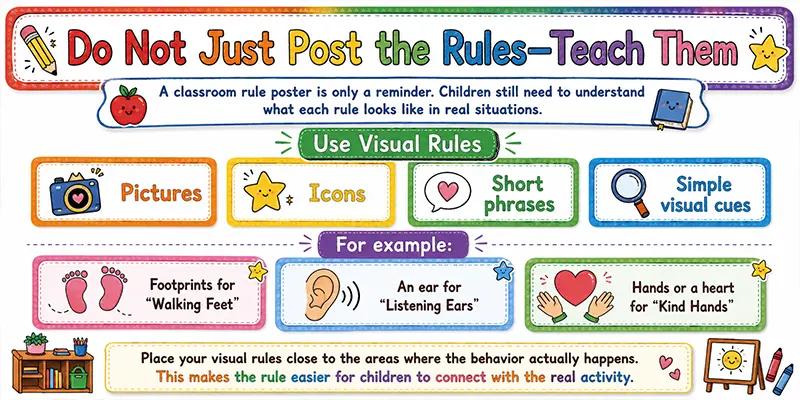
A classroom rule poster is only a reminder. Children still need to understand what each rule looks like in real situations.
Use Visual Rules
For children ages three to five, you can use:
- Pictures
- Icons
- Short phrases
- Simple visual cues
For example:
- Footprints for “Walking Feet”
- An ear for “Listening Ears”
- Hands or a heart for “Kind Hands”
Place your visual rules close to the areas where the behavior actually happens.
This makes the rule easier for children to connect with the real activity.
Practice Through Demonstration and Role-Play
Do not only explain a rule verbally.
You can practice situations such as:
- What should you do when two children want the same toy?
- Where should blocks go after play?
- How should children walk to the bathroom?
- What should happen when clean-up time begins?
Demonstration, practice, and repetition make expectations more concrete.
Praise and Reinforce Specific Behaviors
Children are more likely to repeat a positive behavior when they clearly understand what they did well. For this reason, your reinforcement should focus on the specific behavior, rather than giving only general praise.
Instead of simply saying:
“Good job.”
You can say:
“You put the blocks back on the shelf without being reminded. That was very helpful.”
Verbal praise should be your starting point, but it does not have to be the only way you encourage positive classroom behavior.
You can also use:
- Sticker or heart charts: Children can add a sticker, star, or small heart when they demonstrate a classroom rule such as helping with clean-up, taking turns, or using kind words.
- Classroom recognition boards: Create a simple “Helping Hands” or “Kindness Wall” where teachers can recognize positive behaviors during the week.
- Special classroom responsibilities: Allow a child to become the line leader, book helper, plant helper, or clean-up helper after demonstrating responsible behavior.
- Small privileges: Offer choices such as selecting the next story, helping prepare an activity, or choosing a classroom song.
- Occasional small rewards: Stickers, pencils, bookmarks, or other simple items can be used for special milestones, rather than for every expected behavior.
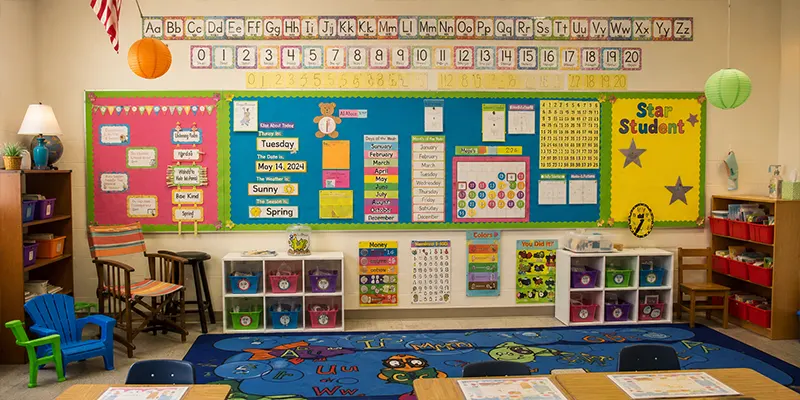
For example, if your class is working on “Kind Hands and Kind Words,” children might collect hearts on a classroom board when teachers notice them helping a classmate, waiting for a turn, or solving a disagreement calmly.
The goal is not to reward children every time they follow a rule. Instead, use positive reinforcement to help them notice, understand, and repeat the behaviors you want to become part of the classroom routine.
As these behaviors become more familiar, you can gradually rely less on external rewards and more on specific praise, responsibility, and the child’s own sense of accomplishment.
How to Turn Classroom Rules Into Daily Routines
A rule becomes much more effective when it becomes part of your everyday routine.
If you want a behavior to become a habit, your classroom should make the correct action easy to complete.
Help Children Organize Their Belongings Independently
One of the easiest ways to turn a classroom rule into a daily routine is to connect it with a task children repeat at the same time every day.
For example, a rule about taking care of personal belongings can become part of the arrival and departure routine. Instead of reminding children individually where to put their bags, coats, shoes, or water bottles each morning, you can create a simple and predictable system they follow every day.
You can provide:
- Child-height cubbies
- Low hooks
- Shoe storage
- Clearly assigned spaces
- Picture or name labels
- Clear circulation paths
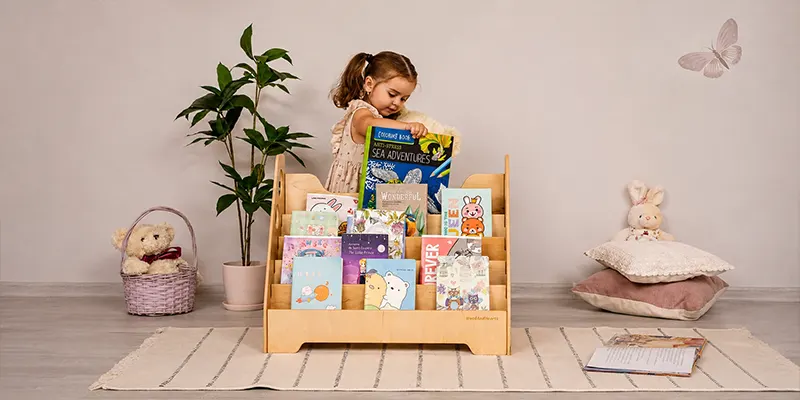
Each child should be able to quickly identify where their belongings go and complete the same steps with less adult help.
When the rule is connected to a fixed place, a clear sequence, and furniture children can use independently, it gradually becomes part of the normal classroom routine rather than a repeated teacher instruction.
This is how a simple classroom expectation can support independence, responsibility, and smoother daily transitions at the same time.
Turn Hygiene Rules Into a Daily Routine
Classroom rules are easier to follow when they are connected to a fixed part of the day. Handwashing is a good example.
Instead of treating “wash your hands” as a reminder that teachers repeat whenever necessary, you can build it into predictable moments such as:
- After using the toilet
- Before meals and snacks
- After outdoor play
- After messy or sensory activities
Over time, children begin to associate these everyday moments with handwashing, so the rule becomes a predictable part of the routine rather than something teachers need to remind them about repeatedly.
You may need:
- Child-accessible washing facilities
- Safe step stools where appropriate
- Simple handwashing visuals
- Conveniently placed soap and drying supplies
- Enough space to reduce congestion
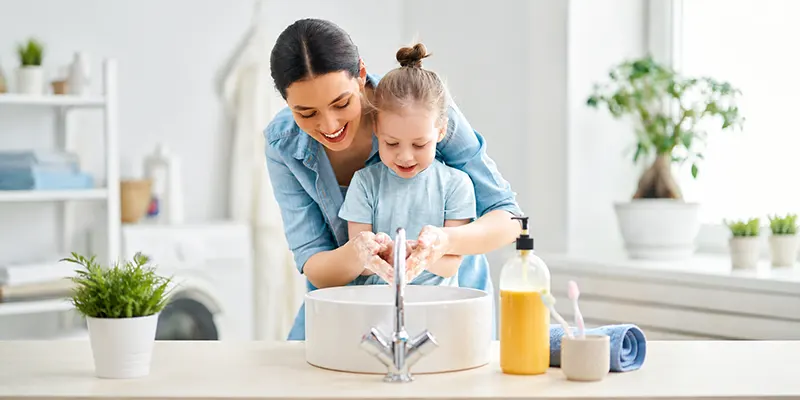
When children follow the same steps in the same place at the same points in the day, handwashing gradually becomes part of the routine rather than a rule that depends on constant adult prompting.
This helps you reinforce hygiene expectations while also supporting independence and smoother classroom transitions.
Classroom Rules Work Better When the Environment Supports Them
You can repeat “Walking Feet” throughout the day, but if your classroom has a long, open pathway with nothing to slow movement, the space itself may be encouraging children to run.
This is why classroom management should not rely on verbal rules alone. Your layout, furniture placement, storage height, and visual boundaries can quietly guide behavior before your teachers need to intervene.
A well-planned preschool classroom does more than hold furniture. It makes the behavior you want easier for children to follow.
Use Circulation Paths to Guide Movement
Children respond naturally to the shape of a space.
Long, straight pathways can easily feel like running routes, especially in active preschool classrooms. If you want children to use walking feet, you should look carefully at how they move from one learning area to another.
Low storage units, rugs, tables, and activity furniture can be used as physical boundaries to break up long circulation lines and create more intentional movement.
For example, a low cabinet around 60 cm high may help separate two activity zones while still keeping the classroom visually open. The exact height should depend on your children’s age, classroom size, and supervision needs.
The goal is not to create obstacles. It is to create a layout where walking feels more natural than running.
简码
Use the Classroom Environment to Support Independence
Rules such as “Helping Hands” are much easier to follow when your classroom environment allows children to complete the expected task independently.
If your storage is too high, bins are too heavy, or materials do not have clear locations, children will continue to depend on adults for clean-up.
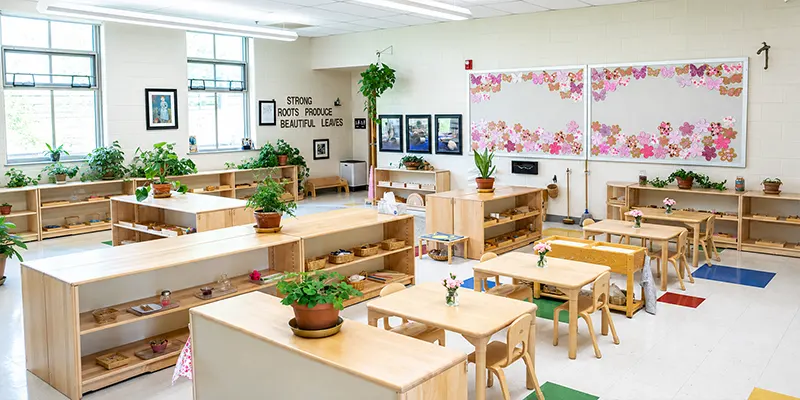
Low open shelving, clearly divided compartments, lightweight baskets, and visual labels can turn clean-up from a teacher-led task into part of the child’s normal routine.
When the environment is designed around children’s actual abilities, rules such as “Helping Hands” become much easier to follow in everyday classroom life., and visual labels can turn clean-up from a teacher-led task into part of the child’s normal routine.
If you want children to take responsibility in the classroom, your furniture must enable them to do so in a real-world setting to truly cultivate a sense of responsibility in children.
Use Visual Cues to Reinforce Physical Boundaries
Physical boundaries work even better when children can clearly understand what each area is for.
You can use:
- Different rugs for different activity zones
- Picture labels on storage
- Floor markers for transition routes
- Simple rule icons near learning areas
- Clearly assigned cubbies
- Consistent material locations
These visual cues reduce the amount of verbal instruction your teachers need to give.
For example, when children can see exactly where books, blocks, and art materials belong, clean-up becomes easier to understand and easier to repeat.
The more your environment communicates on its own, the less your teachers need to manage every action verbally.
Use Classroom Jobs to Build Responsibility
Create Simple and Repeatable Classroom Jobs
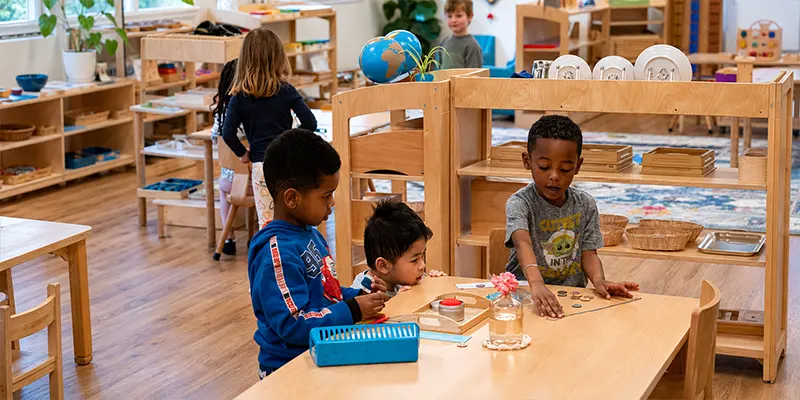
Classroom jobs are most effective when children can clearly understand what they are responsible for and how their work helps the classroom.
Instead of simply giving children job titles, connect each role to a real task they can complete during the day.
For example:
- Clean-Up Helper: Helps return blocks, toys, or art materials to their assigned storage areas after an activity.
- Book Helper: Checks that books are returned to the reading shelf and placed correctly after reading time.
- Table Helper: Helps place simple materials on the table before an activity or wipes the table after meals and art projects.
- Plant Helper: Waters classroom plants or checks whether they need care.
- Material Helper: Helps distribute and collect commonly used classroom materials.
- Line Leader: Leads the group during simple transitions and learns to move calmly while staying aware of others.
These jobs give children a visible role in maintaining the classroom rather than leaving every organizational task to the teacher.
The key is to keep each responsibility small, predictable, and achievable. A three- or four-year-old does not need to “manage the classroom”; they need one simple task they can complete successfully.
When children regularly help return materials, prepare activity areas, or care for shared resources, they begin to understand that the classroom belongs to everyone and that their actions affect the group.
Over time, classroom jobs can turn rules such as “Helping Hands,” “Take Care of Our Classroom,” and “Put Materials Back” into real responsibilities, helping children develop independence, cooperation, and a stronger sense of responsibility.
What to Do When a Child Breaks a Rule
The goal should not be to punish immediately. Your priority is to help the child understand the expected behavior and return to the activity.
Restate the Rule Briefly
Keep your reminder short and direct.
For example:
“Walking feet inside.”
Avoid turning every small behavior issue into a long explanation.
Tell the Child What to Do Instead
Do not only point out what was wrong.
Make the expected behavior clear.
Instead of:
“Stop that.”
Explain what the child should do next.
Use Logical Consequences
Whenever possible, the consequence should be connected to the behavior.
For example, if a child empties a large container of blocks onto the floor, you can ask the child to help return the blocks before moving to the next activity.
This helps children understand the connection between their actions and responsibilities.
Reflecting on the reasons for frequent violations
Reflect on Why the Same Rules Are Always Broken
When a child repeatedly breaks the same rule in the same area, in addition to examining the child’s behavior, you should also consider the use of the space.
If a child frequently runs around the block area, the problem may lie in the layout. Spacious open spaces or straight passageways naturally encourage children to move quickly. In this case, lower shelves or clearer activity boundaries might guide the child to move more calmly.
If tidying up is always messy, the storage system may be the problem. Items stored too high, with unclear locations, or mixed together without labels will make it difficult for children to put things away independently. Simplifying the storage layout and placing frequently used items within easy reach will make tidying up easier.
The same principle applies to quiet areas. If your reading corner is constantly interrupted, it may be because it’s too close to the entrance, role-playing area, or main passageway. Moving it to a quieter spot in the room will help the child maintain the behavior you expect there.
Repeated rule violations don’t always mean the rule is invalid. Sometimes, the classroom environment makes students more likely to break rules.
Set Rules for Different Classroom Areas
Different classroom areas serve different purposes, so they should not all rely on the same expectations.
Children move, speak, share materials, and interact differently in a reading corner than they do in a block area or dramatic play space. When each area has a few clear expectations that match the activity taking place there, children can understand more quickly how they should behave in that specific space.
This also makes classroom management easier for your teachers. Instead of repeating broad instructions throughout the day, you can connect each rule directly to the furniture, materials, and routines already present in the area.
Entrance Area
Rule: Enter calmly and put away personal belongings.
Child-height cubbies, low hooks, benches, and a clear circulation path make it easier for children to store their belongings independently without blocking the entrance or relying on repeated teacher help.
Reading Area
Rule: Use quiet voices and handle books gently.
Front-facing bookshelves make books easy to see and return, while soft seating helps define the reading area as a quieter space. Keeping this zone away from busy circulation paths can also reduce unnecessary interruptions.
Art Area
Rule: Use materials carefully and clean up when the activity is finished.
Child-sized tables, easels, and nearby storage help children use materials safely and return them after the activity. Keeping frequently used supplies within reach also makes clean-up more practical and independent.
Dramatic Play Area
Rule: Take turns and interact kindly with others.
Role-play furniture and organized storage help define the activity space and give children clearer boundaries for shared play. When props and materials have predictable locations, children can also take more responsibility for returning them after use.
Meal Area
Rule: Sit safely and clean your space when you finish.
Age-appropriate tables and chairs help children sit more comfortably and securely during meals. Furniture that matches their height also makes it easier for them to get in and out safely and participate in simple clean-up routines after eating.
Nap Area
Rule: Keep your body and voice calm and respect other children who are resting.
Cots or cribs arranged with clear staff access and organized bedding storage help create a calmer sleep area. Keeping the nap zone away from high-traffic or noisy activity spaces also makes the rule easier for children to follow.
The key is to make sure the rule and the space support the same behavior. When the environment is designed around the purpose of each area, children need fewer reminders because the classroom itself helps reinforce what is expected.
When Should You Review Your Classroom Rules?
Classroom rules should not remain unchanged forever.
You should review them when:
- New children join your classroom
- A new school year begins
- Children return after a long holiday
- Enrollment increases
- New teachers join your team
- The classroom layout changes
- New furniture is introduced
- Curriculum activities change
- The same behavior problem continues to appear
One simple question can help you identify problems:
Which rules do your teachers have to repeat most often?
If one rule requires constant reminders, you may need to review:
- The wording of the rule
- Your daily routine
- Classroom layout
- Furniture placement
- Storage design
FAQ
1.How Many Classroom Rules Should a Preschool Have?
For most preschool classrooms, 4 to 6 core rules are usually easier for children to remember and teachers to reinforce consistently than a long list of expectations.Focus on rules that cover the most common classroom situations,keep each rule short and observable.This is very balanced and quite common.
2.Should You Plan Classroom Rules Before or After Finalizing the Layout?
Rules should be established before planning the classroom layout; this allows you to design the layout effectively based on those rules, creating an environment where the physical space complements your established guidelines. Furthermore, defining the rules upfront helps suppliers understand the specific requirements, dimensions, and details relevant to your products.
3.What Should Teachers Do When Children Keep Breaking the Same Rule?
When the same rule is repeatedly ignored, first check whether the classroom setup or routine is making the rule difficult to follow.Children may keep leaving materials on the floor because the storage location is too high, too crowded, or unclear. Several children may run through one area because the furniture creates a long open path.Before adding more reminders or consequences, identify the point where the routine breaks down. Sometimes changing the environment is more effective than repeating the rule more often.
4.Should Classroom Rules Be the Same in Every Preschool Classroom?
In most cases, rules are easier for young children to follow when they describe what to do, rather than only what to avoid. “Use walking feet” gives a clear action, while “Don’t run” only tells children what must stop.
5.Should Preschool Classroom Rules Be Written as Positive Actions or “Don’t” Statements?
Expressing things positively—rather than using “don’t do this or that” language, which tends to make children feel frustrated—helps foster a positive mindset in the long run.
6. Should Preschool Classroom Rules Be Written as Positive Actions or “Don’t” Statements?
Use visual cues that show the action rather than relying only on written rules.A picture of children placing blocks onto a shelf is more useful than a sign that simply says “Clean Up.” Place visual reminders close to where the behavior happens: cleanup pictures near storage, handwashing steps near the sink, and walking reminders near busy transitions.Action serves as a natural language; even children who cannot yet read can grasp your meaning through body language, gestures, and eye contact. This is often more effective than words, particularly with such young children.
Conclusion
Effective preschool classroom rules should be simple, practical, and closely connected to the way your classroom actually operates.
When your rules are supported by consistent teacher language, predictable routines, child-accessible storage, clear activity zones, and well-planned furniture placement, children can understand expectations more easily and teachers spend less time repeating the same instructions.
the goal is not to create a stricter classroom. It is to build an environment where safe, orderly, independent behavior becomes easier to follow throughout the day.
At West Shore, we support preschools and daycare centers with classroom layout planning, child-sized furniture, storage systems, and complete learning-space solutions designed around real teaching and daily operational needs.