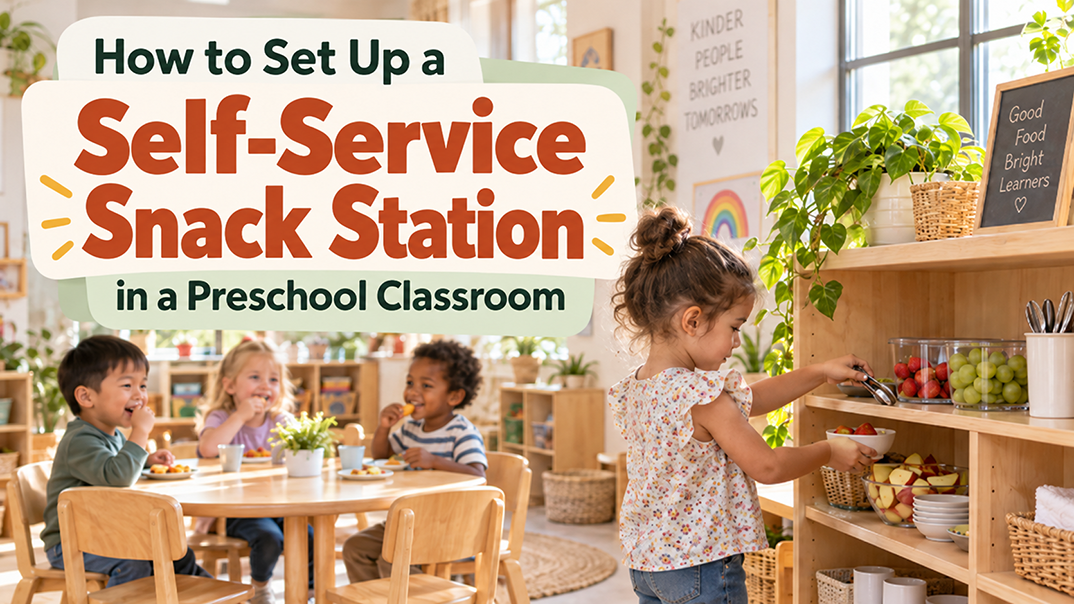
A self-service snack station allows children to serve snacks, pour drinks, and clean up with suitable adult supervision. These everyday activities help children develop independence and become more confident in managing simple tasks on their own. With a practical layout, child-sized furniture, and a simple routine, you can make these tasks easier for children to manage. This guide walks you through planning a self-service snack station that fits your preschool classroom.
What Is a Self-Service Snack Station?
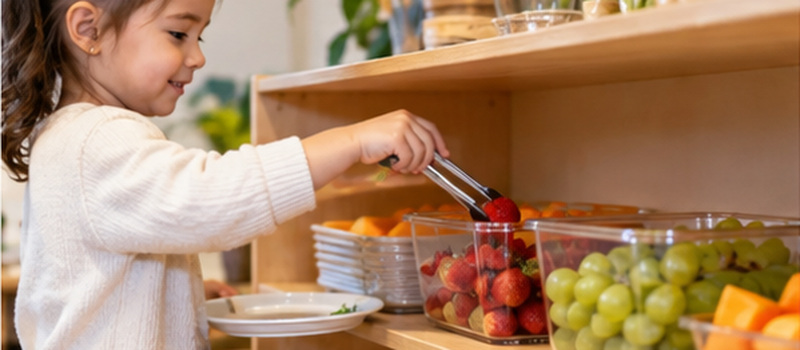
A self-service snack station is a designated classroom space where children can collect food, serve themselves, and return their used dishes. You provide accessible supplies and appropriate supervision while children take on tasks they can manage safely.
You can use this arrangement in Montessori or traditional preschool classrooms. Snack time may happen at a fixed time or within a set time window, depending on your daily schedule, class size, and the children’s abilities.
The main goal is to give children a routine they can follow with increasing independence, without compromising food safety or adult supervision.
How to Organize Snack Time in a Self-Service Snack Station?
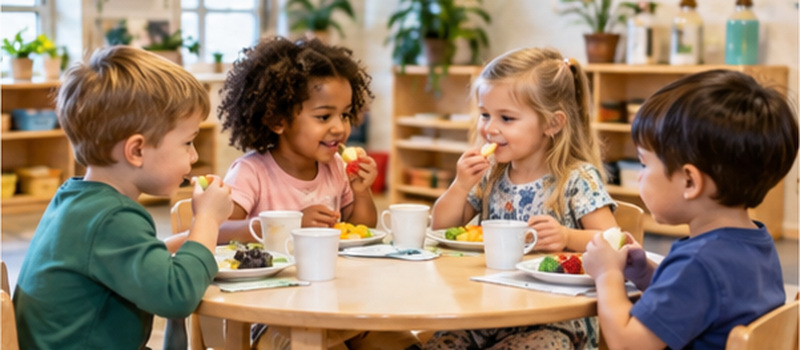
You can organize snack time in two ways, depending on your classroom schedule and how independently children can manage their daily activities.
Fixed Snack Time
A scheduled snack time involves having children eat according to a set timetable. You can have all the children eat together or, depending on the number of seats in the classroom, divide them into smaller groups to take turns.
This approach is relatively easy to organize; teachers can prepare the food in advance and provide centralized guidance on getting food, using utensils, and cleaning up afterward. For children who are new to independent snack activities, a fixed schedule also makes it easier for them to familiarize themselves with the entire process.
Rolling Snack Time
Flexible snack time refers to an arrangement where children can choose when to have their snack within a designated time window, based on the progress of their activities. For instance, if the snack station is open from 9:30 to 10:30 a.m., children may go there on their own initiative once they have finished their current task.
You will need to determine in advance how many children can be accommodated at once and establish simple rules for taking turns. For example, if the snack table has four seats, name cards can be used to help children see if a spot is available. Teachers also need to keep track of which children have already had their snack to ensure everyone has the opportunity to eat.
This approach is better suited for children who are already familiar with classroom rules and possess a certain level of independence. Regardless of the method used, teachers must provide appropriate supervision while the children are eating and offer assistance based on individual needs.
How to Plan the Layout of a Preschool Snack Station?
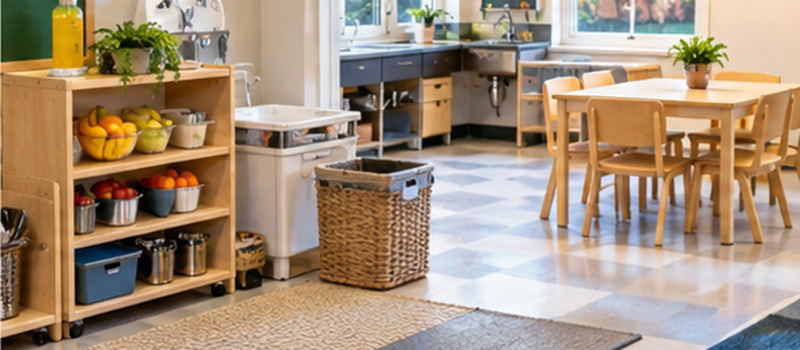
Plan your snack station around where children will collect food, sit down to eat, and return used dishes. Consider how this arrangement fits into the rest of your classroom, especially if other activities continue during snack time. If classroom space is limited, you can integrate the snack station with other learning or activity zones to make the most of the available space.
Location and Accessibility
Choose a relatively quiet part of the classroom, away from busy play areas and main walkways. A location near a handwashing facility is convenient, but make sure food is protected from water splashes and cleaning supplies.
Consider how the location fits into your daily classroom routine. If you use rolling snack time, children should be able to visit the area without interrupting ongoing activities. It is also worth choosing a space that can be cleaned easily after spills, especially if children will be pouring their own drinks.
Make sure the snack station is accessible to children with different physical abilities. The serving station and dining table should allow them to participate as independently as possible, with appropriate support when needed.
Serving, Eating, and Cleanup Zones
Arrange the snack station around three activities: collecting food, eating, and cleaning up. Keeping these areas close together helps children follow the routine without moving across the classroom.
For example, you can place a low serving shelf beside the dining table, with a dish-return container and waste bin nearby. Remember to leave some clear surface space where children can set down their plates while serving food or pouring water. Otherwise, they may struggle to handle everything at once.
Movement and Circulation Space
Leave enough room around the table for children to pull out chairs, stand up, and carry their food comfortably. Pay particular attention to the area in front of the serving shelf, where children may need to wait for their turn.
Try not to place the serving station directly behind the dining chairs. When children are seated, their chairs may block access and make it difficult for others to collect food. You should also consider children entering and leaving the snack station at the same time. Keeping the serving and dish-return stations apart can help prevent them from crossing paths while carrying food or used dishes.
What Furniture and Supplies Does a Preschool Snack Station Need?
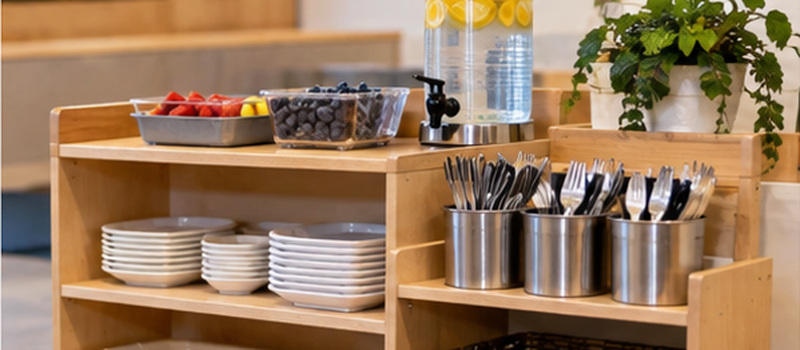
Choose furniture by looking at how children will use each item, how much room it takes up, and how easily staff can clean it. The essentials are accessible storage, suitable seating, safe serving tools, and a clear place for used dishes.
Low Shelving and Storage
Low shelving units provide a dedicated space where children can easily access items needed for snack time. Choose open shelves at a height that allows children to reach and locate plates, cups, and other supplies without difficulty. Baskets or trays can help organize items and make it easier for children to return utensils to their proper places. Shelving units with a countertop surface are also highly practical, as they can serve as a space for snack preparation.
Child-Sized Tables and Chairs
Tables and chairs provide a comfortable space for children to enjoy their snacks. Select furniture of the appropriate height to ensure children can sit with their feet firmly on the ground and use their utensils comfortably. Make sure there is enough tabletop space for each child to place their plate and cup. Small tables seating two to four children are often practical for staggered snack times, whereas group snack times may require more seating. Furniture with smooth, easy-to-clean surfaces makes daily use much more convenient.
Serving and Drinking Supplies
Children need the right tools to serve themselves food and pour their own drinks. Small pitchers, tongs, and serving spoons are useful for different serving tasks. Choose items that are lightweight, easy to grip, and suitable for the food being served. For example, a small pitcher with a comfortable handle allows children to better control the flow of water while pouring. Plates and trays should also be easy to carry; designs with raised edges are ideal for preventing food or drink spills.
Cleaning and Waste Disposal Supplies
Provide containers for used tableware, small trash cans, and cleaning cloths so children can tidy up after eating. Select containers with openings that are easily accessible to children and capacities sufficient for daily use. Small cleaning cloths allow children to wipe up minor spills of food or drink, while teachers handle the thorough cleaning of tableware and the sanitization of food-contact surfaces.
How to Make the Snack Station Easy for Children to Use?
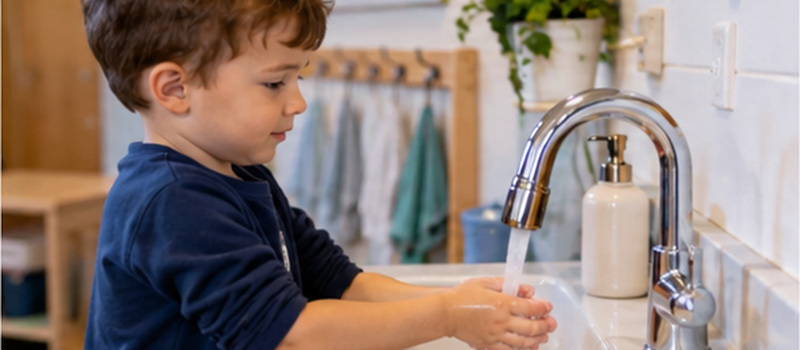
An easy-to-use snack station needs more than child-sized furniture. Children should be able to work out where to begin, find the supplies they need, and understand what to do when they finish. Keep the arrangement consistent and teach the routine before expecting children to manage it alone.
Visible and Accessible Supplies
Keep the items children use together in a consistent arrangement. For example, you can place a tray of cups next to the water pitcher so children can find what they need for a drink in one place. This also helps them understand which items belong together and how to use them.
Try to keep the arrangement consistent from day to day. Once children become familiar with the setup, they can find what they need without having to search for supplies or ask teachers for help.
Picture Labels and Visual Instructions
Picture labels can help children recognize where things belong, especially if they are not yet able to read. You can add simple images to storage baskets or shelves to show where supplies should be returned.
For children who are still learning the snack routine, a few pictures showing the main steps can be helpful. Place them where children will actually use them, rather than displaying all the instructions on one wall. This makes it easier for children to follow the routine without relying on constant verbal reminders.
A Simple Snack Routine
Start by showing children how to use the snack station from beginning to end. Let them practice washing their hands, collecting their food, sitting down to eat, and clearing their places afterward.
During the first few days, you may need to guide them through the process. Instead of stepping in immediately when a child hesitates, give them a little time to work out what comes next. If they need help, demonstrate the task and let them try again.
As children become familiar with the routine, you can gradually reduce your assistance. The goal is for them to know what to do at each stage while still being able to ask for help when needed.
How to Keep a Preschool Snack Station Safe and Hygienic?
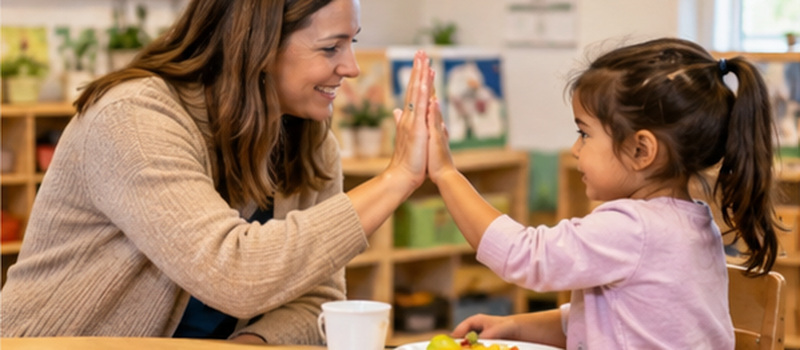
Giving children more independence does not mean reducing adult supervision. Your snack station should support children’s participation while following the food safety and hygiene requirements that apply to your setting.
Food Handling and Surface Hygiene
Children should wash their hands before handling food, and all serving equipment should be clean and suitable for food contact.
Prepare food in an appropriate area and keep it covered or protected from contamination. Perishable foods must be stored and served under suitable temperature and time controls. If you use rolling snack time, pay particular attention to how long food remains available.
After snack time, remove food waste and clean and sanitize tables, serving equipment, and other food-contact surfaces as required. Children’s participation in wiping a table should not replace the hygiene procedures carried out by staff.
Food Allergies and Choking Prevention
Before introducing self-service snacks, make sure your team has a clear system for managing food allergies and individual dietary needs.
If children have food allergies, make sure their snacks are clearly identified and served in a way that prevents allergen cross-contact. Shared serving utensils also need attention, as children may accidentally use the same tool for different foods.
Choose foods and preparation methods appropriate for the children’s ages and eating abilities. Some foods, such as whole grapes or hard raw vegetables, can present choking hazards unless appropriately prepared.
Children should remain seated while eating, and an adult must actively supervise them. Avoid letting children walk around with food in their mouths.
Furniture Safety and Maintenance
Check that shelves, tables, and chairs are stable and in good condition. Storage units that could tip should be secured appropriately, and any damaged furniture should be repaired or removed from use.
Surfaces need to withstand regular cleaning without becoming rough, cracked, or difficult to maintain. Pay particular attention to joints, edges, and areas where spilled food or liquid could collect.
You can include furniture inspections in your regular classroom maintenance routine, rather than waiting until a problem becomes obvious.
How to Set Up a Snack Station in a Small Preschool Classroom?
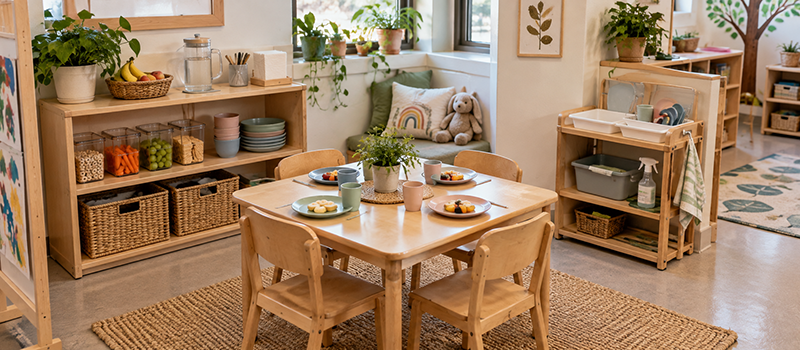
Limited floor space does not have to prevent you from introducing self-service snack time. You can adapt the setup to your classroom instead of trying to fit in a separate dining area.
Corner Snack Station
A corner snack station works well when you have a small space that can remain dedicated to snack time. You can place a compact serving shelf against the wall and arrange a small dining table nearby. This keeps the main classroom space available for other activities while giving children a familiar place to eat each day.
Mobile Snack Station
If a classroom needs to host various activities throughout the day, a mobile snack station offers greater flexibility in space utilization. You can choose a cart equipped with storage space and locking casters to hold snacks and serving supplies, allowing you to move it to different locations as needed.
Children may lean on the edge of the cart for support while picking up food or pouring water; if the wheels are not secured, the cart could easily slide, causing spills or even making a child lose their balance. Therefore, the wheels should be locked before every use to ensure stability. Once snack time is over, the cart can be unlocked and moved back to its storage spot, freeing up space for other classroom activities.
Shared Activity and Snack Table
If you cannot dedicate a separate table to snack time, an existing classroom table may be used at different times of the day.
For example, a table used for drawing in the morning could become the snack table after the materials have been removed and the surface has been properly cleaned and sanitized.
This arrangement is usually easier with a scheduled snack period because the table will not be available for other activities while children are eating.
If you are planning a classroom with several shared-use areas, a complete classroom design plan can help you decide how to arrange furniture without making the space feel crowded.
FAQs
1. At What Age Can Children Start Using a Self-Service Snack Station?
Many preschool children aged three to five can begin participating in self-service snack routines with appropriate support. Younger children may start with simpler tasks, such as collecting a cup or returning a plate. Base the activities on each child’s abilities rather than age alone.
2. Should Snacks Be Available Throughout the Day?
Not necessarily. You can offer snacks at a fixed time or during a scheduled rolling snack period. The best arrangement depends on your daily routine, food safety requirements, staffing, and children’s needs. Children should still have appropriate opportunities to eat and drink throughout the day.
3. How Can You Guide Your Child to Independently Control Their Portion Sizes?
You can encourage your child to start with a small amount of food and add more as needed if they are still hungry after finishing. For children who frequently take too much, observing the leftovers on their plate can help them gradually understand their actual appetite, rather than forcing them to finish everything. With experience, children will slowly learn to choose portion sizes that are right for them.
4. Can a Self-Service Snack Station Work in a Mixed-Age Classroom?
Yes. You can provide different levels of assistance according to children’s abilities. Younger children may need help pouring drinks or handling serving tools, while older children may be able to complete most steps independently. Keep the setup accessible to everyone.
5. How Can Teachers Encourage Children Who Are Reluctant to Use the Snack Station Independently?
Start by letting children observe how their classmates use the snack station, then encourage them to try one simple task, such as collecting their own plate. You can demonstrate unfamiliar steps and offer help when needed, but avoid rushing them or taking over. As children become more comfortable, gradually encourage them to complete more tasks on their own.
Conclusion
You don’t have to create the perfect snack station from the beginning. Start with a simple arrangement that fits your classroom, give children time to become familiar with it, and make adjustments based on how they use the space. As their confidence grows, you may find that they can take on more responsibility than you initially expected.
At West Shore , we can help you plan your preschool snack station, select suitable furniture, and customize a layout that works with your classroom space and daily routines.