Choosing a preschool program is not always as simple as picking the nearest school or the most popular name. Different types of preschool programs are built around different learning goals, teaching styles, classroom routines, and environments.
The Most Common Types of Preschool Programs
- Montessori Preschool Program
- Reggio Emilia Preschool Program
- Waldorf Preschool Program
- Play-Based Preschool Program
- HighScope Preschool Program
- Bank Street Preschool Program
- Cooperative Preschool Program
- Faith-Based Preschool Program
- Mixed-Approach Preschool Program
For preschool directors, the type of curriculum similarly influences the planning of classroom layouts and the selection of furniture. For parents, understanding the major types of preschool education clarifies the selection process, enabling them to consider whether a curriculum is a good fit for their child.
This guide explains the most common types of preschool programs clearly and practically. It is written for parents who want to choose the right preschool for their child, and also for preschool planners who want to build a learning environment that truly supports their educational approach.
What Are Preschool Programs?
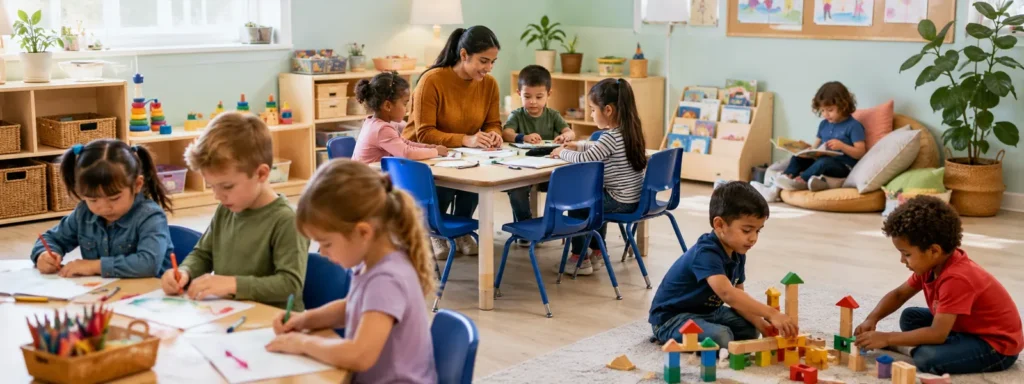
Preschool programs are early childhood education approaches designed for young children before they enter formal elementary school. They usually serve children ages 3 to 5, although some programs may also include toddlers or mixed-age groups, depending on the school.
A preschool program is more than a daily schedule or a list of activities. It usually includes the school’s teaching philosophy, classroom structure, learning materials, teacher-child interaction style.
In simple terms, a preschool program answers these questions:
- How do children learn in this classroom?
- What role does the teacher play?
- How much freedom do children have during the day?
- What kinds of activities and materials are used?
- How is the classroom arranged?
- What kind of learning experience does the school want to create?
Many of the clients we have served engage in detailed discussions with us regarding their preschool programs before undertaking layout planning or purchasing furniture. This is because the successful implementation of many pedagogical approaches depends heavily on spatial planning and the appropriate selection and arrangement of preschool furniture—factors that cannot be determined solely by the educational methodology itself.
Common Types of Preschool Programs
There are many types of preschool programs, and each one has its own teaching style, classroom atmosphere, and learning priorities. Some schools follow one approach closely, while others combine ideas from several programs.
Below are the most common types of preschool programs parents and preschool planners usually compare.
1. Montessori Preschool Program
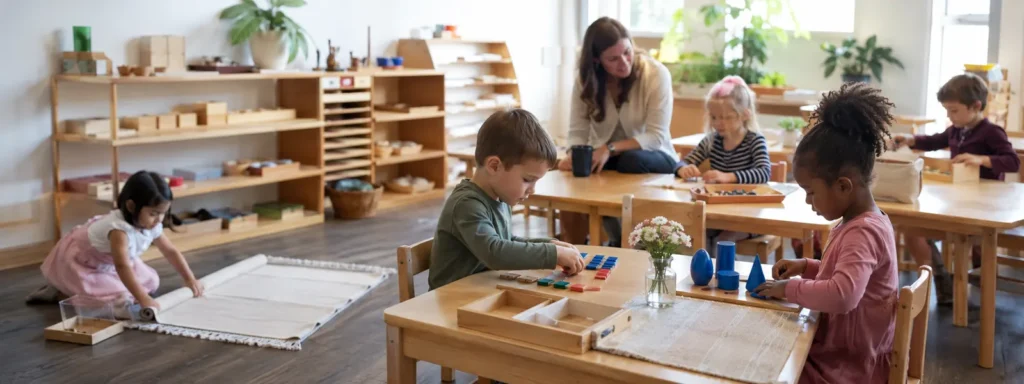
A Montessori preschool program focuses on independence, hands-on learning, order, and self-directed activity. Children usually choose their own work from carefully arranged materials and use them at their own pace. This helps children build concentration, responsibility, fine motor skills, and practical life skills.
In this type of program, the teacher is not always leading the whole class from the front of the room. Instead, the teacher observes, introduces materials when needed, and guides children individually or in small groups. Children are encouraged to care for their materials, return items to the correct place, and complete tasks with increasing independence.
A Montessori classroom setup usually includes:
- Low open shelves for self-selected materials
- Child-sized tables and chairs
- Practical life activity areas
- Sensorial material areas
- Quiet individual workspaces
- Floor mats for independent activities
- Clear storage systems
This type of setup helps children develop independence because the classroom is designed for them to use without constant adult help.
2. Reggio Emilia Preschool Program
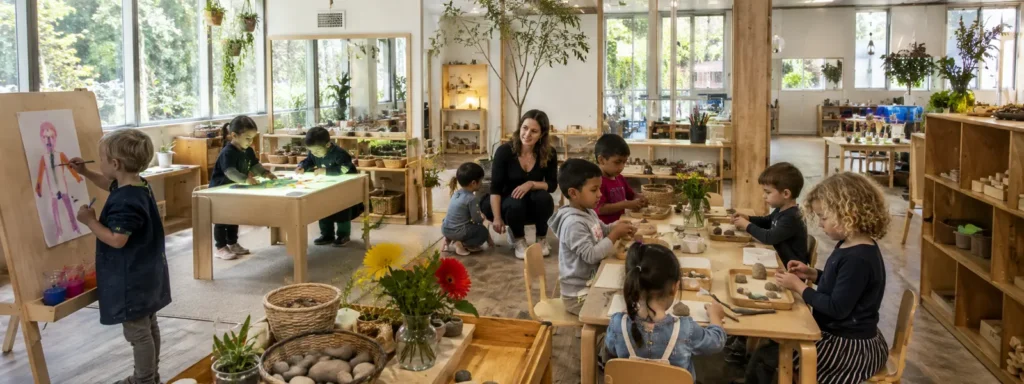
The Reggio Emilia approach focuses on child-led inquiry, project-based learning, creativity, and collaboration. Children are encouraged to ask questions, explore various ideas, create works of art, and express their thoughts in multiple ways.
In this approach, the teacher acts as a co-learner, observer, and facilitator. Instead of simply giving instructions, the teacher listens to children’s ideas, documents their learning process, and helps extend their questions into deeper projects. Children’s artwork, conversations, photos, and project records are often displayed in the classroom to make learning visible.
A Reggio Emilia classroom setup usually includes:
- Large project tables for group exploration
- Art and atelier areas
- Display walls for children’s work
- Light tables for visual exploration
- Natural material storage
- Flexible shelves for loose parts and project materials
- Comfortable areas for group discussion and documentation
This type of setup helps children learn through investigation, expression, and collaboration. The classroom should show what children are thinking, not just what they have finished.
3. Waldorf Preschool Program
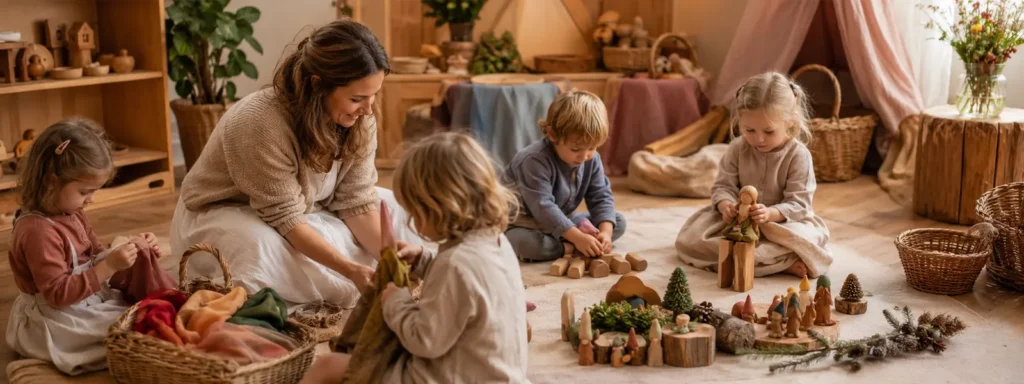
The Waldorf preschool curriculum emphasizes imagination, a rhythmic daily routine, a close connection with nature, physical movement, and emotional warmth. Children learn through activities such as role-playing, seasonal celebrations, and outdoor experiences. Furthermore—based on our industry experience—Waldorf schools maintain exceptionally high standards for teacher recruitment; this rigorous requirement is a primary reason why Waldorf schools remain relatively scarce in the current market.
The teacher’s role is nurturing and guiding. The focus is less on early academic pressure and more on imagination, sensory experience, social development, and a secure classroom atmosphere.
A Waldorf classroom setup usually includes:
- Warm wooden tables and chairs
- Pretend play furniture
- Soft fabrics and natural textures
- Storytelling or circle time area
- Open-ended toys and baskets
- Nature-inspired display areas
- Calm reading or rest corners
The classroom environment should not be cluttered or overcrowded; instead, space should be left for children to engage in activities, allowing them to create their own meanings and experiences.
4. Play-Based Preschool Program
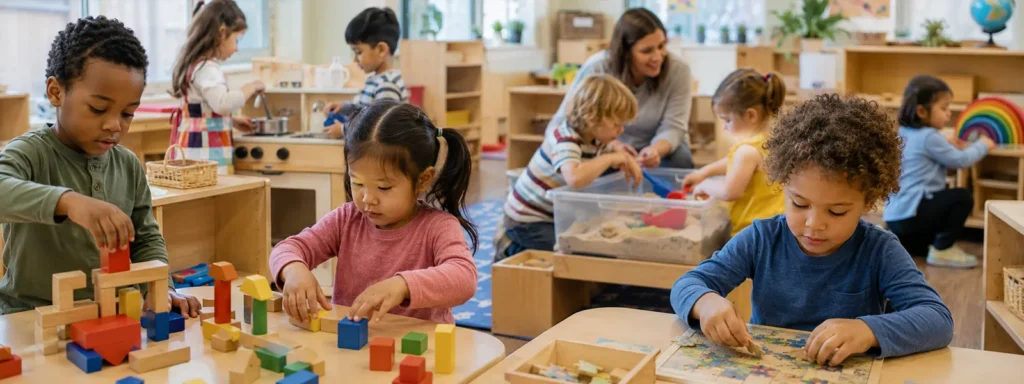
A play-based preschool program uses play as the main path for learning. Through play-based experiences, children cultivate the various skills essential for their development—such as language, social skills, problem-solving, and creativity.
The teacher observes children’s play and extends learning through questions, materials, language, and gentle guidance. The teacher may join play, introduce new vocabulary, help solve conflicts, or connect play to early learning goals.
A play-based classroom is usually active, flexible, and divided into clear learning areas. Children need space to move between activities and choose different types of play.
A play-based classroom setup usually includes:
- Dramatic play furniture
- Block play shelves
- Sensory tables
- Art activity tables
- Reading corners
- Soft seating or classroom rugs
- Open toy storage
- Flexible tables for small-group activities
5. HighScope Preschool Program
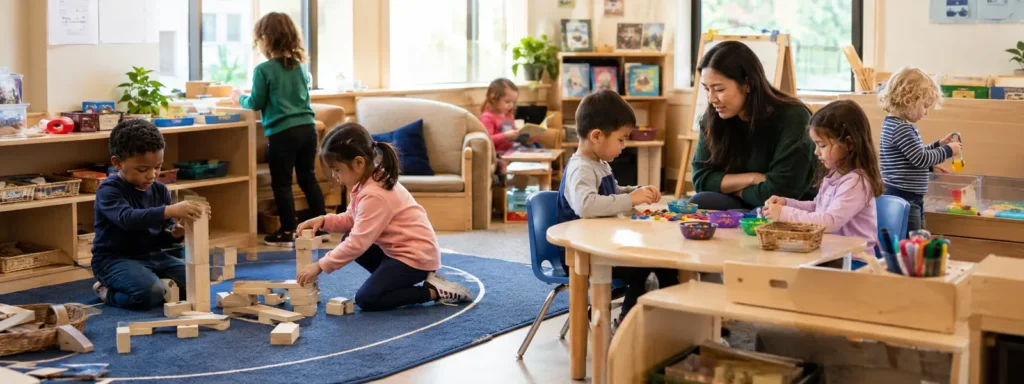
A HighScope preschool program is based on active learning, routine, and child planning. One of its key features is the plan-do-review process. Children make a plan, carry out their chosen activity, and then reflect on what they did.
Children learn by making choices, using materials, interacting with peers, and reflecting on their experiences. They are encouraged to think about what they want to do, how they will do it, and what will happen afterward. Instead of directing every activity, the teacher helps children plan, follow through, and reflect.
A HighScope classroom usually has clearly defined interest areas. Each area has accessible materials, labels, and enough space for children to work independently or with others.
A HighScope classroom setup usually includes:
- Clearly defined learning centers
- Labeled shelves and storage bins
- Planning and review areas
- Accessible classroom materials
- Group meeting space
- Small-group activity tables
- Open areas for active learning
6. Bank Street Preschool Program
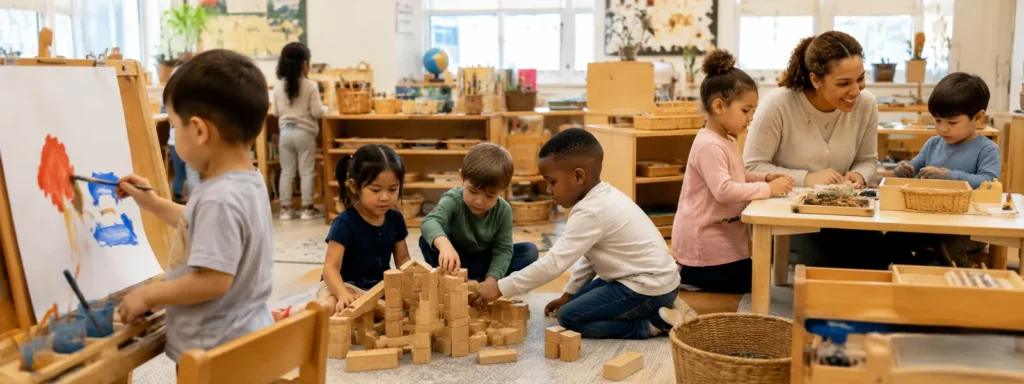
A Bank Street preschool program focuses on whole-child development. It supports children’s social, emotional, physical, and cognitive growth through real-life experiences, play, projects, and classroom relationships.
The teacher’s role is responsive and flexible. Teachers observe children’s needs, interests, and development, then plan experiences that connect to the real world. Learning may include pretend play, community themes, block building, art, storytelling, outdoor exploration, and group discussion.
The classroom environment should be flexible and social. Children need space to work together, act out real-life experiences, build, talk, create, and solve problems. The furniture should support both active play and quieter reflection.
A Bank Street classroom setup usually includes:
- Flexible activity tables
- Pretend play spaces
- Block and construction areas
- Group discussion areas
- Art and project spaces
- Reading and quiet corners
- Storage for real-world props and classroom materials
This type of setup supports balanced development because children can move between social play, hands-on work, creative expression, and group learning.
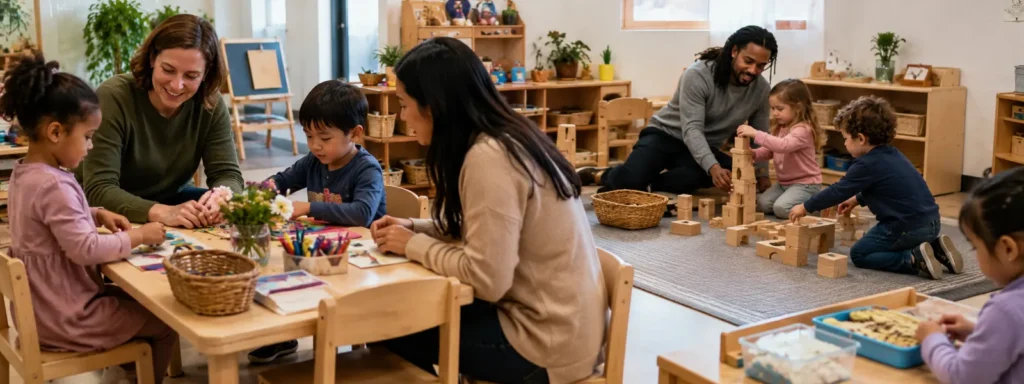
7. Cooperative Preschool Program
A cooperative preschool includes a high level of family participation. Parents may help in the classroom, assist with activities, support school operations, or take part in decision-making. This creates a close connection between home, school, and community.
The teacher still guides the educational program, but parents may play an active support role. Because more adults may be involved in the classroom, the daily routine and space organization need to be clear and easy to follow.
The classroom environment should be flexible and practical. It needs to support parent-child activities, group play, shared materials, and multipurpose use. Storage is especially important because different adults may need to find and return materials easily.
A cooperative preschool classroom setup usually includes:
- Flexible activity tables
- Shared classroom storage
- Parent participation areas
- Group play areas
- Multipurpose open space
- Clear organization systems
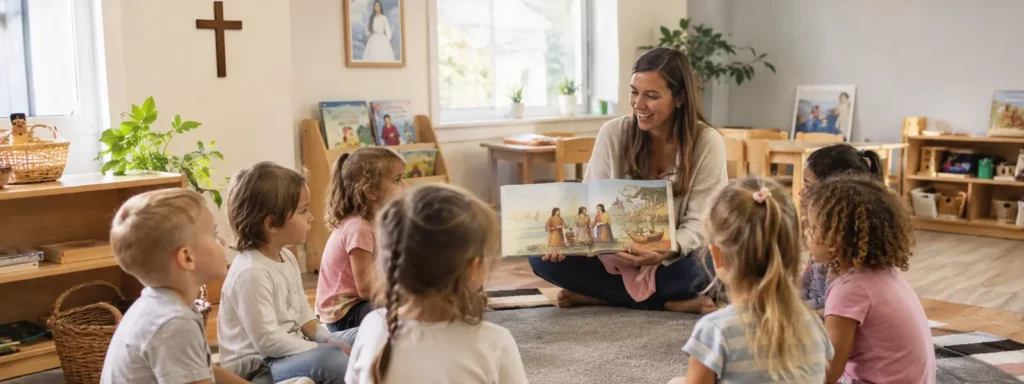
8. Faith-Based Preschool Program
A faith-based preschool combines early childhood education with religious values, spiritual teaching, or character development. The daily program may include stories, songs, prayer, values-based lessons, group activities, and regular preschool learning experiences.
The teacher’s role includes both providing guidance in early childhood education and offering support in terms of values. However, the school’s beliefs can influence classroom culture and daily routines.
A faith-based classroom setup usually includes:
- Group circle area
- Storytelling corner
- Art and activity tables
- Display boards for classroom themes
- Storage for teaching materials
- Dramatic play furniture
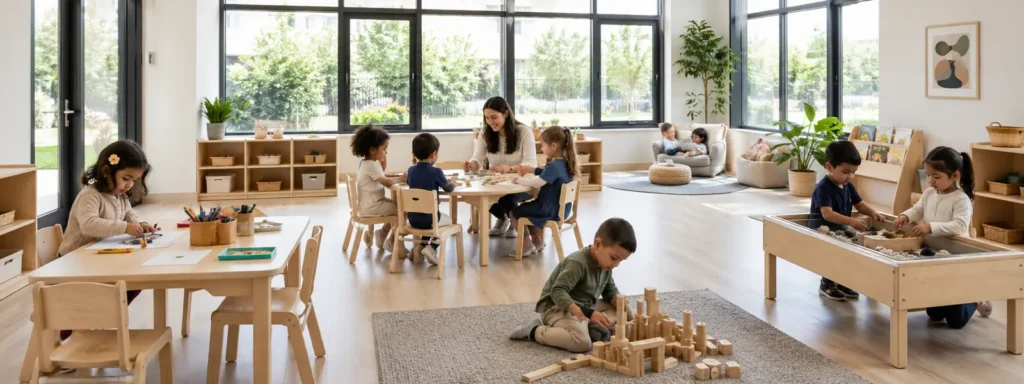
9. Mixed-Approach Preschool Program
Many modern preschool programs do not employ a single teaching method. Schools may combine multiple educational philosophies. This is often referred to as a blended learning program. A blended program can work well when the school has a clear purpose. The challenge is to avoid mixing too many ideas without a strong classroom structure.
This approach is well-suited for schools that cater to children with diverse needs, ages, and learning styles.
In a blended program, teacher planning is especially important. Without clear planning, the classroom can become confusing or overloaded.
A mixed-approach classroom setup usually includes:
- Flexible tables and chairs
- Low shelves
- Mobile storage units
- Reading corners
- Dramatic play areas
- Sensory or art tables
- Clear classroom zones
- Multi-use learning centers
- Teacher-led group space
This type of setup is practical for many daycare centers because it allows the classroom to support different teaching methods throughout the day.
Preschool Program Comparison Chart
The table below gives a quick overview of the main differences between common preschool program types.
| Preschool Program | Main Focus | Teacher’s Role | Classroom Style | Furniture and Setup Needs |
|---|---|---|---|---|
| Montessori | Independence, concentration, hands-on learning | Observer, guide, material presenter | Calm, orderly, child-accessible | Low open shelves, child-sized tables and chairs, floor work areas, organized material zones |
| Reggio Emilia | Creativity, expression, collaboration, project work | Listener, researcher, documenter | Open, flexible, expressive | Art tables, project displays, open storage, natural material areas, flexible group tables |
| Waldorf | Imagination, rhythm, storytelling, nature | Warm guide, rhythm keeper, model | Soft, natural, peaceful | Wooden furniture, simple play areas, cozy corners, natural baskets, pretend play spaces |
| Play-Based | Learning through play, social development, problem solving | Play facilitator, observer, gentle guide | Active, flexible, activity-rich | Dramatic play furniture, block storage, sensory tables, reading corners, open activity areas |
| HighScope | Active learning, planning, reflection | Questioner, supporter, routine guide | Clearly divided and purposeful | Interest areas, labeled storage, planning area, group meeting space, accessible materials |
| Bank Street | Whole-child development, social learning, real-life experience | Developmental guide, activity supporter | Warm, social, child-centered | Block area, dramatic play area, reading corner, art space, flexible activity tables |
| Cooperative | Family involvement, community learning | Teacher and family partner | Welcoming, community-based, flexible | Easy-to-manage activity areas, clear storage, tables for child and parent participation |
| Faith-Based | Values, routine, early learning, community | Teacher, caregiver, values guide | Warm, structured, familiar | Group area, reading space, activity tables, play zones, storage for learning and faith-related materials |
| Mixed or Blended | Combined learning goals | Flexible guide, curriculum adapter | Depends on the school’s model | Clearly defined learning zones, flexible furniture, organized storage, balanced group and independent areas |
In most real preschool settings, the program name is only the starting point. Parents should look at how teachers interact with children, how the classroom is arranged, how materials are used, and whether children seem comfortable and engaged.
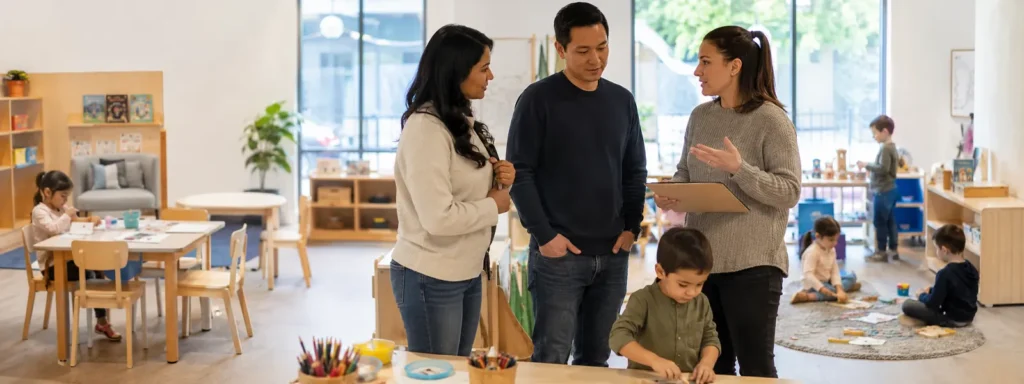
How to Choose the Right Preschool Program?
Choosing the right preschool program is not about finding the most popular name. With proper design and management, they are all good choices.
The better question is: Which program matches the child, the family’s goals, and the school’s daily environment?
Parents should look beyond the program name and pay attention to how children actually learn in the classroom. Preschool owners should also think beyond marketing labels and consider whether the teaching approach, classroom layout, furniture, materials, and teacher training can support the program in real daily use.
When comparing different preschool programs, consider these points:
- Child’s Personality: Choose a program that matches how the child learns, plays, communicates, and handles daily routines.
- Learning Goals: Decide whether independence, creativity, social skills, language learning, or kindergarten readiness matters most.
- Teacher’s Role: Look at whether teachers guide, observe, lead, or support children during daily activities.
- Visit the Classroom Environment: Check whether the classroom layout, furniture, and materials match the program’s teaching style.
- Classroom Size and Layout: Make sure the program can work well in the actual classroom space.
- Family or School Values: Choose a program that matches the family’s expectations or the school’s long-term positioning.
What Preschool Owners Should Consider When Planning a Program?
A preschool program should be planned together with the physical environment. If the program and classroom setup do not match, teachers may struggle, children may feel confused, and the school may not deliver the experience it promises to families.
Define the Program Direction First
Before planning a classroom, you should first determine the learning experience you want to create. The teaching approach should precede furniture selection. Otherwise, the classroom may look complete, but it may not truly support the children’s learning style.
Plan the Classroom Around Daily Activities
Classroom layout should align with daily activities. Each designated area should be easily identifiable for children. They should know where to play, where to study, where to read, and where to return belongings.
Choose Furniture That Supports the Program
Preschool furniture should serve teaching objectives, not merely decorate the classroom. Appropriate furniture can make teachers’ work easier and help children use the classroom with greater confidence.
Keep the Space Easy to Supervise
Preschool classrooms should be spacious enough so that teachers can clearly observe the children. It’s best to avoid using tall furniture that obstructs the view, ensuring that all areas and passageways are clearly visible and spacious.
Match Furniture Size to the Age Group
Toddlers need lower tables, smaller chairs, and simple storage. Older preschoolers may need larger activity tables and storage that supports independent use.
For mixed-age classrooms, furniture planning should be more careful. The classroom may need different seating options and materials arranged by difficulty level.
One of my clients, for example, explained his confusion when he first spoke with me, which was also why he hadn’t placed an order yet.
They had many ideas, but didn’t know how to incorporate them into the classroom layout and furniture selection. After discussing with them, I discovered that the client wanted children to have more opportunities for artistic creation, project exploration, and group activities, rather than rigid, traditional teaching.
We designed a classroom layout for the client that allows children to move freely, explore, create, and collaborate in groups. The client was very satisfied and it perfectly aligned with their educational goals. They no longer chose products solely based on appearance. They could see how each product supported the preschool education program they wanted to build.
Ultimately, the client’s school project opened as scheduled and is now operating very well.
If you are also planning to renovate or build a school and don’t have a clear goal to start your project design, you can contact West Shore Groups. We will help you complete the process and reduce your procurement and design burdens.
FAQs About Types of Preschool Programs
1. What is the most common type of preschool program?
Play-based and mixed-approach programs are very common in many preschool and daycare settings. They are flexible and can support different age groups, activity types, and learning needs. Many schools also combine play-based learning with Montessori and Reggio Emilia project-based learning.
2. Is Montessori better than play-based preschool?
Montessori is not automatically better than play-based preschool. They support children in different ways. Montessori focuses more on independence, order, hands-on materials, and self-directed work. Play-based preschool focuses more on learning through social play, movement, imagination, and exploration.
3. How does classroom setup affect preschool programs?
Classroom setup affects how children move, choose activities, use materials, interact with teachers, and stay engaged. The environment should support the program’s learning goals.
4. Can one preschool use more than one teaching approach?
Yes. Many modern preschools use a mixed approach. This can work well when the classroom is organized clearly and teachers understand how each area supports learning.
5. What should parents look for when visiting a preschool?
Parents should look at how teachers interact with children, how children use the classroom, whether the materials are age-appropriate, and whether the environment feels safe and organized. It is also helpful to observe whether children have enough opportunities for play, movement, choice, group learning, and quiet time.
6. What should preschool owners consider before choosing a program type?
Preschool owners should consider their target families, classroom size, age groups, teacher training, budget, furniture needs, daily schedule, and long-term school positioning.
7. Do different preschool programs need different furniture?
Yes. Different preschool programs often need different furniture and classroom layouts. For example, a Montessori classroom needs open bookshelves and materials easily accessible to children. A Reggio Emilia classroom needs flexible activity tables and display areas. A play-based classroom needs role-playing furniture, sensory tables, and open storage space. Different teaching styles will have different types of furniture.
8. What is the best preschool program for young children?
There is no single best preschool program for every child. The best choice depends on the child’s personality, learning style, family priorities, teacher quality, and classroom environment.
Conclusion
There are many types of preschool education programs, each with its own advantages, and each can create different learning experiences for children.
For parents, the most important step is not choosing the most popular program name. It is understanding how the program works in daily classroom life and whether it fits the child’s personality, needs, and learning style.
For preschool owners and planners, the program decision should guide every part of the classroom environment. Teaching approach, teacher role, learning areas, furniture height, storage design, classroom flow, and material access should work together.
The best preschool program is not always the most famous one. It is the one that works well for the children, teachers, families, and classroom space. When the teaching approach and classroom environment support each other, children can learn more naturally, teachers can manage the day more smoothly, and the preschool can show its value more clearly to families.
For early childhood centers planning a new classroom or upgrading an existing space, thoughtful furniture planning can help turn a preschool program from an idea into a real learning environment.