Many parents start asking this question when their child is around 2 or 3 years old: What age do kids start preschool? The simple answer is that most children begin preschool between ages 3 and 5, but there is no single age that works for every child.
But age alone does not tell the whole story. A child may be old enough for preschool but still need more time to feel comfortable with separation, group activities, toileting, or daily routines. Another child may start at 3 and adjust well because they are curious, social, and ready to explore a classroom setting.
For parents, the real question is not only “Is my child old enough?” It is also “Is my child ready for this kind of environment?”
A good preschool should support children at their own developmental stage. The classroom should feel safe, easy to move around in, and designed for young children’s bodies and routines.
This guide explains common preschool entry ages, what each age group typically needs, and how families and early childhood programs can make better decisions based on children’s actual developmental needs.
What Age Do Kids Usually Start Preschool?
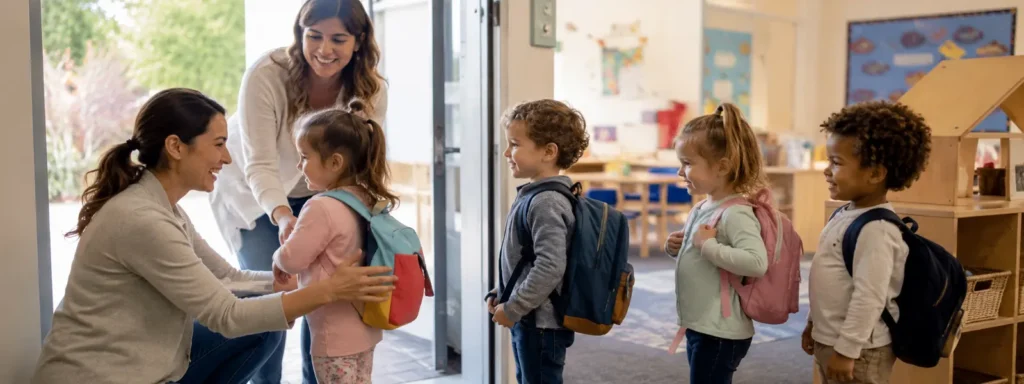
Most children usually start preschool between 3 and 5 years old. In many programs, age 3 is the common starting point for preschool, while age 4 is often used for Pre K or kindergarten preparation programs.
That said, the starting age can vary by school, country, state, and program type. Some schools accept children at 2 or 2.5 years old, especially in toddler or early preschool programs. Other schools may require children to be 3 years old by a certain date before they can enroll.
The Common Preschool Age Range
For most families, preschool starts around these ages:
| Child’s Age | Common Program Type | What It Usually Means |
|---|---|---|
| 2 to 3 years old | Toddler or early preschool | More focus on care, movement, language, and simple routines |
| 3 to 4 years old | Preschool | More social play, independence, classroom routines, and early learning |
| 4 to 5 years old | Preschool or Pre K | More preparation for kindergarten, group activities, and early academic skills |
| Around 5 years old | Kindergarten | More formal school readiness and structured learning |
Benefits of Starting Preschool at the Right Age
Starting preschool at the right age can make a big difference in how children feel, learn, and adjust. When children start at a time that matches their readiness, preschool becomes a positive first step into group learning instead of a stressful experience.
- Better social adjustment: Preschool gives children chances to play near others, share materials, take turns, and slowly build friendships.
- Stronger independence: Children begin practicing small daily tasks, such as putting away belongings, washing hands, choosing activities, and cleaning up after play.
- Smoother daily routines: A ready child can adjust more easily to group time, outdoor play, rest time, and classroom transitions.
- More confidence in the classroom: When children feel ready, they are more willing to explore materials, join activities, and communicate with teachers.
- Better preparation for kindergarten: Preschool helps children build early social, emotional, language, and self help skills before entering a more structured school setting.
- More positive learning experiences: Children are more likely to enjoy songs, stories, art, building, sensory play, and group activities when the activities match their age and attention span.
Overall, starting preschool at the right age helps children feel safe, capable, and ready to take part in daily learning. When the timing and classroom environment work together, preschool becomes a more comfortable and meaningful experience.

Signs Your Child Is Ready for Preschool
Age is important, but it is not the only sign that a child is ready for preschool. Readiness is usually shown through small daily behaviors, not one big milestone.
A child does not need to be perfect at everything before starting preschool. Crying at drop-off, needing help with clothing, or feeling shy around new children can all be normal. What matters more is whether the child can slowly adjust with support from teachers and a stable classroom routine.
Emotional Readiness
One of the biggest signs of preschool readiness is whether a child can spend some time away from parents or main caregivers.
A child may be emotionally ready if they can:
- Stay with another trusted adult for short periods
- Accept comfort from someone other than a parent
- Calm down after a difficult moment
- Show curiosity about new places or people
- Return to play after being upset
If a child becomes extremely distressed every time they separate from a parent, they may need a slower transition or a shorter program at first.
Social Readiness
Preschool is often the first place where children spend regular time with a group of peers. They do not need to be perfect at sharing or taking turns, but they should show some interest in other children.
A child may be socially ready if they:
- Notice and watch other children
- Play near other children
- Join simple group activities for a short time
- Begin to take turns with help
- Show interest in pretend play, songs, stories, or movement games
Social readiness grows through practice. Preschool should provide enough space and materials for children to interact without constant conflict.
Communication Readiness
Children do not need advanced language skills before starting preschool, but they should be able to express basic needs in some way. This can be through words, gestures, pointing, short phrases, or other communication methods.
A child may be ready if they can communicate simple needs such as:
- I need help.
- I am hungry.
- I need the bathroom.
- I am tired.
- I do not like this.
- I want to play.
Self-Help Skills
Preschool helps children become more independent, but a child should have some early self help skills before starting. These skills do not need to be perfect. The goal is that the child is beginning to try.
Useful self help skills include:
- Washing hands with help
- Eating snacks or meals with some independence
- Taking off a jacket
- Putting toys back with guidance
- Carrying a small backpack
- Sitting at a table for a short activity
Routine Readiness
Preschool life is built around simple routines. Children arrive, put away belongings, join activities, eat snacks, clean up, rest, and transition between different parts of the day.
A child may be ready if they can begin to follow simple routines such as:
- Coming to the table for snack
- Sitting for a short story
- Cleaning up with reminders
- Moving from one activity to another
- Following simple teacher directions
A predictable classroom layout can make these routines easier. When children know where to sit, where to place their things, and where to find materials, they feel more secure.
Does a Child Need to Be Potty Trained Before Preschool?
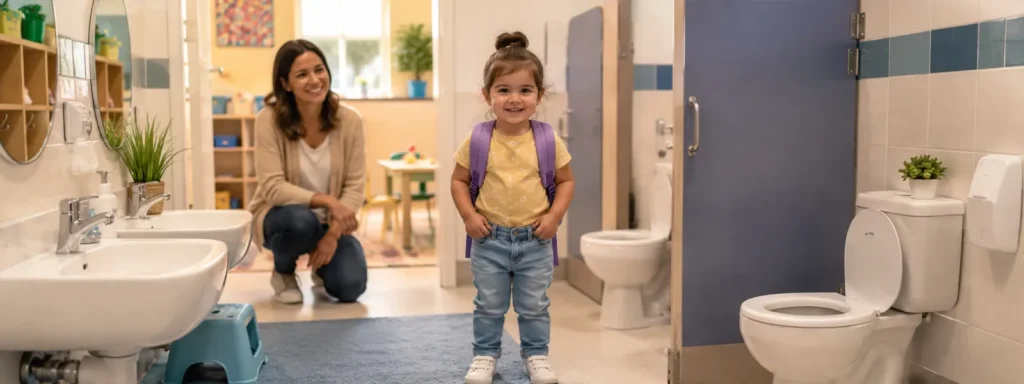
Potty training is one of the most common concerns parents have before sending a child to preschool. Many parents worry that their child may be the right age for preschool but not fully ready for the bathroom routine.
The answer depends on the preschool program. Some preschools require children to be fully potty trained before enrollment, especially programs for 3 to 5-year-olds. Other programs, especially toddler or early preschool classrooms, may accept children who are still learning.
Parents should always check the school’s policy before applying. Potty training rules can vary widely from one preschool to another.
What If Your Child Is Not Ready for Preschool Yet?
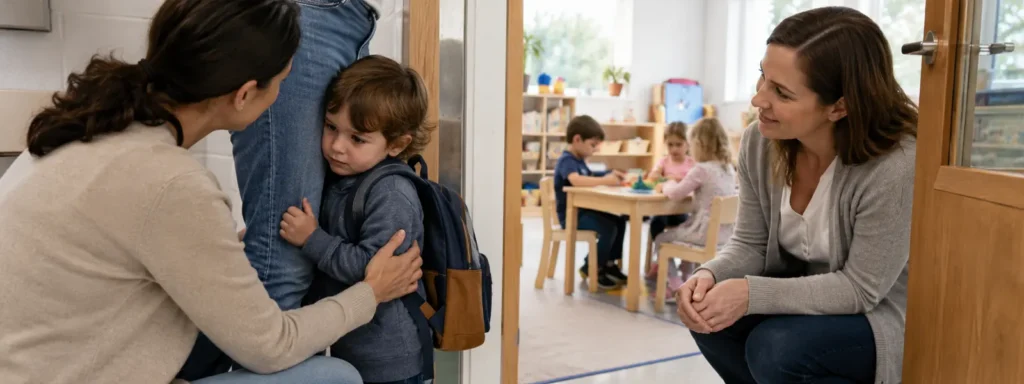
If your child is not ready for preschool yet, it does not mean something is wrong. Children develop at different speeds, and some simply need more time before entering a group learning environment.
Some children are ready at 3. Others may do better starting at 4. Some children may benefit from a gentle toddler program, a half-day schedule, or a small playgroup before joining a full preschool classroom.
Readiness is not a race. A child who starts later can still adjust well, build friendships, and enter kindergarten with confidence.
1. Signs Your Child May Need More Time
Your child may need more preparation if they:
- Become extremely distressed during every separation
- Cannot communicate basic needs in any way
- Struggle with simple routines even with help
- Show very little interest in group activities
- Need more support with eating, toileting, or transitions
- Become overwhelmed in noisy or busy environments
These signs do not mean preschool is impossible. They simply mean the child may need a slower transition or a more supportive program.
2. What Parents Can Do Before Starting Preschool?
If your child is not ready yet, you can use daily life at home to build simple preschool skills. These do not need to feel like lessons. Small habits can make the preschool transition much easier later.
You can start with a predictable daily routine. Try to keep regular times for meals, play, cleanup, handwashing, and rest. Preschool classrooms follow daily rhythms, so familiar routines at home can help children feel safer when they enter a new environment.
3. Try a Gentler Starting Option
If a full preschool schedule feels too much, a softer start may be a better choice. Some children do well when they begin with a shorter day, fewer days per week, or a smaller group setting.
Parents can consider:
- Half-day preschool
- Parent-child classes
- Small playgroups
- Toddler programs
A gentle transition can help children become familiar with teachers, classmates, routines, and classroom spaces without feeling too much pressure.
How Preschool Starting Age Affect Classroom Needs?
The age at which children start preschool has a direct impact on classroom design. A room for 2-year-olds should not be arranged in the same way as a room for 4 or 5-year-olds. Children at different ages have different body sizes, attention spans, movement patterns, social skills, and levels of independence.
For parents, this means the preschool environment should feel suitable for the child’s age, not just attractive in photos. For preschool owners, it means classroom furniture and layout should be planned around the children who will actually use the room every day.
Conclusion
Most children start preschool between ages 3 and 5, although some may begin earlier in toddler or early preschool programs. The right starting age depends on the child’s development, family needs, school policy, and the type of program available.
Age is a helpful starting point, but it should not be the only factor. Parents should also look at whether their child can handle short separations, communicate basic needs, follow simple routines, show interest in other children, and participate in age-appropriate activities.
For preschools, classroom planning that aligns with children’s age characteristics is just as important as the curriculum itself. Appropriate furniture and layout help foster children’s independence, facilitate teacher management, support daily activities, and ensure the long-term usability of the classroom.
If you are planning or updating a kindergarten classroom, West Shore Groups can recommend suitable solutions based on your child’s age and room layout.
FAQs
1. Is 3 a good age to start preschool?
Yes, 3 years old is a common age for starting kindergarten. Many 3-year-olds are ready to adapt to a regular school environment.
2. Is preschool required before kindergarten?
In many places, preschool is not required before kindergarten. However, preschool can help children build social skills, independence, classroom routines, early language skills, and confidence before entering a more formal school environment.
3. Does my child need to be potty trained before preschool?
It depends on the school and the age group. Some preschool programs require children to be potty trained, especially for 3-year-old and 4-year-old classes. Toddler programs and daycare-based programs are more likely to support children who are still toilet training.
4. How long does it usually take a child to adjust to preschool?
Most children need a few days to a few weeks to adjust to kindergarten life. Some children adjust quickly, while others need more time to get to know their teachers, classmates, and daily routine.
5. Should my child start with half day or full day preschool?
A half day program may be better for children who are new to group care, still need more rest, or feel anxious when separating from parents. A full day program may work well for children who already handle longer routines and enjoy group activities. Parents should choose the schedule based on the child’s energy, confidence, and ability to manage a full preschool day.
6. How can you determine if a preschool is putting too much pressure on a child?
A preschool classroom may feel overwhelming if it is too crowded, noisy, visually cluttered, or hard for children to move through safely. Parents can look for clear activity areas, open walking paths, simple storage, calm corners, and furniture that fits young children’s size.
7. What type of classroom setup works best for first-time preschoolers?
First-time preschoolers usually do best in a classroom that feels simple, predictable, and not too crowded. Clear zones, low shelves, child-sized furniture, soft spaces, easy-to-reach materials, and safe movement paths help children understand the room more quickly.
8. What if my child still needs a nap?
Parents should ask whether the preschool provides nap time, quiet time, or a calm rest period. A classroom with a comfortable rest area or quiet corner can help children manage the day without becoming overtired or overwhelmed.