Montessori Preschool Bedroom Design requires careful planning when an entire class shares one rest space. You need to consider bed numbers, room layout, and daily rest routines. A well-designed bedroom should keep children comfortable while making supervision easier for teachers. In this guide, we’ll cover the key considerations for creating a practical and welcoming Montessori preschool bedroom.
What Is a Montessori Preschool Bedroom?
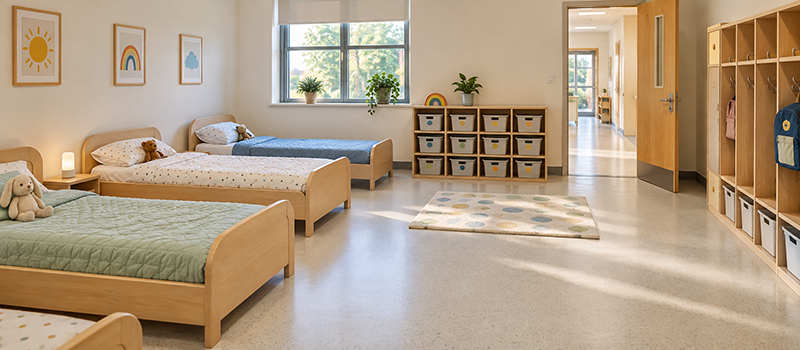
A Montessori preschool bedroom is a resting space designed around children’s needs, comfort, and independence. It creates a calm and organized environment where children can rest comfortably and gradually learn to manage simple routines on their own.
Compared with a traditional preschool nap room, a Montessori bedroom pays more attention to children’s individual needs. Montessori classrooms often include children aged 3 to 6, so their sleeping needs can be different. Younger children may need longer naps, while older children may prefer quiet rest. The room is designed to accommodate these differences, with furniture that children can use independently and an arrangement that allows teachers to provide care and supervision.
How Much Space Does a Montessori Preschool Bedroom Design Need?
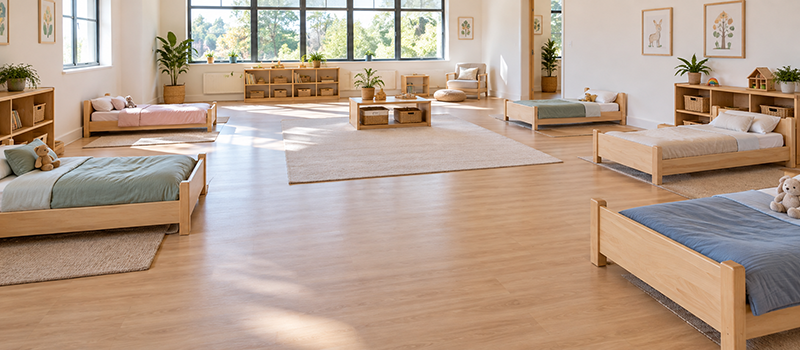
Before designing your Montessori preschool bedroom, you need to know how much space is required. This depends on the number of children, the size of the beds, and the available floor area. Working these out first will help you decide whether your room can comfortably accommodate everyone.
Determine How Many Beds You Need
Start by counting how many children will use the bedroom during the same rest period. Count everyone who will use the room, then check how many individual sleeping places your center needs to provide.
Next, check your local childcare regulations to see whether every child needs an individual bed, cot, or mat. If sleeping places are required for everyone, use that number as your starting point. If separate quiet activities are allowed, you can plan the bed quantity around the children’s actual rest needs.
You can also consider a few extra beds for occasional use or changing sleeping habits before finalizing the number.
Calculate the Required Floor Space
Once you know how many beds you need, check their dimensions to calculate the space they will occupy. Remember to allow room for children and teachers to move around, along with any permanent furniture.
You should also check local regulations, as daycare space requirements per child and bed spacing rules vary between regions. This will help you estimate the actual floor space needed rather than just the area occupied by beds.、
To estimate the total space, add the floor area occupied by beds, the space needed for walkways and teacher access, and any permanent furniture. Compare the result with your local childcare requirements.
Assess Your Available Room Space
Compare your estimated requirements with the usable floor area of your room. Remember to account for built-in cabinets, columns, and other fixed features that take up space.
The room’s shape also matters. A narrow or irregular room may be harder to use than a square room of the same size. If the available space is insufficient, you may need to consider another room or adjust the number of sleeping places while meeting local requirements.
How to Plan the Bedroom Layout?
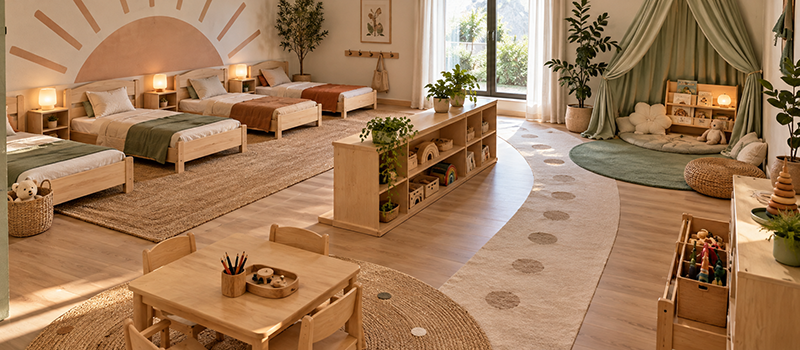
Once you’ve confirmed the available space, you can decide where to place the beds, how to organize different areas, and how children and teachers will move around the room.
Arrange Beds and Sleeping Areas
Start by choosing a quieter part of the room for the main sleeping area, preferably away from frequently used doors.
You can arrange beds in rows or smaller groups depending on the room’s shape. Rows generally work well in rectangular rooms, while smaller groups may suit irregular spaces. Keep the arrangement consistent so children can easily recognize their sleeping places.
Organize Functional Areas
Besides the main sleeping area, you may need a quiet activity area for children who don’t nap. If space allows, you can set up a small reading corner where they can enjoy books or other quiet activities without disturbing sleeping children.
When dividing the room, try to keep the sleeping and activity areas separate. You can place the reading corner closer to the entrance and keep the beds in a quieter part of the room. This allows children to move between areas with fewer interruptions during rest time.
Plan Walkways and Teacher Supervision
Make sure children can reach their beds without stepping over other sleeping spaces. Keep walkways, entrances, and exits clear.
Teachers should also be able to see and reach every child easily. Avoid tall furniture that blocks their view, and consider placing children who need more assistance closer to the teacher’s supervision position.
How to Choose the Right Preschool Beds?
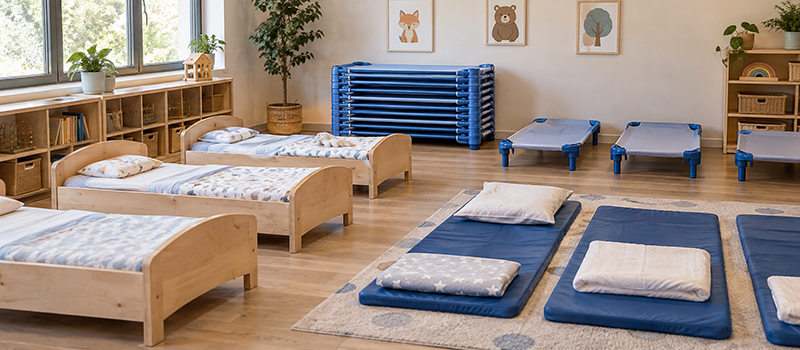
The right bed depends on your children’s needs and how you use the room. Montessori preschools often prefer beds that children can use independently, but you should also consider how practical they are for everyday classroom use.
Floor Beds and Low Wooden Beds
Floor beds and low wooden beds make it easier for children to get in and out on their own, making them a good choice for Montessori preschools with dedicated sleeping rooms. When choosing these beds, look for a comfortable sleeping height, stable frames, and proper mattress support. For beds close to the floor, make sure you can clean underneath and prevent moisture buildup.
Stackable Nap Cots
If your classroom also serves as a nap room, stackable nap cots may be more practical. Teachers can set them up for rest time and store them afterward, leaving the room available for other activities. Choose cots that are lightweight, easy to clean, and stack securely. If you need a large number, check how much storage space the full stack will require.
Nap Mats
Nap mats are suitable for preschools that need flexible sleeping arrangements and have limited storage space. They’re easy to move and put away, making daily setup more convenient. When selecting mats, pay attention to their thickness, cushioning, and washable surfaces. Make sure they provide suitable support for children and meet your local childcare requirements.
How to Organize Bedding and Personal Storage?
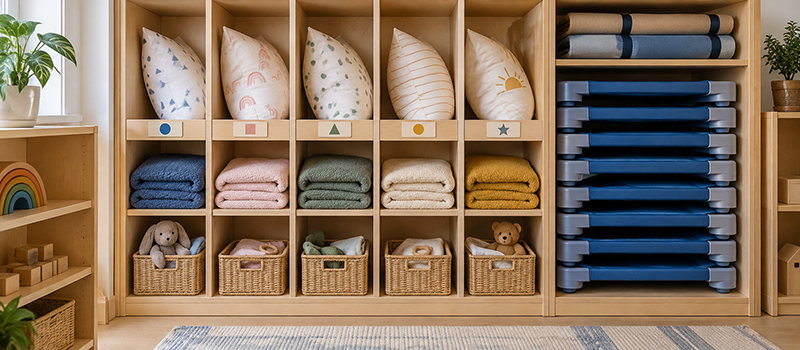
A Montessori preschool bedroom needs suitable storage for bedding, personal belongings, and other rest-time supplies. You can organize these items based on who uses them and how often they are needed, making it easier for children and teachers to find what they need.
Provide Individual Bedding Storage
Each child should have their own space for sheets, blankets, and other bedding. You can use labeled compartments, baskets, or bedding bags to keep everything separate. Low, open classroom storage cabinets are a good choice if you want children to take out and put away their belongings independently.
Provide Space for Comfort Objects
Some children may bring a favorite stuffed animal or another familiar comfort object to help them settle during rest time. If your preschool allows these items, you can keep them in a small basket or compartment assigned to each child, so they are easy to find and don’t get mixed up with other children’s belongings. Make sure the items are safe for the children’s ages.
Store Spare Supplies and Sleeping Equipment
Spare bedding, laundry bags, and cleaning supplies should have their own storage areas. Keep clean and used bedding separate, and store cleaning products in locked cabinets away from children. If you use stackable cots or nap mats, provide a designated place to store them when they’re not in use, preferably close to the sleeping area for easier setup.
How to Choose Lighting, Colors, and Decorations for a Preschool Bedroom?
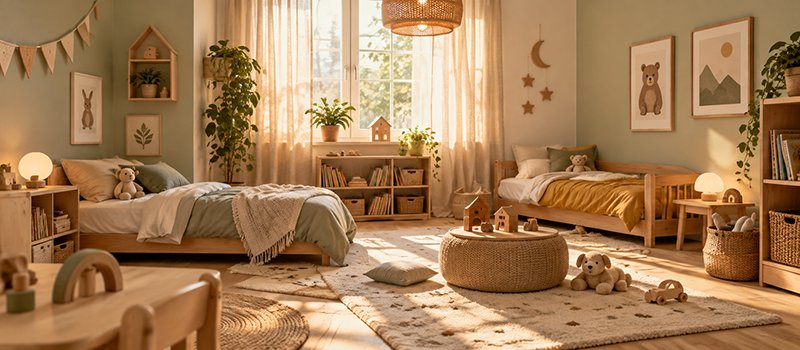
Lighting, colors, and decorations can change how a preschool bedroom looks and feels. When choosing these elements, you want to create a space that feels welcoming to children while remaining suitable for rest time.
Choose Suitable Lighting
Natural light can make a bedroom feel bright and pleasant, but strong sunlight may disturb children during afternoon naps. You can use adjustable blinds or curtains to control the amount of light entering the room throughout the day.
For artificial lighting, consider warm, adjustable lights that can be dimmed during rest time. The room doesn’t need to be completely dark, as teachers still need enough visibility to supervise children safely.
Select a Comfortable Color Scheme
You don’t have to use only white or beige to create a Montessori bedroom. Soft greens, muted blues, and warm neutral colors can all work well, depending on the overall style of your preschool.
Try to keep the main colors consistent across the walls and furniture. If you want to introduce brighter colors, you can use them in smaller details without making the room look too busy. Natural wood furniture is also easy to match with different color schemes.
Keep Decorations Simple
You can decorate the bedroom with nature-inspired pictures, simple wall art, or children’s artwork to make the space feel more familiar. Choose a few suitable pieces rather than filling every wall with decorations.
When deciding where to place them, keep hanging objects away from beds and make sure everything is securely attached. Decorations should also be easy to clean and should not interfere with the room’s daily use.
What Are the Safety and Hygiene Requirements?
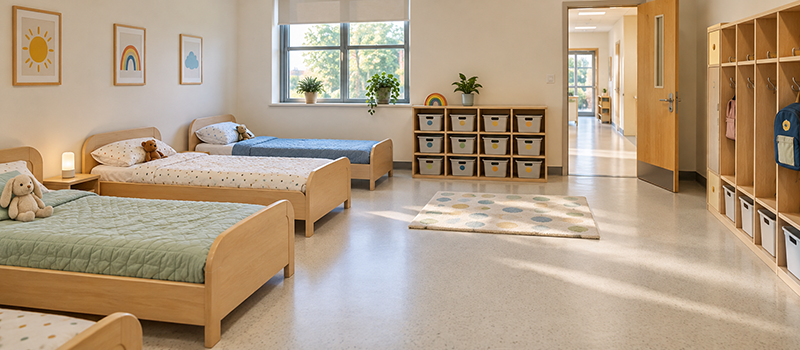
When designing a Montessori preschool bedroom, you need to consider both children’s safety and daily cleaning. Since the room is used by many children, furniture should be safe for independent use, and the space should be easy for teachers to maintain.
Check Furniture and Material Safety
Before purchasing beds and cabinets, check whether the furniture is stable and has rounded edges, secure joints, and no exposed sharp hardware. Pay particular attention to gaps around bed frames where children’s fingers or limbs could get trapped. Tall cabinets should be anchored to the wall, and furniture with wheels should have reliable locks.
You should also check what materials and finishes are used. For wooden furniture, ask about formaldehyde emissions, paint safety, and relevant product testing. Depending on your market, certifications or test reports related to standards such as ASTM, CPSIA, or EN 71 may be relevant, but make sure they actually apply to the product you are purchasing.
Make Cleaning and Hygiene Easier
Choose beds with smooth, washable surfaces and structures that allow teachers to clean underneath. Avoid designs with deep grooves or hard-to-reach corners where dust and dirt can collect. For floor beds, check regularly for moisture beneath the mattress and make sure it can dry properly.
Establish a regular washing schedule for each child’s bedding, and wash items sooner if they become soiled or contaminated. When using cleaning products, follow the product instructions and the hygiene requirements of the local childcare facility.
Check Fire Safety and Emergency Access
Ensure that beds and stored equipment do not block doors, emergency exits, or necessary evacuation routes. Keep sleeping areas clear. Additionally, position beds away from heaters, exposed electrical wiring, and other potential hazards.
Check that smoke alarms and other required fire safety equipment are installed and maintained according to local regulations. If you add more beds or rearrange the room later, check the evacuation routes again to make sure the new layout remains safe.
FAQs
1. Can Boys and Girls Share the Same Montessori Preschool Bedroom?
Yes. Boys and girls can generally share a supervised preschool bedroom, provided the arrangement follows local childcare regulations. You should also consider children’s privacy and individual needs when planning shared rest spaces.
2. Should a Montessori Preschool Bedroom Have a Bathroom Nearby?
Having a bathroom nearby is helpful, as children may need to use the toilet before or after rest time. It also makes daily routines easier for teachers, provided appropriate supervision can be maintained.
3. Can You Use Bunk Beds in a Montessori Preschool Bedroom?
Bunk beds are generally not recommended for preschool bedrooms. Children under six should never use an upper bunk due to the risk of falls. Low individual beds or approved nap cots are usually more suitable.
4. Can a Montessori Preschool Bedroom Be Shared by Two Classes?
Yes, two classes can share the same bedroom if there is enough space and local childcare regulations allow it. You can arrange different rest schedules or assign separate sleeping areas to each class. Make sure the room can accommodate all children using it at the same time and that supervision is properly maintained.
5. Do Preschool Children Need Their Own Pillows and Blankets?
Children should have their own bedding to maintain hygiene and prevent items from being mixed up. Whether pillows and blankets are needed depends on the children’s ages, individual needs, and local childcare requirements. Choose bedding that is comfortable, easy to wash, and suitable for the children’s age group.
Conclusion
A Montessori preschool bedroom should work well for the children who use it and the teachers who care for them. Before finalizing your design, think about how the room will function during a normal school day. A practical arrangement that supports everyday routines will be easier to manage as your preschool grows.
If you’re planning a new bedroom or updating an existing rest area, West Shore can help you with space planning, furniture selection, and customization to create a bedroom that fits your preschool’s needs.