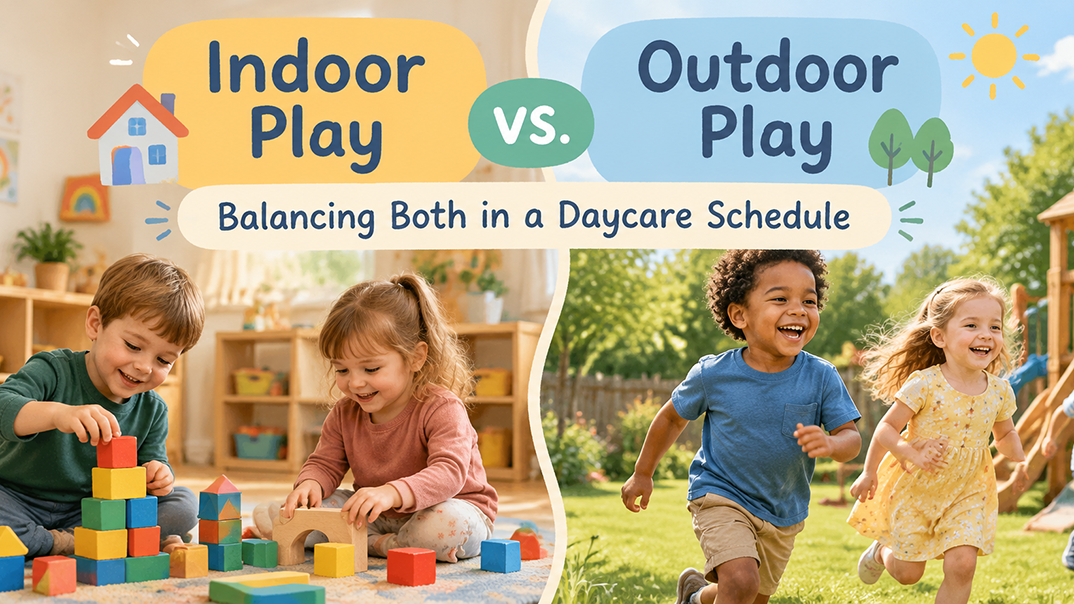
Indoor vs outdoor play in a daycare: Which needs more emphasis? Well, our answer is neither. Instead, a balance of both is needed to ensure children have access to the best of both worlds.
In this blog, we will discuss;
- Daily outdoor and indoor play requirements by the state
- Benefits of indoor and outdoor activities for preschoolers
- An ideal daycare schedule
- Kid-friendly equipment and furniture
Indoor vs. Outdoor Play in a Daycare: What is the Difference?
Indoor and outdoor settings are crucial for a child’s holistic development. A good balance gives children the opportunity to explore, experience, learn, and socialise. Let’s move on to discussing both.
What Indoor Play Looks Like
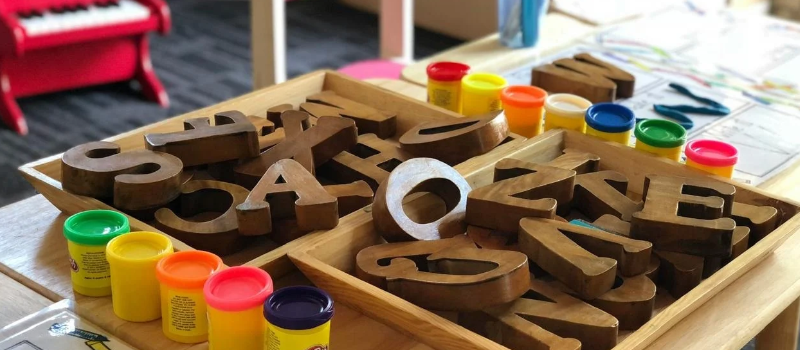
Indoor play helps children develop cognitive, motor, and interpersonal skills. Guided indoor activities help kids explore their creativity.
Some Examples of Indoor Activities
- Block building with a soft block set
- Drawing, painting, dancing
- Storytelling and poem recitation
- Reading and learning activities with materials like sandpaper letters, planet core puzzles, etc.
- Learning about shapes, numbers, colours with knobless cylinders set and geometric solids
What Outdoor Play Looks Like
Outdoor play for children includes a carefully planned and safely structured area. Daycare outdoor play areas may include pretend play setups, wooden climbers, and a designated sand play area. Children take turns while climbing wooden ramps, riding tricycles, and playing with kitchen sets, activities that promote qualities of cooperation and teamwork.
Some Examples of Outdoor Activities
- Supervised mud, sand, and water play
- Gardening and watering plants
- Observing birds, insects, wind, and flowers to understand colors, textures, and shapes
- Riding cycles and tricycles
- Role-playing with an outdoor pretend kitchen, market, and shop setup
Benefits of Indoor and Outdoor Play
The combination of indoor and outdoor activities ensures the holistic development of children. Below, we have discussed the outcome of balancing both in a daycare.
| Area Of Development | Indoor Play | Outdoor Play |
| Physical Development | Drawing and building blocks help develop fine-motor skills and improve hand-eye coordination. | 1. Jumping, climbing, and playing in sand help build balance, confidence, and an understanding of the surroundings. 2. Physical activity promotes overall growth and development. 3. Staying in touch with nature helps children develop immunity during early years. |
| Cognitive Development | 1. Solving puzzles, engaging in problem-solving games 2. Pretend-play with child-friendly kitchen sets, etc. | Exploring nature, comparing objects, observing changes, and testing ideas |
| Language Development | Telling stories and reciting poems with hand gestures brings curiosity in kids. This promotes language development in them. | 1. Exploring textures, making discoveries in nature, and observing animals, plants, and flowers. 2. Children make discoveries and learn to express themselves by drawing. |
| Social Development | Sharing materials like tricycles, taking turns on rides and swings, and participating in cooperative games. | Group games, negotiating play, and exploring together. |
| Creativity | Art, blocks, construction, and imaginative play | 1. Nature art, playing with loose parts. 2. Creating handmade crafts with natural materials. |
How to Strike a Balance Between Time Spent Indoors and Outdoors
To strike a balance, daycare providers must schedule the play routine of the preschoolers around local rules set by the state jurisdiction.
Other factors to consider are:
- The child’s energy levels, age, and individual interests
- Weather and safety conditions
- Written consent of the parents where required, especially for activities that involve water and colors
- Individual preferences also play a major role in deciding the best option when it comes to choosing between indoor vs. outdoor play at daycare. Based on their interests, you can customize the daily plan. For example, some children may enjoy colouring activities, while others may prefer reading.
- Some children enjoy drawing, reading, or painting, while others prefer outdoor games and water play. Keep schedules flexible so every child can explore different activities and enjoy their interests.
The goal of indoor vs. outdoor play in daycare is not to decide which is better, but to create a balance between the two.
An Example of a Balanced Daycare Schedule
We have created a chart representing an ideal daycare schedule only for reference purposes.
| Time | Infants (0–12 months) | Toddlers (1–3 years) | Preschoolers (3–5 years) |
| 8:00 – 9:00 AM | Playing on the floor with sensory toys | 1. Free play like building blocks 2. Coloring 3. Painting 4. Engaging toddlers as per their individual preference | 1. Puzzles 2. Inculcating a reading habit by introducing age-specific books; pretend play with a kitchen set |
| 9:00 – 10:00 AM | 1. Feeding 2. Resting time 3. Supervised outdoor time | 1. Outdoor movement 2. ball games 3. Pretend play | 1. Outdoor games 2. Nature exploration, collecting twigs, leaves, petals |
| 10:00 – 11:00 AM | Tummy time | 1. Art 2. sensory play | 1. Painting 2. crafts 3. building challenges |
| 11:00 AM – 12:00 PM | 1. Feeding 2. naps | 1. Music 2. Some movement with dance, poems 3. Lunch | 1. Storytelling 2.Group activities |
| 12:00 – 2:00 PM | 1. Feeding 2. Reading audio storybooks to them; sleep as needed | 1. Lunch 2. Nap and quiet rest | 1. Lunch 2. Reading and rest |
| 2:00 – 3:00 PM | 1. Gentle interaction 2. Playing on floor mat | 1. Pretend play 2. Puzzles | 1. Pretend play 2. Creative projects- assigning them tasks like creating figures with clay, coloring a cartoon character |
| 3:00 – 4:00 PM | 1. Feeding 2. Carry them in fresh air | 1. Snack 2. Outdoor exploration | 1. Snack 2. Outdoor adventure games 3. Pretend play with kitchen set 4. Climbing child-friendly wooden ridges |
| 4:00 – 5:00 PM | Relaxing them before collection | 1. Free play 2. Training them to keep their toys and materials back in storage boxes before collection | 1. Choice-based play 2. Training them to keep their toys and materials back in storage boxes before collection |
Which Indoor and Outdoor Activities Work Well Together?
Indoor and outdoor activities, when included in the everyday schedule of children, ensure they learn, stay active, happy, and enjoy. Some indoor and outdoor activities that work together are mentioned below:
Speaking and Communication Skills
Teachers can teach children new letters and words by reciting poems and telling stories. Picture books, alphabet rugs, and alphabets printed on tactile tablets can be used for practicing alphabet recognition.
Afterwards, teachers can use the mini outdoor wooden hut for playing word games. They can ask children to find objects that start with a specific letter.

Nature and Science
Ask kids to collect leaves in different colors outdoors. To combine this with an indoor activity, ask them to sort the leaves by color, size, and shape. This activity can be done indoors with leaf cards.
Movement and Mathematics
You can use geometric solids to teach numbers and shapes to kids during their time indoors. Follow this by asking kids to count the toys or props and put them back into their designated boxes while counting.
Similarly, mathematics can be practiced outdoors with the help of building blocks, recognizing the shapes of pretend-play tiny houses, triangular dens, etc. You can also ask children to take five steps to reach a designated point or ask them to count how many children are standing around them.
Building Blocks and Making Sand Castles
Encourage children to use blocks to build different structures. Outdoors, they can build sandcastles on sand tables. These activities help children explore various textures. Building blocks promote creativity, while sand play develops patience and problem-solving skills.
International Comparison Of Daycare Outdoor Play Requirements
Rules and requirements vary, and the chart below gives a quick overview of the daily outdoor play requirement by states/areas in different countries.
Country Daily Outdoor Time Requirement Official Website Link
| Country | Daily Outdoor Time Requirement | Government Website Link |
| United States Of America | 60 to 90 minutes daily (This varies for each state) | ChildCareEd |
| United Kingdom | Check latest update (Last updated in September, 2026) | UK EYFS Statutory Framework |
| Canada | 60 minutes daily (Check latest update) | Government of Canada Early Learning |
| Australia | Unrestricted indoor/outdoor flow has been made mandatory by the state government. (Check latest update) | ACECQA Quality Standards |
| New Zealand | Daily outdoor/indoor activities are a must. (Check latest update) | NZ Ministry of Education Licensing |
Indoor vs. Outdoor Play: Balancing Both in Daycare According to Age Group
Daycare staff must plan and choose activities that match each child’s age and interests. Here are some other activities that daycares can include in their schedules based on the children’s age groups:
| Age Group | Indoor Play | Outdoor Play |
| Infants | 1. Soft toys 2. Audio books 3. Images that can help them recognize different objects and animals | Infants can be laid on a soft, kid-friendly mat. Fresh air, gentle sunlight, natural sounds, and different textures can support their sensory development. |
| Toddlers | 1. Blocks 2. LEGO 3. Pretend play 4. Solving simple puzzles | 1. Supervised water play in small inflatable pools 2. Hand-in-hand walks outdoors. |
| Preschoolers | 1. Origami 2. Creating crafts 3. Painting 4. Storytelling 5. Building blocks | Group games, nature hunts, counting objects, climbing wooden step bridges, gardening, and being involved in activities like singing and dancing. |
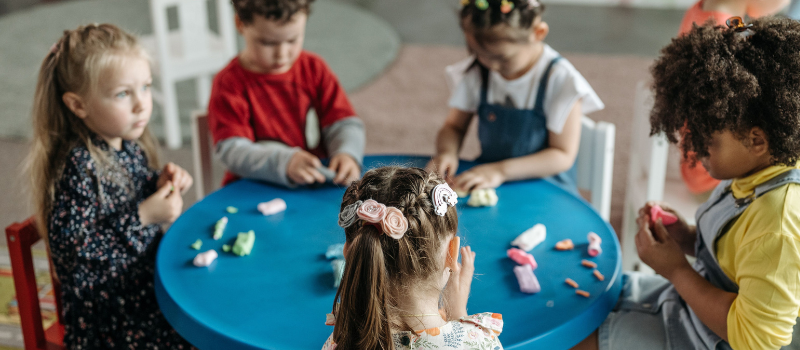
How Classroom Layouts Support a Balanced Daycare Curriculum
A preschool daycare should have a balanced schedule of learning with a cohesive curriculum. It should include indoor learning activities and outdoor play sessions for sensory development.
And this comes down to classroom layout, setup and specialised furniture used. When you design classroom spaces thoughtfully and furniture is chosen for flexibility, children will easily move between activities. This will also help caregivers in managing transitions between indoor and outdoor sessions.
However, designing daycare layout on your own or by a professional is a different approach. An expert will ensure the layout of daycare comply with legal requirements and caters to caregivers and children’s best interests.
Here is how the right furniture supports that balance:
Low-rise Shelves and Organisers for Quick Transition
Child-friendly furniture like low-rise shelves and organisers decrease dependency over caregivers. And let children choose their favourite item like puzzles, art & craft or other learning materials on their own. But here’s a trick, having dedicated space for all learning materials requires a clear labelled box. This way you can easily switch between an outdoor or indoor schedule within minutes without any hassle.
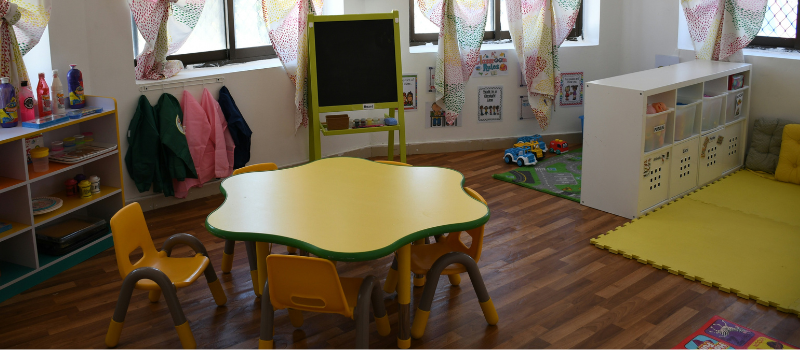
Child-Friendly Chairs and Tables For Focussed Indoor Activities
Having a comfortable set of chairs and tables promotes a little longer structured activities like art & craft, snacks etc. Also, it gives children the concentration required to balance out high-energy outdoor play. Having child-friendly furniture also helps children to refocus on indoor activities after returning from outside activities.

Soft Rugs and Cushioned Seating for Quiet Reset Time
After a good session of outdoor play, children require sufficient time to wind down and rest. For this, a soft rug or cushion can create a cosy corner or story reading corner with quiet play. This way you help them prepare for the following activity.
Easy Access to Outdoor Area
When you place personal belongings like jackets. hats, shoes and sun protection near the exit point, help children get ready for outdoor play quickly and orderly. Also, caregivers can make sure that each child is well prepared for outdoor sessions. For example, in summers you require sunscreen and during winters warm layers are essential.
West Shore’s classroom furniture and design layouts can help daycare providers plan spaces that support this indoor-outdoor balance from the start.
FAQs
Get answers to all your queries in the following frequently asked questions section.
1. How can daycares make transitions between indoor and outdoor play easier?
Smooth transitions help children move between activities without confusion or frustration. Daycare providers can try these simple strategies:
- Give a five-minute warning before switching activities
- Use songs to signal clean-up time and prepare them for going outdoors
- Keep shoes and jackets easily accessible
- Use picture cards to show what comes next
- Keep the area connecting the indoor and the outdoor obstacle-free
2. How can daycares make indoor and outdoor time safe for kids?
Before starting the day, make sure to check all the toys, furniture, and equipment, indoor and outdoor, for any broken parts or sharp edges. So that children can run and play around freely, always keep the pathways and doorways clear. On top of all this, it is ideal to actively supervise kids.
3. Is it healthy for toddlers to play outside?
Yes, playing outside helps develop strong muscles and bones through natural stimulation. While the session boosts vitamin D through sunlight. This ultimately helps improve immune function, cognitive growth and improve sleep schedule.
4. Does the change of weather impact outdoor/indoor activities in winter?
Yes, change of weather, like the arrival of winters, do impact both outdoor and indoor activities. When the temperature is really low, outdoor activities like running or cycling are recreated indoors. While more energy burning and snow play activities are included in the daycare schedule.
Conclusion
Indoor and outdoor play work best when they are planned as connected parts of the day. Daycare providers must design a flexible routine and ensure the balance of outdoor and indoor play opportunities for children.