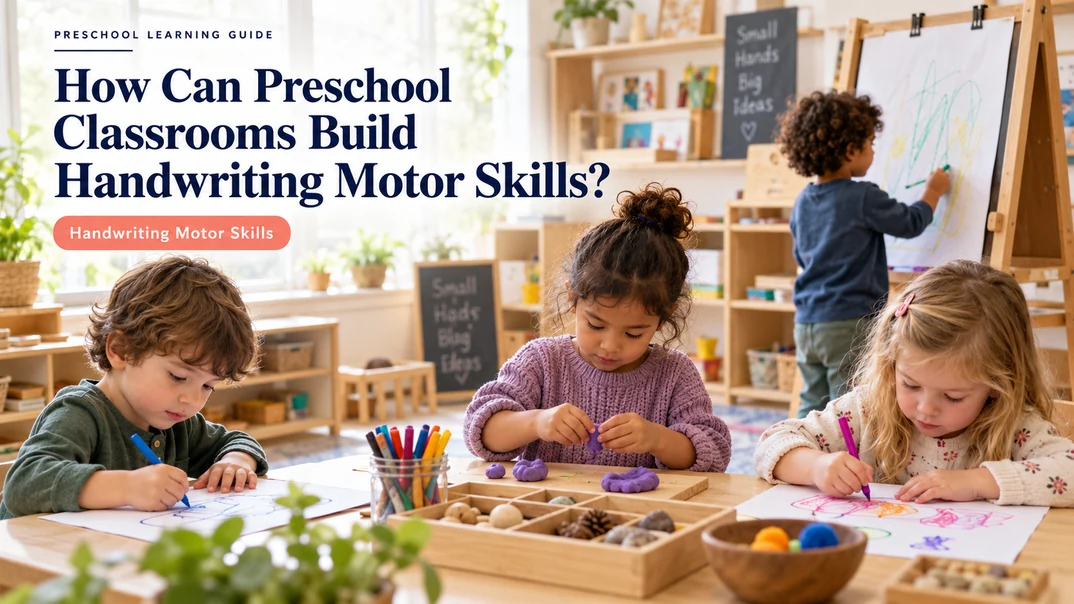
Handwriting motor skills describe the physical control children use when drawing, making marks, and beginning to write. In preschool, these skills develop through everyday experiences such as art, construction, sensory play, and self-care. A child may be interested in letters but still find it difficult to guide a crayon across paper or use both hands together. This guide explains what these skills involve, which activities can support them, how to choose useful materials, and what you can observe as children progress.
What Are Handwriting Motor Skills?
Handwriting motor skills are the physical movements and coordination children use to control a pencil, crayon, or other writing tool. They involve more than hand and finger strength. Children also need control of their arms and wrists, coordination between their eyes and hands, and the ability to use both hands together during activities.
You can observe these skills in everyday preschool activities. A child may hold paper with one hand while drawing with the other, use their fingers to pinch play dough, or guide a crayon along a simple path. Each activity involves different movements, and children develop these abilities at different rates.
| Skill Component | What You May Observe |
|---|---|
| Hand and finger control | The child pinches, presses, squeezes, and releases materials. |
| Wrist and arm control | The child moves a crayon or brush across a surface with increasing control. |
| Hand-eye coordination | The child watches a line or shape and adjusts hand movements to follow it. |
| Bilateral coordination | The child uses one hand to hold paper while the other draws or cuts. |
| Postural stability | The child maintains a comfortable position while working at a table or easel. |
These skills develop through varied experiences, not pencil practice alone. Drawing, modeling clay, puzzles, and other hands-on activities give children chances to practise different movements in meaningful ways.
Why Do Handwriting Motor Skills Matter in Preschool?
Handwriting motor skills give children a foundation for later writing. As controlling a tool becomes easier, children can focus more on the marks they want to make, moving from simple lines and shapes toward forming letters and words.
These skills can also affect how children experience early writing. A child may recognize the letters in their name but find it difficult to form them on paper. Varied, age-appropriate activities give children time to practise before writing tasks become more demanding.
You do not need to rely on long pencil sessions. Offer playful activities that match each child’s current ability. For example, a child who finds small shapes difficult can begin with larger marks on an easel. You can support early writing by offering playful drawing and mark-making activities that help children develop the control they need for later writing.
Children develop at different rates, so focus on steady progress rather than expecting every child to form letters at the same age.
Which Preschool Activities Build Handwriting Motor Skills?
You can help children develop the movements needed for writing through activities they already enjoy. Instead of asking every child to practise with a pencil, offer different ways to squeeze, pick up, turn, draw, and make marks. Each activity gives children a chance to practise a different movement.
| Activity | How Children Take Part | Skills They Practise |
|---|---|---|
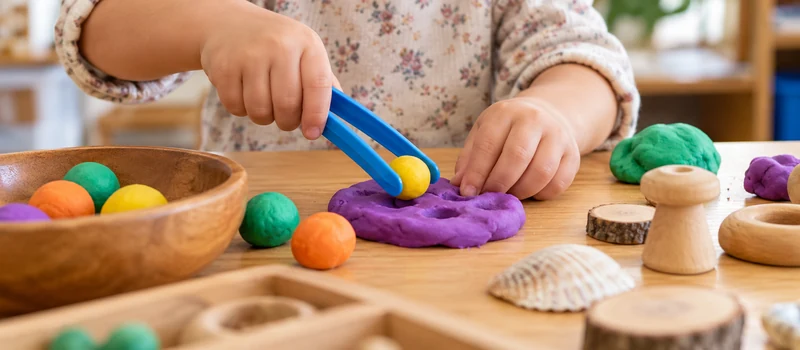
| Play Dough | Roll, squeeze, pinch, and flatten dough to make different shapes. | Hand strength and finger control |
| Tongs and Sorting | Pick up objects with child-sized tongs and transfer them between containers. | Finger control and controlled release |
| Cutting and Tearing Paper | Tear paper into pieces or cut along simple lines with child-safe scissors under supervision. | Two-hand coordination and hand control |
| Threading and Puzzles | Thread suitable large pieces, fit puzzle pieces together, and turn objects to find the right position. | Finger dexterity and hand-eye coordination |
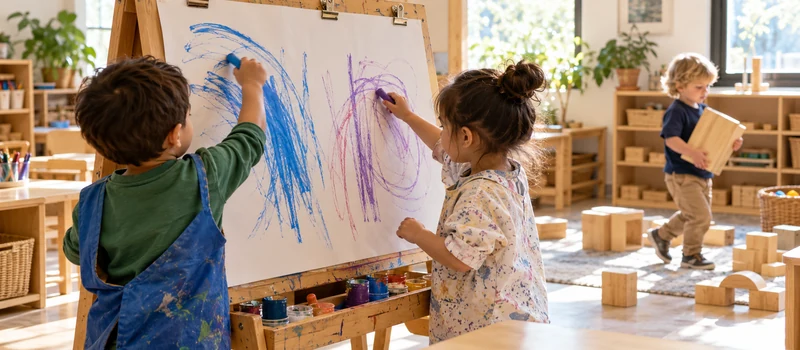
| Easel Drawing | Draw large lines, circles, and curves on a vertical surface. | Arm and wrist control |
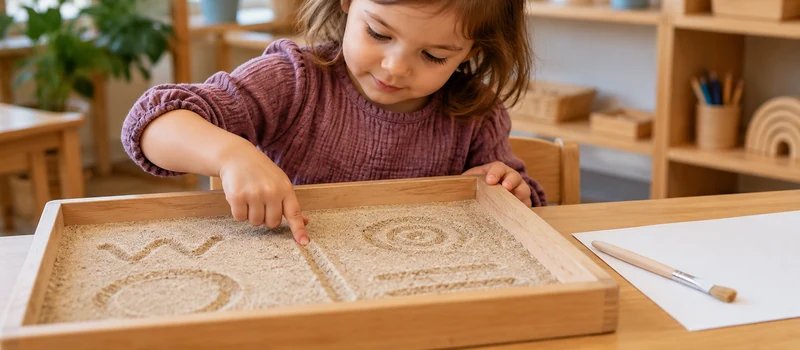
| Sand Tray Mark-Making | Use a finger or suitable tool to make lines, curves, and simple shapes in sand. | Visual-motor coordination and early mark-making control |
| Block Building | Pick up, position, stack, and rearrange blocks to create simple structures. | Hand control and visual-motor coordination |
Adjust one part of an activity when a child finds it too difficult. If small objects are hard to pick up with tongs, begin with larger objects and a wider container. Once the child manages that comfortably, make the target a little smaller.
You can also use sensory activities or block play to give children different ways to grasp, position, and release objects. Choose activities based on the movements you want children to practise, rather than trying to use every activity in the table.
As children take part, notice whether the activity is manageable and engaging. If it remains frustrating, simplify the task or change the tool before moving on to something new.
How Should You Plan a Handwriting Motor Skills Area in a Preschool Classroom?
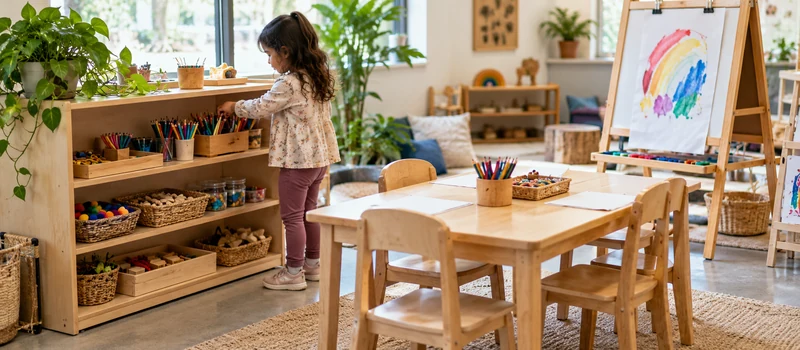
You do not need a separate room for handwriting-related activities. Set aside a clearly defined part of the classroom where children can draw, manipulate materials, and work without interrupting other activities.
Plan for the kinds of work surfaces you will use. A child-sized table and chairs support seated drawing, puzzles, and threading, while an easel provides a vertical surface for larger drawing movements. Choose the combination that fits your program and the space available.
Keep the area organized with accessible storage, such as preschool storage cabinets. Place frequently used materials where children can reach them, and leave enough room for chairs, trays, and teachers to move comfortably.
Before purchasing furniture, mark the table, easel, and storage dimensions on your floor plan. This helps you check whether the activity area fits without taking space away from other classroom needs.
What Materials Support Handwriting Motor Skills?
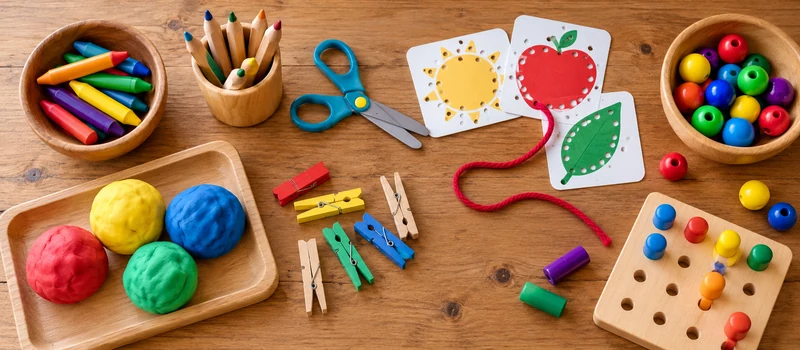
Choose materials according to the actions children can practise with them and the practical needs of your classroom. A small selection of drawing tools, modeling materials, manipulatives, and mark-making surfaces can support a range of activities without creating unnecessary storage demands.
| Material Category | Examples | What to Consider When Purchasing |
|---|---|---|
| Drawing and Writing Tools | Chunky crayons, short pencils, washable markers, paintbrushes | Choose a comfortable size and weight. Washable options can simplify classroom cleanup. |
| Modeling Materials | Play dough, soft modeling clay, dough rollers | Check whether children can squeeze, roll, pinch, and press the material. Confirm age suitability and cleaning requirements. |
| Manipulative Materials | Child-sized tongs, pegs, puzzles, threading materials | Check piece size, ease of handling, durability, and supervision requirements. |
| Mark-Making Surfaces | Paper, easels, chalkboards, reusable drawing boards, sand trays | Choose surfaces that support different mark-making movements and are easy to clean or reuse. |
| Supporting Materials | Trays, baskets, paper holders, material containers | Choose trays and containers that keep activities together and make materials easy to return. |
You can build your collection gradually. Start with versatile materials that children can use in several ways, then add specialized items when you see a clear need in your program.
Before ordering, check the recommended age range, durability, cleaning requirements, and whether small parts need close supervision. Also consider how often each item will be used and whether teachers can maintain it easily.
Choose materials that fit your children’s abilities and your classroom routines, rather than purchasing a large collection at once.
How Can Teachers Observe and Support Progress?
Observe how children approach an activity, not just what they produce. Look for whether they can use the tool comfortably, manage the task without excessive effort, and stay engaged. These observations help you decide whether to keep the activity, adjust it, or offer a different level of challenge.
| What You Observe | What You Can Try |
|---|---|
| The child struggles to hold or control a drawing tool. | Try a thicker or easier-to-hold tool and see whether the child can make marks more comfortably. |
| The child can draw large shapes but struggles with smaller ones. | Continue with larger shapes, then gradually reduce the size as the child gains control. |
| The child has difficulty holding paper steady while drawing. | Use a non-slip mat or paper holder so the child can focus on drawing. |
| The child loses interest or becomes frustrated quickly. | Shorten the activity or simplify one step, then offer another opportunity later. |
| The child completes familiar activities comfortably. | Introduce one small challenge, such as a more detailed shape or a different surface. |
Try changing one factor at a time, such as tool size, surface, or task difficulty, so you can see what helps. If a child experiences persistent pain, unusual fatigue, or ongoing difficulty across several activities, share specific observations with the family and follow your setting’s process for seeking additional support.
FAQs
1. Are Handwriting Motor Skills the same as fine motor skills?
They overlap, but they are not exactly the same. Fine motor skills describe controlled hand and finger movements more broadly. Handwriting Motor Skills also include posture, shoulder and wrist control, visual-motor coordination, bilateral use of the hands, motor planning, and the ability to control a tool across a surface.
2. Should preschool children practice writing letters every day?
You can offer meaningful opportunities to draw, make marks, notice print, and explore letter-like forms, but long formal handwriting practice is not necessary for every child. A varied classroom routine gives children more useful preparation when it includes movement, art, manipulatives, sensory work, and short writing-related choices.
3. What if a child is interested in letters but struggles with drawing?
Keep the interest in letters while adjusting the physical demand. Offer larger surfaces, thicker tools, vertical work, sensory marks, or materials that let the child build letter shapes without needing precise pencil control immediately. You can support the idea of writing and the movement needed for writing at the same time.
4. Does every preschool child need a tripod pencil grasp?
No single grasp should be treated as the only sign of readiness. The more useful questions are whether the child can hold and move the tool comfortably, control the mark, use the other hand to support the work, and continue without excessive fatigue. If the grasp is causing pain or limiting participation, adapt the tool and seek appropriate support.
5. How Can You Tell Whether a Handwriting Activity Is Too Difficult for a Child?
Look for repeated frustration, difficulty completing the movement even with support, or signs that the child is becoming tired or uncomfortable. Try simplifying one part of the task, such as using a larger surface or easier-to-hold tool. If difficulties continue across different activities, record what you observe and discuss it with the appropriate support team.
Conclusion
Handwriting motor skills develop through varied, everyday activities that help preschool children gain control of their hands and prepare for future writing. If you are planning or updating a preschool classroom, West Shore can help you choose suitable tables, easels, storage, and learning materials to support these activities and make better use of your classroom space.