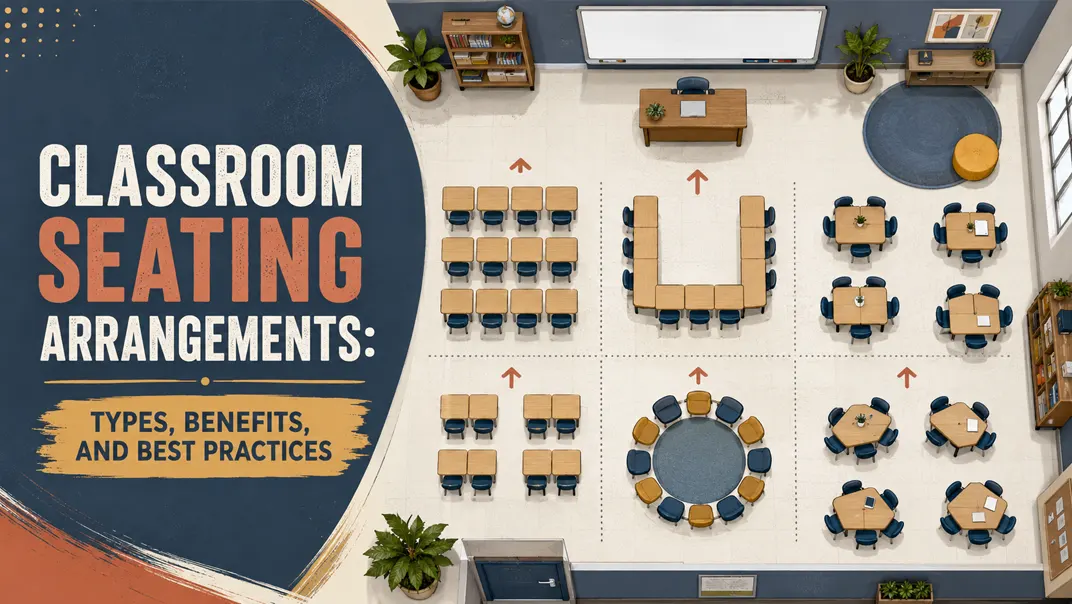
The role that classroom seating arrangements play in the learning process is often far more significant than many people realize. The way desks, chairs, tables, and open areas are positioned directly impacts students’ daily learning experiences within the school environment.
In reality, there is no single “universal” seating arrangement that works for every classroom. A layout that is highly effective for direct instruction (lecture-style teaching) may not necessarily be the optimal choice for facilitating group discussions, collaborative projects, or hands-on practical activities. For this very reason, teachers, school administrators, and classroom space planners must carefully consider the specific functions and intended uses of a space before determining a seating arrangement.
In this guide, we will delve into the fundamental nature and significance of classroom seating arrangements, and analyze the characteristics of various seating layouts.
What Are Classroom Seating Arrangements?
Classroom seating arrangements refer to the way students’ seats, desks, tables, and learning spaces are placed inside a classroom. They decide where students sit, how they face the teacher, how they interact with classmates, and how easily everyone can move around the room.
The choice of seating arrangement depends on multiple factors: the number of students, classroom size, teaching methods, and the type of learning activities planned.
Why Classroom Seating Arrangements Matter?
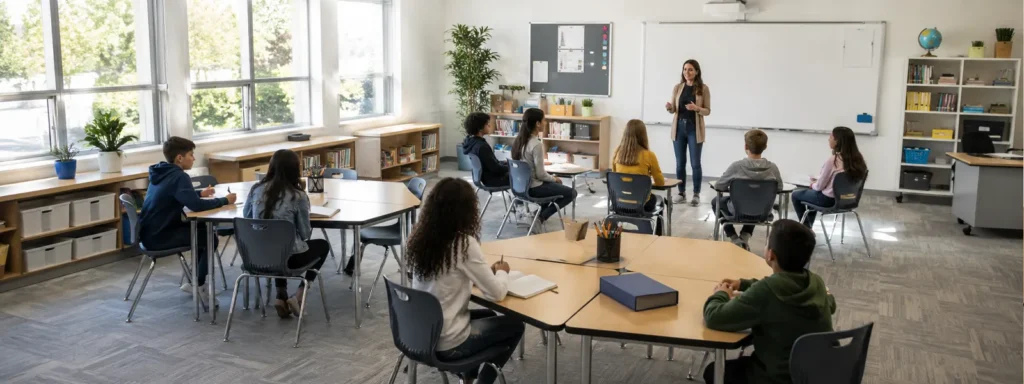
Effective seating arrangements influence many aspects of a classroom’s success:
- Enhance Student Engagement
Properly arranged seating encourages participation and interaction. Students can work together easily in groups, listen attentively during discussions, or collaborate on projects without feeling cramped. - Support Classroom Management
The right layout allows teachers to observe all students, minimize distractions, and maintain order. Strategic placement of desks and pathways ensures that teachers can reach every student without interrupting learning. - Optimize Learning Activities
Different learning activities have different spatial needs. For example, group work requires tables arranged in clusters, while individual assignments might work best in rows or paired desks. Flexible layouts allow teachers to switch arrangements depending on the activity. - Improve Space Utilization and Safety
Proper spacing prevents overcrowding, ensures clear movement paths, and reduces the risk of accidents. This is especially important for classrooms with limited space or active students. - Facilitate Collaboration and Social Skills
Thoughtful seating arrangements can promote communication, teamwork, and social interaction among students. Circle and cluster arrangements, for example, encourage sharing ideas and learning from peers.
In short, classroom seating arrangements are a foundational element of an effective learning environment. They impact student behavior, learning outcomes, and teacher efficiency, making them a critical consideration for any classroom setup.
Common Types of Classroom Seating Arrangements
There are many types of classroom seating arrangements, and each one works better for certain teaching goals. Some layouts help students focus on the teacher. Some encourage group discussion. Others make it easier to move, share materials, or complete hands on activities.
The best choice depends on how the classroom is used.
1. Traditional Rows
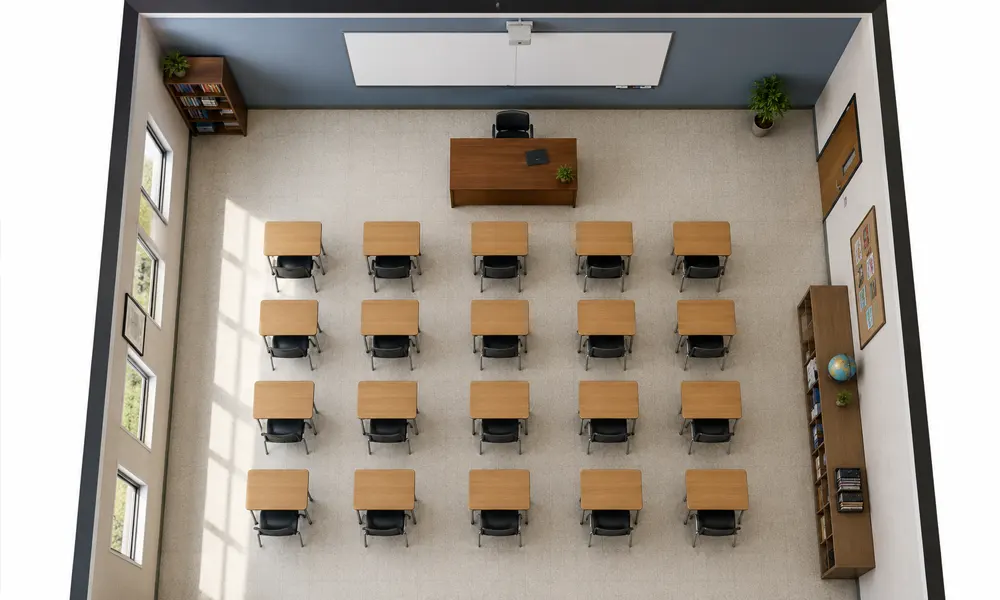
Traditional rows place desks and chairs in straight lines facing the teacher, whiteboard, or screen. This is one of the most familiar classroom seating arrangements because it gives the classroom a clear front-facing direction.
The main advantage of traditional rows is that they create a clear visual focus. Students know where to look, and the teacher can guide the class in a structured way. It can also help reduce unnecessary talking during independent tasks.
Best for: Direct instruction, testing, independent work, presentations
Main limitation: Less suitable for group interaction
2. Pair Seating
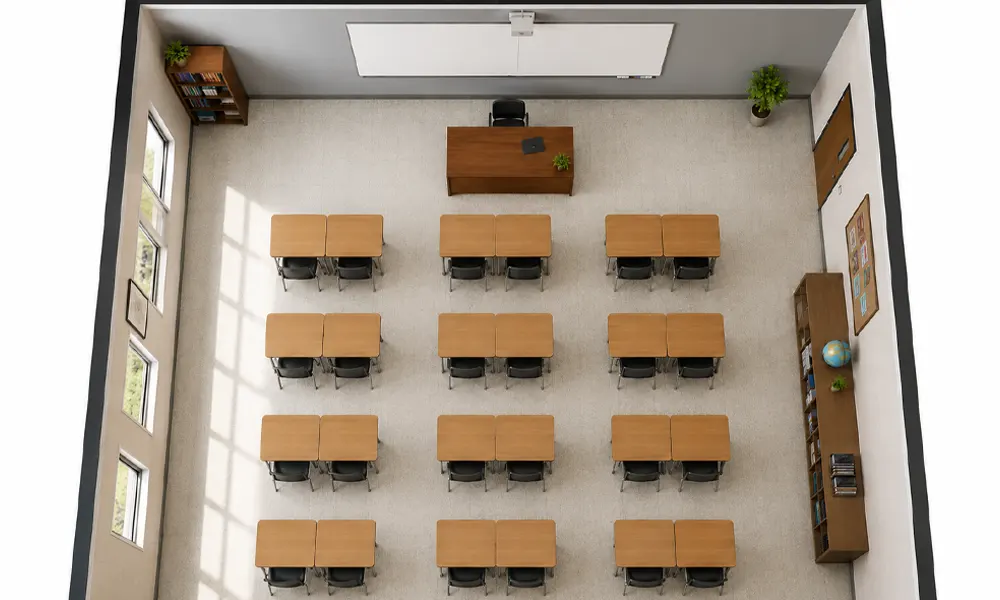
Pair seating places two students together at one desk, table, or side by side seating area. It gives students a chance to work with a partner while still keeping the classroom relatively structured.
This layout is useful when students need to discuss ideas, read together, check each other’s work, or complete short partner tasks. It offers more interaction than traditional rows, but it is easier to manage than larger group tables.
Pair seating can also help teachers support mixed ability learning. A stronger student can work with a student who needs more support, or two students can be paired based on similar learning needs.
The challenge is choosing pairs carefully. Some students work well together, while others may distract each other. Teachers may need to change pairs from time to time to keep the classroom balanced.
Best for: Partner reading, peer support, short discussions, paired activities
Main limitation: Pair choice can affect focus and behavior
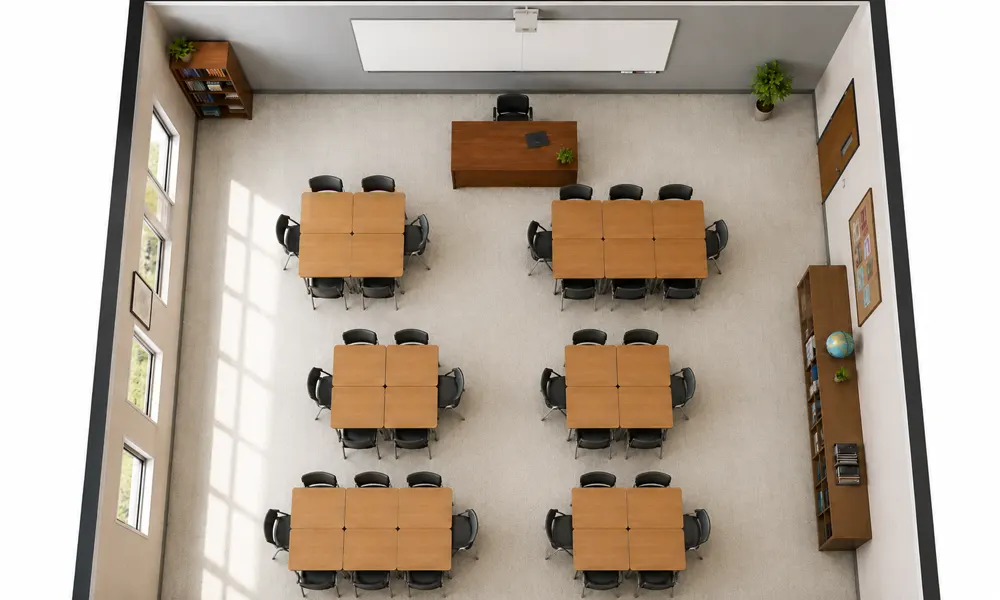
3. Group Tables or Cluster Seating
Group tables, also called cluster seating, place students around shared tables or desks arranged in small groups. This is one of the most useful classroom seating arrangements for collaboration.
Group seating can make the classroom feel more active and engaging. It supports communication and helps students learn from one another. It is also practical when the lesson requires shared resources such as paper, tools, books, manipulatives, or project materials.
The main challenge is classroom management. Students sitting in groups may talk more, and some students may become distracted. To make this layout work well, the teacher needs clear expectations, enough spacing between groups, and good visibility across the room.
Best for: Group projects, hands on learning, discussion, creative work
Main limitation: Can become noisy without clear structure
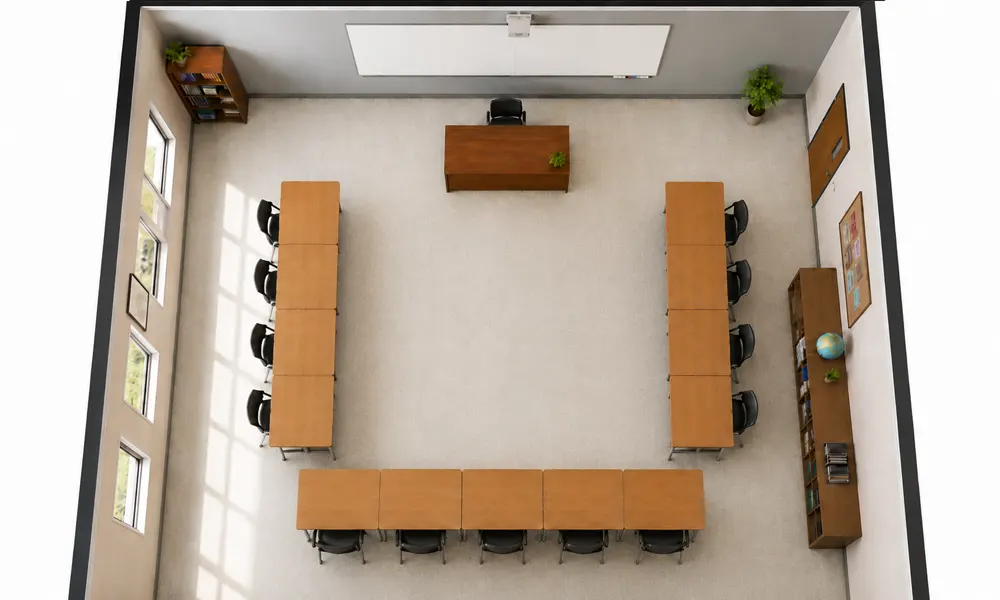
4. U-Shaped Seating
U-shaped seating arranges desks or tables in the shape of a U, leaving an open space in the middle. This layout allows students to see both the teacher and their classmates clearly.
The open center can also be used for demonstrations, movement, role play, presentations, or small group sharing. Compared with traditional rows, a U-shaped layout creates more interaction and a stronger sense of classroom connection.
The main limitation is space. A U-shaped arrangement usually needs a larger room. In a small classroom, it may reduce walking space or make the classroom feel crowded.
Best for: Discussion, demonstrations, presentations, teacher guided activities
Main limitation: Requires enough classroom space
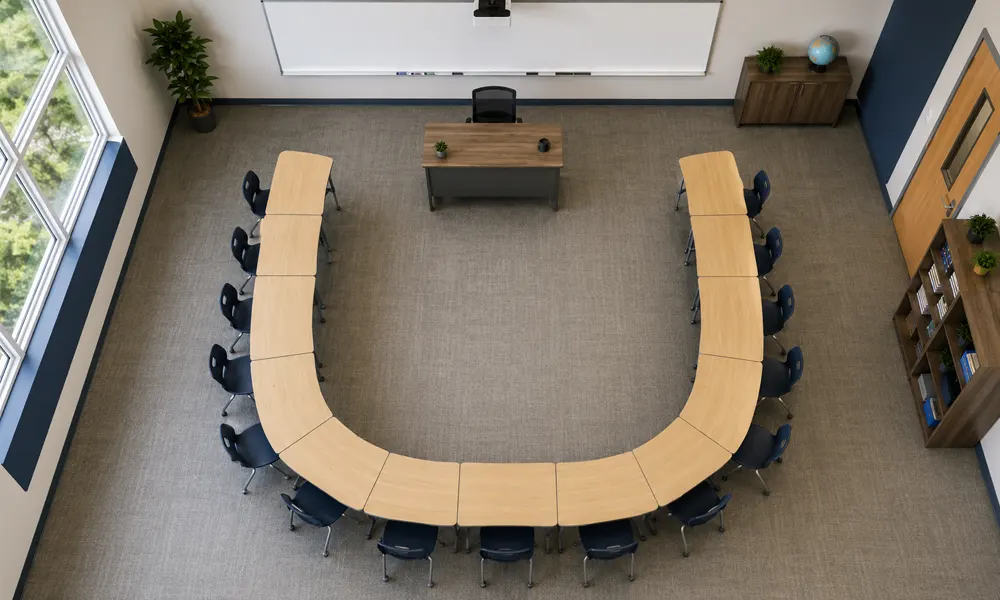
5. Horseshoe Seating
A horseshoe seating arrangement is similar to a U-shaped layout, but usually more open and less formal. Students sit in a curved shape facing the teacher or the central activity area. It gives students a clear focus while still allowing them to see classmates.
Horseshoe seating is useful for language activities, guided discussion, small presentations, demonstrations, and classroom conversations. It can feel more relaxed than rows while still keeping the teacher’s role clear.
The main challenge is that it may not provide enough table space for all activities. It also needs a room wide enough to keep the curved layout comfortable.
Best for: Guided discussion, language activities, presentations, demonstrations
Main limitation: May not work well for material heavy activities
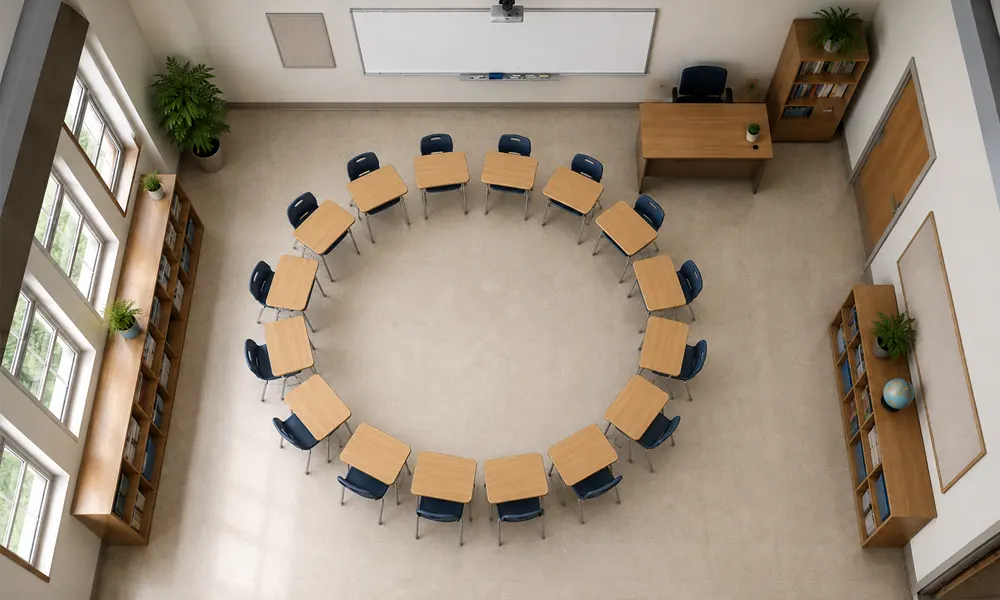
6. Circle Seating
Circle seating places students in a full circle, either on chairs, floor mats, or around an open area. This layout removes the strong “front of the classroom” feeling and creates a more equal learning environment. It helps students feel included because every seat has equal visibility.
Circle seating encourages eye contact and active listening. It can make students more willing to speak because they feel part of the group rather than separated into rows.
Circle seating is not ideal for activities that require writing on desks or using many materials. It usually works best as a temporary layout or as a specific area within the classroom.
Best for: Class discussion, storytelling, sharing, community activities
Main limitation: Not ideal for writing tasks or desk based work
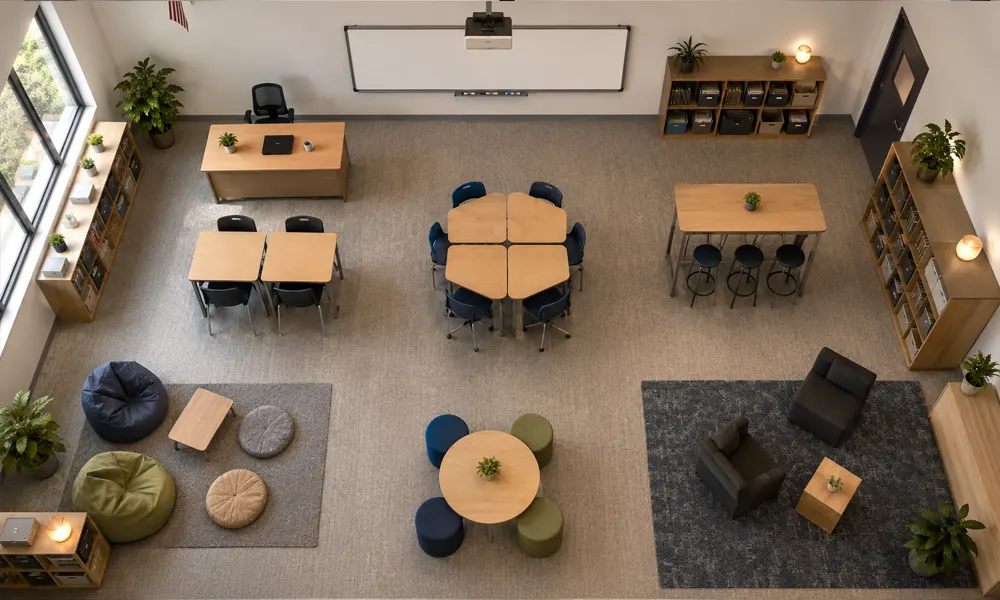
7. Flexible Seating
Flexible seating allows students to use different types of seating depending on the activity. This may include tables, chairs, floor seating, cushions, stools, standing areas, reading corners, or mobile furniture.
This arrangement is useful for classrooms that support different learning styles and activity types. Students may work independently in one area, join a group table for collaboration, or move to a quieter space for reading.
Flexible seating can make the classroom more adaptable. It supports movement, choice, and a more student centered learning environment. It is especially helpful when the classroom needs to change between different activities during the day.
Flexible seating needs good planning. Without clear rules, students may focus more on choosing seats than on learning. The furniture also needs to be safe, stable, easy to move, and suitable for daily classroom use.
Best for: Mixed activities, student choice, active learning, modern classroom layouts
Main limitation: Needs clear expectations and suitable furniture
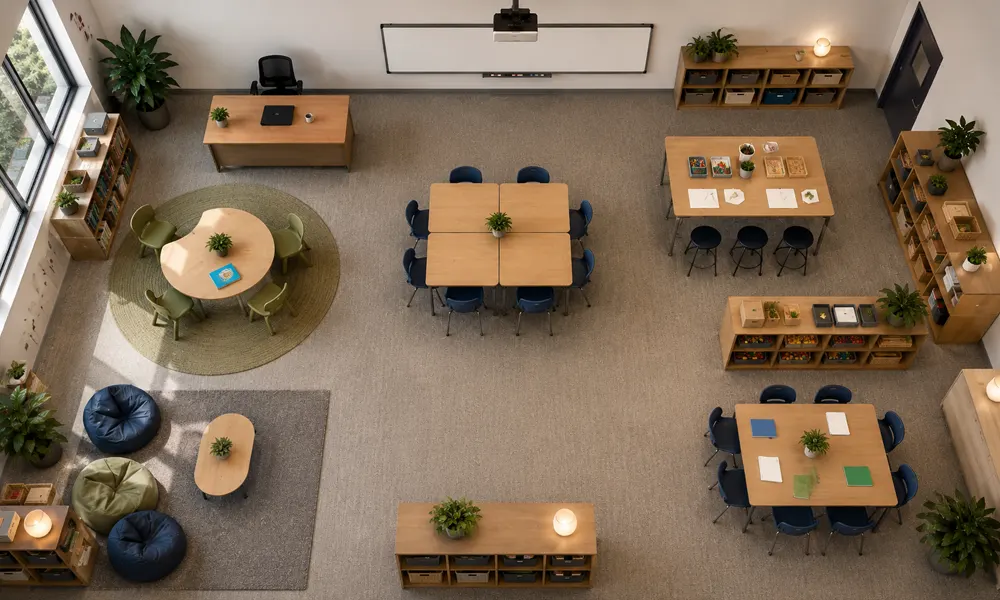
8. Learning Center Seating
Learning center seating divides the classroom into different areas for different activities. Instead of one fixed seating layout, the room may include a reading area, group work table, quiet work area, project table, floor activity space, and teacher guided area.
This layout is useful when students rotate between activities or when the classroom supports different learning tasks at the same time. It helps organize the room by function rather than placing all students in the same type of seat.
Learning center seating can make the classroom more practical and engaging. Students know where to go for each activity, and materials can be placed close to the area where they are used.
Best for: Activity based learning, small group work, independent work, classroom rotation
Main limitation: Requires careful space planning
Pros and Cons of Different Classroom Seating Arrangements
Each classroom seating arrangement has its own strengths and limitations.
The purpose of comparing different seating arrangements is not to find one perfect option. Instead, it helps teachers and school planners choose the right layout for the right activity.
| Seating Arrangement | Best For | Advantages | Limitations |
|---|---|---|---|
| Traditional Rows | Direct instruction, testing, quiet work | Easy to manage, clear focus, fewer distractions | Limited interaction, not ideal for group work |
| Pairs Seating | Partner work, peer support, short discussions | Balances focus and interaction, easier to manage than groups | Pairings need to be adjusted carefully |
| Group or Cluster Seating | Projects, teamwork, art, hands-on activities | Encourages collaboration and material sharing | Can become noisy without clear rules |
| U-Shaped Seating | Discussion, presentation, demonstration | Good visibility and teacher-student connection | Requires more classroom space |
| Horseshoe Seating | Storytelling, sharing, guided discussion | Creates an open and welcoming layout | Not ideal for large classes or crowded rooms |
| Circle Seating | Group meetings, discussion, social learning | Builds community and equal participation | Limited table space for writing or materials |
| Flexible Seating | Multi-activity classrooms, student choice | Supports movement, comfort, and different learning needs | Requires clear rules and suitable furniture |
| Centers-Based Seating | Activity zones, independent work, hands-on learning | Supports different learning areas in one room | Needs careful space planning |
How to Choose the Best Classroom Seating Arrangement?
Choosing the best classroom seating arrangement should start with the purpose of the classroom.
Before moving furniture, it is helpful to think about the daily routine, teaching methods, student needs, and the activities that happen most often in the room.
Start with Primary Instructional Goals
First, clearly identify the specific types of support this classroom needs most. Tailoring your seating arrangement to your instructional objectives will help you effectively plan the overall layout.
Consider the Students’ Age
Younger students typically require more space for movement and clearer classroom routines. Older students, conversely, can sit for longer periods, adhere to more structured seating arrangements, and engage in independent study for extended durations.
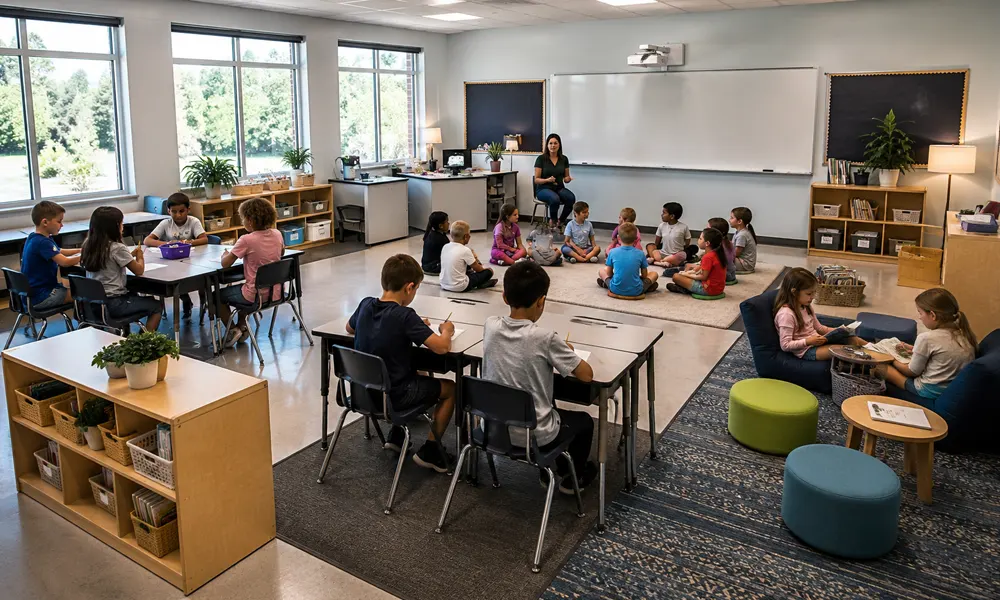
Arranging Seating Based on Classroom Activities
Many classroom issues stem from a mismatch between seating arrangements and instructional activities. A functional classroom may require more than one seating arrangement over the course of a week.
Here is a simple guide:
| Classroom Activity | Recommended Seating Arrangement |
|---|---|
| Direct instruction | Traditional rows, horseshoe seating |
| Testing or quiet work | Traditional rows, individual seating |
| Group projects | Group tables, cluster seating |
| Class discussion | U shaped seating, circle seating, horseshoe seating |
| Partner work | Pair seating |
| Reading time | Circle seating, flexible seating, quiet corners |
| Presentations | U shaped seating, horseshoe seating, rows |
| Hands on activities | Group tables, learning centers |
| Activity rotation | Learning center seating |
| Mixed daily activities | Flexible seating |
Consider Classroom Size and Capacity
A layout that looks good on paper may not work in a real classroom if the space is too small or too cramped.
In small classrooms, flexible furniture arrangements, compact seating, and unobstructed walkways can make the space feel more open and spacious. In larger classrooms, it is necessary to define distinct zones so that students understand where different activities take place.
Ensure the Teacher Remains Clearly Visible
A sensible seating arrangement allows the teacher to observe the entire classroom clearly. If furniture obstructs the line of sight or creates hidden corners, it becomes difficult for the teacher to notice when students need assistance or when behavioral issues arise.
Planning Safe and Unobstructed Pathways
When arranging classroom seating, it is essential to carefully determine the spacing between rows or individual desks to ensure free movement throughout the room. Failure to do so may result in students bumping into one another and prolong the time required to transition between activities.
Selecting Furniture That Harmonizes with the Layout
The selection of classroom furniture impacts the ease of arranging seating. Even the most sound classroom design plan may prove ineffective if the wrong furniture is chosen. To achieve layout flexibility, lightweight and durable furniture is an invaluable asset.
Balancing Structure and Flexibility
A well-balanced classroom layout grants students sufficient freedom to participate while simultaneously maintaining an orderly environment. For instance, a classroom might feature fixed tables for group discussions, flexible reading zones, and open spaces where students can converse or move around.
Regularly Review and Adjust the Layout
Classroom seating arrangements should not remain static. As the student body changes, curricula are updated, and classroom routines become established, the seating layout may require adjustment.
Even small changes can make a significant difference. Moving a single desk, widening an aisle, rearranging student groupings, or designating a clearer activity zone can all improve the overall flow of movement within the classroom.
The optimal classroom seating arrangement is not necessarily the one selected at the beginning of the school year, but rather the one that consistently supports learning, classroom management, and daily classroom usage.
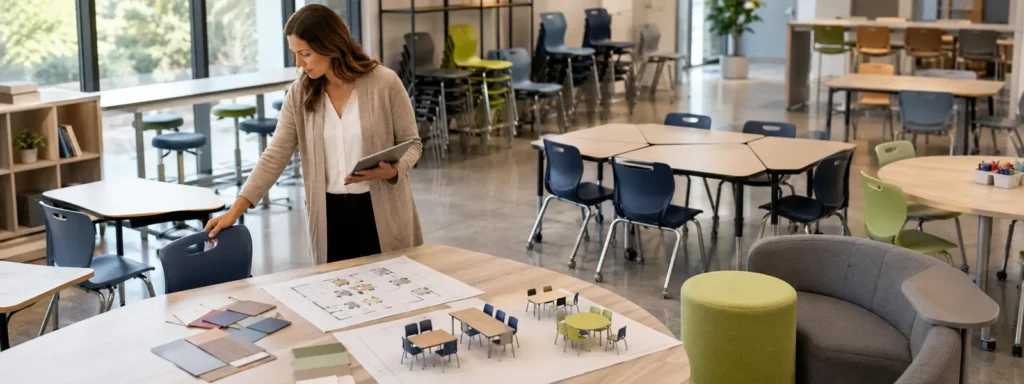
How Classroom Furniture Affects Seating Arrangements?
Once we have finished laying out the classroom seating, we will inevitably proceed to purchase furniture to furnish the space. At this stage, however, it is crucial to exercise caution; selecting classroom furniture requires a certain degree of skill, as a poor choice could undermine the work we have already accomplished.
The following are the key points to focus on:
- Table shape influences interaction
- Table and chair dimensions affect comfort
- Furniture weight impacts flexibility
- Storage location
- Durability and ease of maintenance
If you are still unsure about the right choice, please feel free to contact West Shore; we can start by providing you with a seating layout. We will then assist you in selecting the furniture best suited to your specific requirements, helping you effortlessly arrange everything.
FAQs About Classroom Seating Arrangements
1. How do I know if my classroom seating arrangement is working?
A simple way to check is to observe the classroom during real lessons. If students frequently block walkways, struggle to see the board, talk at the wrong time, or need too much help moving between activities, the layout may need adjustment.
2. Should students choose their own seats?
A balanced approach often works best. Teachers can allow choice during certain activities while keeping assigned or guided seating for lessons that need more structure. This gives students some independence without making the classroom difficult to manage.
3. What is the difference between a seating chart and a seating arrangement?
A seating arrangement refers to the physical layout of the classroom, such as rows, groups, circles, or flexible learning areas. It focuses on how furniture and seats are placed in the room.
A seating chart refers to where each student sits within that layout. For example, a classroom may use group tables as the seating arrangement, while the seating chart decides which students sit at each table.
4. How much space should be left between desks or tables?
There should be enough space for students to sit, stand, pull out chairs, and walk without bumping into others. Teachers should also be able to move between seating areas comfortably.
The exact spacing depends on classroom size, furniture size, and student age. Instead of only measuring distance, it is helpful to test the layout in use.
5. Where should the teacher’s desk be placed?
The teacher’s desk should not block movement, visibility, or important learning areas. In many classrooms, it works best along a wall, in a corner, or in a place where it does not take attention away from the main teaching space.
6. How can I arrange seating for students with different learning needs?
The seating plan should be flexible enough to support these differences. Instead of placing every student in the same type of seat, teachers can create a layout that includes focused spaces, collaborative areas, and seats with easy teacher access.
7. Can seating arrangements affect student behavior?
Yes, seating arrangements can influence behavior by changing who students sit near, how much movement happens in the room, and how easy it is for the teacher to notice problems early.
8. How often should I review or change the classroom seating arrangement?
Seating arrangements should be reviewed regularly, especially when student needs, activities, or classroom size change. Adjustments may be necessary at the start of a new term, after adding new furniture, or when introducing new lesson formats or activities.
Conclusion
Classroom seating arrangements have a major effect on how a classroom feels, functions, and supports learning. The right layout can improve focus, encourage participation, support classroom management, and make daily activities easier to organize.
The best seating arrangement is not always the most attractive layout. It is the one that supports the real needs of the classroom. A room used mainly for direct instruction may need a different setup from a room focused on projects, discussion, or hands-on activities.
When seating, furniture, and classroom routines are harmoniously aligned, classroom management becomes more streamlined, and learning efficiency is significantly enhanced.