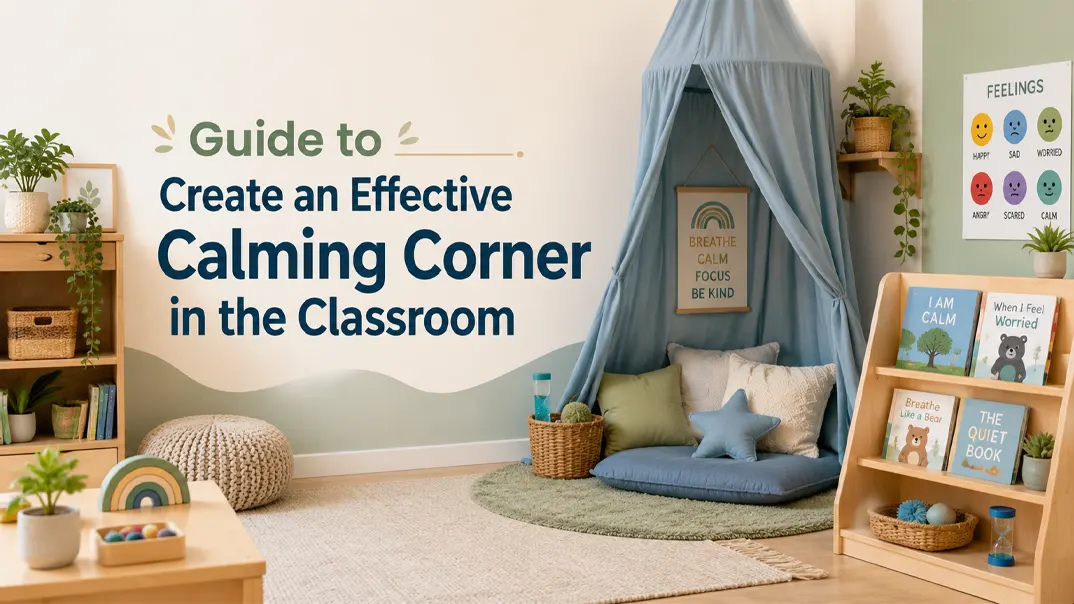
When you manage a daycare classroom, you know how quickly one child’s emotional difficulty can affect the whole room. Therefore, when a child’s emotions fluctuate, we need a calming corner to supports the child without turning the situation into a classroom disruption.
Next, I will teach you how to create a calm corner suitable for your classroom.
What Is a Calming Corner?
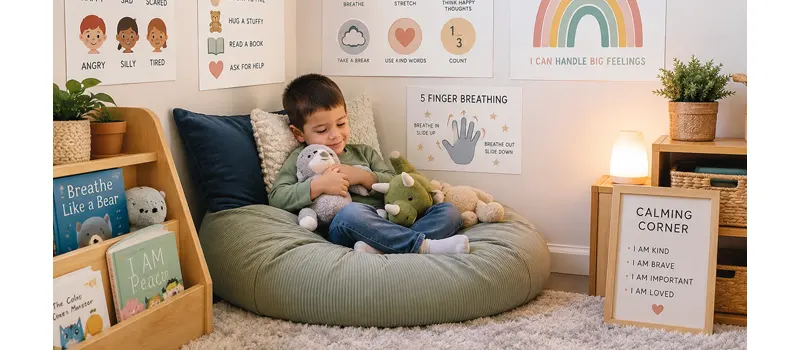
A calming corner is a quiet, low-stimulation space in the classroom where children can pause when they feel emotionally overwhelmed. You can use a calming corner to help your child slow down, calm down, and prepare to reintegrate into classroom routines.
Calming corner should be planned as part of classroom management. But noticed you are not creating a place to send children away. You are creating a support area where you can guide children through big feelings calmly and consistently.
Why Calming Corner Matters?
In classrooms, emotions are easily contagious. A calming corner gives you a better way to handle children’s emotions before they disturb the whole class.
A calming corner helps you create a classroom routine that feels safer and more predictable. Children learn that when their feelings become too big, there is a space where they can pause. This helps them build self-regulation instead of depending only on adults to solve every emotional moment.
A calming corner also makes daily classroom management easier. When children encounter emotional problems, you can tell them they can go to the calm corner to rest for a while, instead of constantly dealing with various emotional issues on your own. It also shows parents that your classroom is designed with care, emotional support, and child development in mind.
How to Create a Calming Corner in the Classroom?
Creating a Calming Corner starts with one clear question: what should this space help your children do? In a daycare classroom, the goal is quite simple: to provide children with a quiet space where they can pause their activities, calm themselves, and return to the group in better condition. This space should feel safe and be easy to use.
1. Choose a Quiet but Visible Area
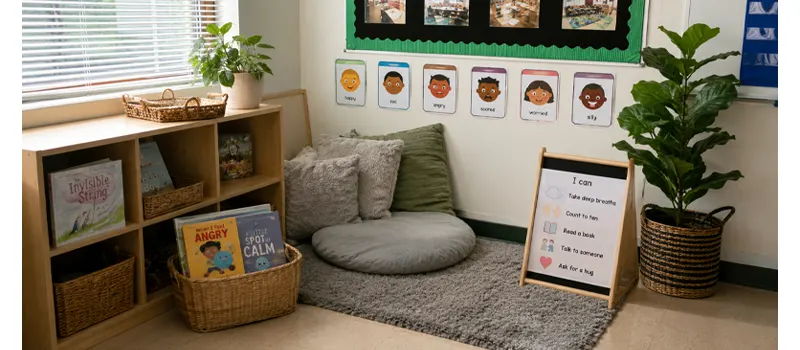
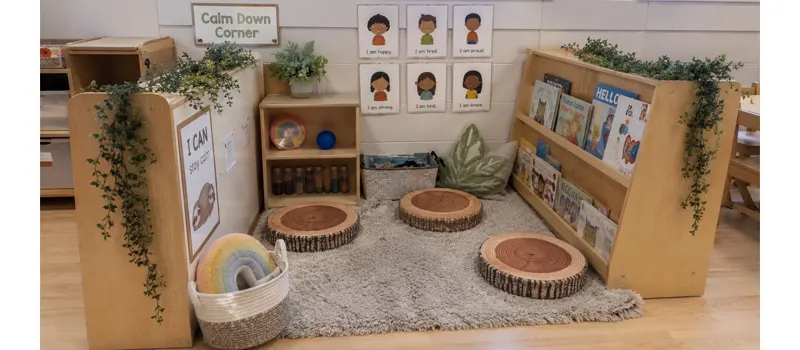
You should start with a part of the classroom that feels calm, but still allows teachers to see the child clearly. A calming corner should give children a small break from the noise and movement of the classroom, but it should not feel separated from the group.
You can place it near a reading area if that space is already quiet. Try to keep it away from doors, block play, dramatic play, and other high-traffic areas where children are likely to run, talk loudly, or move around often.
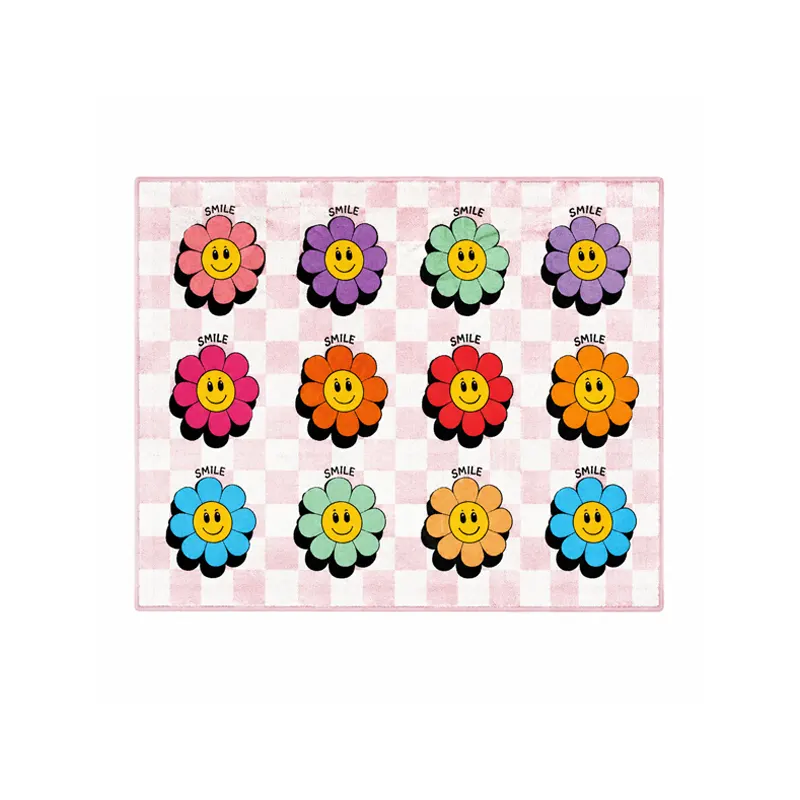
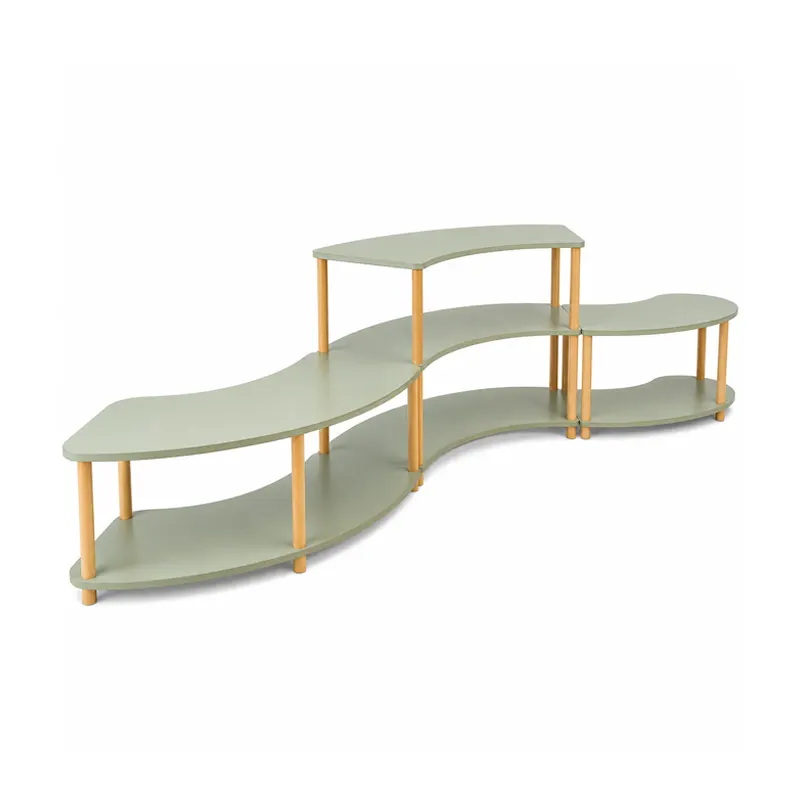
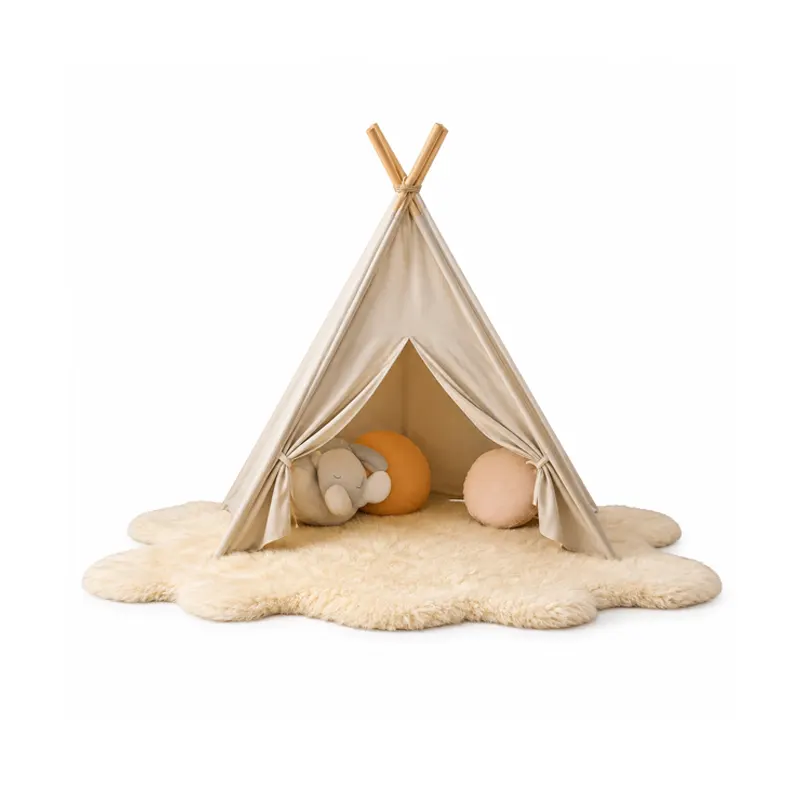
If your classroom is small, you can use one rug, one calm nest, and one storage basket to create a simple calm down area. Place it beside a low shelf or in a quiet corner where teachers can still see the child clearly. This setup works well without changing the whole classroom layout.
2. Create a Clear Boundary
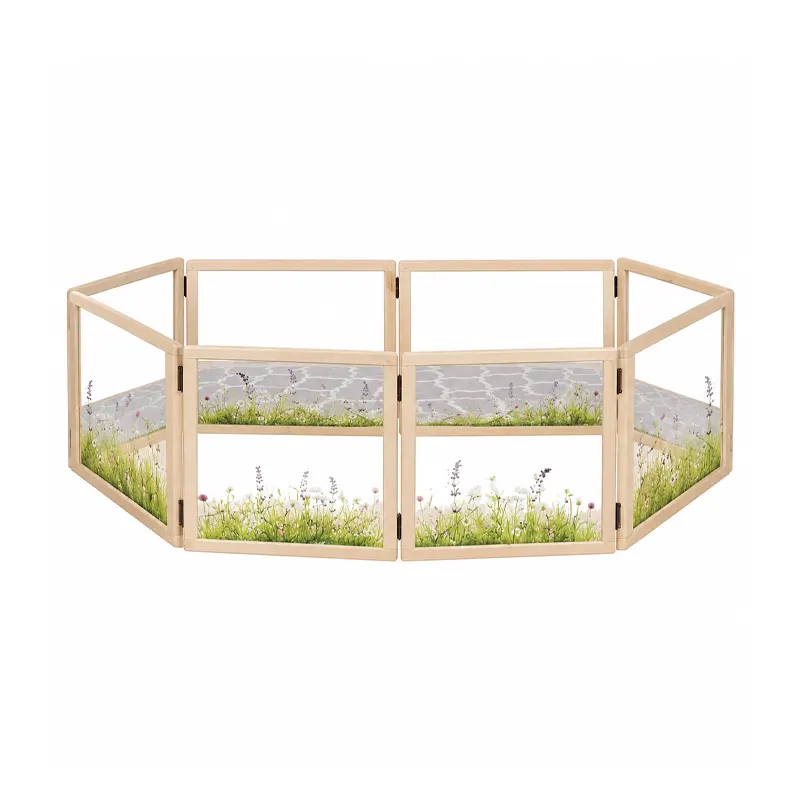
Once you’ve chosen a good location, you’ll need to define clear boundaries so your child understands it’s an independent, supportive space. To avoid making the calming corner feel isolated, you can create a soft boundary using a small rug, a low shelf, or a gentle partition.
3. Add Comfortable and Safe Seating
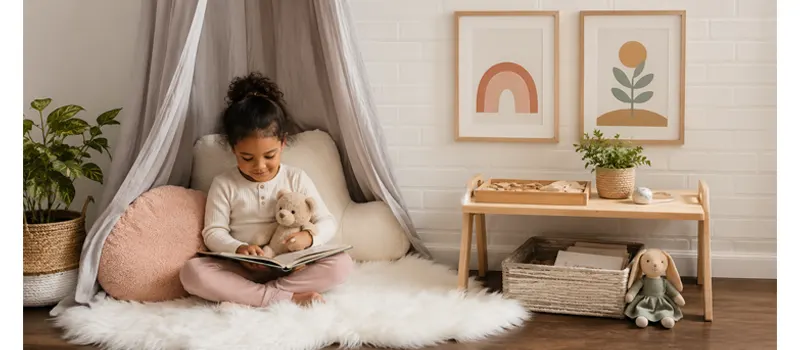
In the calming corner, you’ll also need some cozy, comfortable seating. Considering the needs of a daycare environment, the chairs you choose should be durable, safe, and easy to clean. Floor mats, small sofas, or beanbag chairs are all good options. We can help you find suitable furniture based on your available space.


4. Add Materials to Help Children Calm Down
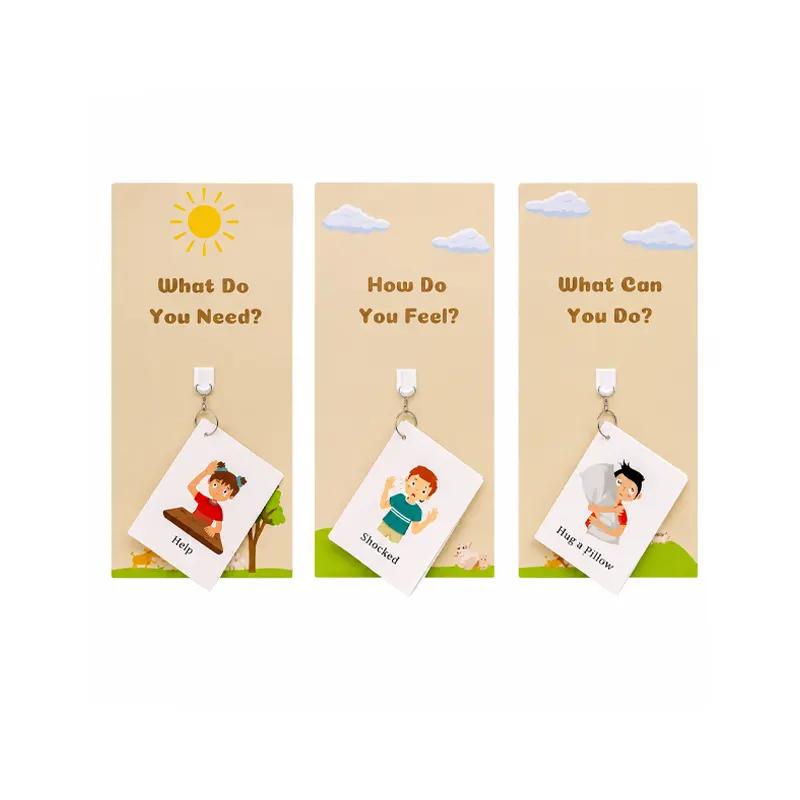
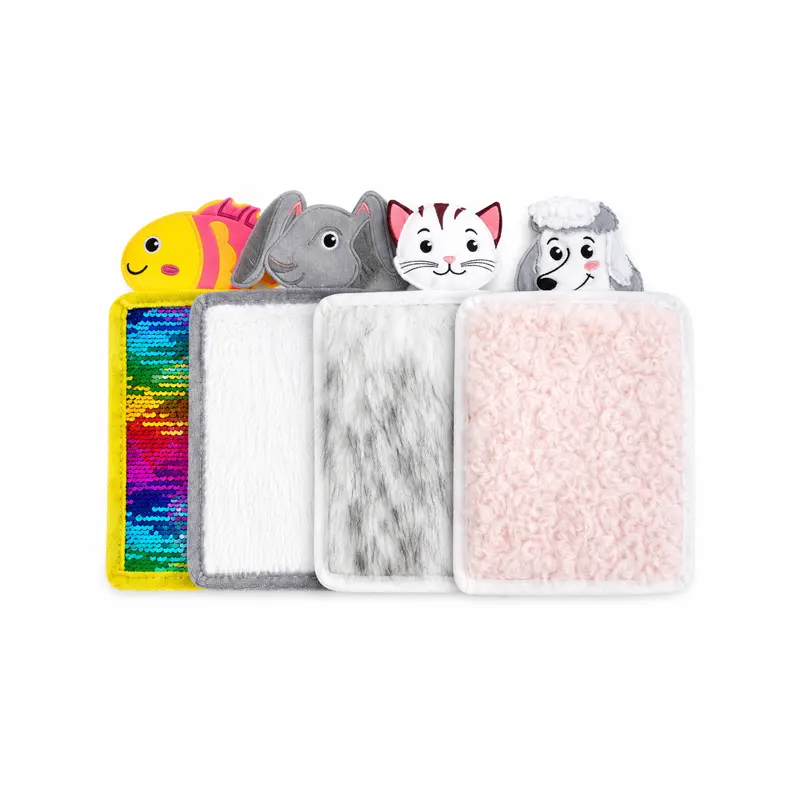
In the calming corner, you can place some soothing items, such as sensory bottles, plush toys, mood cards, or quiet books. Don’t fill the space with too many toys. When there are too many choices, children may treat the corner like a play area. We want the space to help children calm down, not invite active play.

5. Use Visual Supports
Children may not know what to do when entering a calming corner. You can use simple visual cues, such as breathing steps, calm-down choices, or an “I feel” chart, to help them better utilize the space and reduce teacher guidance time.
6. Review and Adjust the Space
After the calming corner has been used for a while, watch how children respond. If they are playing inside it, reduce the materials. If they avoid it, decorate the space to make it warmer and easier to use. If teachers cannot supervise it well, adjust the location or boundary.
How to Make It Actually Work?
If we simply create a space that looks soft and comfortable, children might use it as a play area or a place to escape classroom activities. So if you want this space to work well, you need to take the following two steps.
Set Rules for Your Calming Corner
You can use short rules that children can remember easily, such as:
- One child at a time
- Calm bodies
- Choose one calming tool
- Keep materials in the corner
- Return to the group when ready
A visual timer can also help. It gives children a clear sense of time and helps teachers avoid turning the calming corner into a place where children stay too long or avoid the classroom routine.
Teach Children How to Use It
You should introduce the calming corner when the class is already calm, not during a meltdown. Show children where it is, what is inside, and how each tool should be used. You can model a simple routine: “I feel upset. I can sit here, take a deep breath, hold a soft toy, and come back when I am ready.” When children practice this during normal classroom time, they are more likely to use the space correctly when emotions feel big.
Calm Down Corner Ideas
A good calming corner needs to allow children to quickly understand the purpose of the space, while also facilitating daily management by teachers.
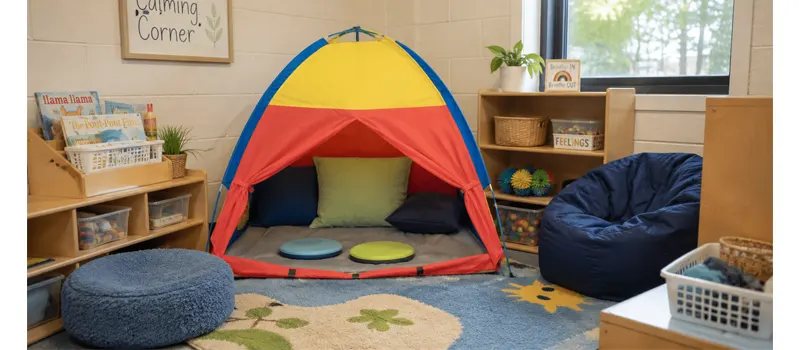
1. Reading Area + Calm Down Corner
Some kindergartens combine the reading area and the calming corner. If you would like to set this up as well, please make sure your child understands its purpose. Also, please store calming tools separately from regular books and reading materials. Please note that children can read together in the reading area, but the quiet corner is usually for one child at a time.
2. Sensory Calm Down Corner
For children who need more sensory support, you can add a few simple calming tools, such as a sensory bottle, soft fabric, stress ball, or weighted lap pad. Keep the choices limited. Too many sensory items can make the space feel like a play area instead of a calming space.
3. Nature-Inspired Calm Down Corner
You can use soft, neutral tones and warm lighting to create a more tranquil atmosphere. Adding one or two simple natural elements, such as plant ornaments or nature-themed artwork, will also make the space feel warmer. Natural colors and simple materials help reduce visual distractions, making the space more suitable for children.
4. Pause and Breath Corner
You can add some breathing cards to your calming corner, with simple visual cues such as smelling flowers, blowing out candles, or tracing a shape with one finger. This type of calming corner focuses on breathing and pausing, providing children with concrete actions to practice and help them calm down.
5. Emotion Check-In Corner
You can place a simple emotion chart at the child’s eye level, with clear facial expressions such as happy, sad, angry, scared, tired, and worried. Next to it, you can add emotion cards, a small mirror, and a basket of calming tools so children can connect what they feel with what they can do next. This calming corner provides a visual way for young children who cannot fully express their emotions verbally, and it can also help you find a more suitable attitude to respond to your child.
Calming Corner vs. Time-Out Corner

You may have also heard of a “time-out corner,” which looks similar to a calming corner, but they convey very different messages to children.
Many preschools still have “time-out corners” used as punishment after a child misbehaves. Children are often asked to leave the group to stop the misbehavior. However, we do not recommend using a time-out corner, as this can make children feel embarrassed or excluded, especially when they are already in a bad mood.
If you already have a time-out corner, consider transforming it into a “calm corner.” A calm corner is meant to help children calm themselves and understand their emotions. Children go there not to be punished; instead, you are providing a safe space for them to pause, catch their breath, and calm down before rejoining group activities.
This distinction is crucial for your childcare facility. If teachers use the calm corner as a punishment area, children may begin to fear it and even refuse to go there. Parents may also misunderstand its original purpose. But if you use it as a supportive space, children will understand that strong emotions are normal and can be managed.
FAQs
What age is a calming corner for?
A Calming Corner can be used for toddlers, preschoolers, and kindergarten-age children, but the setup should match their age and level of independence. Toddlers need simple visuals, soft seating, and more teacher support. Preschoolers can begin to use feeling cards, breathing prompts, and simple calming tools. Older children may use the space more independently with a timer or choice board. The goal is not the child’s age alone, but whether the space helps them pause, calm down, and return safely to the group.
Should teachers stay with the child in the Calming Corner?
It depends on the child’s age and emotional state. Younger children may need a teacher nearby to help them breathe, choose a tool, or feel safe. Older preschoolers may use the space more independently, but you should still keep the child within sight.
What if a child refuses to use the Calming Corner?
We should not force the child into the space. If a child refuses, you can offer a simple choice, such as sitting near the teacher, taking deep breaths together, or using one calming tool outside the corner. Later, when the child is calm, you can practice the routine again.
How often should we update the Calming Corner?
You do not need to change it often. A calming corner works best when it feels familiar. You can review it every few weeks and make small changes if children are not using it properly, if materials are damaged, or if the classroom routine changes.
Should we explain the Calming Corner to parents?
Yes. Parents should understand that the Calming Corner is not a punishment area. You can explain that it gives children a quiet place to calm their bodies, practice emotional skills, and rejoin classroom activities with support. This helps parents see the space as part of your classroom care system.
Conclusion
A Calming Corner becomes meaningful when it fits the real rhythm of your classroom. When the space is planned with care, it gives you a calm and consistent way to support children before emotions turn into bigger classroom disruptions.
For daycare directors, this small area can reflect the quality of your center. It shows that you understand children’s emotional needs and that your classroom environment is designed with intention.
If you need support with classroom layout, furniture selection, or a complete daycare setup, West Shore can help you plan and source everything in one place, so your calming corner fits naturally into the whole classroom.