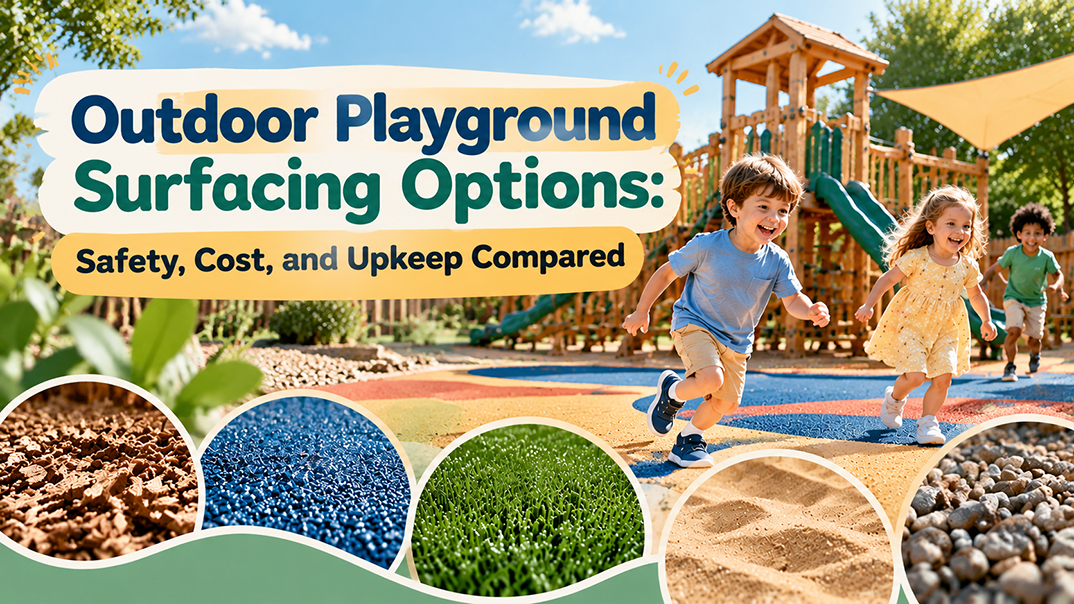
Outdoor playground surfacing options impact children’s safety, outdoor learning experience, and long-term maintenance budgets. It also affects how safely a child can fall from outdoor play equipment like swings, slides, and climbing structures.
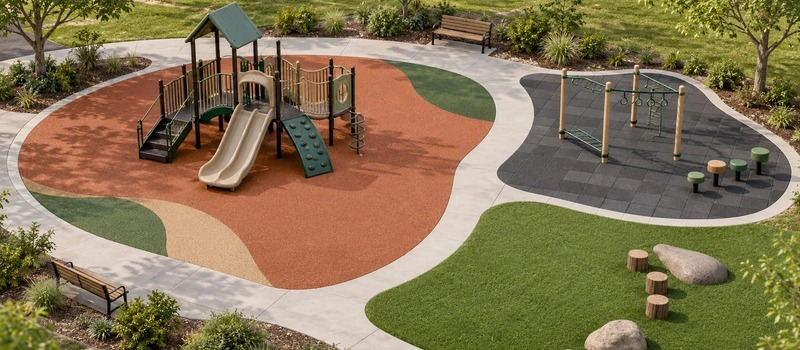
To help you choose the best playground surfacing options, this guide compares rubber mulch, poured rubber, and other surfaces.
What Makes an Outdoor Playground Surface Safe?
A child falling from equipment in an outdoor playground setup is unfortunately the most common cause of injuries in preschool daycare. And the ground or surface they land on makes a lot of difference in how serious it is.
Fall Zone
The fall zone is the ground under and around play equipment where a child may land intentionally or unintentionally. As most children don’t fall straight down, they either fall from the side exit, jump off, or slide off the side.
Thus, it’s necessary for you to cover preschool climbing equipment and extend past the edges. Make sure you measure the area from the equipment to the outward area, not just the footprint.
Critical Height
Critical height is the highest point from which a fall can have impact on the surface. A well-installed surface can absorb impact without causing life-threatening head injury. And since every surface has a tested rating and critical height standards, compare the figure with the fall height of your equipment.
A toddler’s platform can have 1 to 2 feet of height, while a preschool climber or slide may have 3 to 5 feet of height. Make sure the surface rating is either equal to or even higher than the tallest equipment in your outdoor play area.
Why Grass, Dirt, and Concrete Fail
Ground surfaces built with concrete are hard, so even a fall from 2 feet can have an injurious impact on children. Over the years, the surface collects dirt, which eventually becomes even more dense and develops bumps and holes.
On the contrary, grass looks soft, but it wears thin under swings and slide exits, leaving bare soil exposed. On top of it, rocks, roots, and frozen ground make it worse to play or even walk.
Standards by Region
Before you invest your hard-earned money, it’s always a good idea to choose standardised equipment with trusted reports attached. Each country or state utilises unique product standardisation methods and grants certification. For example,
- The United States has the ASTM F1292 standard that tests how well the surface absorbs the impact of a child falling.
- In Canada, the CSA Z614 standard covers playground surfacing and equipment and surfacing safety standards.
- Whereas in Australia, AS4422 and in New Zealand, NZS 5828, both countries consider these standards for softfall.
Top 3 Loose-Fill Playground Surfacing Options
Loose-fill is a material consisting of small pieces of specialised material all over the ground. This surface usually requires secure edges, a suitable base, and enough depth to provide the desired impact protection.
However, as soon as children step onto such surfaces, material may move here and there. So it’s essential for you to maintain regular checks and refill the loose-fill with material wherever required.
Rubber Mulch
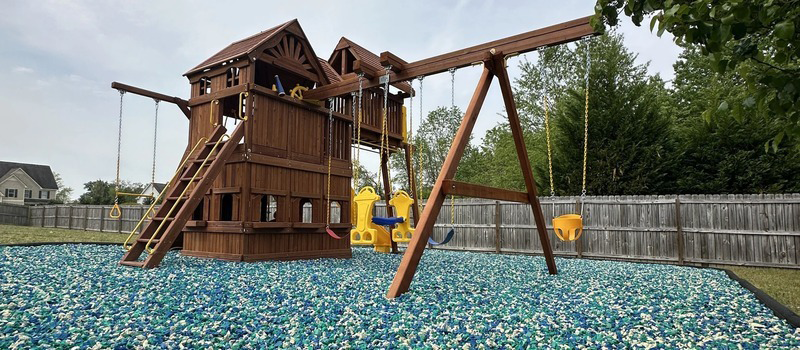
Rubber mulch surfaces are filled with small rubber pieces, which are often made from recycled tires. This is a popular choice of materials for many daycare owners who want impact protection without paying hefty amounts on fully bonded outdoor surfaces.
Pros:
- Lower upfront cost than poured rubber
- Provides impact protection with a high-rated installation of product and depth
- Easily drains water, if the base and drainage system are suitable
- Supports selective area management; individual areas can be topped up if material moves
Cons:
- Requires regular raking and surface depth checks
- Material can scatter beyond the play area
- Loose pieces may be picked up or mouthed by young children
- Wheelchairs and walkers can be harder to move across it
- Dirt and debris may collect between the pieces
Engineered Wood Fiber
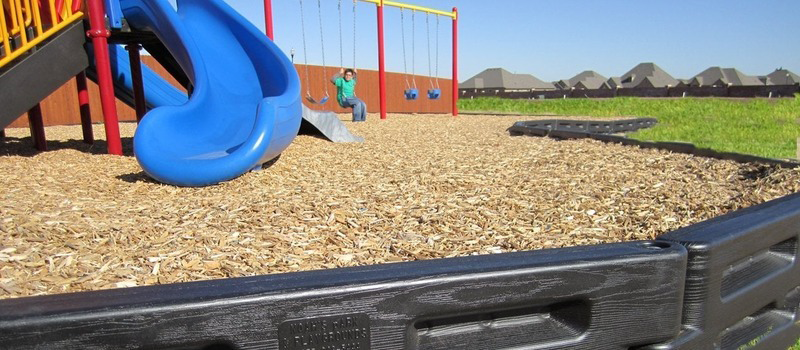
Material like engineered wood fiber (EWF) is made out of specialised processed wood and is designed for playground construction. This material is different from ordinary garden mulch, which may not provide the same performance.
Pros:
- Costs less to install
- Creates a natural look for outdoor playgrounds
- Provides impact protection if installed at the required depth
Cons:
- Regular maintenance includes raking, leveling, and refilling
- Material may break down or become compacted over time
- Shifts away from busy areas and equipment exits
- If drainage is poor, rainy weather can lead to muddy or uneven areas
Note: It’s important to confirm whether the specific product has been tested for playground use. For example, in the United States, the IPEMA certification program tests and verifies engineered wood fiber products against relevant standards.
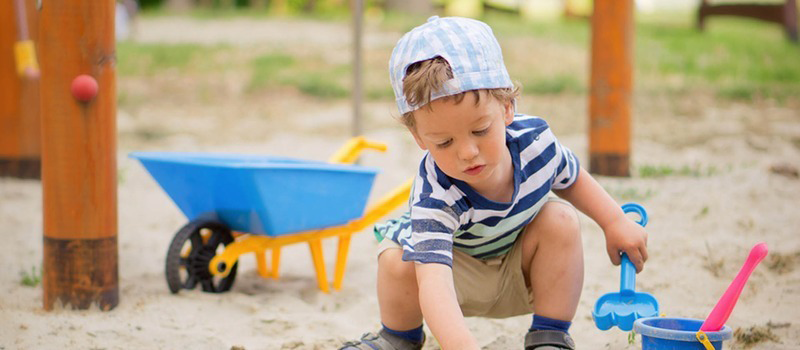
Sand and Pea Gravel
Sand and pea gravel are loose-fill options that create surfaces for selected play zones. The materials are not interchangeable, so ordinary landscaping materials are assumed not to provide impact protection.
Pros:
- Useful for supervised digging and sensory play
- Both materials, “sand and pea,” can be relatively inexpensive to source
- Sand supports creative, open-ended outdoor activities
- Gravel drains well when the site is properly prepared
Cons:
- Both sand and pea require frequent leveling and replenishment
- Sand often becomes dirty, wet, or compacted
- Pea gravel can be uncomfortable for small children and may cause a choking hazard
- Loose surfaces make wheelchair access difficult
- Sand and pea gravel are not for fall zones unless the specific material is installed with the right depth and meets the required safety criteria
Top 3 Unitary Playground Surfacing Options
Unitary playground surfacing is a solid surface that can easily withstand external weather for years. The material is either poured in place, installed as connected tiles, or artificial turf is designed with a shock pad.
As compared to other materials, unitary surfaces are durable and make movement a lot easier. However, the impact protection still depends upon the tested system, thickness of surface, quality of base material, and installation process.
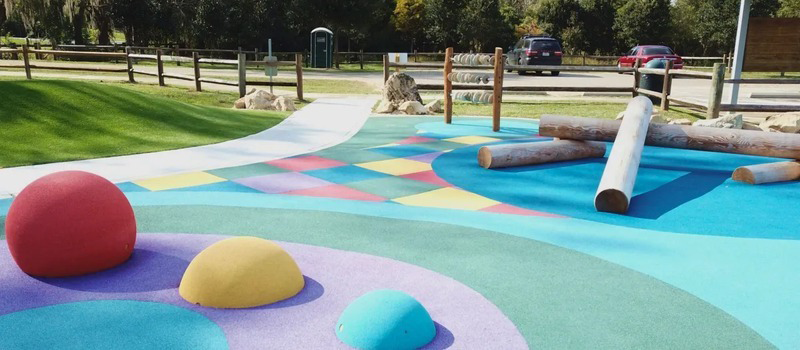
Poured-in-Place Rubber
Poured-in-place rubber is attached as an extra layer of rubber over an existing base. This mechanism combines a shock-absorbing layer with a colored top layer on the surface and provides high-quality impact resistance.
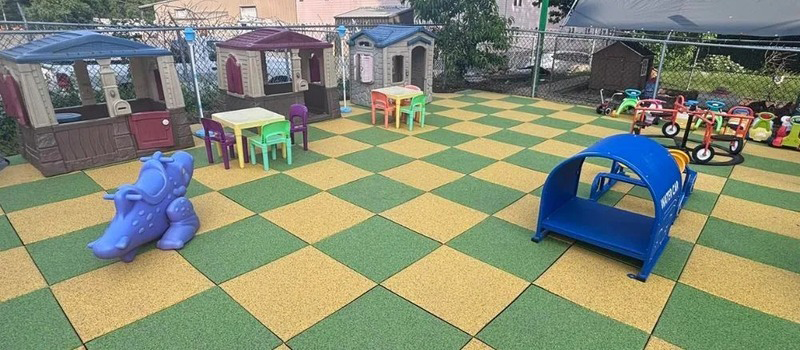
Rubber Tiles
Rubber tiles are pre-made pieces that fit together and form cushion surfaces for the playground. These tiles are attached to an already existing base and provide extra depth to the outdoor playground.
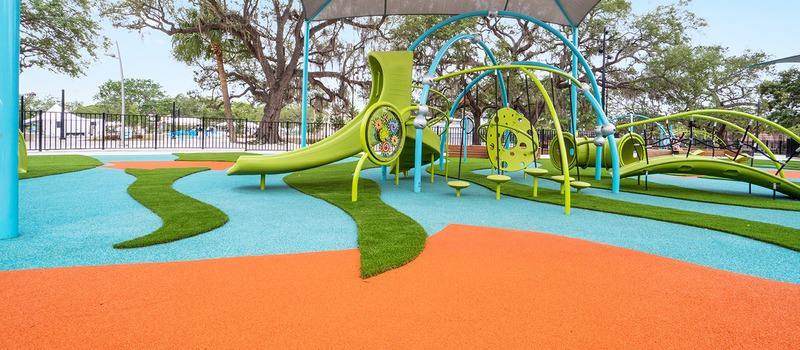
Artificial Turf With Shock Pad
The artificial turf is attached to a shock pad, which helps absorb the impact of a fall. This artificial turf develops a grass-like playground appearance, which does not require watering or mowing. The shock pad is attached beneath the turf, which provides impact protection from falls.
Side – by – Side Comparison: Unitary Surfaces
| Details | Poured-in-Place Rubber | Rubber Tiles | Artificial Turf With Shock Pad |
| Appearance | Seamless; many colors and patterns | Varied thicknesses, colors, and patterns | Consistent green year-round |
| Accessibility | Firm, stable for wheelchairs | Accessible if tiles are rated for it and joints stay level | Accessible if the full system is firm, stable, and tested |
| Upkeep | Low leveling; fix cracks, worn spots, drainage | Replace damaged tiles individually | Clean, remove debris, check turf, seams, and pad |
| Cost | Higher upfront | Varies by tile quality and installation | Varies by turf, pad, base, drainage, and installation |
| Best Use | Busy play areas, accessible routes, fall zones | Mixed-use areas and zones needing easy repairs | Large, visual areas needing a green look |
Note: Artificial turf cannot perform well and provide adequate protection without a suitable shock pad in fall zones.
When Rubber Mulch can be the best choice?
Rubber Mulch can be the best choice for a small-sized preschool daycare facility. You can easily use this outdoor playground surfacing material under low climbing equipment. However, remember rubber mulch requires regular upkeep, in-depth checks, and frequent refills.
When Poured Rubber can be the best choice?
Poured rubber may suit best if you require continuous free surfaces and movement between play zones in your daycare. Also, it has good resistance to fall impact and works best on all fall zones. But make sure that this material requires professional assistance.
Note: When finalising a material, confirm details regarding required fall height, site preparation, and accessibility needs from the supplier.
Compare All Surfacing Materials at a Glance
Until now, you have explored all types of playground surface materials like rubber mulch, wood fiber, poured rubber, sand and pea gravel, etc.
Each material has its unique strengths to consider. Some are best for outdoor use, and some are great for fall impact. However, experts suggest that comparing materials’ impact protection and upkeep, accessibility, and expected durability is essential.
Match the Playground Surface to Each Play Zone
One preschool daycare yard requires more than one type of surface. For example, a surface that might work well under climbing equipment may not suit a tricycle path or other sensory activity.
- Under Climbing and Balance Equipment: Always choose a surface area that is tested for impact absorption and rated for the equipment’s fall height. Materials like rubber mulch, poured rubber, engineered wood fiber, or suitable tiles may work.
- Tricycle and Scooter Path: Having a smooth and firm surface helps children ride and turn their preschool outdoor riding toys safely. If you install rubber or another suitable hard path properly, it will provide better results compared to loose-fill material.
- Sand and Water Area: Ensure your preschool daycare outdoor play area has good drainage. And keep the sensory materials separate from the main fall and walking zones.
- Quiet Corner or Den: Always prefer a stable surface that is easy to clean while suitable for resting or sitting comfortably. These comfortable quiet corners or dens also help children take shade during peak hours of sunlight.
- Swing and Slide Surfacing: Give special attention to regular movement and landing zones. For example, swings need adequate clearance and slides need an appropriate landing area at the exit.
Safety Factors to Check Before You Buy
Before buying any playground surface material, ensure that the material you want is suitable for your equipment, the children playing on it, and your backyard.
- Match the surface rating to the tallest equipment on your playground
- Check the depth needed for loose-fill materials after compaction
- Consider toddlers who put things in their mouths, which usually affects loose-fill pits
- Check material safety, such as low-lead and non-toxic standards
- Look at heat in sunny climates, especially for dark rubber and turf
- Verify standards that cover fall impact, surface accessibility, wood fiber for playground use, and evaluate against the relevant standard.
Playground Surfacing Cost and Maintenance Over Time
The cheapest surface to install is not always the most affordable to maintain. Loose-fill options may cost less at first, but refills, leveling, and repairs can add up over the years.
Upfront Cost vs Long-Term Cost
Installation cost depends on:
- Total area of ground requiring surfacing
- Depth of material required
- Preparation of ground, sub-base layers, and drainage work
- Edge protection for loose fill material
- Labour, delivery, and access
Maintenance cost depends on:
- How often you need to refill loose-fill material
- Cleaning and leveling
- Repairing cracks, seams, tiles, and wear and tear
- Drainage work and damage by weather
- Cost of new surfacing upon completion of service life
Simple Maintenance Routine for Each Surface
The following table highlights the starting routine; these are not fixed legal requirements. But ensure you inspect the playground before every session and definitely after severe weather.
| Surface | Routine | How often |
| Rubber mulch | Rake, level, check depth, and top up | Inspect weekly; top up as needed |
| Engineered wood fiber | Rake, remove debris, and restore depth | Inspect weekly; replenish as needed |
| Sand and pea gravel | Level, remove debris, and replace contaminated material | Inspect frequently; maintain as needed |
| Poured rubber | Sweep, clean, and check for cracks or worn areas | Inspect weekly; arrange repairs when needed |
| Rubber tiles | Clean and check joints, edges, and lifting | Inspect weekly |
| Turf with shock pad | Remove debris and check seams, wear, and drainage | Inspect weekly; clean as needed |
Drainage and Weather Concerns
Water stored in the yard can wash away loose fill material, create mud, or destroy the substructure of the unitary surface. Therefore, it is important to have proper drainage of the ground before setting up the playground surface.
Whereas in cold environments during winter, the freeze-thaw effect usually influences the surface and often creates cracks. This further results in lifting of the ground in scattered areas and an uneven surface.
If you talk about hot climatic conditions, materials like dark rubber or synthetic grass will absorb more heat and may cause harm to children. So, always check the temperature before calling it an outdoor play day and ensure the outdoor play area has some shaded areas wherever possible.
Prepare Your Site Before Installing a Playground Surface
The right preparation of the play area is essential for proper surface installation. This checklist should be followed before starting installation to avoid complications that could increase expenses.
- Measure the usable area around all equipment before determining the surface area
- Use barriers to keep loose fill materials within their designated space
- Inquire about base materials, drainage, minimum depth or thickness, and warranties from the installing company
- Clarify the requirements for daycare licenses, inspections, and playground surfaces from local daycare licensing authorities
- Choose who will inspect the surface, report the issues, and coordinate repairs among the daycare staff
FAQs
1. Is rubber mulch or poured rubber better?
Rubber mulch costs less upfront but needs frequent maintenance. Poured rubber gives a continuous, accessible surface at a higher cost.
2. How much does playground surfacing cost?
Cost depends on surface type, area, depth, base prep, drainage, and labor. Loose-fill is cheaper upfront than poured rubber, so get local installed quotes.
3. How often should playground surfacing be replaced?
It depends on material, weather, use, and upkeep. Loose-fill needs regular top-ups, and unitary surfaces last years, but repair or replace either when it stops meeting safety requirements.
4. Is rubber playground surfacing safe for kids?
Yes, when the whole system meets safety standards and is properly installed. Check testing, surface heat, and loose pieces around toddlers.
5. Does a daycare playground need surfacing under all equipment?
Generally, yes, in the fall zones of any equipment children could fall from. Confirm requirements with the manufacturer’s instructions and your local licensing rules.
Conclusion
The right choice of playground surfacing materials is determined by the height of equipment, how often it’s used, and your budget. Along with the maintenance capacity, this will always be the primary factor for choosing the right material for a playground.
However, the best way to have a functional playground would be to combine your surfacing with eco-friendly play equipment. And get in touch with industry experts such as West Shore. They are renowned for premium-quality daycare furniture and outdoor equipment.