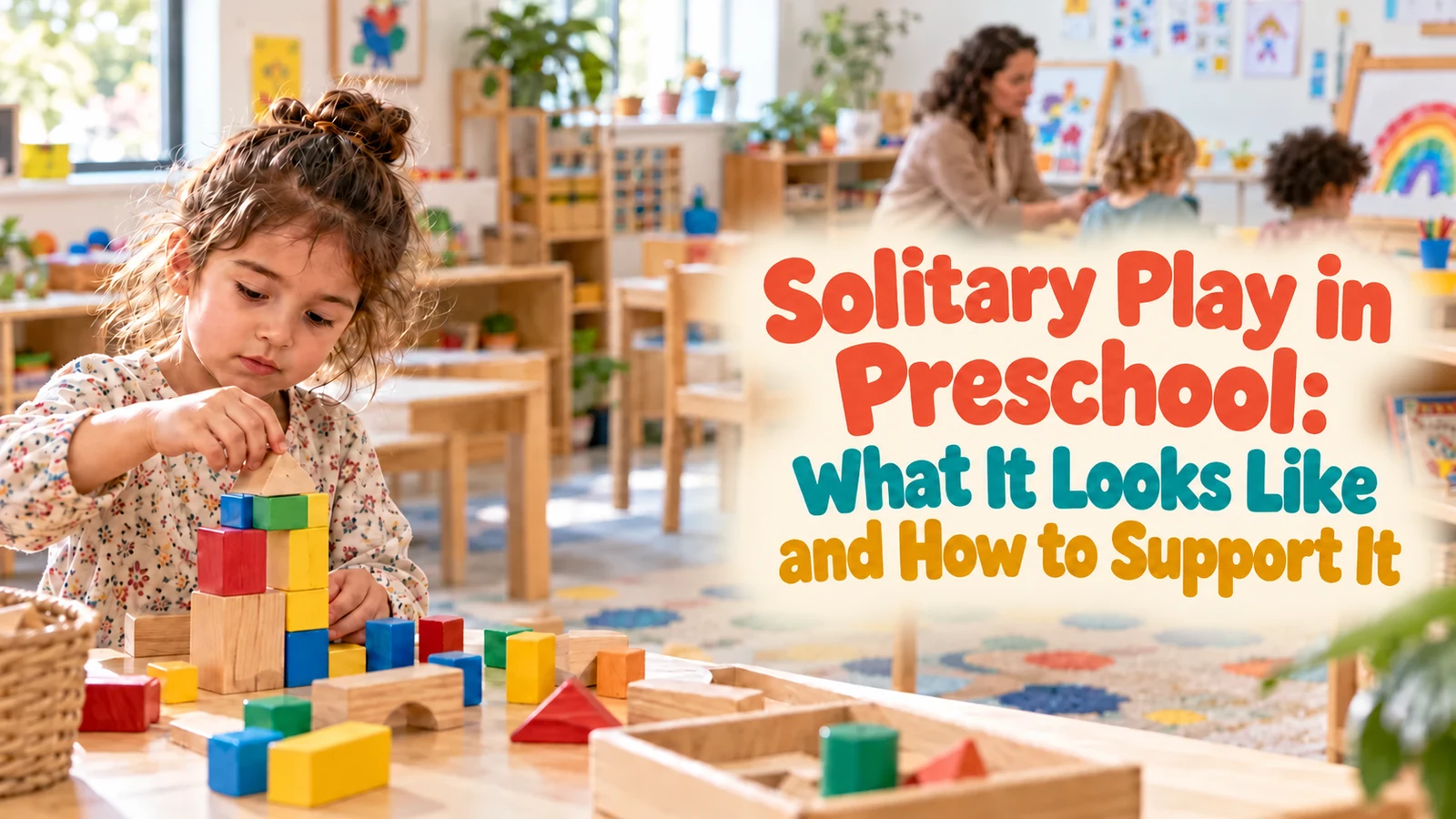
In a busy preschool classroom, a child playing alone can be quietly absorbed or trying to join others without knowing how. Those moments look similar from across the room, but they call for different responses. This guide explains what solitary play means, how it differs from parallel play, what it can offer children, and when a child may need your help.
What Is Solitary Play?
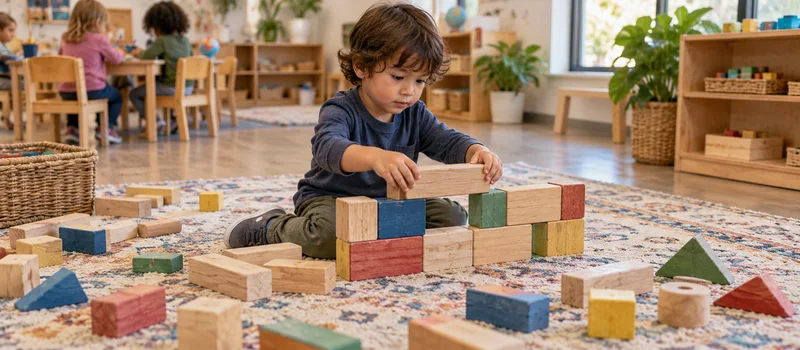
Solitary play is a type of play in which a child plays independently without actively interacting with other children. The child focuses on their own activity, even when other children are nearby. For example, a preschooler might build a block tower while classmates play together. The child may notice what others are doing but remain focused on their own activity.
Solitary play is one of the six stages of social play described by sociologist Mildred Parten. It is particularly common among infants and toddlers, but preschool-aged children also engage in solitary play as part of their everyday activities.
Solitary play does not necessarily mean a child feels lonely or has difficulty making friends. Children may choose to play alone because they enjoy an activity, want to explore something at their own pace, or prefer to concentrate without interruption.
Solitary Play vs. Parallel Play
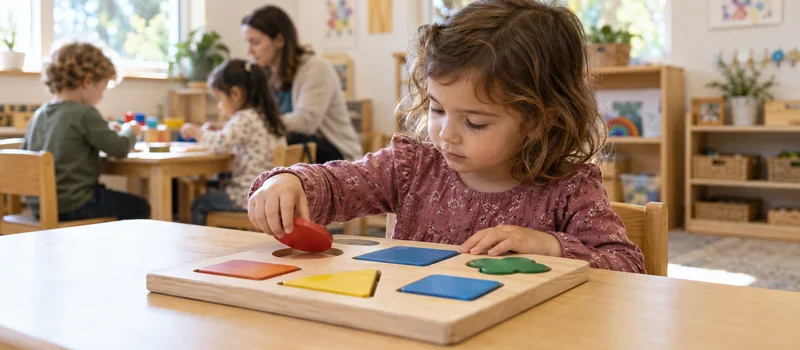
Solitary play and parallel play are often confused because neither requires children to interact directly. However, they differ in how children position themselves in relation to others and participate in the play environment.
| Aspect | Solitary Play | Parallel Play |
|---|---|---|
| Play arrangement | Plays independently, alone or near others | Plays alongside other children |
| Attention to peers | Mainly focused on own activity | May watch or imitate nearby children |
| Use of materials | Chooses and uses materials independently | May use similar materials nearby |
| Interaction | Does not actively engage with peers | Plays alongside peers without coordinating |
| Example | A child builds a tower on their own | Two children build separate towers side by side |
The distinction is not always obvious from physical distance alone. A child sitting near classmates may still be engaged in solitary play, while children participating in parallel play may occasionally observe or imitate one another without starting a shared activity.
Both types of play are common in early childhood. Children may move between them depending on their interests, comfort level, and the activities available. Neither label alone tells you whether a child is content or wants company.
What Can Children Learn Through Solitary Play?
Solitary play can give children opportunities to practice important skills as they explore activities at their own pace. When they direct their own play, they can make choices, try different approaches, and learn from what happens.
Independence and Decision-Making
When children play alone, they decide what to do, which materials to use, and how to approach an activity. Making these choices without relying on others helps children practice independence and build confidence in their own decisions.
Concentration and Attention
Solitary play allows children to focus on activities that interest them without constantly responding to others. They can take their time, repeat actions, and work through an activity at their own pace, helping them practice sustained attention.
Problem-Solving Skills
Independent play encourages children to find solutions through trial and error. When something does not work as expected, they can experiment with different approaches, observe the results, and make adjustments. This process helps develop reasoning and problem-solving skills.
Creativity and Imagination
Without needing to follow another child’s ideas, children have greater freedom to direct their own play. They can invent stories, explore different possibilities, and use materials in creative ways, helping them develop imagination and express their own ideas.
Emotional Regulation and Patience
Solitary play gives children opportunities to work through small frustrations and challenges independently. When an activity becomes difficult, they can practice staying calm, trying again, or changing their approach. These experiences can gradually strengthen patience, persistence, and emotional regulation.
What Are Some Examples of Solitary Play Activities?
You can offer simple, open-ended activities that children can explore in their own way. Choose materials that interest them and let them decide how to use them, rather than expecting every child to follow the same steps.
Building with Blocks
Give children a collection of blocks and let them decide what to build. One child might make a tall tower, while another experiments with different shapes and structures. Building blocks and construction toys are useful for this kind of open-ended play because there is no single right way to use them.
Drawing and Painting
Set out paper, crayons, and paint, and let children decide what they want to create. They may draw, experiment with colors, or simply enjoy making marks on the page. Keeping materials within reach makes it easier for children to begin on their own.
Puzzles and Matching Games
Puzzles give children a chance to work through a challenge at their own pace. They can turn pieces, test different combinations, and keep trying until they find a match. Choose puzzles that are appropriate for their age and ability, with enough challenge to hold their interest without making the task frustrating.
Dramatic Play
A play kitchen, a doll, or a few toy accessories can be enough to get a child’s imagination going. They might pretend to prepare a meal or look after a doll, creating their own little stories as they play. Dramatic play furniture helps create a dedicated space for these activities.
Sensory Exploration
Sand, water, and play dough invite children to explore through touch and hands-on experimentation. They can squeeze, pour, shape, and compare materials in their own way. A sensory table can keep materials accessible and help define the activity area.
Watch what holds each child’s interest and offer a few suitable choices. Some children may stay with one activity, while others move between materials. You can help when needed without deciding every step for them.
How Can Teachers Support Solitary Play Without Isolating Children?
You don’t need to encourage every child to join a group activity. Some children enjoy playing independently, and they should have that choice. You can support their independence while making sure they still feel part of the classroom.
Let Children Choose How They Play
Give children the freedom to decide whether they want to play alone or with others. If a child is happily focused on an activity, let them continue rather than interrupting to suggest a group activity. Giving children time to make their own choices and explore their interests can support their personal, social, and emotional development.
Create Space for Independent Play
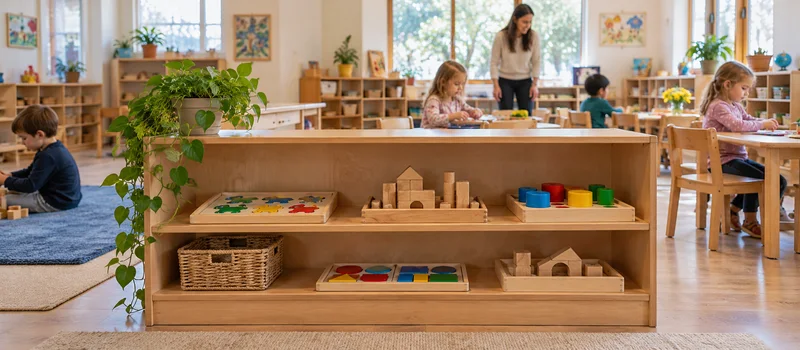
Think about how your classroom layout supports different ways of playing. A quiet corner with accessible materials can give children room to concentrate, while nearby shared activity areas keep them connected to classmates. Open shelves can make it easier for children to choose materials and put them away when they’re finished.
Be Available Without Taking Over
Children don’t need an adult to direct every moment of play. Give them time to explore materials and work through small challenges. If they ask for help, offer a little guidance, then let them decide what to try next.
Independent play should be a comfortable option within the classroom, not a way of separating children from their peers. Keep materials accessible and opportunities to interact available, while allowing children to choose how they want to play.
When Should Teachers Look More Closely at a Child Who Plays Alone?
Playing alone is a normal part of early childhood, and some children simply enjoy their own company. Rather than focusing on how often a child plays alone, look at their overall well-being, engagement, and opportunities to connect with others.
When a Child Seems Unhappy or Withdrawn
If a child often seems sad, anxious, or disconnected during play, take time to understand what may be happening. They may be overwhelmed by a busy classroom or dealing with something unrelated to play. Observe patterns across the day instead of drawing conclusions from a single moment.
When a Child Struggles to Connect with Peers
Notice if a child often tries to join peers but seems unsure how to approach them, or if attempts to interact repeatedly end in frustration. You can help create a low-pressure shared activity and observe how the child responds. If the difficulty continues, discuss your observations with the family to learn more about the child’s experiences in other settings.
When Solitary Play Is the Only Form of Play
Some children prefer independent activities, but ongoing lack of interest in any interaction may be worth discussing with the family, especially if it affects the child’s participation in classroom life. Consider the child’s communication, comfort around peers, and behavior over time. If concerns persist, suggest that the family seek guidance from a qualified child development professional rather than drawing conclusions from solitary play alone.
FAQs
1. Can Solitary Play Help Children Prepare for Group Activities?
Solitary play can give children time to explore materials, practice making choices, and become familiar with an activity before using it alongside peers. It does not guarantee that a child will find group play easy, but it can be one useful part of a varied preschool day.
2. How Long Should a Child Spend on Solitary Play?
There is no set amount of time a child should spend playing alone. Some children stay engaged for a few minutes, while others focus for longer. Follow the child’s interest and consider whether they seem comfortable and engaged rather than setting a time limit.
3. Should Teachers Plan Specific Time for Solitary Play?
You don’t need to schedule a separate session just for solitary play. Instead, make room for independent exploration during free-choice periods and learning centers, so children can choose it when it fits their interests and the classroom routine.
4. Does Solitary Play Need Adult Supervision?
Yes. Young children still need age-appropriate supervision, even when they are playing independently. Keep an eye on safety while allowing them to make their own choices, and step in when they need help or an activity presents a risk.
5. Can Solitary Play and Group Play Take Place in the Same Space?
Yes. You can create separate activity areas within the same classroom, such as a quiet corner for independent play and a shared area for group activities. This allows children to choose how they want to play while remaining part of the classroom.
Conclusion
Playing alone is a normal part of preschool life, and it doesn’t automatically mean a child has a developmental problem. What matters is whether the child feels comfortable, stays engaged in play, and has opportunities to connect with others when they want to. If you’re planning your classroom, West Shore can help you choose suitable play materials, storage, and furniture to support both independent play and shared activities.