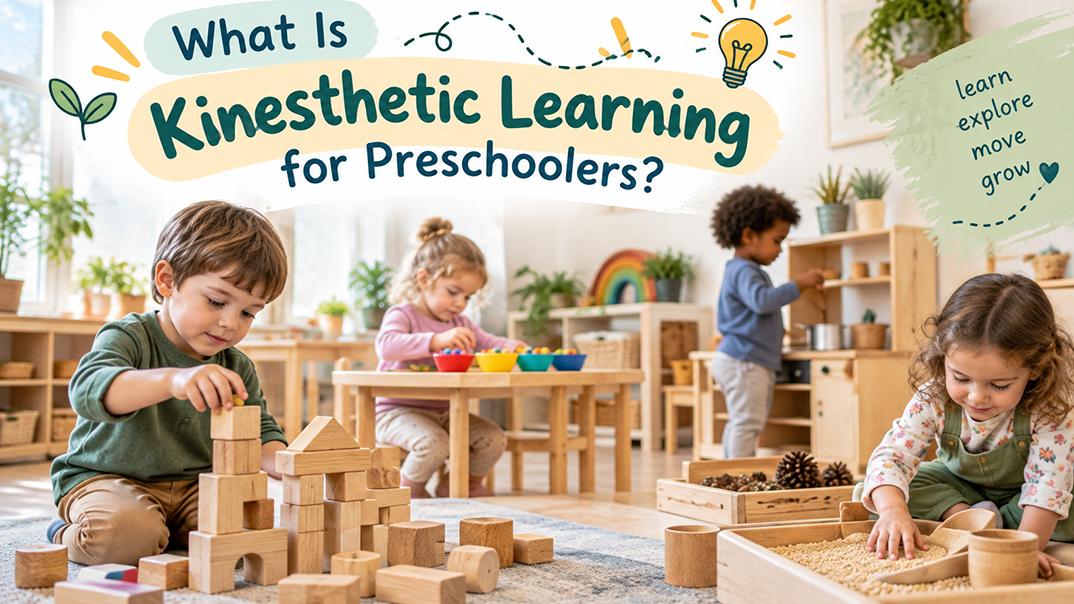
Preschoolers rarely learn simply by sitting, listening, and watching. They prefer to make sense of the world around them through active engagement—such as comparing sizes with blocks, pouring water into different containers, imitating movements, building models, role-playing, drawing, or exploring the outdoors.
These activities all involve kinesthetic learning. By moving their bodies, touching materials, manipulating objects, and engaging in trial and error, children transform abstract concepts into tangible, understandable experiences.
Therefore, the goal is not merely to label children as “kinesthetic learners,” but rather to leverage their natural inclination to move, touch, and explore, making learning more active, concrete, and accessible.
Definition of Kinesthetic Learning
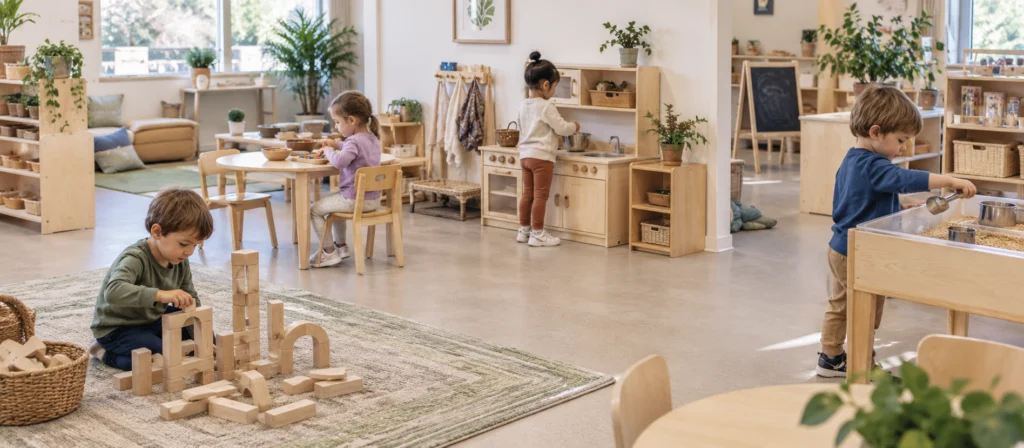
Kinesthetic learning is about children learning through the process of “doing.” By engaging in hands-on actions—such as grasping, touching, moving, building, jumping, drawing, sorting, and experimenting—children observe the results of their actions and gradually grasp the underlying concepts.
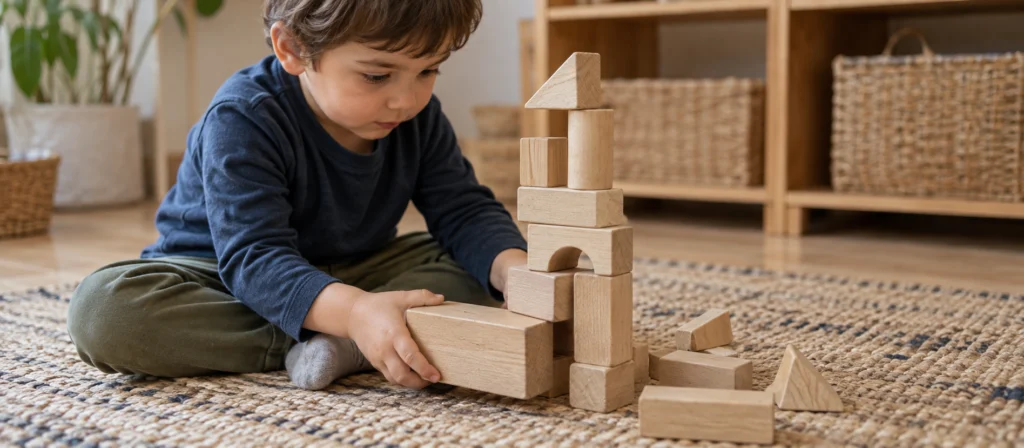
For instance, when a child plays with building blocks, they aren’t just “playing.” They discover which blocks provide more stability, how to build higher, and why a structure might topple over. These hands-on experiences are, in fact, a form of learning.
In short, kinesthetic learning does not involve simply explaining concepts to a child; instead, it allows them to figure things out for themselves through direct, hands-on experimentation.
What Are the Benefits of Kinesthetic Learning for Preschoolers?
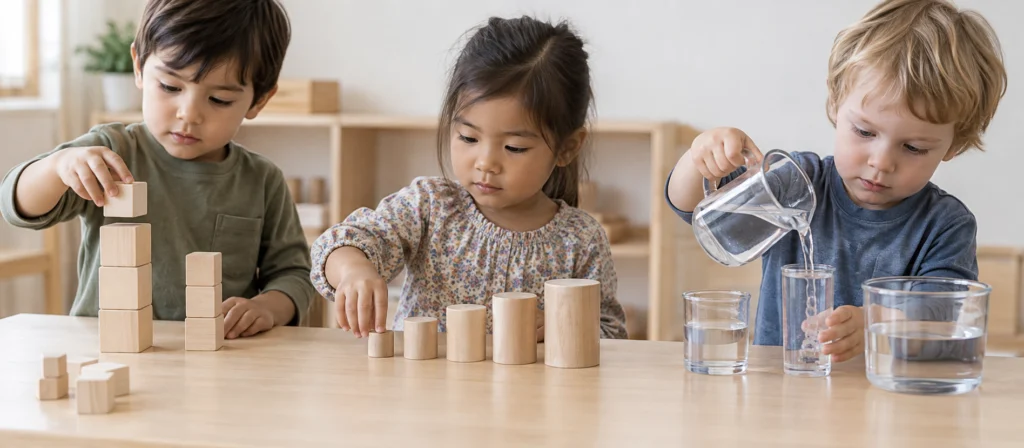
The value of kinesthetic learning is not simply that it keeps children active. It gives them a way to understand learning content through real experiences. For preschoolers, many ideas become easier to understand when they are connected to real objects and actions.
Helps Children Understand and Remember Abstract Ideas
For instance, when a child is learning the number “5,” simply looking at the numeral might make it difficult to truly grasp what it represents. However, if the child physically gathers five blocks, counts five objects, or jumps five times, they can connect the abstract number “5” to actual quantities and actions. The same applies when learning about size, direction, shape, or simple addition and subtraction. Through touching, moving, and hands-on activity, children transform abstract concepts into concrete experiences, making them easier to understand and remember.
Encourage children to participate, explore, and solve problems.
For children, “hands-on” activities are usually more engaging than simply following instructions. Through practical engagement, children can touch, move, build, and manipulate materials, seeing the results of their actions immediately. When the outcome differs from expectations, they naturally reflect on what went wrong and attempt to adjust their approach. This ongoing process of experimentation, observation, and refinement helps them gradually develop a spirit of exploration and problem-solving skills.
Furthermore, hands-on activities often offer children more choices: “What happens if I do it this way?” “What if I try a different method?” This kind of curiosity naturally drives them to continue participating and exploring. Play and hands-on activities can also give children opportunities to practice attention, working memory, self-control, and flexible problem-solving.
Supports Physical Development and Social Interaction
Kinesthetic learning requires children to actively use their bodies throughout the learning process; consequently, many of the activities themselves help foster physical capabilities. For instance, activities such as running, jumping, crawling, carrying objects, and building structures help children develop balance, strength, and coordination, while tasks like solving puzzles, drawing, stringing beads, or manipulating small objects exercise hand control and fine motor skills. In other words, children are not merely engaging in isolated “physical exercise”; rather, they are practicing physical control while simultaneously completing learning tasks.
Many kinesthetic activities also require cooperation with other children. When building with blocks, engaging in role-play, participating in group games, or completing simple assignments together, children must share materials, take turns, and express their ideas, all while listening to and responding to their peers. When disagreements arise, they learn to negotiate and work together to solve simple problems.
Therefore, kinesthetic learning combines physical activity with real-world interaction, enabling children to develop body control, communication skills, and cooperation abilities. All of these are achieved through the process of “doing.”
How Does Kinesthetic Learning Happen Through Hands-On Activities?
You can start by identifying what children need to understand, then turn that idea into something they can physically do. Common approaches include:
Keep the movement connected to the learning goal
Kinesthetic learning is not just about keeping children active. The movement should help them understand what they are learning, so each activity should have a clear purpose.
Turn abstract concepts into hands-on tasks
When learning numbers, let children collect the correct number of blocks. For size, ask them to arrange objects from small to large. For capacity, use scooping, pouring, and comparing different containers.
Let children try first and observe the result
You do not need to give the correct answer immediately. If a block tower falls, let children try a different base. If a puzzle piece does not fit, encourage them to turn it and try again. This helps them understand balance, space, and cause and effect through experience.
Choose activities that involve real manipulation
Building, sorting, threading, dramatic play, sensory play, and simple science experiments all work well for kinesthetic learning. Different activities can support early math, language, science, fine motor skills, and social interaction.
What Is the Difference Between Kinesthetic, Auditory, and Tactile Learning?
These learning approaches often appear together in preschool, but they involve children in different ways.
| Learning Type | Main Approach | Common Preschool Examples |
|---|---|---|
| Kinesthetic Learning | Learning through body movement and action | Carrying and sorting, number jumping, building, dramatic play |
| Auditory Learning | Learning through sound and spoken language | Listening to stories, singing, following verbal instructions |
| Tactile Learning | Learning through touch and hand-based exploration | Playing with clay, exploring textures, tracing sandpaper letters |
Tactile and kinesthetic learning are easy to confuse. Tactile learning focuses more on what children feel through their hands and skin, such as softness, hardness, roughness, or smoothness. Kinesthetic learning involves broader body movement and actions used to complete a task.
In practice, you do not need to separate these approaches completely. For example, when you read an animal story, children may listen to the words, look at pictures, and then use their bodies to imitate the animals. One activity can include auditory, visual, and kinesthetic learning at the same time.
What are the typical characteristics of kinesthetic learners?
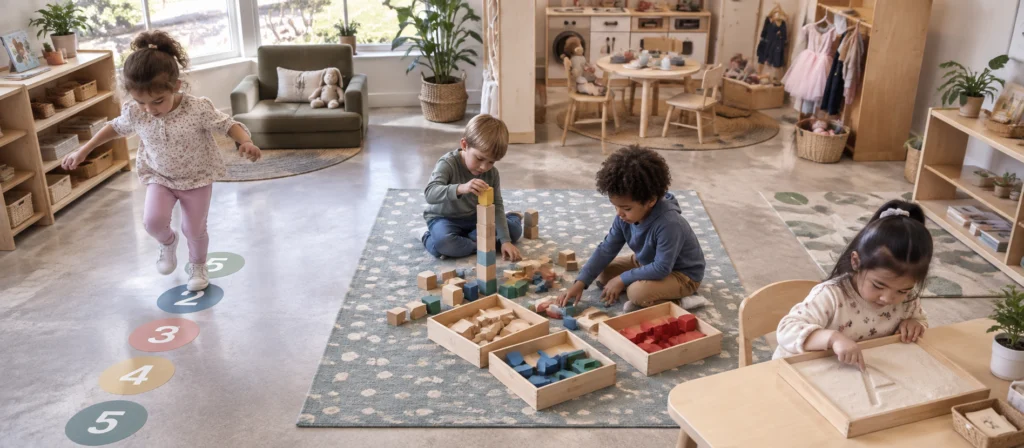
Preschoolers naturally like to explore, so many children show a preference for learning through action and hands-on experiences. You may notice that they want to try something soon after hearing a simple instruction, rather than watching a long demonstration first.
Common signs include:
- Enjoying blocks, puzzles, sorting, sand and water play, and simple experiments
- Wanting to touch, hold, or try new materials
- Enjoying dramatic play and imitating real-life situations
- Solving problems through repeated attempts
- Naturally using actions such as holding, moving, arranging, and imitating while learning
- Showing more interest in activities they can actively participate in
These signs do not mean that you need to label a child as a fixed “kinesthetic learner.” Preschoolers usually learn through a combination of seeing, listening, speaking, touching, and doing.
It is more useful to observe which types of activities help each child understand and express ideas more effectively.
Why May Traditional Classrooms Not Fully Support Kinesthetic Learning for Preschoolers?
Preschoolers still need time to sit, listen, and participate in group activities. However, if the classroom depends too heavily on static learning, children have fewer opportunities to explore through movement and hands-on experience.
For this age group, the problem is often not that children do not want to learn. The learning activity may simply not give them enough opportunities to participate actively.
Traditional Learning Can Depend Too Much on Listening and Static Tasks
If preschoolers spend long periods sitting at a table, listening, looking at flashcards, or completing worksheets, they are mainly receiving information rather than testing and understanding it through their own actions.
Many preschool concepts are easier to learn with real objects. Children can use objects to understand quantity, combine shapes to explore spatial relationships, pour water into different containers to learn about capacity, or physically move to learn concepts such as front, back, inside, and outside.
This does not mean that stories, picture cards, or paper activities have no value. They simply should not be the only ways preschoolers learn. In early childhood education settings, guidance with clear learning objectives can be combined with play and hands-on activities involving children’s active participation.
Hands-On Activities and Movement Are Not Always Integrated Into Learning
Some classrooms separate movement from learning. Children run and jump during outdoor play, but when they return to math, language, or science activities, they are expected to sit again.
You can bring movement directly into learning. For example, children can carry a certain number of blocks when learning numbers, find and sort classroom objects when learning colors, imitate characters during story activities, or plant, measure, and observe during science activities.
Sensory activities are another useful option. You can provide sensory play tools that allow children to scoop, pour, transfer, pick up, and sort different materials. These simple actions can support early concepts such as quantity, capacity, classification, and fine motor control.
In this way, physical activity is not only a break from learning. It becomes part of how children understand the content.
What Are Some Examples of Kinesthetic Learning for Preschoolers?
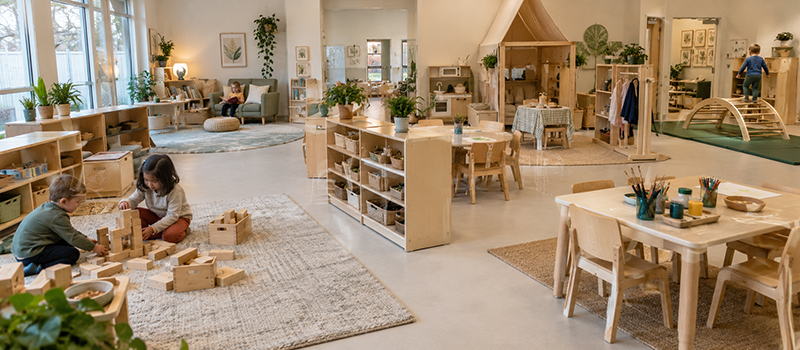
Many preschool classrooms already include kinesthetic activities. The main difference is whether the activity is clearly connected to a learning goal.
| Activity | What Children Can Learn |
|---|---|
| Number Jumping | Number recognition, counting, and sequence |
| Sand Writing | Letters, numbers, and hand control |
| Block Building | Quantity, shape, space, and balance |
| Sorting and Carrying | Color, size, category, and quantity |
| Sand and Water Play | Capacity, more and less, sinking and floating, cause and effect |
| Dramatic Play | Language, social roles, and everyday experiences |
| Simple Science Experiments | Observation, comparison, prediction, and change |
| Outdoor Exploration | Nature, measurement, sorting, and spatial concepts |
When deciding whether an activity supports kinesthetic learning, ask a simple question: does the child’s movement help them understand something?
For example, running freely is mainly physical activity. Running to different points in number order adds a learning goal. Moving blocks around is play, while sorting them by size and then using them to build can also support early math and spatial learning.
Dramatic play is another common kinesthetic learning experience. In a kitchen, shop, or home play area, you can provide dramatic play materials that allow children to pick up, stir, arrange, prepare, and share items while practicing language and social interaction.
How Can You Support Kinesthetic Learning in Preschool?
You do not need to create a separate “kinesthetic learning course.” A more practical approach is to add movement and hands-on experiences to the math, language, science, art, play, and outdoor activities children already do.
Add Movement and Hands-On Activities to Everyday Learning
Start with what you want children to learn, then think about whether they can complete part of the learning through action.
When learning numbers, children can collect a certain number of objects or complete movements based on a number. When learning letters, they can trace, build, or shape letters with clay. During story activities, they can imitate characters or act out parts of the story. In science, they can observe, measure, mix, pour, and compare.
You are not adding an extra activity. You are changing the way children take part in the learning that is already happening.
Designing Spaces for Exploration and Activity
To support kinesthetic learning, classrooms need to provide sufficient space for children to move, manipulate objects, and explore, and the layout should be planned based on how they actually engage in activities.
Distinct activity zones should be clearly defined. The construction area requires a larger open floor space; art and sensory areas should be located near easy-to-clean spots; and the reading area should be situated away from high-energy zones to minimize mutual disruption.
Clear pathways between furniture items are essential to allow children to move naturally from one area to another. Frequently used materials should be stored near their respective activity zones to reduce unnecessary walking and to enable children to access and return items independently.
In short, when designing a classroom for kinesthetic learning, you need to create a space that supports free movement while providing sufficient room for building, hands-on manipulation, collaboration, and exploration.
Offer Different Ways to Participate and Balance Active and Quiet Activities
Supporting kinesthetic learning does not mean children need to move all the time. Preschoolers also need stories, reading, drawing, conversation, small-group activities, and quiet play.
You can create a more balanced daily rhythm. For example, follow outdoor gross motor play with story time, move from a whole-group activity into hands-on small-group work, or let children draw or talk about what they discovered after outdoor exploration.
Children also do not need to complete every task in exactly the same way. One child may show understanding through building, while another may use sorting, drawing, language, or dramatic play.
For children with limited mobility or additional support needs, you can use tabletop activities, hand movements, adaptive tools, or partner work so they can participate in a way that works for them.
Conclusion
For preschoolers, kinesthetic learning means learning through movement and hands-on experiences. By connecting activities such as building, sorting, experiments, dramatic play, and outdoor exploration with clear learning goals, you can help children understand concepts by actively exploring and trying things for themselves. If you are planning a preschool classroom, West Shore can also help you choose suitable furniture, learning materials, and a layout that supports active learning based on your children’s ages, class size, and activity needs.