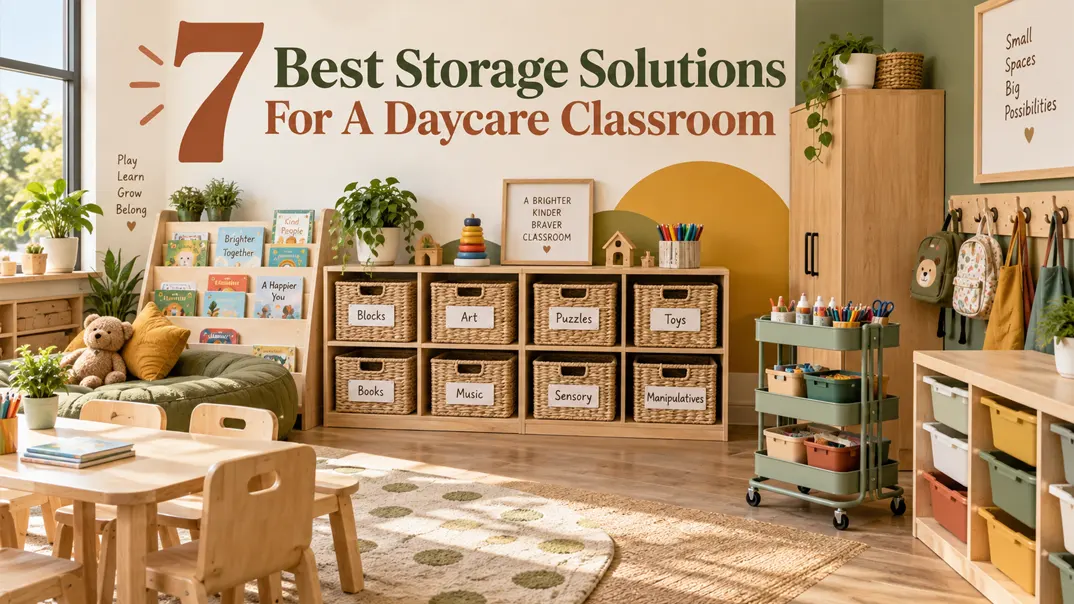
It’s a universal problem to keep a daycare classroom clean and tidy. But with the right choice of storage furniture like cubbies, shelves, cabinets, and lockers, you can easily manage your classroom.
However, you must comply with safety regulations like anti-tip and only certified materials for furniture.
To help you organise your daycare classroom, we compiled a checklist of the top 7 storage solutions, each handpicked for the problem it solves.
What To Check Before You Buy Storage For A Daycare Classroom
Storage equipment is designed to withstand years of usage. So it’s important to know the buying criteria and invest in storage options that make sense.
- ANSI/BIFMA X5.9 Tip-over Standard
If you are purchasing cubbies, shelves, or dressers, ensure the manufacturer follows ANSI/BIFMA X5.9 tip-over standard regulations. It’s a mandatory safety standard to check stability while the product is free-standing. - CPSIA Compliance for Materials, Finish, and Hardware
The Consumer Product Safety Improvement Act is designed to mandate strict safety standards for childcare products. Licensing officials ensure the material and hardware used in childcare furniture do not emit harmful chemicals. The products have smooth finishes and edges. - Anti-tip Wall Anchoring on Tall or Top-heavy Units
Ensure the top-heavy storage furniture is secured from tipping over or falling. Anchor straps or brackets of furniture directly into a wooden or metal wall stud. This will provide protection against any possible structural damage or prevent any possible accidents. - Rounded Edges and Non-toxic, Wipeable Finish
It’s an absolute gold standard for any childcare product to have rounded edges and be non-toxic. And since childcare classrooms require the most hygienic surfaces, all the products should have a wipeable finish that can be cleaned easily. - Height Matched to the Age Group Using It
It’s important to keep in mind that some storage equipment is used by both children and caretakers. So, before investing in any product, first analyse for whom you are buying. And whether the height matches the age group using it.
How Many Storage Units Does Your Classroom Need?
Before you invest in daycare storage furniture, ensure you refer to your state’s childcare requirements. And find out how many children can be accommodated according to the size of your daycare.
Most state authorities require you to maintain a minimum of 35 sq.ft. usable indoor space per child. Divide your classroom’s usable square footage by 35 to find your maximum capacity of enrolment. For example, a 700 sq.ft. classroom would allow up to 20 children (700 ÷ 35 = 20).
Once you are aware of the correct headcount, gradually invest in storage units. For example,
- Purchase 1 cubby per child with 2-3 extra units for staff members.
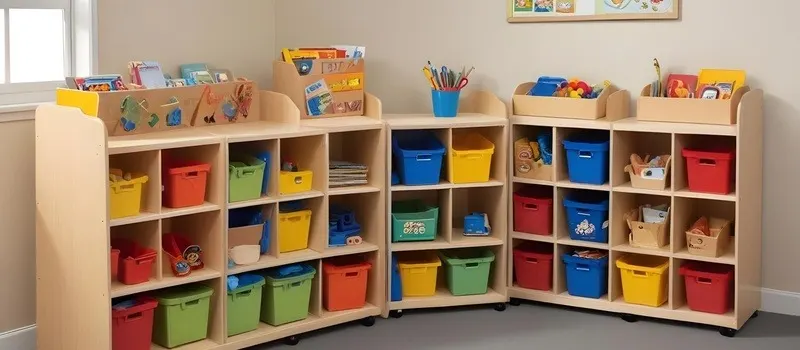
- Add one open shelving unit for every 8-10 children to keep toys or other learning materials within reach of preschoolers.
However, classrooms with mixed age groups require more than one type of storage unit.
- Infants or toddlers will require shallow bins or low-level desks.
- Preschoolers require more open and tall shelves for easy access.
7 Best Storage Solutions For A Daycare Classroom
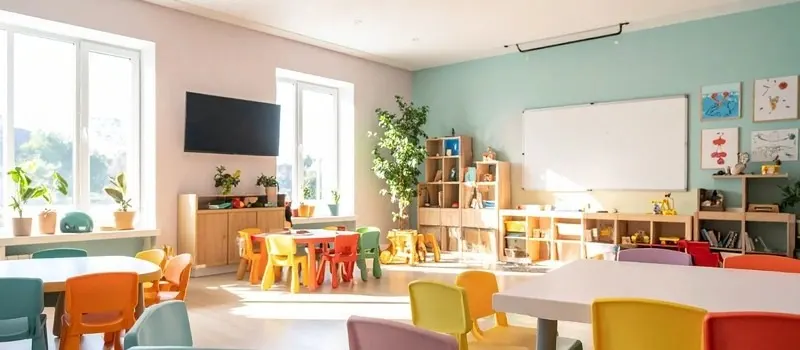
Balancing classroom storage and room layout goes hand in hand. From cubbies and cabinets to book display shelves or lockers, each storage unit should provide smart storage solutions without taking up too much space.
Below, we have compiled a list of storage solutions every daycare classroom requires.
1. Wall-Mounted Cubby Units For Personal Belongings
Personal belongings like coats, bags, and lunchboxes create the most untidy clutter. If you don’t have separate space for each child to keep their items, there is a high chance of cross-contamination.
Since wall-mounted cubby units have typical sizing and individual compartment design, you can easily maintain space and store belongings smartly. But ensure the anti-tip strap is used to prevent accidental tip-overs.
2. Open Low-Profile Shelving For Child-Led Access
Without proper storage shelves, you might experience toy pile-up, which extends to books, colours, etc. Also, it increases dependency on staff members to hand over things every now and then.
With low-profile shelving, kids can access their day-to-day materials. Especially with open-face shelving that complies with the shoulder-height rule by age. This supports independent access and helps kids to engage in regular activities with ease. It also encourages rotation of old items and helps maintain your daycare classroom with a storage strategy.
3. Mobile Storage Carts And Cabinets On Casters
Mobile storage carts and cabinets are versatile products, it not only solve the storage problem but supports change of layouts. You can easily move them wherever you wish to make more space for naps, meals, or floor cleaning.
But before you buy, make sure your carts and cabinets have a locking-caster safety system that keeps the equipment in place and prevents unwanted drifting. Also, the right balance of storage and weight is required so the cart stays stable when loaded.
4. Lockable Closed Cabinets For Staff-Only Supplies
Some storage cabinets are required to store sanitary supplies that should only be accessed by the staff members or caregivers. These cabinets should be away from the child’s access and should include cleaning chemicals and first-aid stock. Also, make sure every choking-hazard item is safely kept away.
Remember, some countries and licensing authorities make lockable closed cabinets a mandatory requirement for child daycare.
5. Bench Cubby Combos For Shoes And Bags
Another most cluttered space is the entrance drop-off area. It creates an unwelcoming space due to footwear and laundry bag clutter. But instead of purchasing separate units for bags and shoes, it’s best to invest in a bench cubby combo. It uses less floor space and keeps your things in one place.
You can also invest in a chair-with-storage combination. A dual-purpose piece of furniture that provides a sitting place and enough space to store mid-size materials.
6. Labeled Tote And Bin Systems
Unspecified materials per child and loose parts create chaos in the classroom. Moreover, it becomes difficult for children to look for their materials among everyone else’s.
However, labeled totes and bins will easily resolve this issue. The use of clear bins makes it easy for children, who have an idea of storing the different materials separately. And children who are still learning to read can do so using pictures on the labels and then arrange the materials themselves.
Such practice will reduce children’s dependence on the caregiver.
7. Front-Facing Book Display Shelving
When you stack books on top of each other, they are out of display and hardly grab the attention of children. And they will require your assistance to choose what suits their interest.
Whereas the best idea to keep books in place and visible is to invest in front-facing book display shelves. It attracts the attention of the children and encourages them to interact with learning books on their own.
Which Storage Material Is Best: Plywood Vs. Laminate Vs. Plastic Vs. Metal
Although there is no single best material for your storage furniture. The choice should depend upon cleaning frequency, moisture exposure, durability, safety, and how much budget is available.
Each material has various strengths and is ideal for unique storage requirements. But it’s essential for you to ensure the material used in daycare storage furniture is non-adhesive and does not emit harmful chemicals. The choice of material and its properties can help you get licensed or get banned forever.

| Storage Furniture Material | Highlighted Benefit | Main Concern | Best Use Case |
| Plywood | 1. Sturdy material 2. Natural wood-like visual feel and texture 3. Holds structure for years | Plywood has pores that can absorb moisture and stains if not sealed properly, so the material needs a protective finish. | 1. Cubbies & shelving 2. Low-moisture areas where warmth and durability matter |
| Laminate/Melamine | 1. Easy to wipe clean 2. Scratch-resistant 3. Available in many colors/patterns | Lamination can chip or peel at edges over time, especially with rough handling, and collect dust within spaces. | Everyday classroom storage like cubbies, bins, and toy shelves that need frequent cleaning |
| Plastic | 1. Lightweight & waterproof material 2. Easy to sanitize 3. Most budget-friendly option | Plastic is said to be Less durable in the long term and can easily crack or fade with heavy use or sun exposure. | 1. Sanitary areas that are exposed to water and spills. 2. Art supply bins and outdoor storage exposed to the external environment |
| Metal | 1. Extremely durable 2. Resistant to heavy use, moisture, and pests | Metal can often tend to have sharp edges if not properly finished and may cost more upfront. | 1. Heavy storage 2. Outdoor equipment sheds, or areas needing long-term heavy-duty use |
| Solid Wood | 1. Premium-looking material 2. Exceptional strength 3. Easy to get repaired over its lifespan | Solid wood comes with the highest upfront cost and is also heavier to move. It can get damaged if exposed to humidity swings. | 1. Statement pieces like reading corners, entryway storage 2. Best for long-term investment furniture in climate-controlled rooms |
Before you decide on opting for the ideal material, ensure childcare storage furniture is a long-term investment. Don’t overlook material due to its price range, but focus on how well it can serve your daycare center in the coming years.
Common Mistakes When Choosing Daycare Storage
When purchasing childcare storage, many make the following mistakes, especially those who are new to the daycare business.
- Buying Home Or Office Furniture Instead Of ANSI/BIFMA X5.9-Rated Units
The most common mistake anyone makes is that they try to use home or office furniture instead of purchasing ANSI/BIFMA X5.9-rated units. They are especially designed with strict stability standards that help prevent tip-overs. And since home furniture is not rated under specific stability standards, authorities refrain from offering a license.
- Skipping Anti-Tip Wall Anchoring On Tall Shelving
If you plan to purchase tall shelves, do not forget to purchase anti-tip wall anchoring. Because if you miss this small detail, you will keep children and staff at risk of tip-overs. These anti-tip wall anchors distribute the weight across the panel and keep shelves in place until you decide to take them off.
- Using One Storage Type For A Mixed-Age Room
Another common mistake is that owners invest in one standard-sized storage solution for a mixed room. This rarely solves the problems of storage for most kids. Because mixed-age rooms have infants, toddlers, and preschoolers, they engage in activities to develop motor skills. So, if you have a mixed room, try splitting storage types by height.
- Buying Storage Before Measuring The Room
If you are constructing or renovating your daycare center, refrain from buying storage furniture before getting your building constructed first. If your daycare center is still under construction, there is a chance that you can make changes to the layout and buy furniture accordingly. However, if you buy storage furniture beforehand, there might be problems placing the units afterwards.
- Forgetting Staff-Only Storage
Most daycare owners forget to invest in staff-only storage. A dedicated space helps them keep their personal belongings and classroom materials safe during & after working hours. Though this type of storage furniture does not affect your license, but its essential to keep all the rooms clutter-free.
FAQs
Get answers to all your queries in the following frequently asked questions section.
1. How Many Cubbies Do I Need For A Daycare Classroom?
The best idea is to purchase 1 cubby per child and a few extra cubbies for staff and supplies. However, some authorities require a minimum square footage per cubby, so ensure you check your state’s guidelines.
2. Do daycare storage cabinets need to be bolted to the wall?
It’s not necessary to mount daycare short or standing storage cabinets. But if your cabinets are heavy and tall, it’s necessary to mount them and attach them with anti-tip anchors. This prevents your cabinets from tipping over and causing injuries to children and caregivers.
3. What’s the difference between cubbies and lockers?
Cubbies are front-opening compartments that are used for everyday use and provide quick access to shoes or coats. Whereas lockers are secured with a proper locking system and have doors that are best suited for personal belongings or more secure items.
4. Can I use regular home shelving in a licensed daycare?
Generally, we do not suggest using regular home shelves placed in a daycare center. Authorities require you to follow ANSI/BIFMA X5.9 tip-over safety standards. If you use non-rated furniture, it might prevent you from obtaining a license.
5. What Storage Is Best For An Infant Daycare Room?
It’s suggested that everything should be within the reach of an adult and completely inaccessible to crawlers or infants. This provides easy access to storage for diapers, wipes, and extra clothing. It works best with locked cabinets for medication and cleaning supplies storage.
Conclusion
Safety, sanitation, accessibility, and capacity should all be considered when attempting to solve daycare storage problems. The selection of storage furniture must prioritize quality over cost, while also ensuring that it meets ANSI/BIFMA X5.9/CPSIA certifications prior to purchase.
To get safe and long-lasting storage solutions, you can start with West Shore Groups. Renowned manufacturers specializing in childcare, daycare, and storage furniture.