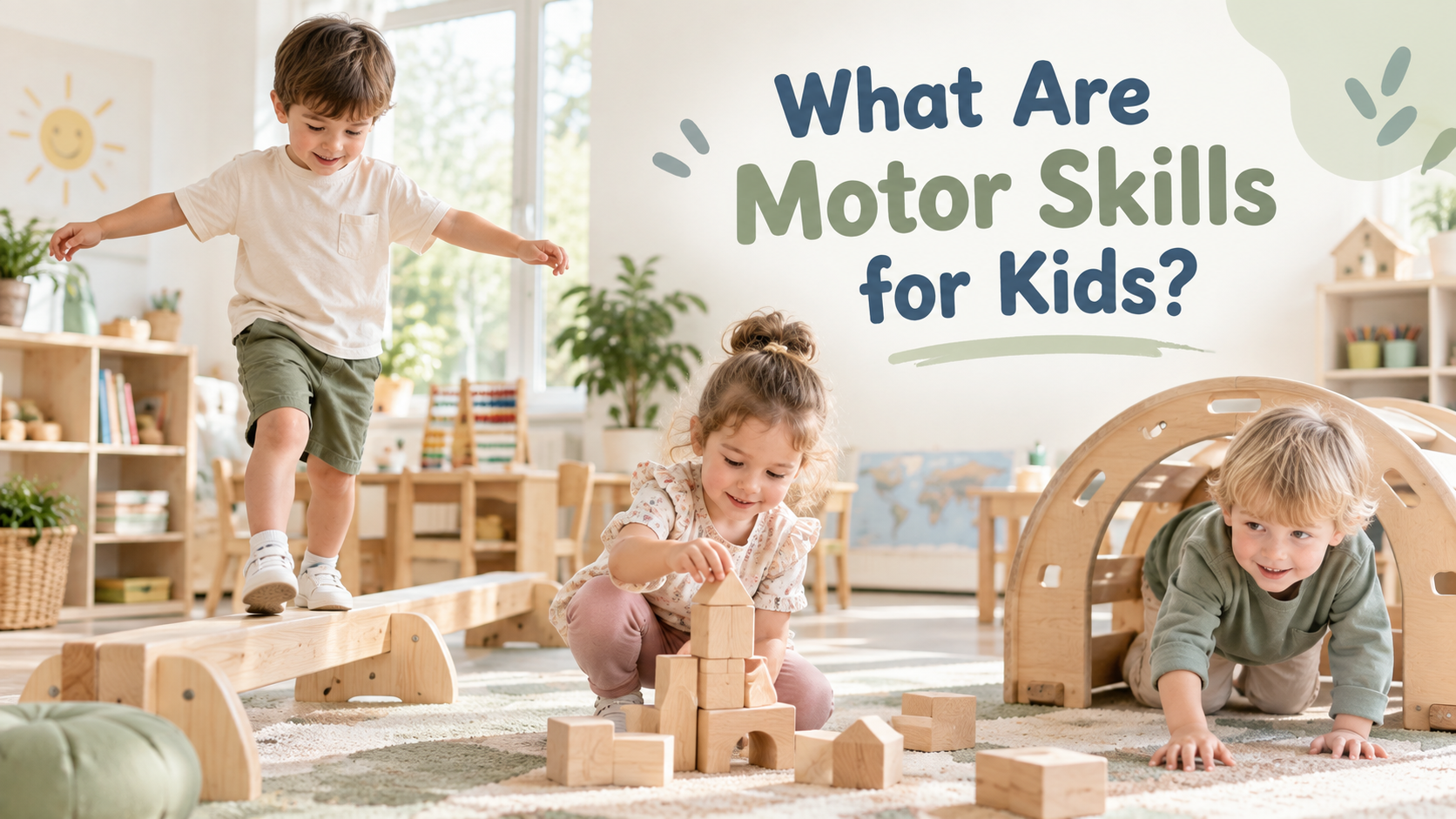
Every time a child runs, climbs, draws, stacks blocks, or fastens a zipper, they are using motor skills. Motor Skills for Kids support movement, classroom participation, self-care, play, and independence. By understanding the difference between gross and fine motor skills, you can better recognize what children are developing and create more opportunities for practice through daily activities, toys, and their environment.
The Two Main Types of Motor Skills for Kids.
Children’s motor skills are generally categorized into two types: gross motor skills and fine motor skills.
Motor skills in children refer to the ability to control and coordinate body muscles to perform movements.
You can think of it quite simply: whenever a child needs to actively control their body to accomplish a task, motor skills are usually involved.
Walking, bending down to pick something up, running, jumping, grasping toys, building with blocks, turning the pages of a book, drawing, and feeding or dressing oneself may seem like completely different activities, but they all require the child to control specific parts of their body.
Gross Motor Skills
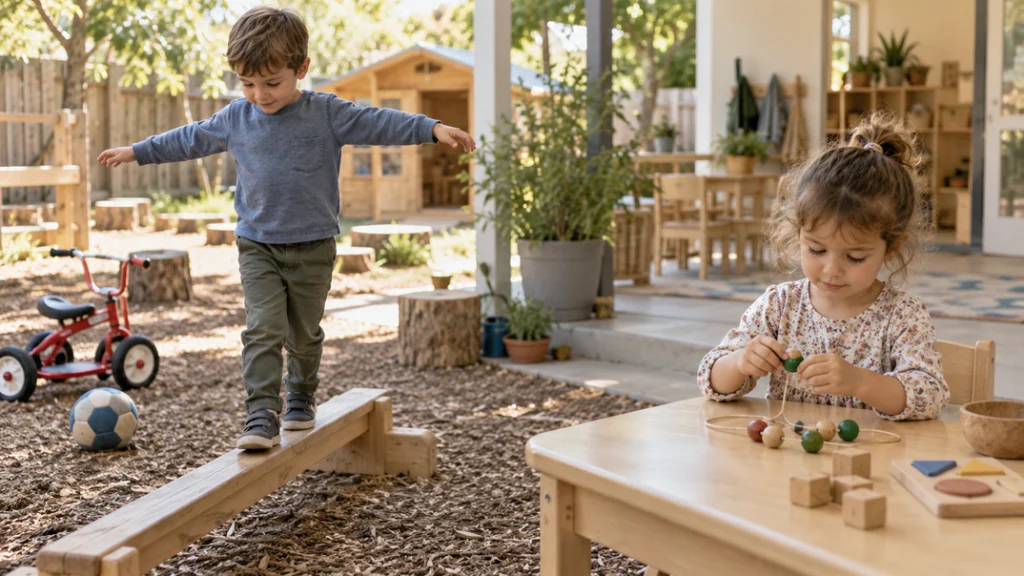
Gross motor skills rely primarily on large muscle groups in the legs, arms, shoulders, and torso. Children utilize these abilities when running, jumping, climbing, balancing, kicking, throwing, catching, pushing or pulling objects, and riding tricycles. They form a crucial foundation for daily movement, outdoor activities, and physical exploration.
Gross motor skills are not merely about raw strength; they result from the interplay of strength, balance, coordination, spatial awareness, and body control. For instance, when jumping off a low platform, a child must gauge the distance, adjust their center of gravity, and coordinate their legs to execute the jump and landing; catching a ball requires tracking the ball’s position and trajectory while making timely adjustments to the body and arms.
Children develop gross motor skills through continuous movement and experimentation. Activities such as free running, climbing, cycling, ball games, and balancing—supported by appropriate outdoor toys and equipment—offer a variety of physical exercises. Rather than repeatedly practicing a single movement, it is more important for children to engage in a wide range of actions—including running, jumping, climbing, pushing, pulling, throwing, and balancing—to gradually improve their overall body control and coordination.
Fine Motor Skills
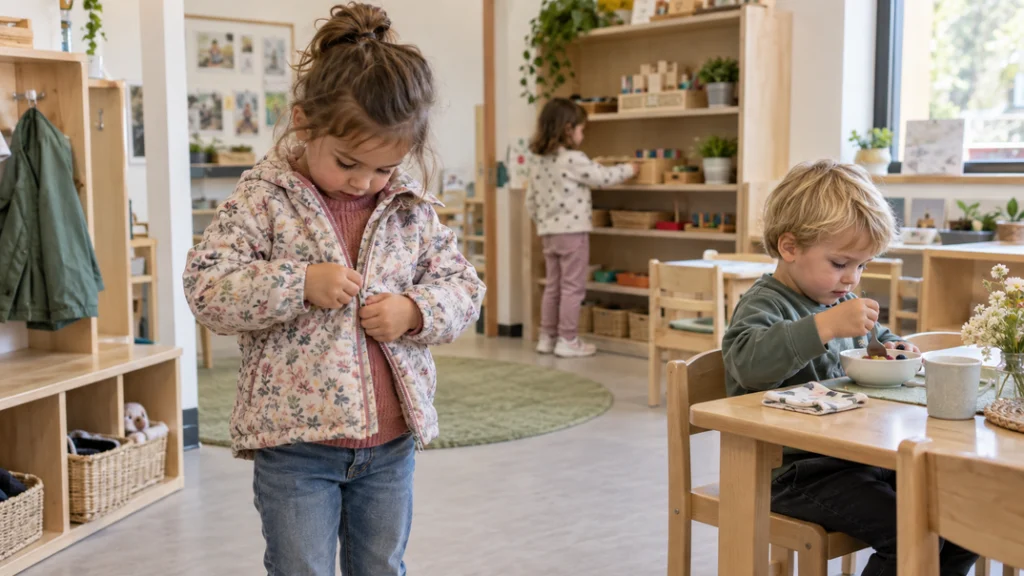
Fine motor skills rely primarily on the small muscles of the hands, fingers, and wrists, and typically require good hand-eye coordination. Activities such as playing with building blocks or puzzles, stringing beads, drawing, paper cutting, playing with clay, using eating utensils, and fastening buttons or zippers all utilize these skills.
Therefore, fine motor skills encompass more than just the ability to write. Tasks such as eating independently, getting dressed, turning pages, handling educational tools, and organizing materials all require varying degrees of hand control; these skills form a crucial foundation for a child’s daily independence and classroom activities.
The table below helps you quickly understand the differences between the two types of motor skills:
| Type | Primary Body Parts Used | Common Activities |
| Gross Motor Skills | Large Muscle Groups Such as the Legs, Arms, Shoulders, and Torso | Running, Jumping, Climbing, Balancing, Kicking a Ball, Throwing a Ball, Riding a Bike |
| Fine Motor Skills | Small Muscles of the Hands, Fingers, and Wrists | Drawing, Paper Cutting, Bead Stringing, Doing Puzzles, Building With Blocks, Using Eating Utensils |
In practice, gross motor skills and fine motor skills are often used simultaneously. For example, when a child sits on the floor building with blocks, they need to maintain trunk stability while also performing precise finger movements. Therefore, there is no need to view these two types of skills in complete isolation; many everyday games and activities naturally exercise multiple physical abilities at the same time.
Why Are Motor Skills Important for Children?
Support Physical Control and Coordination
Motor skills help children control their bodies more effectively when walking, running, jumping, balancing, or changing direction.
Build Independence in Daily Life
Skills such as using utensils, getting dressed, opening containers, and tidying up toys allow children to complete more tasks on their own.
Support Learning and Classroom Participation
Drawing, cutting, turning pages, building with blocks, and handling learning materials all rely on fine motor control and hand-eye coordination.
Encourage Play and Exploration
Stronger motor skills make it easier for children to join outdoor play, climbing, riding, ball games, and other activities that involve movement and interaction.
When Do Children Develop Motor Skills?
Children begin developing motor skills early in life, progressing from simple movements like lifting the head, rolling over, and reaching for toys to more complex actions such as sitting, crawling, standing, and walking. With practice and experience, their coordination, stability, and movement control gradually improve.
Babies and Toddlers
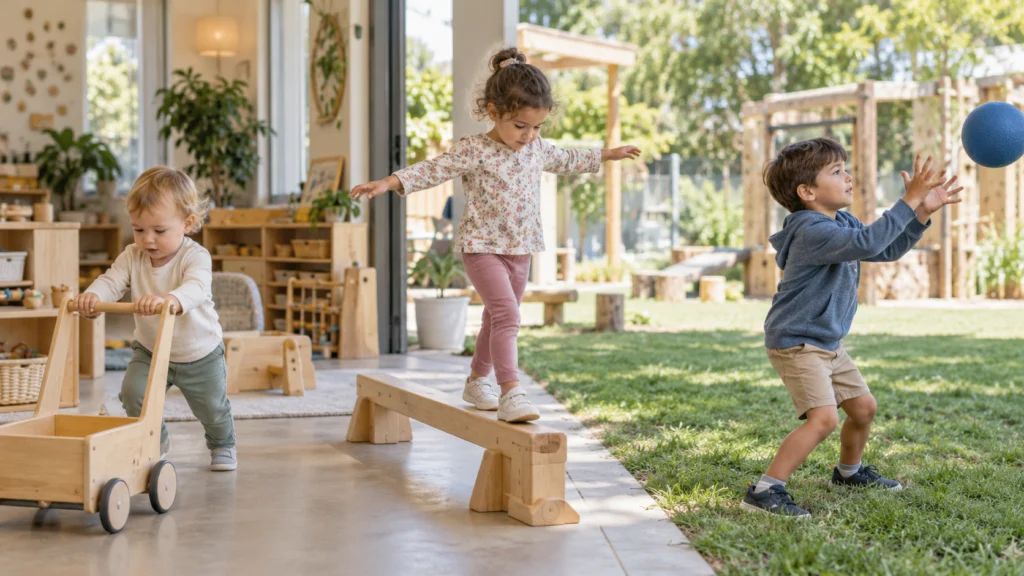
During infancy and the toddler years, children gradually move from basic body control—such as sitting, crawling, standing, and walking—to more active skills like running, kicking, pushing, pulling, and handling toys. At the same time, their hand control improves as they begin turning pages, using a spoon, stacking blocks, and making simple marks.
At this stage, children learn best through movement and exploration rather than formal training. Everyday actions like walking, carrying, building, grasping, and getting back up after a fall all give them valuable opportunities to develop coordination, balance, and hand control.
Preschoolers
During the preschool years, children gain better control of both large and small movements. They become more confident with running, jumping, climbing, balancing, throwing, catching, and riding a tricycle, while also improving skills like cutting, drawing, completing puzzles, building with blocks, and using utensils.
For kindergartens and childcare centers, these abilities develop naturally through everyday play. Carrying materials, doing art, building, riding, and ball games all help children improve coordination, control, and independence.
School-Age Children
As children reach school age, their motor skills become stronger, smoother, and more precise. They may ride bikes, play sports, throw and catch more accurately, and improve fine motor tasks such as writing, drawing, crafts, and tool use.
Age is only a general guide, and every child develops at their own pace. What matters most is giving children regular opportunities to practice and seeing steady progress in their coordination and control.
Where Do Children Develop Motor Skills?
Motor skills are not developed solely during PE classes, on the playground, or in specially organized sports activities. In fact, many seemingly ordinary daily actions help children practice body control and coordination.
At home, activities such as eating, getting dressed, putting on shoes, and tidying up toys all require varying degrees of motor skills; in the classroom, handling materials, drawing, building with blocks, and using scissors also call for physical or hand control. Outdoors, children have even more opportunities to develop gross motor skills through running, jumping, riding, climbing, and balancing.
In other words, the development of motor skills takes place across many different settings throughout the day and is not limited to any single type of activity or fixed location.
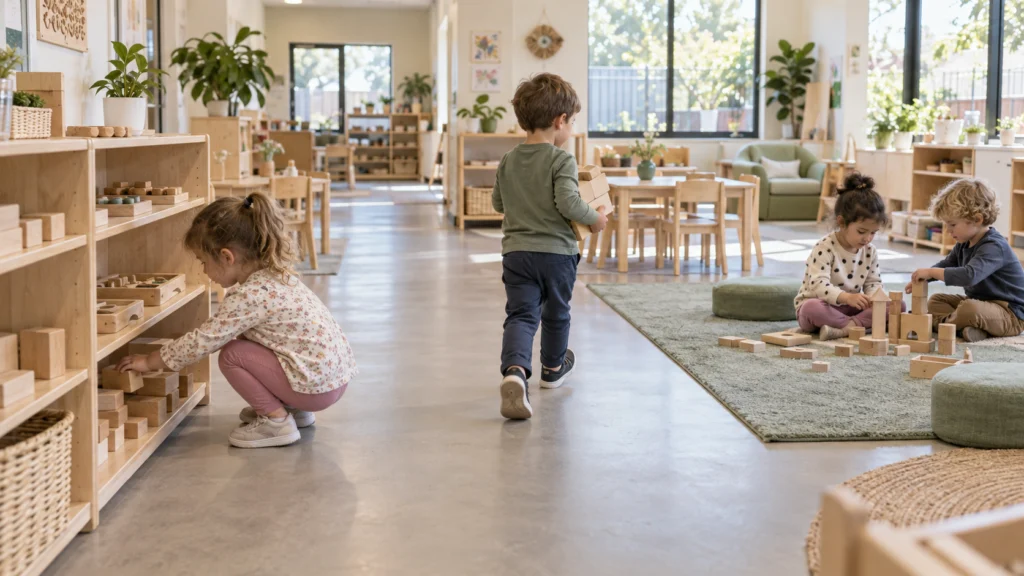
The table below offers a clear overview of the motor skill opportunities different environments can provide for children:
| Environment | Main Skills Developed | Common Activities |
| At Home | Fine Motor Skills, Body Control, Self-Care Skills | Getting Dressed, Eating, Putting On Shoes, Tidying Up Toys, Opening Boxes, Pouring Water |
| In the Classroom | Hand-Eye Coordination, Fine Motor Skills, Body Control | Drawing, Paper Cutting, Doing Puzzles, Building With Blocks, Taking and Returning Materials, Organizing Items |
| Outdoors and on the Playground | Balance, Strength, Coordination, Gross Motor Skills | Running, Jumping, Climbing, Riding a Bike, Throwing a Ball, Catching a Ball, Crossing Obstacles |
| Daily Routines | Overall Motor Skills | Washing Hands, Going Up and Down Stairs, Opening Doors, Carrying Light Objects, Using Eating Utensils |
This also suggests that you do not necessarily need to set up a dedicated “motor skills area.” Many motor skills can be naturally integrated into a child’s daily activities.
For instance, consider a child taking building blocks from a low shelf, carrying them to a rug area, sitting down to build, and finally putting the blocks back. This seemingly ordinary sequence actually involves a range of abilities, such as walking, squatting, grasping, carrying, maintaining body stability, hand-eye coordination, and fine motor manipulation.
Therefore, rather than focusing solely on which specific physical activities to schedule, consider whether the child’s daily environment supports self-initiated movement. Factors such as the accessibility of frequently used materials, the height of children’s furniture, clear pathways for movement, and sufficient outdoor space all influence the opportunities a child has to practice. The development of motor skills does not occur only during a dedicated lesson; it unfolds continuously through the child’s daily movements, object manipulation, play, and self-care activities.
How Can You Help Children Develop Motor Skills?
Helping children develop motor skills does not mean scheduling a formal motor skills training session every day. A more practical approach for parents and early childhood educators is to provide a variety of activities, materials, and environments that allow children to experiment, repeat actions, and gradually challenge themselves.
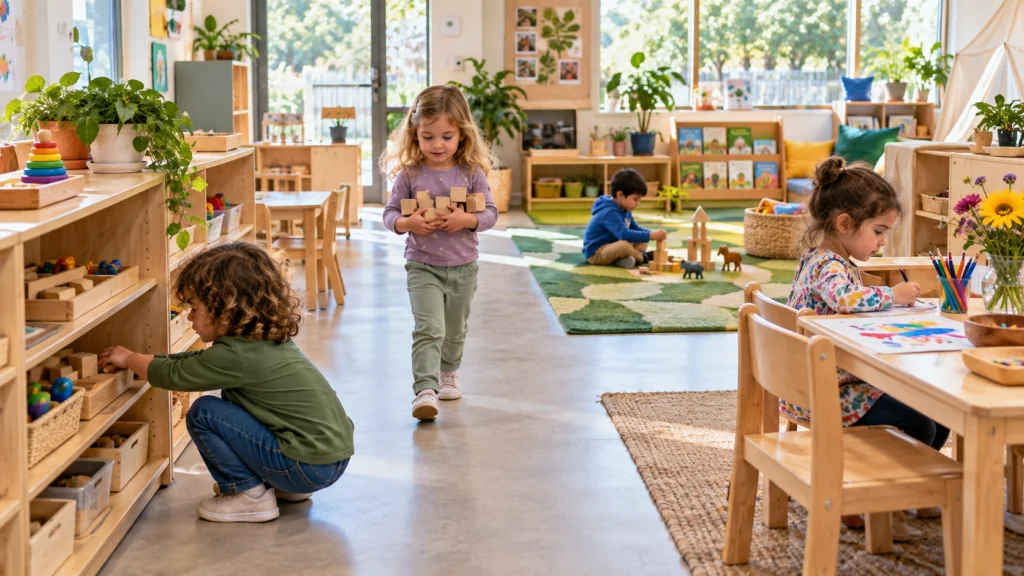
Provide Different Types of Movement
If you want to help your child develop gross motor skills, the focus shouldn’t be on repeatedly practicing a single movement, but rather on exposing them to a wide variety of physical activities. Running helps practice speed and directional control; jumping requires coordinating the legs and the body’s center of gravity; climbing engages the arms, legs, and torso simultaneously; and ball games incorporate distance judgment, hand-eye coordination, and physical reactions.
You can provide your child with diverse opportunities for physical activity through actions like running, jumping, climbing, pushing and pulling, throwing, kicking, balancing, and riding. The equipment doesn’t need to be complex; items such as balls, tricycles, low-level balancing gear, soft mats, climbing structures, or simple obstacle courses can inspire a multitude of ways to play.
What truly matters isn’t finding the “best” exercise, but giving your child the chance to constantly try new movements—gradually improving their body control, coordination, and balance through a process of repetition and exploration.
Incorporate More Hands-On Activities
Helping children develop fine motor skills shouldn’t just revolve around writing or holding a pencil; more importantly, it involves providing them with authentic, varied opportunities for hands-on manipulation. Building blocks, puzzles, clay, beads, art supplies, child-safe scissors, tongs, tweezers, and scooping or pouring tools all allow children to exercise their hands in different ways.
Different materials offer different types of practice. Kneading clay builds hand strength, stringing beads requires precise hand-eye coordination, and using tongs to pick up small objects demands control over finger pressure and movement accuracy.
Therefore, “play” itself is a vital method for fine motor development. Children don’t progress simply by repeating a single hand movement; rather, they gradually learn to control their hands with greater precision through purposeful activities like building, drawing, grasping, stringing beads, and tidying up materials.
Create an Environment That Supports Movement
While activities and toys are important, the environment a child inhabits daily also influences motor skill development. A suitable space must not only be safe but also allow children to move freely, access materials independently, and engage in self-directed tasks.
You can assess whether an environment is suitable by asking a few simple questions:
- Is there enough space for movement?
- Are the table and chair heights appropriate?
- Can children access frequently used toys and materials on their own?
- Are the main pathways clear?
- Are there ample opportunities for movement and play both indoors and outdoors?
For instance, if all materials are stored at adult height, children must wait for a teacher’s help every time they need something. In contrast, when blocks, puzzles, and other common materials are kept in open storage accessible to children, they can walk over, squat down, pick up, carry, use, and put the materials away independently. A well-designed environment for children isn’t just about keeping the space tidy; it is about giving children more opportunities to move, access items, manipulate objects, and tidy up on their own.
FAQs
1. Do Gross Motor Skills and Fine Motor Skills Develop Simultaneously?
Yes. Many activities use both skills at the same time. For example, building with blocks requires body stability as well as precise hand movements, so classroom activities often support gross and fine motor development together.
2. Do Children Need Specific Training for Motor Skills?
Usually, there is no need to turn motor skill development into a separate training course. Daily activities—such as running, climbing, building with blocks, drawing, eating, dressing, and tidying up materials—naturally help children practice body control and coordination.
3. Which activities support both gross and fine motor skills?
Activities such as building with large blocks, obstacle courses, gardening, ball games, and carrying and arranging classroom materials can support both gross and fine motor skills by combining whole-body movement with hand control.
4. How do indoor and outdoor equipment support different motor skills?
Indoor equipment often supports fine motor skills through building, puzzles, art, and hands-on play, while outdoor equipment gives children more opportunities to run, climb, balance, ride, and develop gross motor skills.
5. Do All Children Develop Motor Skills at the Same Pace?
No. Age provides a general idea of developmental progression, but it is not a strict timetable. Children develop at different rates; what matters more is whether they have consistent opportunities to practice and whether their body control and movement abilities are gradually improving.
Conclusion
The development of motor skills stems not only from formal training but also—and perhaps more significantly—from the diverse experiences of daily life. Activities such as running, climbing, building, drawing, eating, and dressing all help children enhance their physical control, coordination, and independence.
For parents and educators, the key lies in providing ample space, suitable toys, and age-appropriate furniture that allow children to move, explore, and practice naturally. West Shore Group is dedicated to supplying early learning environments with a wide range of furniture, toys, and play equipment, all designed with these everyday activities in mind.