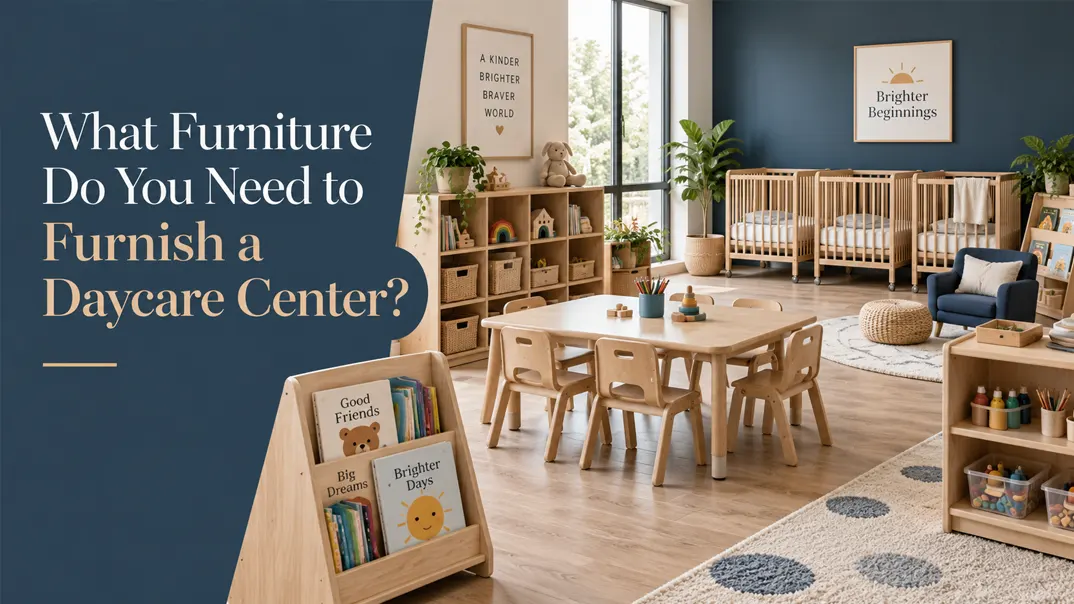
Most owners who have just opened a daycare center struggle with which furniture to buy and how much to buy.
Experts suggest the checklist should include age-appropriate furniture. Along with cleaning essentials, safety & health equipment, and Interactive learning toys.
To help you set up a daycare, this guide includes a daycare startup furniture checklist by room, budget ideas, and how to avoid overspending.
How Much Does Daycare Furniture Cost?
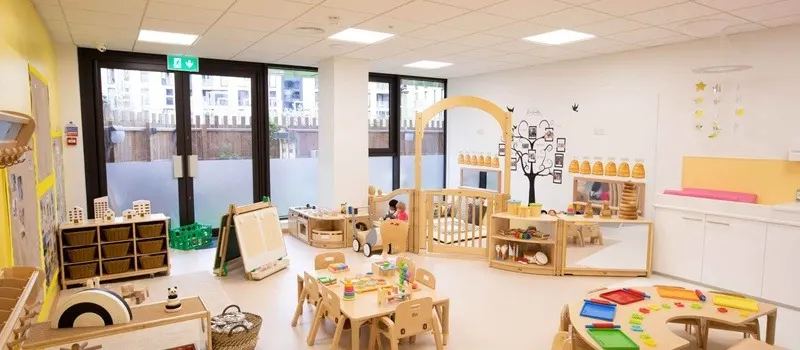
There is no one definite cost for opening a daycare furniture budget. The budget is usually influenced by whether you are purchasing indoor or outdoor furniture and the material you are investing in.
However, the budget range usually lands between USD 15,000 and USD 80,000 for an outdoor setup. For indoor facilities, the cost ranges from $6,000 to $60,000, depending on daycare size and whether it’s a standard or flagship facility.
| Facility Size | Children Capacity | Budget Range |
| standard | 10- 25 children | $6,000 – $12,000 |
| Premium | 25+ children | $12,000–$ 20,000 |
| Flagship | 3-5 rooms | $25,000 – $60,000 |
However, there are a few professionals who also provide custom-made solutions for a flagship daycare center. And the budget for a Flagship/custom daycare center may cost $60,000 or above.
New Vs Used Furniture: Is it Necessary to Invest in Furniture Every Year?
The answer to “whether you should invest in daycare furniture every year” is no. If you are setting up a daycare facility for the very first time, then you are required to purchase everything that is required per child.
Once your daycare is furnished, you can maintain the used furniture and only replace the broken ones. Since it’s essential for a daycare center to always be productive, the regular inspections (personal) should be well taken care of. You should immediately replace broken or torn furniture, as it may injure children.
What Furniture Do You Need, Room by Room?
To furnish your daycare center and transform a space into a warm, welcoming, and functional childcare facility, furniture plays a major role. Every room deserves supplies that not only meet the requirements but also attract and engage children.
For better assessment, take a walk through each room of your daycare and analyse the available space in the infant room, toddler room, preschool room, reception, and other utility rooms. For better understanding, the detailed daycare startup furniture checklist is given below for each room.
| Infant Room (Nursery) | Toddler Classrooms | Preschool Classrooms | Mixed Rooms |
| Stackable Nap Cots | Toddler Activity Table | Basic Round Table | Alphabet Rug |
| Infant Changing Table with Sink | Wooden Toddler Stackable Chair | Basic Square Table | Animals Daycare Rug |
| Feeding Chairs | Toddler Changing Table with Stairs | Basic Rectangular Table | Circus Elephant Parade Rug |
| Wooden High Chair | Toddler Sofa Set or Double Sofa Set | Basic Trapezoidal Table | Falling Leaves Carpet |
| Premium Tray | Sensory Tables — Toddler Sensory Table with Bins | Basic Semi-Circle Table | Low Open Shelves |
| Mobile Sensory Table | Children’s Montessori Chair | Three-Tier Shelving Units | |
| Reading Nook Benches — Kids Wooden Bench, Stackable Preschool Bench | Early Childhood Slatted Chair | Three-Tier Open Back Shelf | |
| Adjustable Height Art Easel | White Classroom Chair | Play Furniture — Play Kitchen Sets, Puppet Theater | |
| 2-Station Art Easel with Storage | Stackable Chairs | Housekeeping Stand | |
| Cubbie Lockers | |||
| Individual Storage Lockers |
Other Utility Rooms:-
Each daycare center should have these basic yet essential utility rooms: a kids’ resting area, a reception area, and a supplies area. To help you with their furniture requirements, refer to the table given below.
| Rest Area / Nap Room | Administrative & Reception Area | Supplies room |
| Stackable Nap Cots | Teacher’s Office Chair | 6-Basket Storage Cabinets |
| Infant Changing Table with Sink | Desk Chair with Armrest | Adjustable Shelf Storage |
| Toddler Changing Table with Stairs | Stackable Office Chairs | 5 Cubic Meter Storage Rack |
| Alphabet Rug | Adjustable Mobile Laptop Cart Desk | Translucent Back Storage Cabinets |
| Falling Leaves Carpet | 3-Drawer Vertical File Cabinet | Art Wooden Storage Trolley |
| Nature View Divider | Dedicated Reception Desk | Combi Art Trolley |
| Cafe Tearoom Panel Set | 3-Drawer Vertical File Cabinet | |
| Toddler Sofa Set — quiet/cozy rest seating | Individual Storage Lockers | |
| Cribs | Cubbie Lockers |
Furniture for Daycare Licensing: Rules You Must Follow
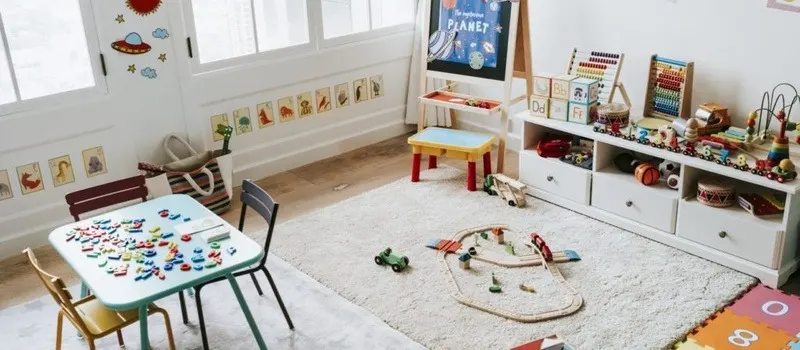
Before you invest in furniture & supplies, ensure you comply with the local licensing authorities. Most countries or states have unique requirements for childcare furniture. They may even pass your daycare license based on the availability of specific furniture & equipment.
However, licensing rules vary country by country and sometimes between two states as well. It’s important to contact your local licensing authorities before making a purchase.
Daycare Licensing Rules
- 25–50 sq ft of floor space per child
- Permanently fixed furniture is not included in total room size
- Bulky pieces of furniture lower your licensable capacity
- Equipment must be spaced 18–36 inches apart
- Evacuation pathways need 30 inches of space
- Use full-sized or non-full-sized cribs and comply with state rules
- No pillows/comforters under 12 months (some states extend to 2 years)
- Most states have banned drop-side cribs
- Cradles and bassinets must meet CPSC standards
- Fabric and foam must meet flammability standards
- Furniture should have low VOCs (volatile organic compounds)
- Tables and chairs must meet dimension standards and education framework
- Furniture must meet anti-tip stability standards
- Furniture should not have sharp edges, sharp points, or small detachable parts
- Changing stations need a non-porous, sanitizable surface with a handwashing basin
- Furniture childproofing is an essential parameter for obtaining a license
What are the mandatory safety standards for childcare furniture?
- F963: The US safety standards for children’s products, covering toxic substances, small parts, sharp edges, and product strength.
- CPSIA: A federal law regulating the amount of lead and other hazardous materials used in children’s furniture.
- F2057 (STURDY Act): Mandatory safety standard that addresses the issue of tip-over of furniture storage units.
- GREENGUARD: Ensures low emissions of chemicals/VOCs.
- Baby Safety Alliance (formerly JPMA) Certified: Independent certification for juvenile products in the US market.
- ISO 71 and ISO: Equivalent safety standards for furniture products in the European market.
- TSCA Title VI: Limits formaldehyde emissions from composite wood furniture.
Build Your Furniture Budget by Childcare Center Size
Furniture often occupies half of your budget in opening or renovating a daycare center.
Small In-Home Daycare (6–10 children)
A home-based daycare center usually has the option to utilize the existing furniture. While investing in essentials like one or two activity tables, stackable chairs, a compact storage unit, and a rug. To set up a home daycare, the average budget ranges from $1,500 – $3,500.
Small Single-Classroom Center (12–20 children)
If you own a small daycare center with a single classroom, you will require a limited set of furniture. For such a toddler classroom, the furniture will be age-specific and will require $5,000 – $15,000 to build fully-loaded setups with premium materials.
Multi-Classroom Center (40+ children)
If you are planning to scale up your daycare center with the setup of 3-6 rooms, you have to set aside an estimated budget of $ 60,000 to $ 150,000+. This budget will provide you with a well-fitted premium daycare classroom setup. However, if you purchase in bulk, you might receive discounts from the manufacturer.
How to Furnish a Daycare Without Overspending
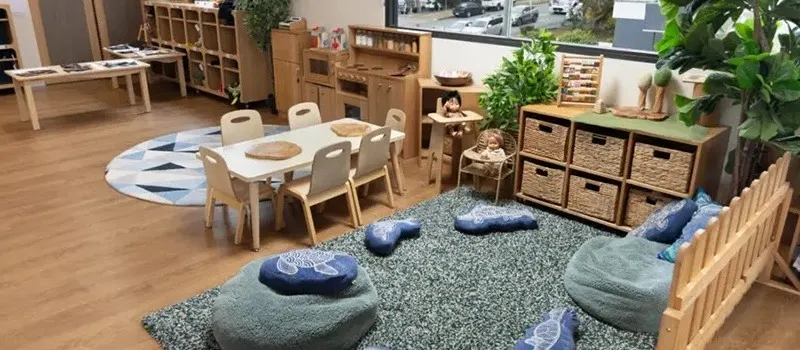
To set up a dream daycare center, you don’t have to break your bank. You can manage your budget and opt for money-saving tips to enjoy premium-quality furniture within your budget.
Here are practical money-saving tips:
- Buy in Phases by Enrollment Stage: While setting up a daycare center, ensure you invest in furniture gradually. Analyse the space left behind and what is required for the moment, and only purchase those items. This will control unwanted purchases and save budget.
- Prioritize Safety First: Always prioritize the safety of kids above everything. Ensure the material of furniture complies with the state’s regulations and does not emit harmful chemicals. Also, when purchasing furniture, it’s essential for you to ask for safety standard certificates from the manufacturer.
- Use Multi-Use or Stackable Furniture: Try investing in furniture that is multipurpose and can be used for various activities. For example, a standing activity station: a child can read, draw, or even play in that space.
- Consider Certified Secondhand: If you cannot invest in new furniture and are going for secondhand, make sure the furniture is from certified manufacturers. Also ask for its safety standard along with material certificates.
- Combine Orders To Save On Shipping: It’s best to order in phases but in a single order. Avoid ordering parts of furniture in various orders. Separate orders usually increase delivery charges, and you may also face delays in delivery.
What to Check Before Investing in Furniture? Buying Tips
Follow these best practices to invest in the right furniture and get a quality product within your desired budget.
- Buy commercial-grade furniture; the products are designed to bear regular wear & tear.
- Always check for non-toxic materials and make sure the product maintains food-grade safety on tables and low-VOC finishes.
- Confirm furniture is compliant with anti-tip stability, especially for shelves or storage units.
- If you want your furniture to remain durable for years to come, invest in solid wood material or commercial-grade laminate.
- While purchasing shelves and chairs, focus on load-bearing capacity and weight ratings.
- Some wooden materials don’t require deep cleaning, so make sure the surface is wipeable.
- Don’t forget about size matching with the age group and purchasing age-appropriate furniture.
- Warranty terms are essential for commercial furniture, so make sure each product has multi-year coverage.
- When ordering in bulk, always request documentation from the supplier
FAQs
Get answers to all your queries in the following frequently asked questions section.
How many cribs or cots do I need per child?
You usually require 1 crib and 1 cot per infant or toddler. It is best not to share them, even after different shifts. Unless your state regulations allow staggered nap schedules with sanitized turnover. So, always confirm your state’s staff-to-resting-child ratio and design room layout.
How long does daycare furniture typically last?
If you opt for commercial-grade furniture, it is generally built for a lifespan of 15 to 25 years of lifespan. The wood material with metal-framed pieces is structured with “dowel-and-glue joints that outlast screw-only construction,” which keeps them intact for years. However, after purchasing, regular inspections are mandatory, and timely repairs extend the usability period.
How many tables and chairs do I need for a classroom of 20 children?
Plan one seat per child; it’s mandatory, along with 10-15% extra area for smooth rotations and repairs. You can purchase trapezoid or any round tables with seating for 4-6 children each. This means, in a classroom with 20 children, you will require 4-5 such tables that can easily accommodate 22-24 children.
Does outdoor play furniture need to meet the same safety standards as indoor furniture?
Yes, with additional requirements. Furniture should be able to withstand regular wear & tear and the external environment. It should also be waterproof, rust-resistant, and UV-resistant. It should have rounded edges and meet stability requirements. Anchoring becomes important in the external environment.
Can daycare furniture be customized for Montessori?
Yes, there are manufacturers who provide options for customization in terms of sizes, open shelves, and materials according to Montessori classrooms. You can also opt for a different colour theme according to your daycare center theme or brand.
What’s the typical lead time for ordering daycare furniture in bulk?
Bulk and customized items will require a 6-12 week turnaround time before delivery. Since international orders are expected to take longer, it is recommended that your furniture plan be completed well ahead of your planned opening date.
Conclusion
While investing in your daycare center, choose durable and age-appropriate furniture from a certified manufacturer. Though you might happen to spend half of your facility budget on furniture, quality supplies will ensure your daycare license.
Still, you can plan your budget room by room in phases and gradually make purchases. There are manufacturers like West Shore, which offer quality and premium furniture at factory-direct pricing. That’s not all, you receive free layout designs, so you will find furniture for all types of rooms under one roof.