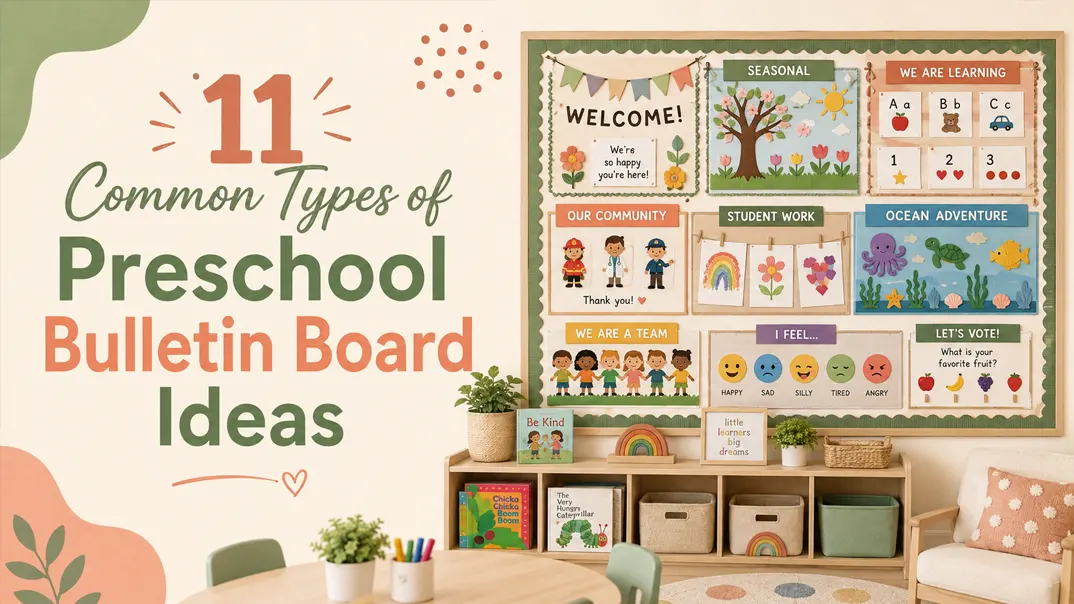
Bulletin boards are far more than mere decoration. The messages conveyed by the walls of your preschool classroom often speak more powerfully than the teachers’ own words. Use diverse preschool bulletin board ideas to match your classroom theme; these boards can showcase children’s work while keeping parents informed about daily activities.
If you are setting up a new classroom or renovating an existing space, the following preschool bulletin board ideas can help you create an environment that is both practical and engaging.
What Elements and Materials Should a Preschool Bulletin Board Include?
Setting up a preschool bulletin board in your classroom is actually quite simple; with just a few easy techniques and the right materials, you can design a creative and engaging display.
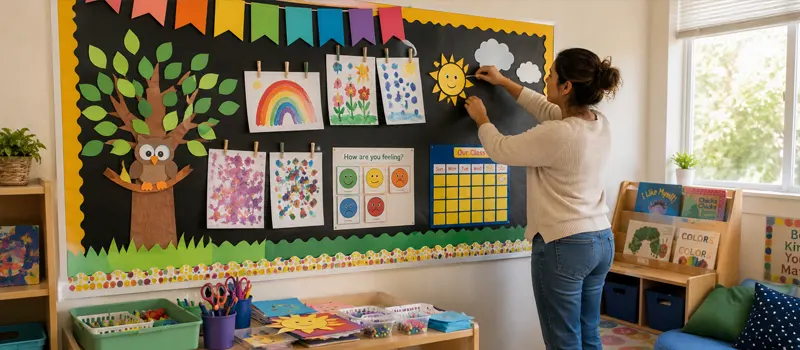
Setup Tips You Need to Know
You cannot simply decorate the bulletin board however you please; the layout needs to be based on the actual environment and the children’s experience.
1. Keep It at the Children’s Eye Level
Preschool bulletin boards are designed for children, so ensure the board is positioned at their eye level; avoid placing it so high that they have to look up to see it.
At the same time, involve the children in the creative process as much as possible and let their imaginations run wild. If the bulletin board is too high, they won’t be able to participate in creating it.
2. Keep It Simple and Tidy
Your classroom likely already contains furniture, toys, and other items in a variety of colors. Adding too many wall decorations can create a cluttered look and make it difficult for children to grasp the key information displayed on the bulletin board.
Opt for a simple background—ideally in a single, solid color. Avoid using tiny images or pieces of artwork; instead, use note cards to provide brief descriptions for each item.
| Scenario | Recommended Spacing | Notes |
|---|---|---|
| Between Images | 5–8 cm (2–3 in) | Give each image enough visual space. |
| Between Images and Labels | 3–5 cm | Keep labels below or beside images with clear breathing room. |
| Between Different Sections | 8–15 cm | Use visible white space to separate different activity areas. |
| Between Content and Board Edges | At least 5 cm | Keep content away from the edges for a clean, framed look. |
3. Preschool Bulletin Board Ideas Should Always Have a Clear Purpose
Preschool bulletin boards generally fall into three categories: decorative, interactive, and informational. You should design them based on their intended function. For instance, if your goal is to welcome students or showcase their artwork, you might create a decorative board; if you aim to encourage interaction, an interactive board would be appropriate.
It is best to feature a variety of bulletin board types in your classroom rather than sticking to just one style; you can create specific boards tailored to the corresponding areas of the room.
4. Update Based on Seasons or Holidays
You need to update your preschool bulletin board to reflect different seasons or holidays. Leaving it unchanged can cause children to gradually lose interest; furthermore, if the content does not align with your classroom theme, it will look out of place.
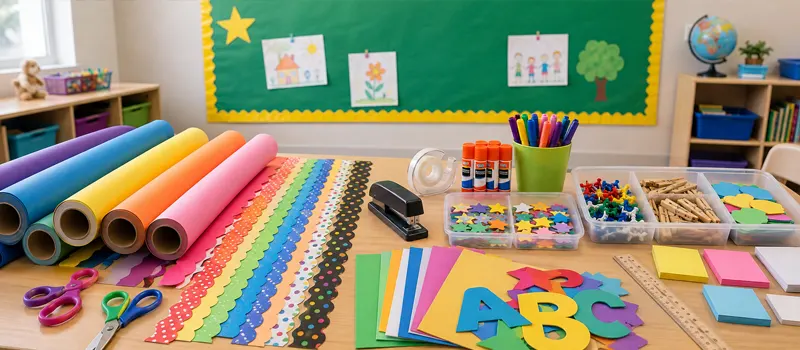
Standard Materials You’ll Need
- Colored cardstock: Cut into shapes like letters, numbers, flowers, or animals; a staple for basic decoration
- Felt: Cuttable and reusable; ideal for use on felt boards
- Photos/Images: Photos of the children, event snapshots, or educational visuals
- Children’s artwork: Drawings, paper plate crafts, origami, etc.; the centerpiece of the bulletin board
- Labels/Text cards: Headings, children’s names, and explanatory text
- Ribbons/Lace trim: For border decoration to add a polished look
- Frames/Border strips: Wooden frames create a warm, natural feel and unify the display style
- 3D wall stickers: Dimensional decorations, such as tree or animal shapes
- Scissors: For cutting cardstock, felt, ribbons, etc.
- Tape or thumbtacks: For easily mounting artwork or decorations
11 Preschool Bulletin Board Ideas for Your Classroom
1. Feelings Check-In Board
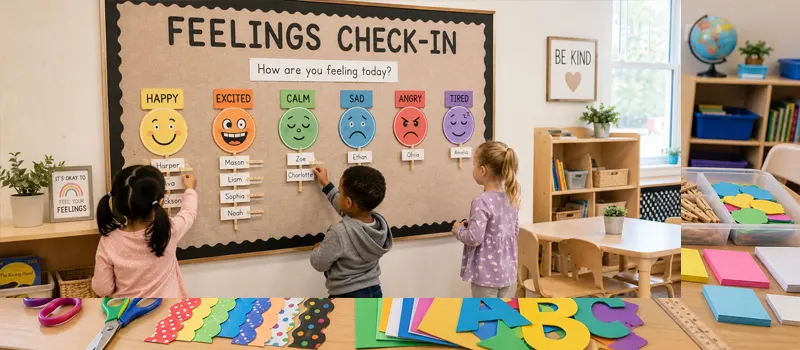
A feelings check-in board helps children identify and express their emotions, making it an excellent tool for fostering social-emotional skills. Upon arriving at the center each day, children can select an expression card that reflects their mood and place it next to their name. This allows you to gauge the children’s emotional state each morning; you can also refresh the board monthly—for example, by using animal-themed expressions one month and fruit-themed ones the next.
How to Set It Up:
- Select a corkboard (approximately 60 x 90 cm) and mount it near the classroom entrance or the group activity area.
- Arrange the children’s name tags vertically on the left side; including a photo alongside the name helps children recognize their own.
- Create an “emotions section” on the right side featuring categories such as happy, sad, angry, scared, and calm, pairing each emotion with a corresponding facial expression icon.
- Prepare a small name card for each child; upon arrival each morning, they move their card to the position corresponding to their current emotion.
You can incorporate a segment during Circle Time where one or two children share why they chose a particular emotion.
Materials Needed:
- Corkboard (approx. 60 x 90 cm)
- Push pins or thumbtacks
- Colored cardstock (for cutting out name tags and expression icons)
- Children’s photos
- Children’s name cards (can be made using popsicle sticks or stiff cardstock)
- Scissors, hole punch, hot glue gun
2. Artwork Display Board Ideas
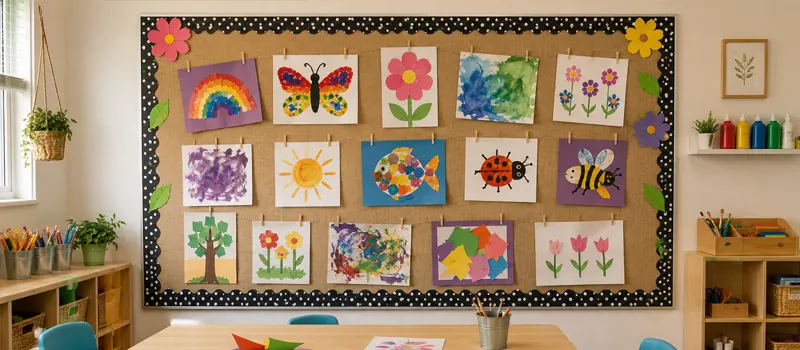
An artwork display wall provides space to showcase every child’s creations, helping to boost their self-confidence. You can set up dedicated areas for displaying and drying artwork; these are typically located near the art corner.
How to Set It Up:
- Choose a wide wall—at least 2 meters across.
- Install corkboards, or create a surface using foam boards and double-sided tape.
- Designate a specific spot for each child and attach name labels to ensure everyone has their own “exhibit space.”
- Secure the artwork using clips or thumbtacks; it is recommended to refresh the display weekly.
Materials Needed:
- Corkboards, or foam boards and double-sided tape
- Clothespins or small clips (2–3 per child)
- Name labels/cards
- Colored cardstock
3. Birthday Bulletin Board Ideas
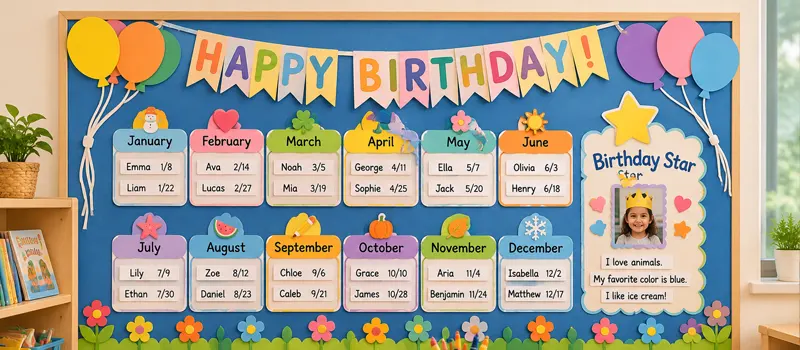
A birthday wall is often the bulletin board children look forward to the most. However, it shouldn’t just be a list of dates; you can turn it into a teaching tool for learning the months of the year. For instance, you can have the children count how many classmates have birthdays in a particular month or ask them to identify which month their own birthday falls in.
How to Set It Up:
- Choose a prominent wall space (approximately 90 x 120 cm) and cover the background with colored cardstock.
- Arrange the 12 months horizontally or vertically, pairing each month with a thematic icon.
- In the section for each month, display the names and birth dates of the children celebrating their birthdays that month.
- For children celebrating their birthdays during the current month, you can set up a special “Birthday Star” area next to the main display to showcase their photos, favorite things, and artwork.
Materials Needed:
- Colored cardstock
- Labels for the 12 months (large size; color-printed or hand-drawn)
- Decorative icons for the months
- Name cards and birthday cards for the children
- Photo clips or thumbtacks
- Birthday crown and balloon decorations
4. Weather Bulletin Board Ideas
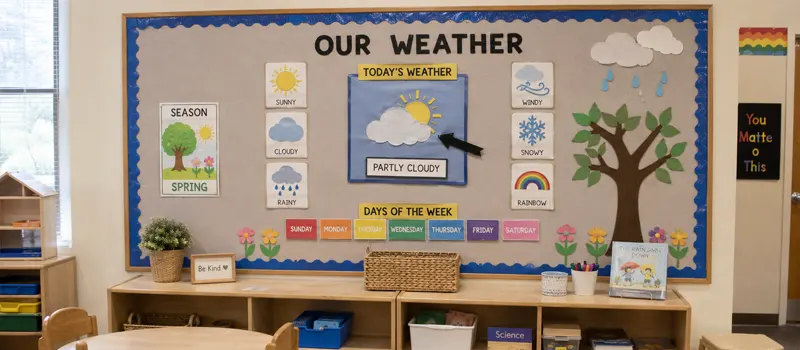
While weather boards are a common sight in kindergarten classrooms, many are overly decorative and lack practical utility. Each morning, assign one or two children to step outside, observe the actual weather, and select the corresponding card to place on the board.
How to Set It Up:
Divide the bulletin board into functional sections:
- Date Section: Date number cards (1–31, interchangeable), day of the week, and month
- Weather section: Icons for sunny, cloudy, rainy, snowy, windy, etc.
- Temperature Section: Cold/Cool/Warm/Hot
Designate a “helper of the day” to update the weather and date, using thumbtacks or double-sided tape to secure the cards.
Materials Needed:
- Date number cards
- Weather icons
- Season icons
- Temperature indicator strip
- Thumbtacks or double-sided tape
5. Seasonal Preschool Bulletin Board Ideas
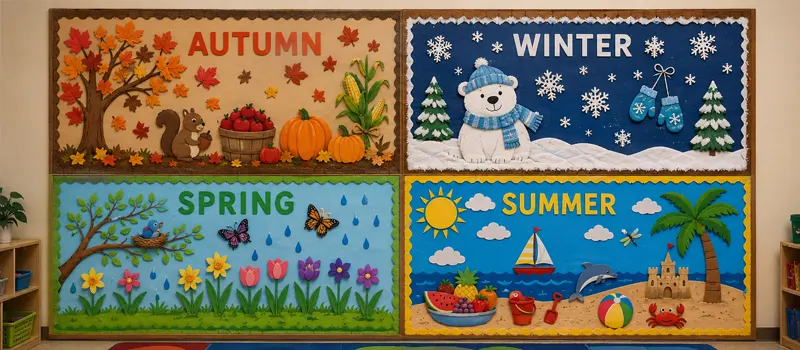
What appeals to me most about seasonal bulletin boards is how they allow children to visually experience the changing natural world. You can update the board monthly or weekly based on seasonal themes, helping children gain a deeper understanding of the unique characteristics of each season.
How to Set It Up:
Rotate themes based on the season:
- Autumn Preschool Bulletin Board Ideas: Falling leaves, apples, pumpkins, harvest, squirrels, migrating birds
- Winter Preschool Bulletin Board Ideas: Snowflakes, ice crystals, winter animals, warm clothing
- Spring Preschool Bulletin Board Ideas: Blooming flowers, butterflies, nesting birds, spring rain
- Summer Preschool Bulletin Board Ideas: Sun, beach, marine life, fruit, insects
Include the following elements for each season:
- Seasonal knowledge: Weather changes, animal behavior, plant growth patterns
- Children’s work: Seasonal crafts and drawings (updated regularly)
- You can set up a weather observation corner next to the bulletin board, allowing children to record the weather while experiencing the changing seasons.
When the season changes, you can organize a “farewell to the season” activity before updating the display together.
Materials Needed:
- Seasonal decorative materials (cardstock, felt, ribbons, sequins, cotton, dried leaves, etc.)
- Seasonal images/photos
- Children’s crafts
- Push pins, double-sided tape
- Scissors, hot glue gun
6. Holiday Preschool Bulletin Board Ideas
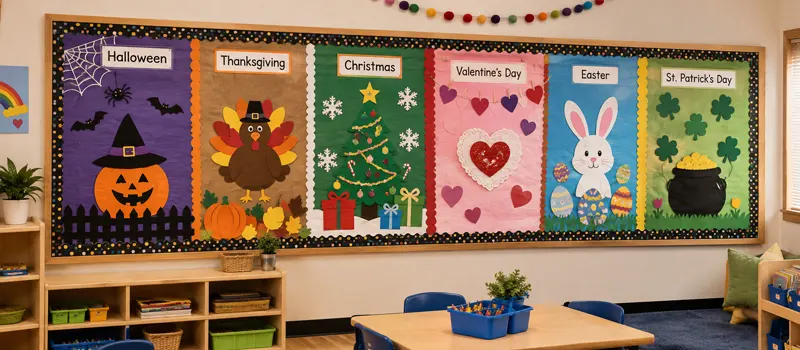
The greatest value of holiday-themed preschool bulletin boards lies in introducing children to diverse cultures. Each holiday carries unique cultural stories and educational significance. Your goal is not merely to display visuals of the holiday, but to help children understand the meaning or story behind it.
How to Set It Up:
You can use a board measuring approximately 120 x 150 cm and change the background color and decorations to match the holiday theme.
Common holiday themes include:
- Halloween Bulletin Board Ideas: Cute jack-o’-lanterns, spiderwebs, bats, and simple drawings of haunted houses.
- Thanksgiving Bulletin Board Ideas: Warm yellow background, turkeys, harvest baskets, corn, pumpkins, and a “Gratitude Tree.”
- Christmas Bulletin Board Ideas: Red and green background, Christmas trees, Santa Claus, gifts, snowflakes, candy canes, and reindeer.
- New Year Bulletin Board Ideas: Gold or silver background, countdown numbers, fireworks, New Year’s wish cards, and calendars.
- Valentine’s Day Bulletin Board Ideas: Pink background, hearts, flowers, and friendship cards.
- Easter Bulletin Board Ideas: Light green background, colorful eggs, bunnies, spring flowers, and chicks.
- Mother’s Day/Father’s Day: Warm color tones and portraits of family members drawn by the children.
7. Themed Preschool Bulletin Board Ideas
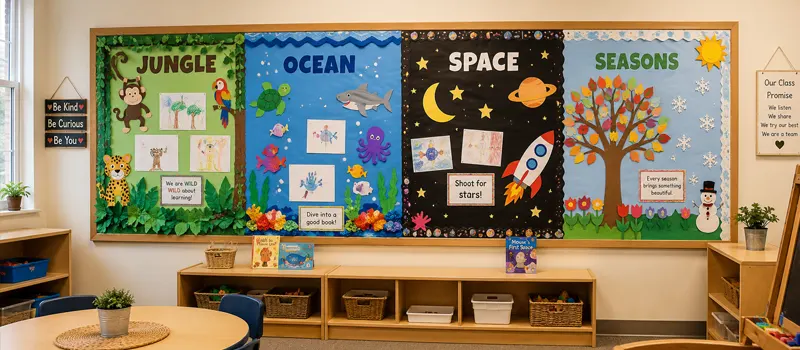
Themed bulletin boards transform the classroom into a storybook world, making every morning arrival feel like stepping into an adventure. You can design the board to match your classroom theme without needing to have every element ready before the unit begins; instead, you can incorporate the children’s questions, drawings, photos, and observations to create the final display.
How to Set It Up:
Choose a central theme—ideally, one that changes every semester or every two months. Popular themes include:
- Space Bulletin Board Ideas: Dark blue background; stars, planets, rockets, astronauts, aliens
- Forest Bulletin Board Ideas: Green background; trees, animals, mushrooms, rivers, cabins
- Ocean Bulletin Board Ideas: Light blue background; fish, sea turtles, jellyfish, coral, submarines
- Farm Bulletin Board Ideas: Yellow background; barns, animals, tractors, scarecrows, vegetables
- Rainforest Bulletin Board Ideas: Dark green background; tropical plants, parrots, monkeys, butterflies, waterfalls
- Dinosaurs Bulletin Board Ideas: Brown background; various dinosaur species, volcanoes, fossils, ferns
- Transportation Bulletin Board Ideas: Gray background; cars, trains, airplanes, ships, traffic signs
- Fairy Tales Bulletin Board Ideas: Colorful background; castles, princesses, knights, dragons, enchanted forests
Start by adding a simple background and a title, leaving plenty of open space. As the children explore the theme, add their artwork and contributions to collaboratively build the board.
If the theme spans several weeks, consider keeping some earlier work on display so the children can see how their ideas and understanding have evolved.
Materials Needed:
- Background paper or fabric
- Themed images
- Themed decorative elements (animals, plants, characters, etc.)
- Children’s artwork
- Push pins, double-sided tape
- Scissors, craft knives
- 3D decorations
8. Preschool “Welcome Back” Bulletin Board
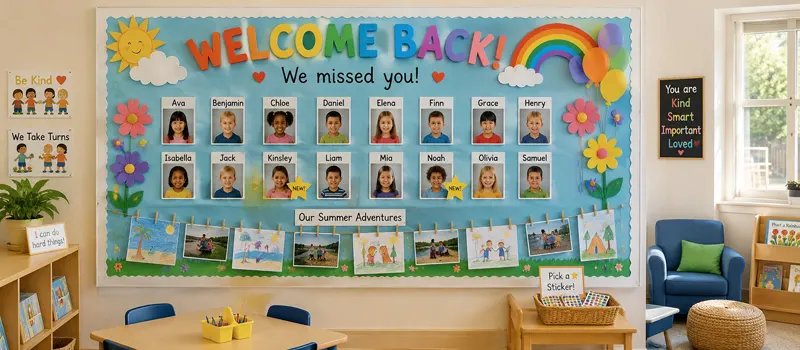
When children return to kindergarten, you want the classroom to feel warm, familiar, and exciting the moment they step inside. A “Welcome Back” bulletin board is the first thing they see at the start of the new term; it serves to welcome them back and help them settle into the new environment. You can include photos of activities from the previous term to help trigger fond memories.
How to Set It Up:
Focus on a “Welcome Back” theme: start with a simple greeting, then add each child’s name and photo. Create a welcoming scene:
- Header Area: Use large lettering for “Welcome Back!” or “Welcome to Our Classroom!” and decorate with colorful balloons, rainbows, flowers, etc.
- Photo Display Area: Show every child’s name and photo; mark new students with a star.
- Sharing Area: During the first week of school, children can post photos or drawings from their summer break to share fun vacation stories.
Place a small basket next to the board filled with various stickers so each child can pick one to stick on.
Materials Needed:
- Lettering for the title
- Children’s photos and name tags
- Decorative elements
- Summer vacation photos or drawings (ask parents to prepare these in advance)
- Stickers
9. Interactive Bulletin Board Ideas
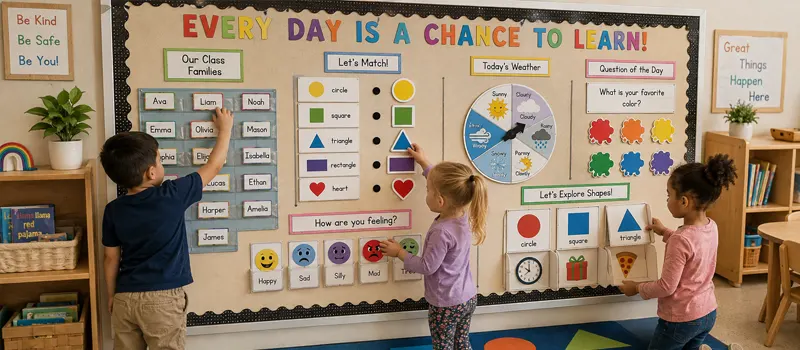
Creating an interactive bulletin board gives children a reason to stop, touch, think, and engage. It transforms the board from a mere decoration into a hands-on learning tool. This type of board is particularly effective in preschool settings, as it aligns with young children’s natural, hands-on approach to learning.
How to Set It Up:
First, decide what you want the children to do with the board. You might have them match, sort, count, make choices, compare, or move items. For example:
- “Guess Who I Am” Matching Game: Place images of objects on the left and corresponding name cards on the right; children use connecting strings or pushpins to match the images to the names.
- “What I Did Today” Choice Wall: Use emoji cards or picture options; children select their favorite activity of the day and place their name tag under the corresponding option.
- “Weekly Challenge”: Post a new challenge each week—for instance, “Can you find three round objects in the classroom?”
- “Touch and Feel” Matching Wall: Attach squares of different materials to the board; children touch them and match the corresponding material name card.
It is recommended to refresh the interactive content weekly to maintain interest. The activities should align with the week’s teaching theme.
Materials Needed:
- Interactive cards
- Velcro strips
- Pushpins
- String or yarn
- Cardstock and markers
- Sensory objects with various textures
- Small baskets or storage bins
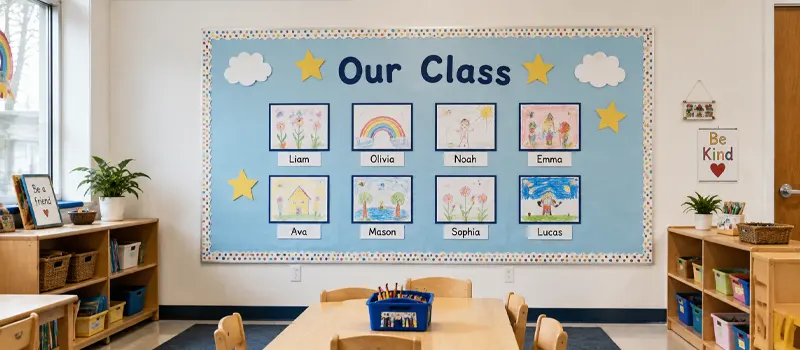
10. Simple Preschool Bulletin Board Ideas
You don’t need to spend hours cutting paper and crafting elaborate decorations to create a functional preschool bulletin board. Sometimes, a simple display is more effective because it allows you to update content quickly and keep it current.
By using children’s artwork or classroom photos as the main content, you can create a simple, personalized board without the need for complex designs or excessive prep work.
How to Set It Up:
You can start with a simple backdrop and keep using it. Then, add reusable clips, pockets, and similar items, allowing you to quickly swap out photos, artwork, and flashcards on the board to suit different content.
Materials Needed:
- Plain paper or fabric background
- Colored cardstock
- Children’s artwork or photos
- Scissors
- Wooden clips or clothespins
- Clear display pockets
- Removable adhesive
11. Classroom Community Bulletin Board Ideas
Creating a classroom community bulletin board helps children realize they are part of a group and that everyone has a place within it. You can use the board to promote friendship, kindness, cooperation, independence, and the small, everyday actions that make the classroom a caring environment.
For preschoolers, you don’t need long, inspirational quotes. Displaying real photos of children helping others, sharing, cooperating, or trying new things often conveys the message more effectively.
How to Set It Up:
Ideas for a community bulletin board:
- “Kindness Tree”: Create the outline of a large tree and give each child a leaf-shaped card. When a child performs an act of kindness, they can write it on their leaf and attach it to the tree. Watching the tree transform from bare to full and leafy mirrors the growth of a kind atmosphere in the classroom.
- “Star of the Week” Section: Select one child each week who has stood out, and display their photo and name.
- Classroom Agreements Section: Establish classroom rules at the beginning of the term, using cheerful language and accompanying images. Examples include “We help each other” or “We speak gently.”
- Photo Section: Arrange the children’s photos in a heart or circle shape with the teacher’s photo in the center to showcase friendship and a sense of teamwork.
At the end of each term, you can take a photo of the completed community bulletin board with the teacher and children, and include it in each child’s portfolio.
Materials Needed:
- Cardstock in various shapes
- Photos of the children
- Name tags
- Photos of classroom activities
- Speech bubble cards
- Pushpins, double-sided tape
- Clips or reusable adhesive putty
FAQs
How do you make bulletin board letters easy to read?
You should use large letters, simple fonts, and strong contrast between the title and background. Avoid decorative fonts that make individual letters difficult for young children to recognize.
Can you use a classroom door as a bulletin board?
Yes. You can use your classroom door for a welcome display, children’s names, current classroom themes, or simple family-facing information when you do not have enough wall space.
How can you create a bilingual preschool bulletin board?
You can include the main words or messages in both classroom languages and use pictures to help children connect the words with their meaning. For example, you might show greetings, classroom vocabulary, names, or simple labels in English and Spanish.
How can you make several bulletin boards look good together?
You do not need to give every board the same theme. Instead, you can repeat a few visual elements such as the same background style, border type, label shape, or font.
How can you make a preschool bulletin board more inclusive?
You can include different families, cultures, languages, abilities, and everyday experiences that reflect the children in your classroom. Use real photographs and children’s own contributions rather than relying only on generic characters.
How often should I update my preschool bulletin board?
There’s no hard and fast rule, but in most cases, it’s recommended to update it every 4-6 weeks or with the seasons. Smaller updates are also possible, such as adding new counting elements or vocabulary cards to the bulletin board weekly. The key is to establish a consistent update schedule to keep the child visually stimulated and interested in learning.
Can professional bulletin boards be installed on different wall types, such as concrete or drywall?
Yes, but the mounting system is key. High-quality boards should feature a Hidden Z-Bracket mounting system. This system allows the board to be securely attached to various wall types—whether it’s masonry, concrete, or hollow drywall—while ensuring the board remains perfectly level and cannot be easily pulled off by a child, which is a major safety concern in busy classrooms.
Do you offer customization for non-standard classroom architectural features?
Absolutely. We provide OEM/ODM services where you can specify custom dimensions, frame finishes (such as natural birch, white, or oak), and surface colors to ensure the display system integrates perfectly with your school’s unique interior design.
What is the best way to sanitize bulletin board surfaces without causing long-term damage?
For our water-based finished birch frames, a simple wipe with a damp cloth and mild soap is sufficient. For the display surfaces (cork or fabric), we recommend using a diluted, alcohol-free sanitizing spray. Avoid harsh chemicals that can break down the natural binders in cork or discolor the fabric fibers.
Conclusion
When ordinary walls are transformed into spaces that showcase student work and foster interaction between teachers and students, you are building a unique brand of trust for your school—one that is difficult to replicate.
If you are setting up classroom bulletin boards for the first time, I recommend starting with the basics before gradually introducing more complex designs. West Shore Group offers comprehensive support to ensure your learning environment truly contributes to the school’s long-term growth.