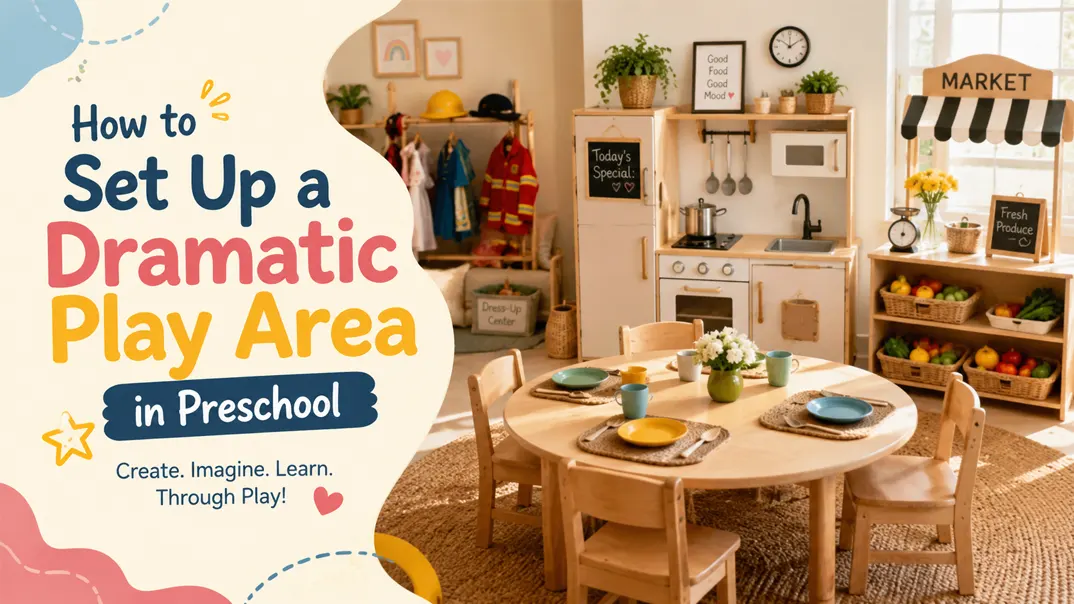
Dramatic play is one of the most active and meaningful areas in a preschool classroom. A well-designed dramatic play area gives children a safe space to act out real-life experiences and create their own stories. With the right layout, furniture, props, and storage, this area can become an inviting learning center that supports both independent play and group interaction.
In this guide, we will look at how to set up a dramatic play area in preschool, including where to place it, how much space it needs, what furniture and props to include, how to keep it organized, and how to make it safe and engaging throughout the year.
What Is a Dramatic Play Area in Preschool?
A role-play area is a space where preschool children engage in pretend play, simulate real-life scenarios, and take on various roles. It can be set up as a “home corner,” a play kitchen, a grocery store, a doctor’s office, a café, a dress-up station, or other similar settings.
The role-play area offers numerous opportunities for learning through play. It provides a natural way for children to practice language skills, social interaction, imagination, and independence—as well as familiarize themselves with daily routines—through hands-on play.
Why Dramatic Play Matters in Early Childhood Classrooms
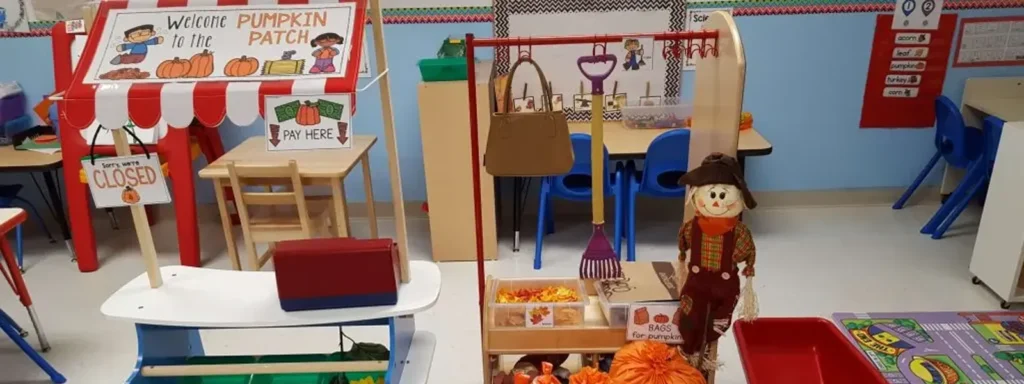
Role-play is important because it offers children a way to practice real-life situations in a safe environment. As they act out these scenarios in the role-play area, they not only expand their vocabulary but also develop essential verbal communication skills. For instance, one child might want to play the doctor while another plays the patient; they must communicate, listen, agree on their roles, and work together to keep the play going.
Role-play also helps children understand everyday routines and situations. They may mimic behaviors they have observed at home, in the community, or at school. Through these simple simulations, children begin to grasp the meaning of various professions, family roles, caring, responsibility, and cooperation.
For teachers, the role-play area is also a useful place to observe children. It shows how they communicate, solve small conflicts, choose roles, and respond to others. These observations can help teachers understand children’s interests and provide better support during daily classroom activities.
Where to Place a Dramatic Play Area in the Classroom
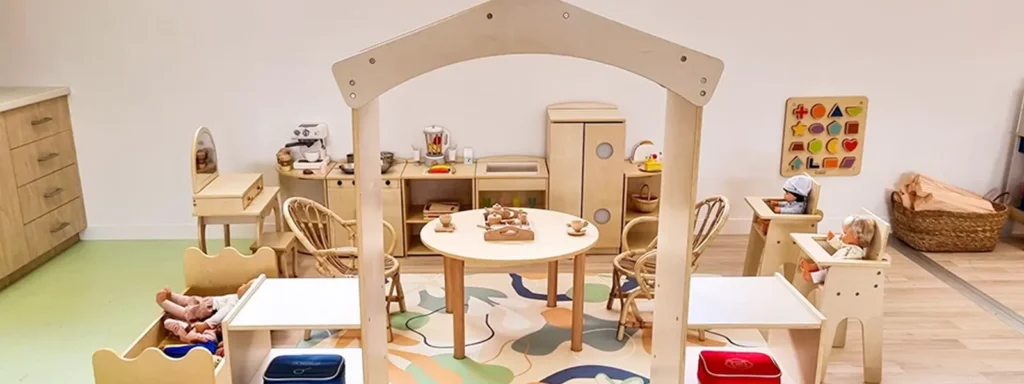
The dramatic play area is typically a lively space filled with social interaction; therefore, it should be situated where children can talk, move about, and play together without disrupting quieter activities. In many preschool classrooms, placing the dramatic play area near the block corner, music area, or other active learning zones works well.
Avoid positioning dramatic play areas next to reading corners, nap areas, or designated quiet zones. These areas require a calmer atmosphere, whereas dramatic play often involves conversation, physical movement, role-playing, and group interaction.
A classroom corner is often an excellent choice, as two walls can naturally define the space. If a suitable corner isn’t available, low bookshelves, play dividers, rugs, or room partitions can be used to create simple boundaries. These help children understand where the dramatic play area begins and ends.
How much space is needed for a dramatic play area?
The amount of space required for a dramatic play area depends on the size of the classroom, the number of children, and the types of play you wish to support. In most preschool classrooms, the area should be spacious enough to comfortably accommodate at least two to four children playing together.
For smaller classrooms, a compact setup with a small play kitchen, low shelf, basket of props, and small table can create a simple but functional dramatic play corner. In standard preschool classrooms, the area can include child-sized tables and chairs, dress-up storage, a mirror, and open shelves for props, giving children more room to cook, serve, dress up, and interact. For larger classrooms or childcare centers, the space can be expanded into different themed zones, such as a home living corner, grocery store, doctor’s office, café, or puppet theater. No matter the size, the area should have clear boundaries so children understand where the play space begins and ends, while teachers can manage cleanup more easily.
Essential Furniture for a Preschool Dramatic Play Area
Furniture is the base of a dramatic play area. It helps children understand the theme, use the space independently, and keep materials organized. The best setup does not need too many pieces, but each item should have a clear purpose in daily role play.
Play Kitchen Set
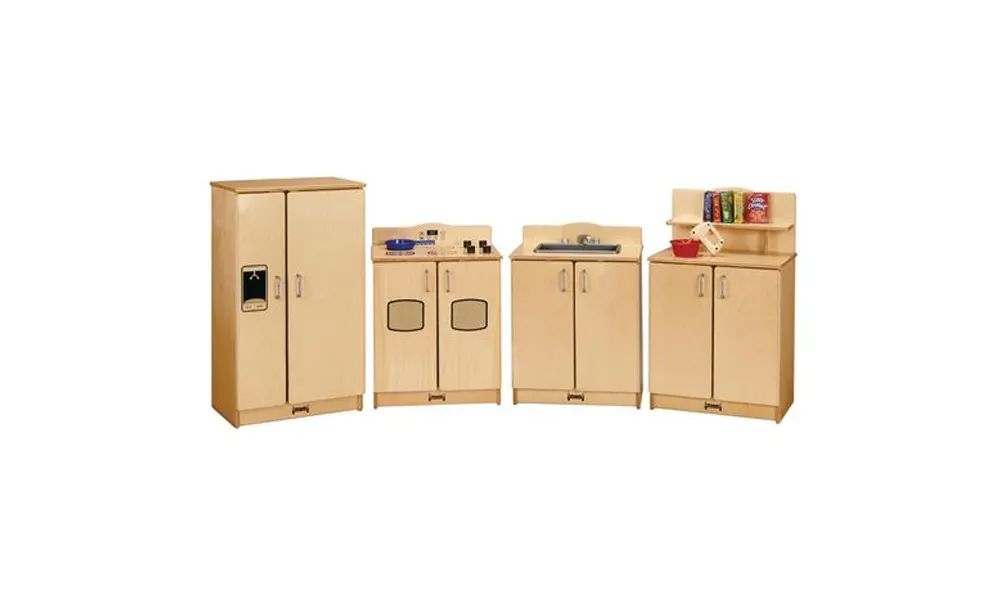
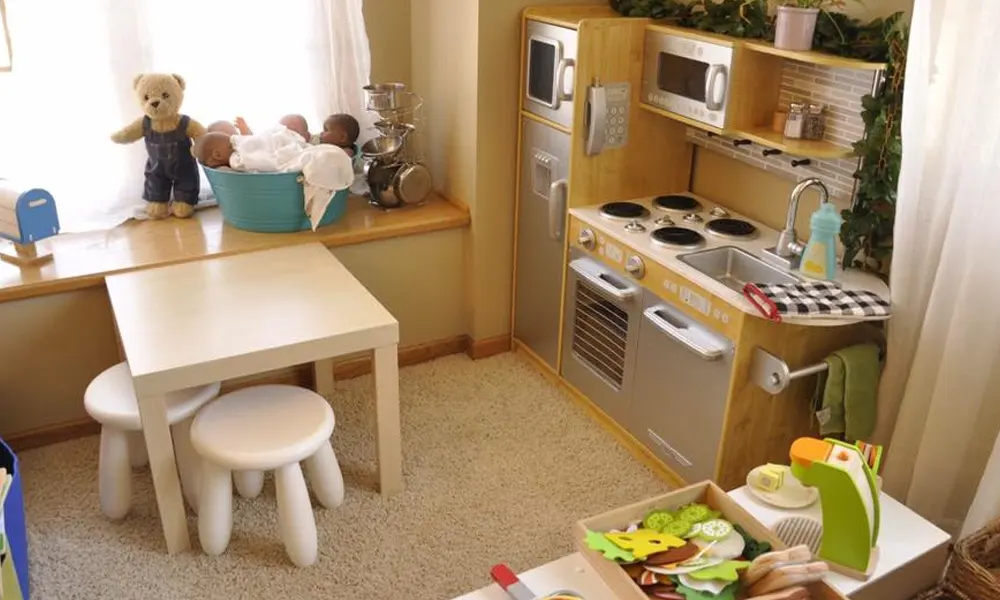
A play kitchen set is one of the most common furniture pieces for dramatic play. A stove, sink, refrigerator, cupboard, or small counter can support many themes, such as home living, restaurant, café, grocery store, and family play. For small classrooms, one or two compact kitchen pieces may be enough, while larger classrooms can use a complete set to create a stronger role-play scene.
Child-Sized Table and Chairs
A child-sized table and chairs give children a place to serve meals, write orders, check patients, sort groceries, or sit together during pretend play. This simple furniture combination is very flexible because the same table can become a dining table, café table, doctor’s desk, shop counter, or writing station.
Low Storage Shelves
Low storage shelves help children see, choose, and return materials by themselves. Open shelves with baskets or bins can be used for pretend food, dolls, dishes, doctor kits, shopping items, and theme materials, making the area easier to use and much easier to clean up.
Dress-Up Storage
Dress-up clothes can quickly become messy without proper storage. Hooks, a small wardrobe, a dress-up trolley, or baskets can keep costumes, hats, bags, aprons, and role items organized while still allowing children to choose their own roles independently.
Play Panels or Room Dividers
Play panels, arches, or low room dividers can help create a clear dramatic play space, especially when the classroom does not have a natural corner. They can turn a simple area into a small home, shop, clinic, puppet theater, or pretend office without needing major changes to the room.
Child-Safe Mirror
A child-safe mirror is useful near the dress-up area because children can look at their clothes, facial expressions, and body movements while acting out different roles. It should be securely fixed and made from child-safe materials, especially in busy preschool classrooms.
What Props and Materials Should Be Included?
Props make the dramatic play area feel real and give children more ways to create stories. The best materials are simple, familiar, and easy for children to use. Instead of filling the area with too many items, choose props that match the current theme and support natural conversation, movement, and pretend roles.
Everyday Life Props
Everyday life props are the easiest starting point because children already understand how they are used. Plates, cups, bowls, pretend food, bags, phones, empty food boxes, blankets, baby dolls, and shopping baskets can help children act out home living, family care, cooking, shopping, and other daily routines.
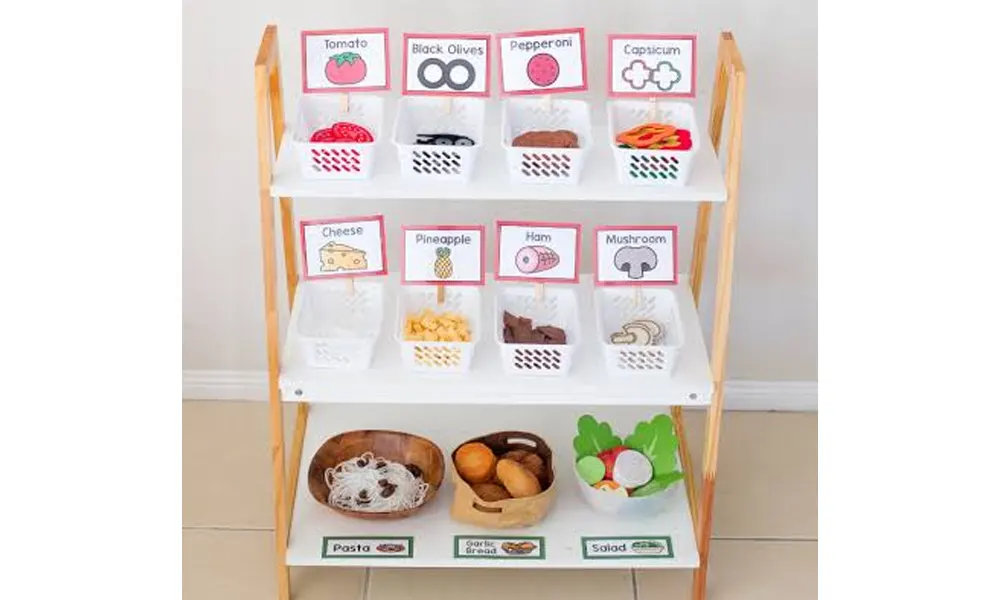
Role Play Props
Role play props help children step into different characters. A doctor kit, cash register, tool set, apron, hat, mailbox, stroller, puppet, or small basket can quickly change the play theme from a kitchen to a clinic, shop, workshop, post office, or café.
Writing and Literacy Materials
Simple writing materials can make dramatic play more meaningful. Menus, shopping lists, order forms, appointment cards, price tags, recipe cards, labels, clipboards, and pencils allow children to copy real-world writing in a natural way while they play.
Open-Ended Materials
Open-ended materials give children more freedom to decide what something can become. Fabric pieces, scarves, cardboard boxes, wooden blocks, loose parts, pom-poms, and small baskets can be used in many different ways, so the same materials can support several themes without needing to buy new props every time.
Theme-Based Materials
Theme-based materials should match the current classroom topic or children’s interests. For example, a grocery store theme may need play food, baskets, price tags, and a cash register, while a baby care theme may need dolls, blankets, bottles, and a small bed. Keeping these materials in separate bins makes theme rotation easier for teachers.
Popular Dramatic Play Themes for Preschool
Dramatic play themes should be easy for children to understand and flexible enough for different types of play. The best themes often come from daily life, family routines, community places, and classroom topics. Teachers do not need to change the whole area every time; many themes can use the same basic furniture with different props and signs.
Home Living Area
A home living area is one of the easiest themes to start with because it is familiar to most children. A play kitchen, small table, dolls, blankets, pretend food, dishes, and simple cleaning tools can help children act out cooking, caring, sharing meals, and family routines.
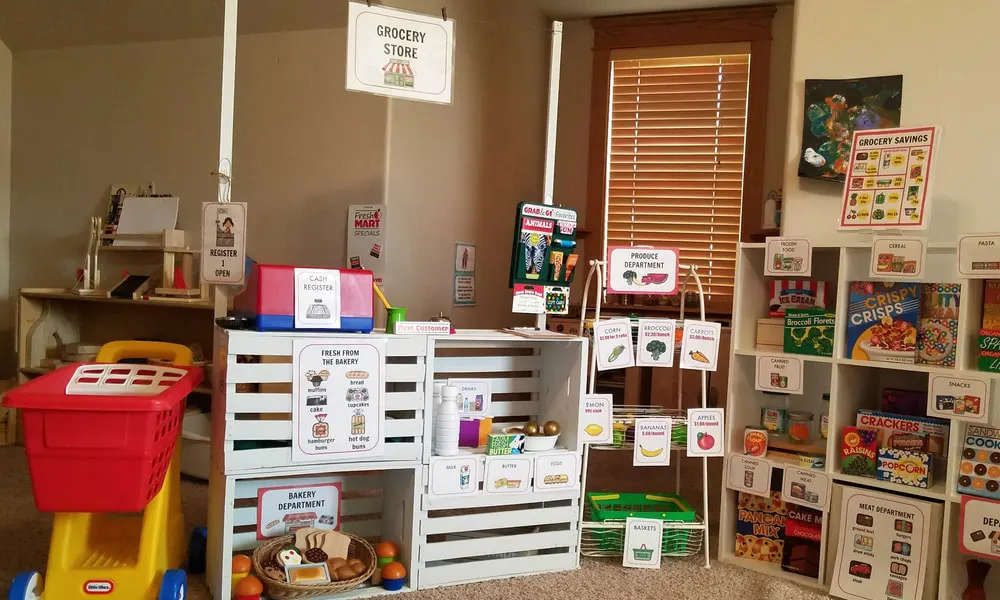
Grocery Store or Market
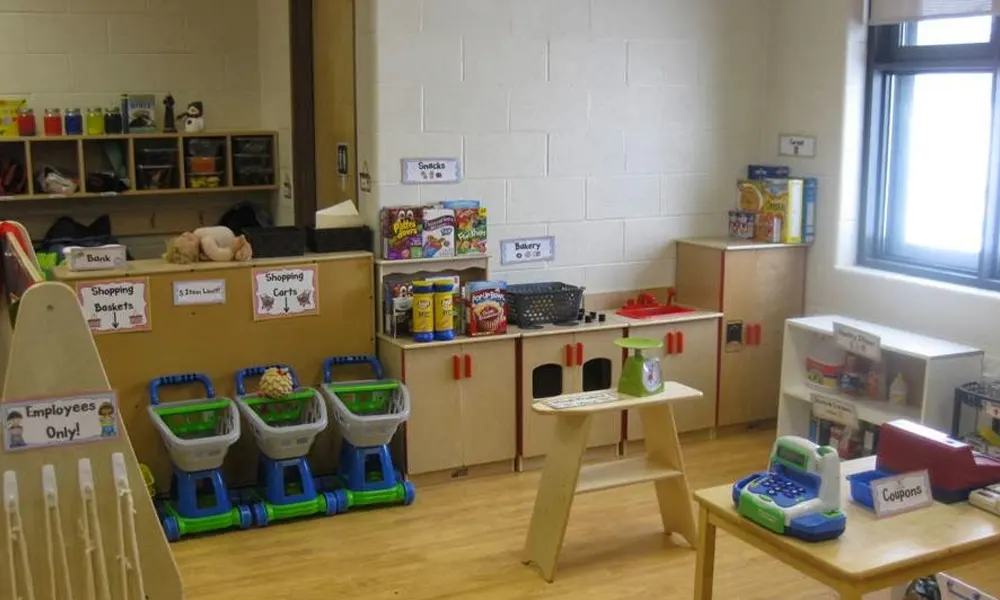
A grocery store theme works well with baskets, pretend food, empty food boxes, price tags, shopping lists, and a cash register. Children can practice choosing items, counting, paying, talking with a shopkeeper, and organizing products on shelves.
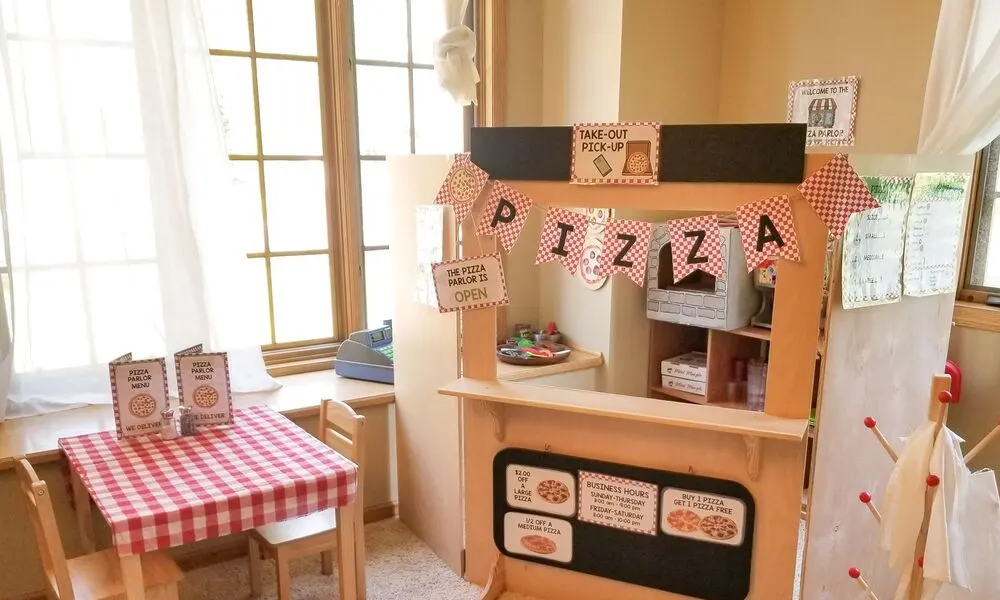
Restaurant or Café
A restaurant or café setup can use a play kitchen, small table, chairs, menus, order pads, aprons, cups, plates, and pretend food. This theme naturally encourages children to speak with each other, take orders, serve food, and switch between customer and worker roles.
Doctor Clinic or Baby Care Area
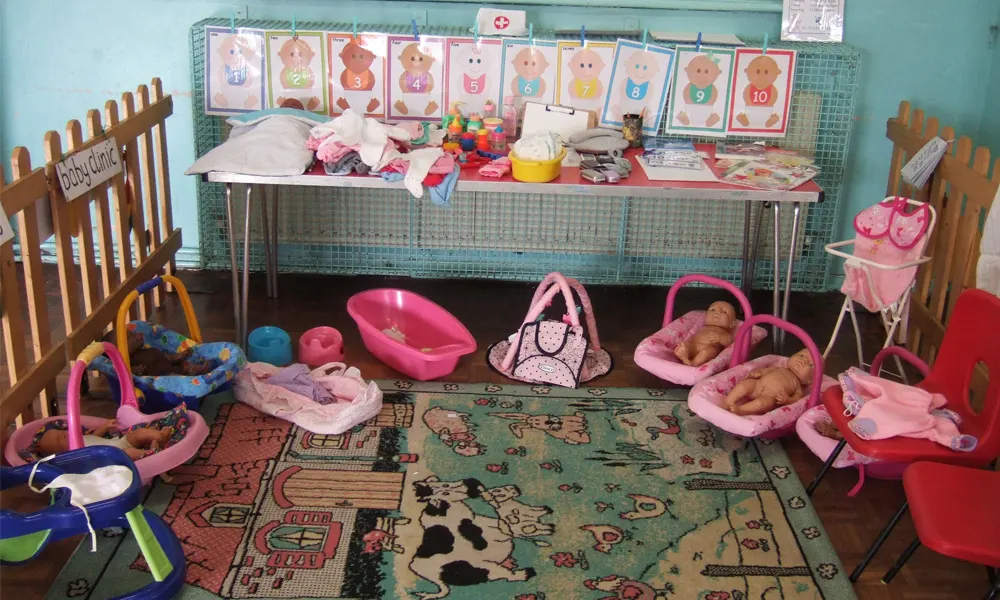
A doctor clinic or baby care area can include dolls, blankets, doctor tools, appointment cards, small beds, bottles, and soft seating. This theme helps children practice care, comfort, turn-taking, and simple health-related routines in a calm and familiar way.
Construction or Workshop
A construction or workshop theme can use toy tools, hard hats, blocks, small workbenches, safety vests, signs, and storage bins. It is especially useful for children who enjoy building, fixing, carrying, sorting, and working together on pretend projects.
Puppet Theater or Storytelling Area
A puppet theater or storytelling area gives children a chance to create characters, act out stories, and speak in different voices. It can be set up with a small theater panel, puppets, fabric, baskets, story cards, and a nearby book display to connect dramatic play with early literacy.
How to Organize the Dramatic Play Area for Easy Cleanup
A dramatic play area can become messy very quickly, especially when children are using costumes, pretend food, dishes, dolls, and small props together. Good organization makes the space easier for children to use independently and helps teachers reset the area without spending too much time after each activity.
Use Picture Labels
Picture labels help children understand where each item belongs, even before they can read words. Labels can be placed on shelves, baskets, bins, and hooks so children can match plates with plates, costumes with costumes, and doctor tools with doctor tools during cleanup.
Keep Props Limited
Too many props can make the area crowded and confusing. It is usually better to display a smaller number of useful items and keep extra materials in teacher storage. Children often play more deeply when the space feels clear and the choices are easy to understand.
Sort Materials by Theme
Theme-based bins make dramatic play easier to manage. For example, teachers can prepare one bin for a grocery store, one for a doctor clinic, one for a restaurant, and one for baby care. When the theme changes, the teacher only needs to switch the bin instead of reorganizing the whole area.
Use Child-Height Storage
Items used every day should be placed at child height so children can choose and return materials by themselves. Less-used items, small pieces, or teacher-managed props can be stored higher or inside closed cabinets to keep the area safe and organized.
Create a Simple Cleanup Routine
A clear cleanup routine helps children take responsibility for the space. Teachers can use a short cleanup song, a picture checklist, or a simple rule such as “one basket at a time” so children know what to do before moving to the next activity.
Safety Tips for Setting Up a Dramatic Play Area
Safety is important in a dramatic play area because children often move around, carry props, change roles, and play in small groups. The space should feel open and inviting, but the furniture, materials, and layout still need to support safe daily use.
Choose Stable, Child-Sized Furniture
All furniture in the dramatic play area should be stable and suitable for children’s height. Play kitchens, tables, chairs, shelves, and dress-up units should be easy for children to use without climbing, pulling, or leaning too much during play.
Use Rounded Edges and Safe Materials
Furniture with rounded corners and smooth surfaces is better for busy preschool classrooms. Materials should be strong, child-safe, and easy to clean, especially for items that children touch every day, such as play kitchens, tables, shelves, and pretend food storage.
Keep Small Props Age-Appropriate
Small props should be chosen based on the children’s age and ability. Items that are too small, sharp, fragile, or easy to break should be avoided, especially in classrooms with younger preschoolers or mixed-age groups.
Secure Heavy Furniture and Mirrors
Tall shelves, heavy play units, mirrors, and room dividers should be properly fixed or placed in a stable position. This helps prevent tipping when children reach for props, lean on furniture, or move quickly during role play.
Keep Pathways Clear
The dramatic play area should have enough open space for children to enter, move, and leave safely. Props, costumes, baskets, and chairs should not block walking paths, classroom exits, or access to other learning areas.
Check the Area Regularly
Teachers should check the dramatic play area during daily classroom routines. Loose parts, broken props, unstable furniture, dirty materials, or overloaded shelves should be fixed or removed before children use the space again.
How to Keep Dramatic Play Fresh Throughout the Year
A dramatic play area does not need to stay the same all year. Children’s interests change, classroom topics change, and the materials in the area should change with them. Keeping the space fresh helps children stay interested and gives them new reasons to talk, pretend, and work together.
Rotate Props Instead of Replacing Furniture
The basic furniture can stay the same for most themes. A play kitchen, table, low shelf, mirror, and storage unit can support many different setups. Teachers only need to change smaller props, signs, baskets, costumes, or writing materials to create a new scene.
Follow Children’s Interests
Children often show what they are interested in through their conversations and play. If they keep pretending to cook, shop, build, care for babies, or visit the doctor, teachers can add related props and materials to extend the play naturally.
Connect Themes with Classroom Topics
Dramatic play themes can connect with seasons, community helpers, family life, food, transportation, animals, health, or classroom projects. This makes the area feel connected to the rest of the classroom instead of becoming a separate play corner.
Keep Some Familiar Items
When changing the theme, it helps to keep a few familiar items in the area. Children may still use the same table, baskets, dolls, dishes, blocks, or fabric pieces in new ways. This makes the transition easier and helps them build on previous play.
Refresh the Area in Small Steps
Teachers do not need to redesign the whole dramatic play area every week. Small changes, such as adding a new basket of props, changing a sign, adding menus, or introducing a new role item, can make the space feel new without creating extra work.
FAQs About Preschool Dramatic Play Areas
How often should dramatic play themes be changed?
Dramatic play themes do not need to change too often. Many classrooms refresh the area every few weeks or when children lose interest. Small changes, such as adding new props, signs, costumes, or writing materials, can keep the area interesting without changing all the furniture.
Is a play kitchen enough for dramatic play?
A play kitchen is a good starting point, but it works better when paired with storage, props, dress-up items, and a small table. These extra pieces help children create different roles and turn the space into a home, café, grocery store, clinic, or other pretend setting.
How can teachers keep the dramatic play area organized?
Teachers can keep the area organized by using picture labels, baskets, bins, and child-height shelves. It also helps to limit the number of props on display and store extra theme materials separately, so children can clean up more easily after play.