Running a preschool takes more than a few boxes of crayons and paper. Every day, teachers need supplies for learning activities, art projects, sensory play, hygiene routines, snack time, outdoor play, nap time, and classroom organization. When these supplies are not prepared in advance, even simple classroom routines can become stressful.
A clear preschool supply list can make daily operations much easier. It helps prevent missing essential items, reduces classroom disorder, supports smoother routines, and gives teachers the materials they need for hands-on learning.
The best preschool supply list should be practical, age-appropriate, and easy to manage. It should include the items children use during daily activities, the materials teachers need for instruction, and the consumables that support cleaning, safety, and care routines. Since every preschool has different class sizes, schedules, and curriculum styles, this list can be adjusted based on your own program needs.
What Is a Preschool Supply List?
A preschool supply list is a checklist of items a preschool or daycare center needs to support daily teaching, child care, classroom management, hygiene, safety, and learning activities.
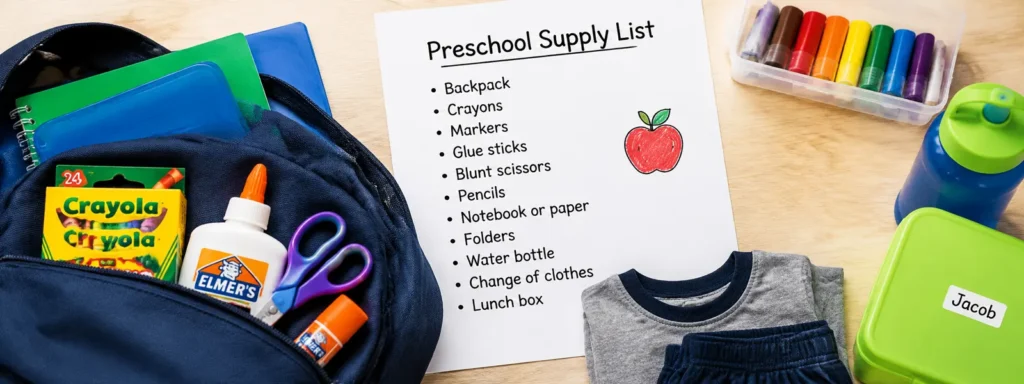
Unlike a parent school supply list, which usually focuses on one child’s personal items, a preschool supply list is designed for the whole classroom or center. It includes materials that teachers and children use every day, as well as supplies that help the school operate safely and smoothly.
A complete preschool supply list usually includes:
- Teaching supplies
- Art and craft supplies
- Literacy supplies
- Math supplies
- Science supplies
- Sensory play supplies
- Dramatic play supplies
- Hygiene supplies
- Safety supplies
- Nap and meal supplies
- Organization supplies
- Teacher supplies
For a preschool, supplies should be chosen based on age group, daily schedule, teaching style, class size, and hygiene requirements. The goal is not to buy as many items as possible. The goal is to prepare the right supplies that teachers use often, children can use safely, and the classroom can manage easily.
Complete Preschool Supply List for Daily Classroom Use
Daily classroom supplies are the materials teachers and children use most often during normal preschool routines.
The list below can be used as a practical starting point for preschool classrooms, daycare centers, and early learning programs.
Teaching and Classroom Supplies
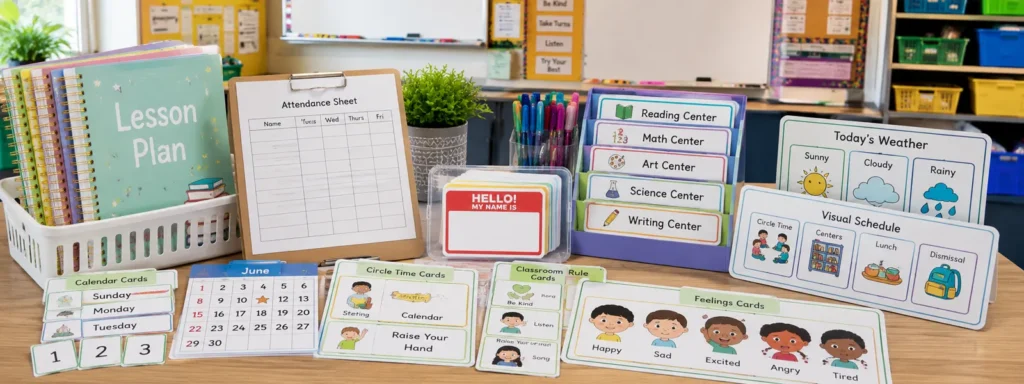
Teaching supplies help teachers guide daily routines, organize activities, and support children’s participation. In preschool, these items should be visual, simple, and easy for young children to understand.
Common teaching and classroom supplies include:
- Lesson plan notebooks
- Attendance sheets
- Name tags
- Classroom labels
- Visual schedule cards
- Calendar cards
- Weather chart cards
- Circle time cards
- Classroom rule cards
- Feelings cards
- Transition cards
- Flashcards
- Dry-erase markers
- Whiteboard erasers
- Clipboards
- Folders
- Stickers
- Stampers
- Reward charts
- Timers
Preschool children often respond better to pictures, cards, labels, and repeated routines than to long verbal instructions. Visual classroom supplies can make transitions smoother and reduce confusion during the day.
Art and Craft Supplies
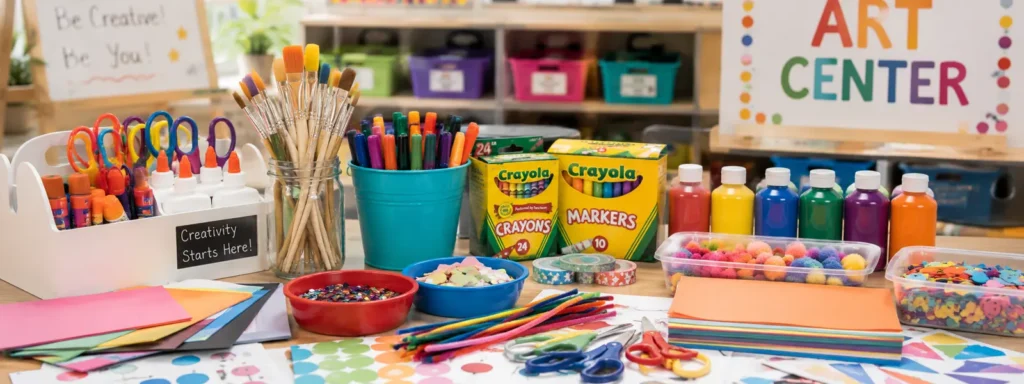
Art and craft supplies are some of the most frequently used preschool supplies. Children draw, paint, cut, glue, fold, stamp, and create during daily activities, seasonal projects, and open-ended exploration.
Common art and craft supplies include:
- Crayons
- Washable markers
- Colored pencils
- Finger paints
- Washable paints
- Paint brushes
- Glue sticks
- Liquid glue
- Child-safe scissors
- Construction paper
- Drawing paper
- Craft paper
- Tissue paper
- Stickers
- Pom-poms
- Pipe cleaners
- Craft sticks
- Paper plates
- Cotton balls
- Aprons or smocks
- Drying racks
- Art trays
When selecting art supplies, materials that are washable, non-toxic, and safe for children are best suited for daily classroom use. Furthermore, these supplies should be easy for teachers to prepare, distribute, clean up, and replenish.
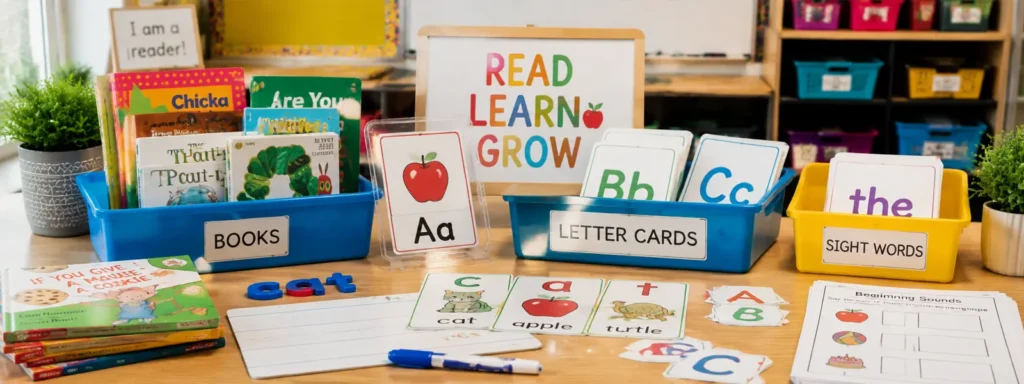
Early Literacy Supplies
Early literacy supplies help children build language, listening, storytelling, letter awareness, and early reading readiness. These materials should be playful and hands-on rather than overly academic.
Common early literacy supplies include:
- Picture books
- Board books
- Story cards
- Alphabet cards
- Letter matching cards
- Magnetic letters
- Name cards
- Rhyming cards
- Dry erase boards
- Large grip pencils
- Writing practice cards
- Storytelling puppets
- Felt board pieces
- Book baskets
- Word picture cards
Preschool literacy materials should encourage children to talk, listen, recognize sounds, notice letters, retell stories, and connect words with pictures. Name cards, picture books, puppets, and storytelling props are especially useful because they make language learning feel natural.
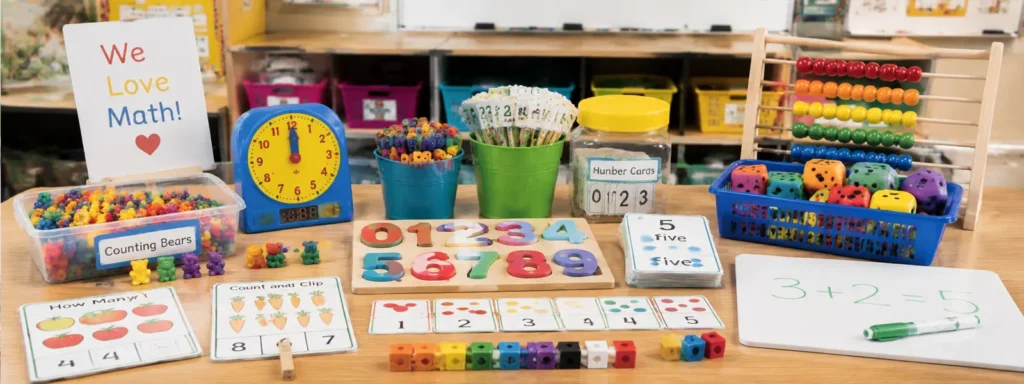
Math and Counting Supplies
Math supplies in preschool should support hands-on exploration. Instead of worksheets, young children need materials they can touch, move, sort, count, compare, and arrange.
Common math and counting supplies include:
- Counting bears
- Linking cubes
- Number cards
- Shape blocks
- Pattern blocks
- Sorting trays
- Matching games
- Beads
- Lacing cards
- Measuring cups
- Simple balance scales
- Dice
- Number puzzles
- Color sorting toys
- Shape sorting toys
- Counting mats
For preschool classrooms, math materials should be durable, easy to sort, and simple to store. Small manipulatives should be age-appropriate and used with supervision, especially in classrooms with younger children.
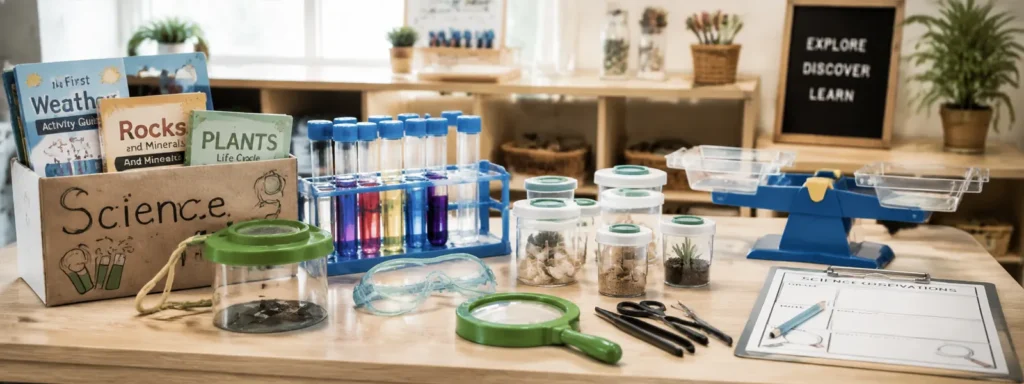
Science and Discovery Supplies
Preschool science supplies do not need to be complicated. The best materials are simple tools that encourage children to observe, compare, ask questions, and explore the world around them.
Common science and discovery supplies include:
- Magnifying glasses
- Observation trays
- Child-safe mirrors
- Magnets
- Droppers
- Measuring cups
- Plastic tweezers
- Plant growing kits
- Nature collection containers
- Discovery bottles
- Weather observation cards
- Simple experiment tools
- Light table accessories
- Color mixing bottles
- Sorting containers
For preschool settings, science supplies should be safe, visible, and easy to clean. Teachers should also choose materials that can be repeated and explored in different ways, rather than single-use activities that only work once.
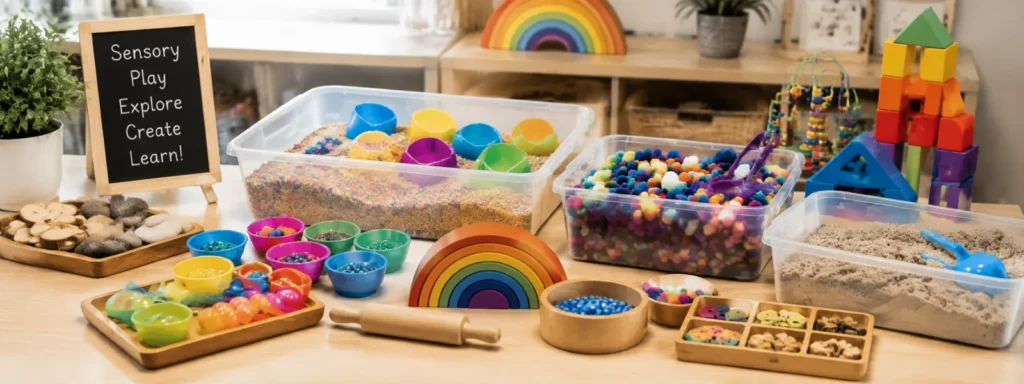
Sensory Play Supplies
Sensory play supplies support touch, movement, fine motor development, concentration, and emotional regulation.
Common sensory play supplies include:
- Sensory bins
- Scoops
- Funnels
- Tongs
- Pouring cups
- Textured balls
- Sensory bottles
- Play dough
- Kinetic sand
- Sand play tools
- Water play tools
- Foam shapes
- Light table manipulatives
- Montessori sensory materials
- Texture cards
- Sorting trays
Sensory supplies should be selected carefully based on age and classroom rules. Because sensory play can become messy, preschools should also prepare towels, trays, bins, cleaning cloths, and clear storage containers.
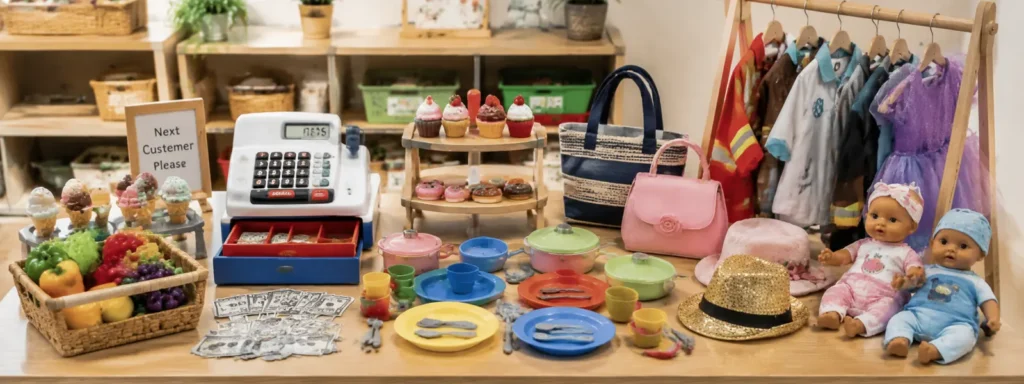
Dramatic Play Supplies
Dramatic play supplies help children act out real-life situations, practice language, build social skills, and understand the world around them.
Common dramatic play supplies include:
- Pretend food
- Play dishes
- Play money
- Cash register toys
- Dress-up clothes
- Hats
- Bags
- Baby dolls
- Doll care items
- Toy tools
- Doctor play sets
- Cleaning play sets
- Market play props
- Community helper costumes
- Phone props
- Menu cards
- Shopping baskets
Dramatic play supplies can be changed throughout the year based on classroom themes. The most useful dramatic play supplies are open-ended, durable, and easy for children to use together.

Nap Time Supplies
Nap and rest items are critical for full-day preschool programs and daycare centers. They ensure children have a comfortable and hygienic space to rest.
Common nap time supplies include:
- Nap mats or rest cots
- Small blankets or sheets
- Bedding storage bags
- Individual labels for each child
- Quiet toys or comfort items
- Music players or white noise machines
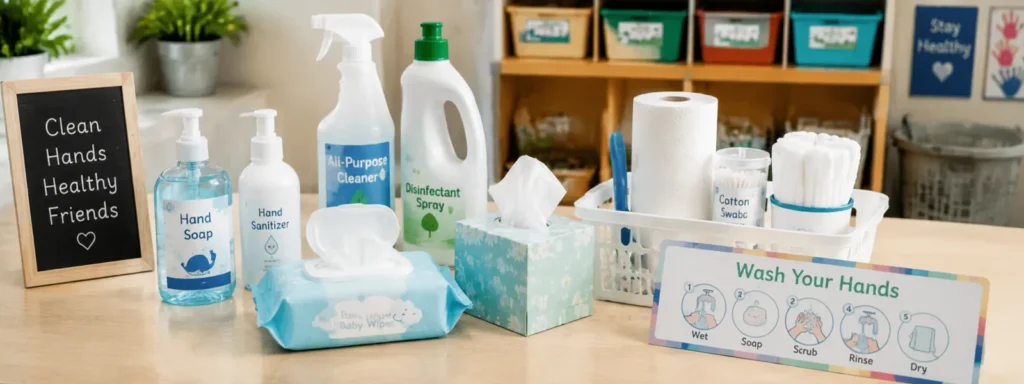
Hygiene and Cleaning Supplies
Hygiene and cleaning supplies are a vital part of daily preschool operations. They protect children’s health and help teachers maintain a safe environment.
Common hygiene and cleaning supplies include:
- Tissues and paper towels
- Wet wipes
- Hand soap and hand sanitizer (if allowed)
- Disposable gloves
- Cleaning cloths and disinfecting wipes
- Trash bags
- Laundry bags for soiled items
- Surface cleaners and spray bottles
- Mops and buckets
- Changing table supplies if applicable
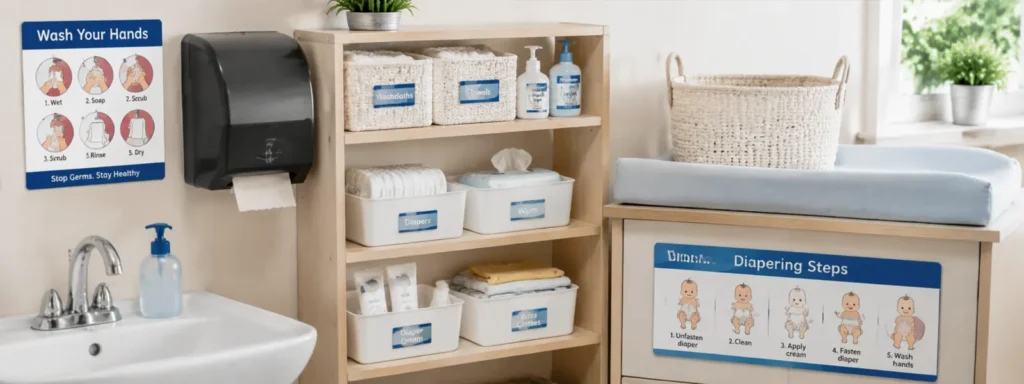
Bathroom and Diapering Supplies
For toddlers or younger preschoolers, diapering and toilet training supplies are a daily necessity.
Common bathroom and diapering supplies include:
- Diapers or pull-ups
- Baby wipes
- Diaper cream (if allowed)
- Changing pads
- Disposable gloves
- Plastic bags for soiled items
- Step stools for bathroom independence
- Toilet training charts
- Handwashing reminder posters

Organization and Storage Supplies
Proper organization reduces clutter, helps children find materials independently, and makes classroom management more efficient.
Common organization and storage supplies include:
- Name labels for children’s personal items
- Bin and shelf labels
- Color-coded labels
- Clear plastic bins and containers
- Baskets for open storage
- Zip bags for small items
- File folders and binders for teacher materials
- Paper trays and document organizers
- Visual schedule cards
- Transition cards
- Behavior and reward charts
- Attendance charts
- Daily routine charts
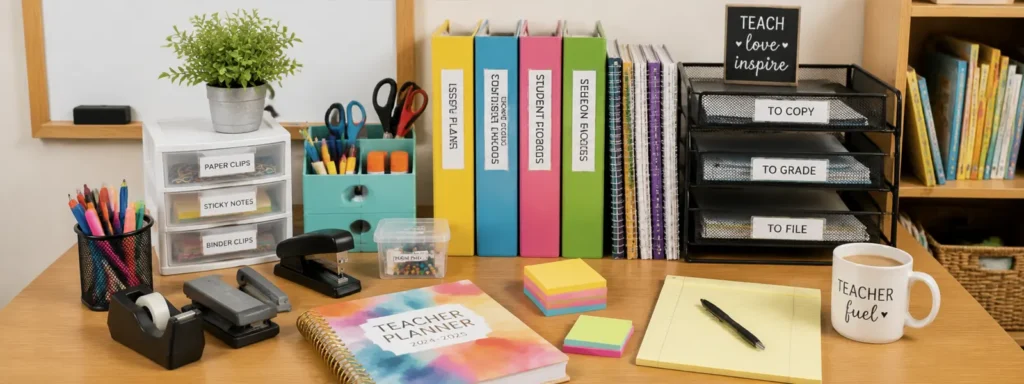
Teacher and Office Supplies
Administrative supplies help preschool staff manage paperwork, records, planning, and communication with families. Proper office supplies reduce daily stress and improve efficiency.
Common teacher and office supplies include:
- Pens, pencils, and markers
- Sticky notes
- Clipboards
- File folders and binders
- Laminating sheets
- Tape and stapler
- Hole punch
- Paper clips and binder clips
- Envelopes
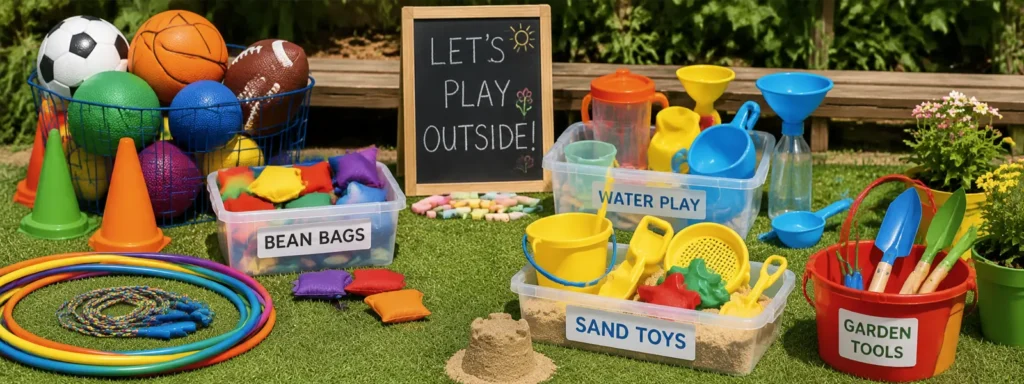
Outdoor Play Supplies
Outdoor activities are an essential part of preschool curriculum, supporting gross motor skills, coordination, and social interaction. Having the right outdoor supplies ensures activities are safe, fun, and engaging.
Common outdoor play supplies:
- Balls, hoops, jump ropes
- Bean bags for movement games
- Water play tools (scoops, pitchers, funnels)
- Sand toys (buckets, molds, shovels)
- Sidewalk chalk
- Gardening tools (for outdoor learning)
- Sun hats and sunscreen (if permitted)
- Outdoor storage bins for toys
- Cones or markers for obstacle courses
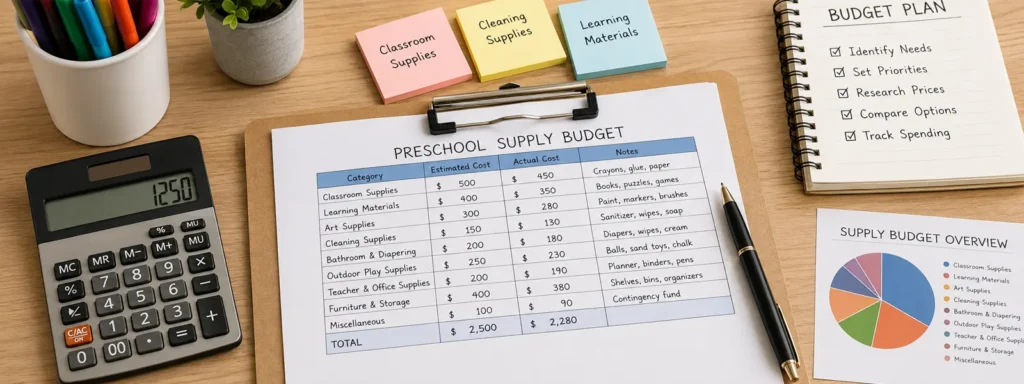
How to Build a Preschool Supply Budget?
Without proper planning, schools risk overspending, running out of essential items mid-term, or accumulating unnecessary supplies. A well-structured budget ensures that classrooms are fully stocked, activities run smoothly, and funds are allocated efficiently.
Categorize Supplies by Type
First, categorize all necessary items. Categorization helps you quickly identify which items are essential for daily operations and which are dispensable extras.
Estimate Quantities Based on Classroom Size
Calculate how much of each supply you need according to the number of children in each class and the expected daily usage. Consumable items like paper, glue sticks, and markers will be used frequently, so planning enough stock for each classroom prevents shortages and avoids last-minute purchases.
Prioritize Essentials vs Optional Items
Focus your budget on the items that children and teachers require for their daily routines. These essential classroom supplies are indispensable, while other items can be gradually added as needs arise.
Account for Age Groups
Supplies can also be customized by age group, ensuring that every child receives exactly what they need and avoiding the waste of money on unsuitable items.
Include Seasonal and Special Needs
You can place advance orders for seasonal supplies based on local timing, eliminating the need to purchase all the products required for every season at once.
Monitor and Adjust
A preschool supply budget is not static. Track how quickly consumables are used and adjust your budget for the next term based on actual needs. Maintaining a small reserve allows for emergency replacements and unexpected activities, keeping classrooms fully operational without financial surprises.
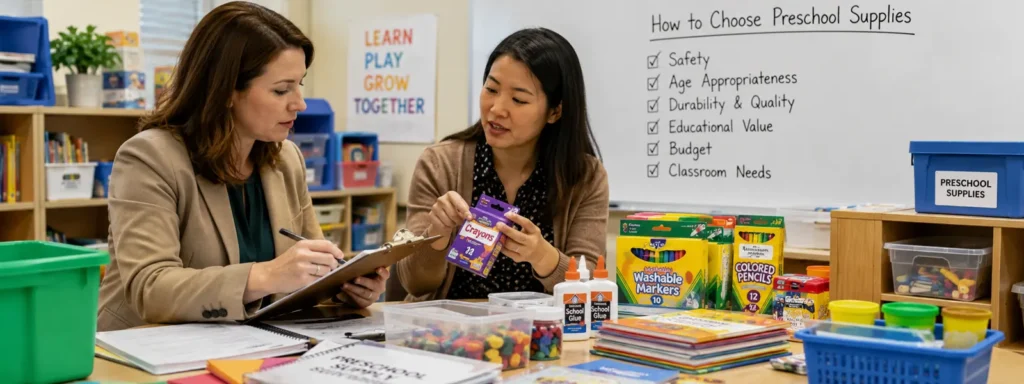
How to Choose Preschool Supplies?
Selecting preschool supplies requires careful consideration of daily classroom needs and operational efficiency. Please focus on the following strategies:
- Prioritize High-Use Materials: Start with items that support daily routines, learning centers, hygiene, meals, and rest, not decorative or rarely used supplies.
- Consider Multi-Purpose Items: Select materials that can be used for different activities or learning outcomes to maximize space and budget.
- Plan for Safety and Compliance: Ensure all supplies meet child safety standards (ASTM, CPSIA, EN71), including choking hazard evaluation and non-toxic certification.
- Optimize for Classroom Flow: Supplies should be easy to access, return, and store, minimizing teacher time on setup and cleanup.
- Evaluate Consumable Turnover: For items like paper, glue, markers, and wipes, calculate weekly usage to avoid shortages or overstocking.
- Align With Curriculum and Pedagogy: Choose materials that support the school’s teaching approach (Montessori, Reggio, play-based, etc.) and classroom learning objectives.
- Check Durability vs. Cost: Durable, washable, and reusable materials reduce replacement frequency and long-term operational costs.
- Test Usability Before Bulk Purchase: Try small quantities first to ensure children can use them independently and teachers can manage efficiently.
Conclusion
A well-prepared preschool supply list ensures that teachers have the materials they need. It is a practical planning tool that helps preschools run efficiently, keep children safe, and support daily learning activities.
For preschools looking to streamline supply planning, simplify procurement, or access high-quality, classroom-ready materials, West Shore Groups provides a comprehensive one-stop solution. From daily classroom supplies to art, literacy, sensory, and care materials, we offer bulk supply, professional guidance, and reliable delivery, helping your preschool operate efficiently while maintaining the highest standards for safety and learning.
Remember, the supply list should be adapted to your program type, age group, and daily schedule. Use this checklist as a starting point, then refine it based on your classroom needs and school policies.
FAQs About Preschool Supply List
How do preschool supply lists differ from parent school supply lists?
Parent lists focus on personal items for one child (backpack, lunch, clothing), while preschool supply lists focus on classroom-wide materials, teaching tools, and daily operational supplies.
How often should preschool supplies be replaced?
Consumables like paper, glue, markers, and wipes should be checked weekly or monthly. Reusable items like toys, sensory materials, and teaching tools should be inspected regularly for wear and safety.
What are common supply mistakes to avoid?
Common mistakes include buying too many decorative items first, forgetting hygiene and cleaning products, mixing teacher and child supplies, not labeling items, and ignoring age-appropriateness.
Should preschools purchase supplies in bulk?
Yes. Bulk purchasing of frequently used items like paper, glue sticks, crayons, wipes, and cleaning products helps prevent shortages and keeps classrooms running smoothly.
How can I manage supplies efficiently?
- Keep a labeled storage system with bins or shelves.
- Track inventory using checklists or spreadsheets.
- Separate essential items from optional extras to avoid overspending.
- Assign staff responsibility for restocking and monitoring materials.
How do I adjust the supply list for different age groups?
- Toddlers: more hygiene and care items (diapers, wipes), larger manipulatives, safe art materials.
- Preschoolers (3–4 years): balanced mix of art, sensory, literacy, and math materials.
- Pre-K (4–5 years): more advanced manipulatives, early writing and literacy tools, school-readiness items.
Should outdoor and seasonal items be included in the supply list?
Yes. Outdoor play tools, weather-appropriate clothing, sunscreen (if allowed), and seasonal activity materials should be included. These items ensure children can participate in outdoor activities safely and comfortably year-round.