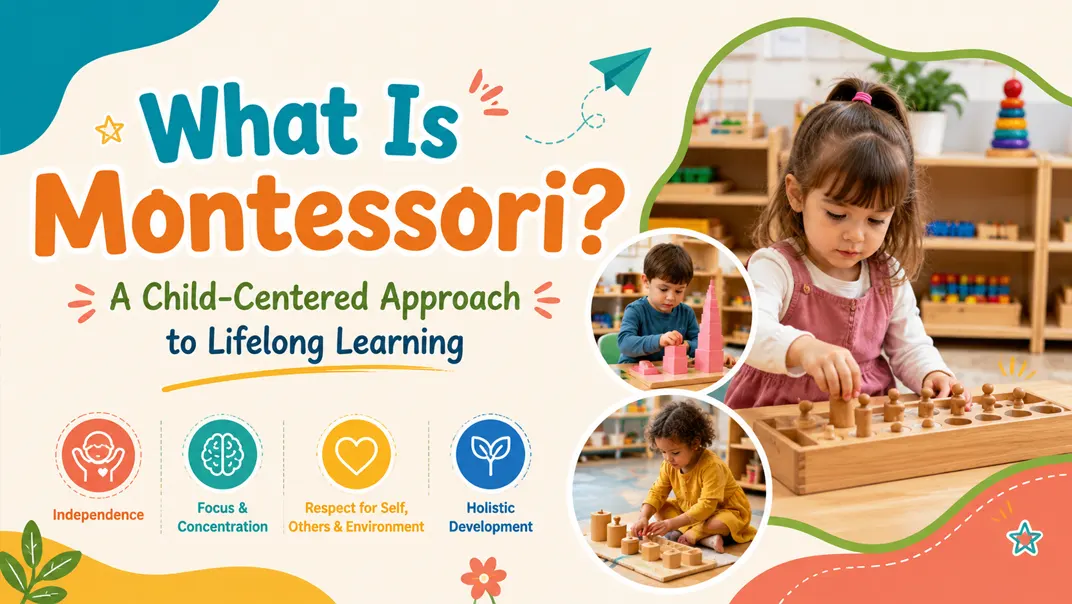
Montessori is one of the most recognized approaches in early childhood education, but many parents, teachers, and preschool owners still have the same question: what is Montessori, and why does it matter?
In simple terms, Montessori is a child-centered educational approach that encourages children to learn through independence, hands-on activities, freedom within clear limits, and a carefully prepared environment. Instead of relying only on direct instruction, Montessori gives children the chance to explore, choose meaningful work, repeat activities, and build confidence through real experience.
For parents, Montessori often represents a different way to support a child’s growth. They want to know whether this method can help their child become more independent, focused, responsible, and confident. For preschool owners and daycare operators, Montessori is also closely connected with classroom design, school image, parent trust, and daily teaching efficiency.
Today, Montessori education is used in preschools, daycare centers, kindergartens, elementary schools, and home learning environments around the world. Although classrooms may look different from one school to another, the core idea remains the same: children learn best when they are respected, supported, and placed in an environment designed for their independence and growth.
What Is Montessori?
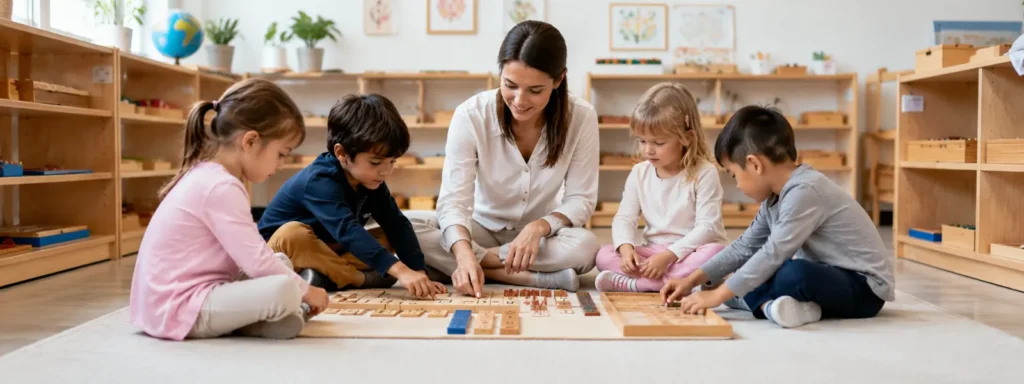
Montessori is a child-centered educational approach that supports children through independence, hands-on learning, and a carefully prepared environment. It is based on the idea that children learn best when they can explore at their own pace, use real materials, and take an active role in their daily learning.
In a Montessori classroom, children are not expected to sit still and listen to long lessons all day. Instead, they choose activities from organized shelves, work with materials that match their development, and repeat tasks until they build confidence and understanding. The teacher observes, guides, and introduces new lessons when the child is ready.
Who Created the Montessori Method?
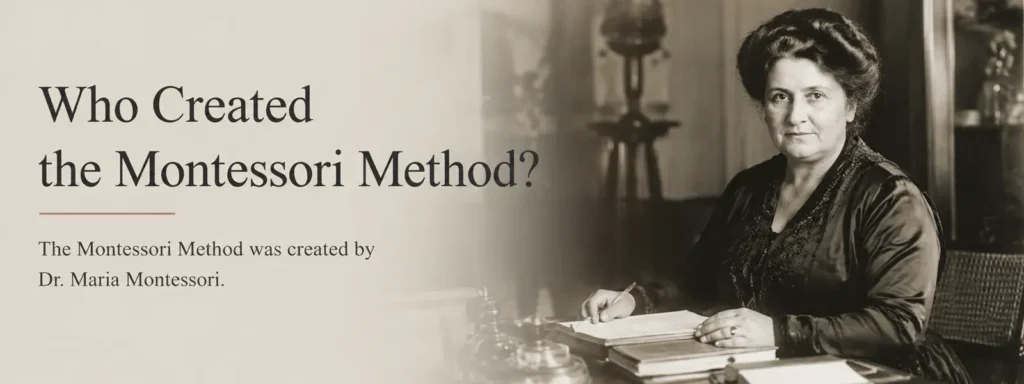
The Montessori Method was created by Dr. Maria Montessori, an Italian physician and educator. She was one of the first women in Italy to become a doctor, and her medical background helped her observe children in a careful and scientific way.
Maria Montessori developed her educational ideas through direct observation of children. She noticed that young children were naturally curious, capable, and eager to learn when they were given the right environment and suitable materials. She also saw that children could concentrate deeply when they were free to choose meaningful work instead of being forced into constant adult-led instruction.
In 1907, she opened the first Casa dei Bambini, or Children’s House, in Rome. This classroom became the starting point for what is now known as Montessori education. The children used child-sized furniture, practical learning materials, and an organized classroom environment that allowed them to move and work more independently.
Core Principles of Montessori Education
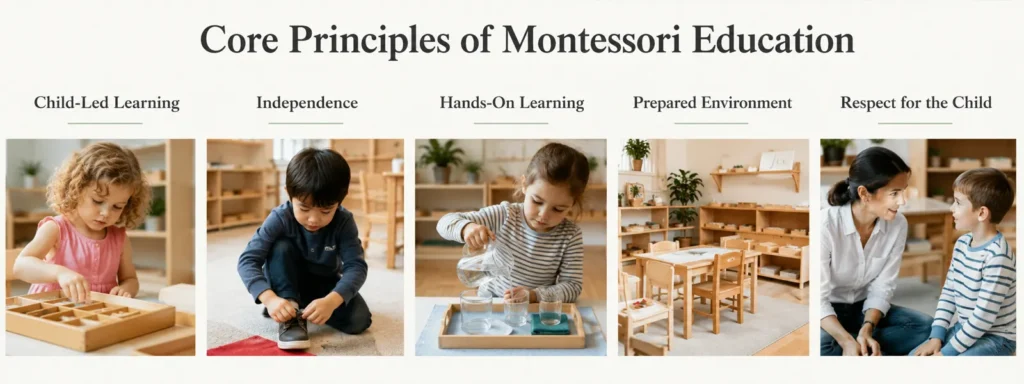
Montessori education is built around a few simple but powerful ideas. These principles help explain why Montessori classrooms are arranged differently, why children have more freedom of choice, and why the learning environment matters so much.
Child-Led Learning
In Montessori education, children are encouraged to choose activities that align with their interests and developmental level. However, this doesn’t mean children can do whatever they want without restrictions. There are still clear rules, daily routines, and expectations in the classroom.
Independence
Independence is one of the most important principles of Montessori education. Children are encouraged to complete simple daily tasks on their own, such as choosing activities, carrying trays, putting things back, washing hands, pouring water, or cleaning tables after use.
These seemingly simple actions cultivate children’s confidence and sense of responsibility. By using child-sized furniture, low bookshelves, easily accessible storage space, and a clear classroom layout, children can grow independently. Learning becomes more meaningful when children realize, “I can do this myself.”
Hands-On Learning
Montessori education is based on experiential learning. Children don’t just listen to explanations; they touch, move, sort, compare, pour, count, build, clean, and repeat.
This learning style helps children connect action with thought, and abstract concepts are easier to understand when they interact with real objects and materials.
Prepared Environment
At the heart of Montessori education lies a well-prepared environment. The classroom is carefully arranged to ensure children can move around safely, easily find the learning materials they need, and complete activities with minimal adult assistance.
Respect for the Child
Montessori education respects children’s learning abilities. Before introducing a new lesson, teachers observe each child’s interests, learning progress, and readiness. Give children time to concentrate without unnecessary distractions. When children receive trust and gentle guidance, they are more likely to develop confidence, patience, and a positive learning attitude.
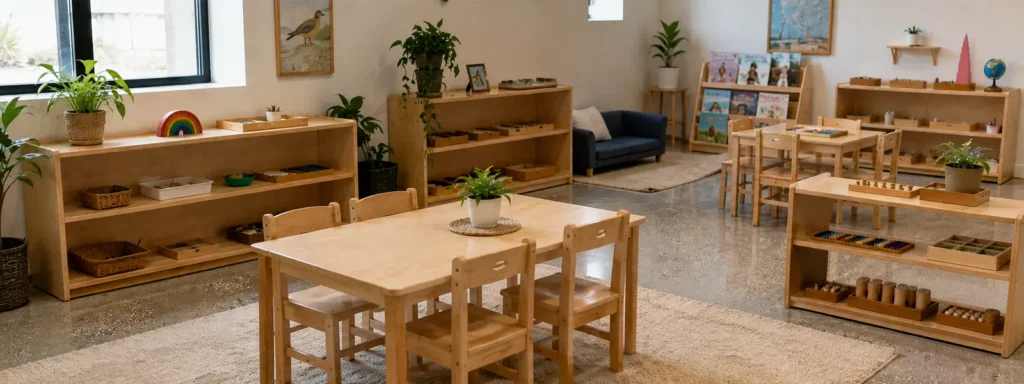
What Does a Montessori Classroom Look Like?
A Montessori classroom usually feels calm, open, and purposeful. It is not filled with random toys, bright decorations, or crowded storage. Instead, the space is arranged so children can clearly see what is available, move safely, and work with focus.
Low Open Shelves
Montessori classrooms usually use low open shelves that children can easily reach. Learning materials are displayed neatly and clearly, helping children choose activities independently and return items after use.
Child-Sized Furniture
Tables, chairs, and storage units are designed for children’s height and daily use. This allows children to move furniture safely, work comfortably, and build independence during classroom activities.
Clear Learning Areas
The classroom is often divided into different areas such as:
- Practical life
- Language
- Math
- Reading
- Art
- Sensorial activities
Each area has a clear purpose, helping children understand where activities belong and how to move through the classroom more confidently.
Natural Materials and Calm Colors
Wood furniture, natural textures, and soft colors are commonly used to create a quieter and more focused learning environment.
Open and Orderly Layout
Montessori classrooms are usually designed with clear walking space and simple organization. The goal is to help children move safely, stay focused, and develop responsibility for their environment.
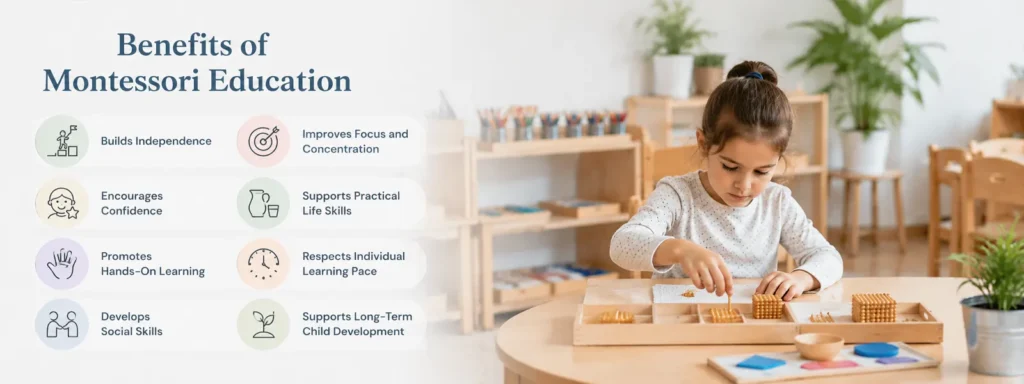
Benefits of Montessori Education
Montessori education supports both academic learning and everyday child development. Its structured but independent learning approach offers several long term benefits for young children.
- Builds Independence: Children learn to make choices, complete tasks, and manage simple daily routines on their own.
- Improves Focus and Concentration: Calm classrooms and hands-on activities help children stay engaged for longer periods.
- Encourages Confidence: Children gain confidence by completing meaningful tasks independently and learning at their own pace.
- Supports Practical Life Skills: Daily activities such as pouring, cleaning, organizing, and preparing materials build real-life abilities.
- Promotes Hands-On Learning: Children learn through movement, exploration, and direct interaction with materials.
- Respects Individual Learning Pace: Each child can progress according to their own development level and interests.
- Develops Social Skills: Mixed-age interaction encourages cooperation, communication, peer learning, and respect for others.
- Supports Long-Term Child Development: Montessori focuses on emotional, social, physical, and cognitive growth together.
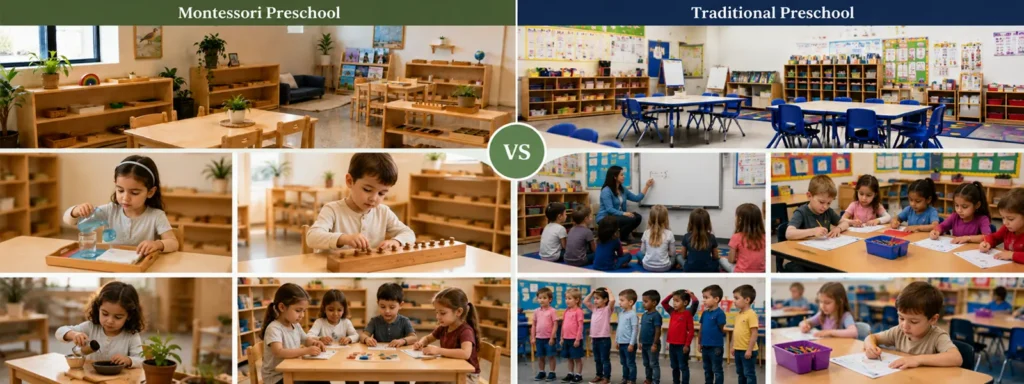
Montessori vs Traditional Preschool
Many parents search for Montessori because they want to understand how it is different from a traditional preschool. The difference is not only about teaching style. It also appears in classroom layout, teacher role, daily routine, materials, and how children make choices.
| Area | Montessori Preschool | Traditional Preschool |
|---|---|---|
| Learning Style | Children learn through self-directed, hands-on activities | Learning is often more teacher-led and group-based |
| Teacher Role | The teacher observes, guides, and introduces materials when needed | The teacher usually leads lessons and directs most activities |
| Classroom Setup | The classroom is a prepared environment with clear areas and accessible materials | The classroom may be arranged for group lessons, play centers, and teacher-led activities |
| Child Choice | Children often choose their own work within clear limits | Activities are usually more scheduled by the teacher |
| Materials | Materials are purposeful, hands-on, and often designed for specific skills | Materials may include toys, worksheets, books, crafts, and group teaching tools |
| Furniture | Furniture is usually child-sized, low, open, and arranged for independence | Furniture varies by school and may focus more on general classroom use |
| Learning Pace | Children can repeat work and progress at their own pace | Children often follow a shared class schedule or lesson plan |
| Classroom Atmosphere | Calm, orderly, and focused | More varied depending on teaching style and program type |
A traditional preschool is not necessarily bad, and Montessori is not automatically better for every child. They simply follow different educational ideas.
For preschool owners, the biggest difference is that Montessori education requires more meticulous classroom planning. Furniture, bookshelves, teaching materials placement, traffic flow, and learning areas all need to be coordinated and consistent. If you are planning to open a Montessori school, you can contact us for a one-stop service from classroom layout design to furniture selection.
How to Set Up a Montessori Classroom?
Setting up a Montessori classroom does not mean filling the room with as many materials as possible. The goal is to create a simple, orderly, and child-centered space where children can move safely, choose activities, and work with confidence.
Some of the most important elements include:
- Use Child-Sized Furniture
- Choose Low Open Shelves
- Create Clear Learning Areas
- Keep the Environment Organized
- Use Natural and Calm Materials
- Leave Enough Open Space
Setting up a Montessori classroom properly involves much more than simply arranging furniture. Classroom layout, furniture selection, learning areas, storage planning, and daily classroom flow all work together to support children’s independence and development.
If you want a more detailed guide, you can also read our complete article on Montessori Classroom Setup, where we explain classroom layout ideas, furniture planning, learning area design, and practical tips for creating a more effective Montessori learning environment.
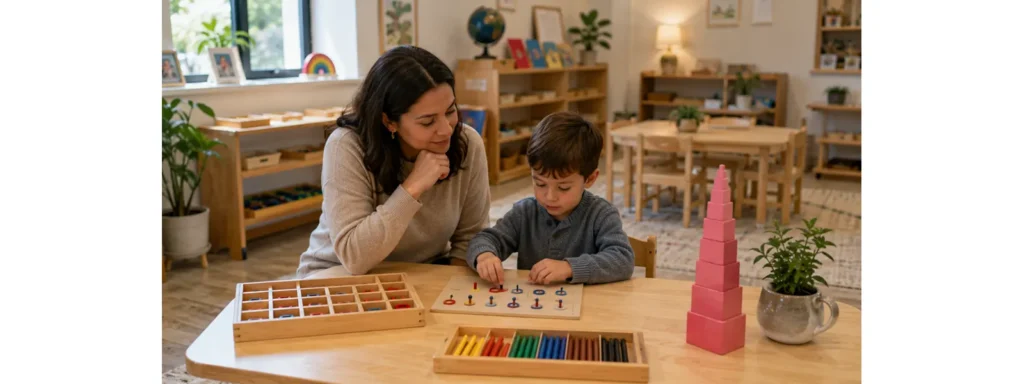
Is Montessori Right for Your Child or Preschool?
Montessori can be a good choice for families and preschools that value independence, hands-on learning, and a calm classroom environment.
For Parents
Montessori may be right for your child if you want them to:
- Become more independent
- Build focus and patience
- Learn through hands-on activities
- Develop practical life skills
- Grow in a calm and respectful environment
For Preschool Owners
Montessori can be a strong direction if you want to create a more child-centered and professional learning environment.
A Montessori-style preschool usually needs:
- Child-sized furniture
- Low open shelves
- Clear learning areas
- Safe movement space
- Organized classroom storage
- Calm and natural classroom design
For new daycare centers or preschool projects, Montessori can also help create a stronger school image and make the classroom easier for parents to understand during visits.
For Teachers
Montessori is suitable for teachers who want to guide children through observation, environment design, and meaningful activities rather than only relying on direct instruction.
In this type of classroom, the teacher’s role is to support children’s independence, help maintain order, and prepare materials that match their developmental needs.
FAQs
What is the main idea of Montessori education?
The main idea of Montessori education is to respect each child’s natural development and give them the right environment to learn, explore, and grow independently.
What age is best for Montessori?
Montessori can be used from infancy through elementary age, but it is especially common in preschool and early childhood programs for children aged 2 to 6.
Is Montessori better than traditional preschool?
Montessori is not automatically better for every child. It is better suited for families who value independence, hands-on learning, calm environments, and child-led activity.
Why are Montessori shelves low and open?
Montessori shelves are low and open so children can see, choose, use, and return materials independently without always needing help from an adult.
Can a regular preschool use Montessori ideas?
Yes. A regular preschool can use Montessori ideas by adding child-sized furniture, organizing materials clearly, creating calm learning areas, and encouraging more independence in daily routines.
Is Montessori only about wooden toys?
No. Montessori is not only about wooden toys. The real focus is independence, purposeful materials, hands-on learning, order, and a prepared classroom environment.
Conclusion
Montessori education is built around a simple but powerful idea: children learn best when they are respected, supported, and placed in an environment that allows them to explore independently.
For parents, Montessori offers a way to understand how children develop confidence, focus, practical life skills, and self-motivation. For preschools, daycares, and early learning centers, it also shows how important the classroom environment is in shaping daily learning.
A successful Montessori environment does not depend on decoration alone. It depends on whether the classroom truly supports children’s independence. When shelves are easy to reach, furniture fits children’s size, materials are organized, and movement space is safe, the Montessori idea becomes easier to apply in real preschool life.
If you are planning a Montessori classroom, daycare center, or early learning space, West Shore Groups can support your project with preschool furniture, Montessori classroom furniture, and layout solutions designed for real classroom use.