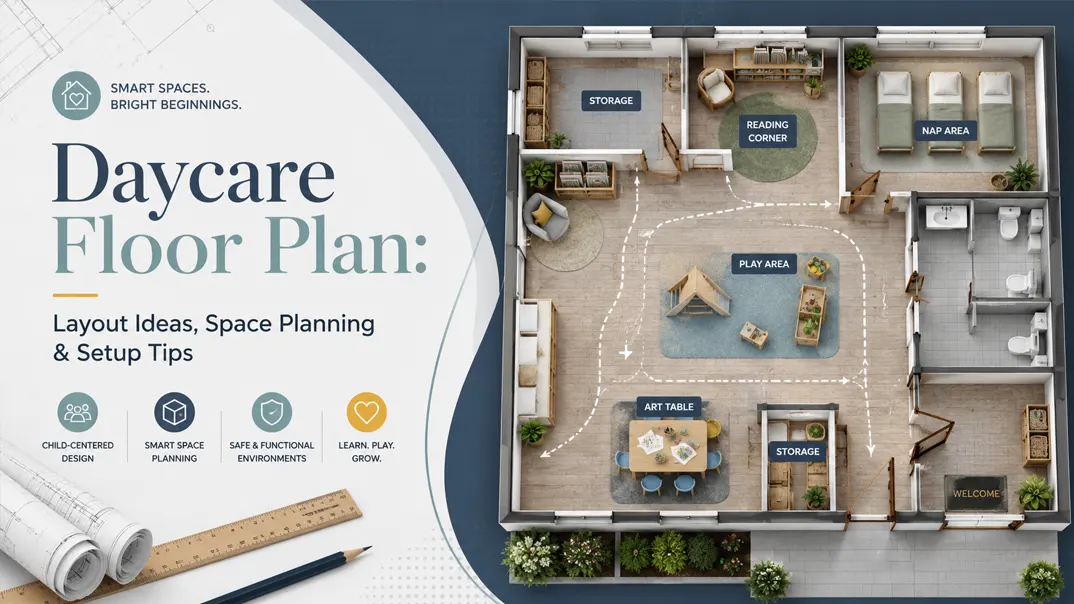
Before opening your center, the daycare floor plan should be your primary consideration. The design and selection of this layout will directly impact how the classrooms function once fully furnished. Serving as the foundation for the daycare center’s daily operations, the plan must be tailored to factors such as the available space, the number of children, and your specific educational philosophy to create an efficient and well-organized learning environment.
For many daycare operators, the most critical challenge is not simply securing sufficient space or finding suitable furniture, but rather determining how to rationally plan and utilize that space. While a room may appear spacious enough on paper, the layout becomes far more complex once various functional zones and furniture arrangements are introduced. Without a clear floor plan, it is all too easy to encounter issues such as overcrowded zones, obstructed supervision lines, poor pedestrian flow, or furniture placement that fails to meet practical operational needs.
A practical floor plan serves as the bedrock for establishing a superior daycare facility. This guide explores the essential elements that a daycare floor plan should encompass, making it an invaluable resource for professionals preparing to launch a new center or planning to renovate an existing space.
What Is a Daycare Floor Plan?
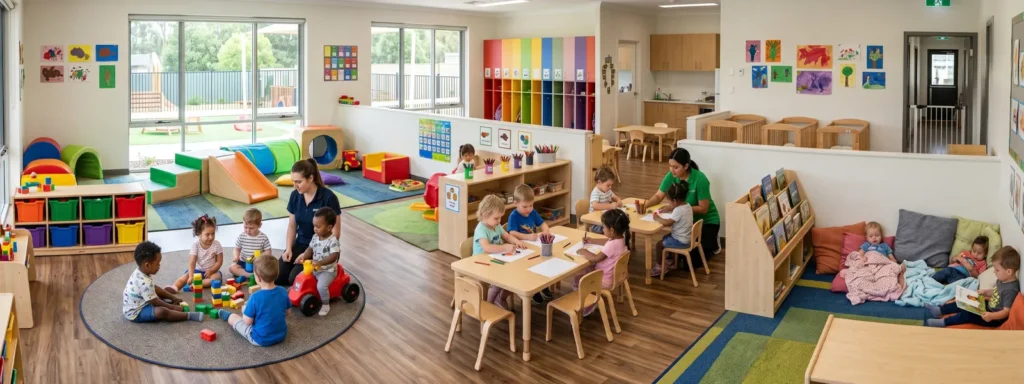
A daycare floor plan is a layout that shows how a childcare space is organized for daily use. It defines how different areas are arranged to support activities, supervision, movement, and routines.
What does a daycare floor plan usually need to consider?
A practical daycare floor plan usually includes these key factors:
- Age groups: Different age groups need different types of space, furniture, and activity support
- Activity areas: The layout should make room for learning, play, rest, and other daily functions
- Circulation: Children and staff need clear pathways to move safely and easily through the space
- Supervision: Teachers should be able to monitor children without major blind spots or blocked views
- Storage: Daily supplies, learning materials, and personal items need organized and accessible storage
- Safety: The layout should help reduce crowding, confusion, and unnecessary risks
- Daily routines: The space should support how the daycare actually operates, from arrival and play time to meals, rest, and transitions
Why is it the foundation of a daycare setup?
A daycare floor plan is one of the first steps in setting up a childcare space because it shapes many decisions that come after it. It affects how the room is divided, what furniture is needed, how much open space should be left, and whether the environment will feel practical and easy to manage in daily use.
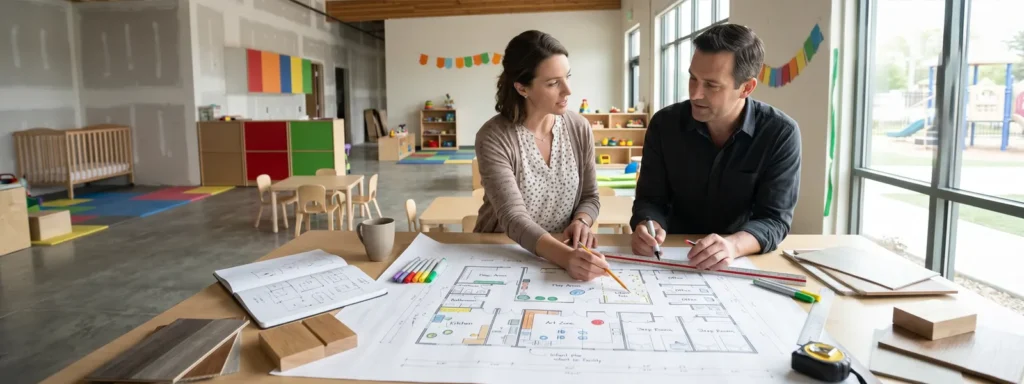
How to Plan a Daycare Center Floor Plan Step by Step?
If you are planning a daycare space for the first time, the process can feel overwhelming. A simple step-by-step approach makes it easier to move from ideas to a practical layout.
Step 1: Measure the Room Carefully
Start with the actual space before planning anything else.
Check:
- Doors and windows
- Columns
- Sinks
- Toilets
- Other fixed structures
Step 2: Identify Your Daily Routines and Priority Zones
Before choosing furniture or dividing the room, think about how you will use the space every day. Once these daily routines are clear, it will be easier to decide which areas need the most space and which areas can be kept compact.
The following points also need to be considered:
- Age group
- Teaching style
- Planned number of children
Step 3: Decide How Much Open Space You Need
No corner should be filled in. Don’t treat it as spare space; open space is crucial for movement, transitions, group activities, and preventing the room from feeling cramped.
Step 4: Choose Furniture Based on Layout Needs
Furniture should serve the spatial layout, not dominate it. Once the main areas and traffic flow are identified, choosing suitable tables, chairs, storage cabinets, and other furniture becomes much easier. This avoids buying furniture that looks practical but clashes with the overall style of the room.
Step 5: Review the Plan from a Teacher’s Point of View
The layout diagram may look good, but it could be difficult to manage in practice. This solution needs to be examined from the perspective of daily management and classroom routines.
Step 6: Leave Room for Future Adjustments
Changes in class size or the emergence of new needs may necessitate a rearrangement of daycare classrooms. Classroom floor plans should allow for flexibility to be adjusted as needed without requiring a complete overhaul.
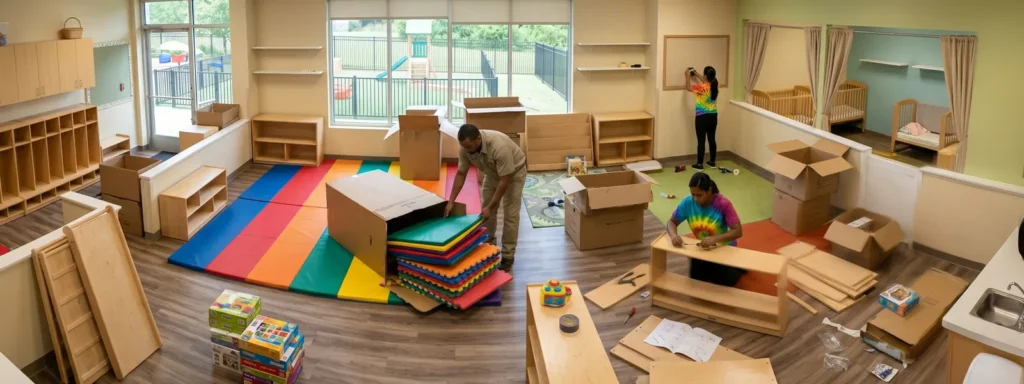
How to Create a Safe and Easy-to-Manage Layout?
A good daycare layout should make movement simple, keep the space organized, and allow teachers to supervise easily. When pathways are unclear or zones overlap too much, the room quickly feels crowded and hard to manage.
Plan clear pathways between key areas
First, consider how children move around in the classroom throughout the day. Movement between different areas should be natural and fluid, without having to walk around furniture or cross unrelated areas. When the circulation is simple and clear, the whole room will appear more organized.
Keep entry, storage, and shared-use zones organized
High-use areas should be easy to access and easy to control.
- Keep the entry area clear
- Place storage where it is easy to use without creating congestion
- Give shared-use areas enough surrounding space
Separate active and quiet zones when possible
Different areas of a classroom serve different purposes. An active play area naturally attracts more activity and noise, while reading corners and rest areas require a quieter environment. Placing these functional areas too close together often causes disturbance. Even without physical barriers, using partitions can create a more harmonious space.
Leave enough room for children and teachers to move comfortably
The layout should work well during real daily use.
- Leave enough space between furniture
- Keep walkways open during activities and transitions
- Make sure teachers can move easily to supervise and assist children
Avoid using oversized daycare furniture.
Furniture size has a direct impact on how the layout works. Large tables or bulky storage units can interrupt movement and reduce visibility. Choosing appropriately sized furniture helps maintain open pathways and keeps the space easier to supervise and manage.
How to Plan a Daycare Floor Plan Based on Your Space?
There is no single, fixed daycare floor plan that suits every project. The appropriate layout depends on the size of the space, the number of children being served, and the functional requirements of the rooms throughout the day. A daycare floor plan should be designed based on your specific circumstances, rather than simply copying someone else’s design.
Small Daycare Floor Plan Ideas
In a small daycare, space planning should focus on what is truly necessary. The goal is to keep the room functional without making it feel crowded.
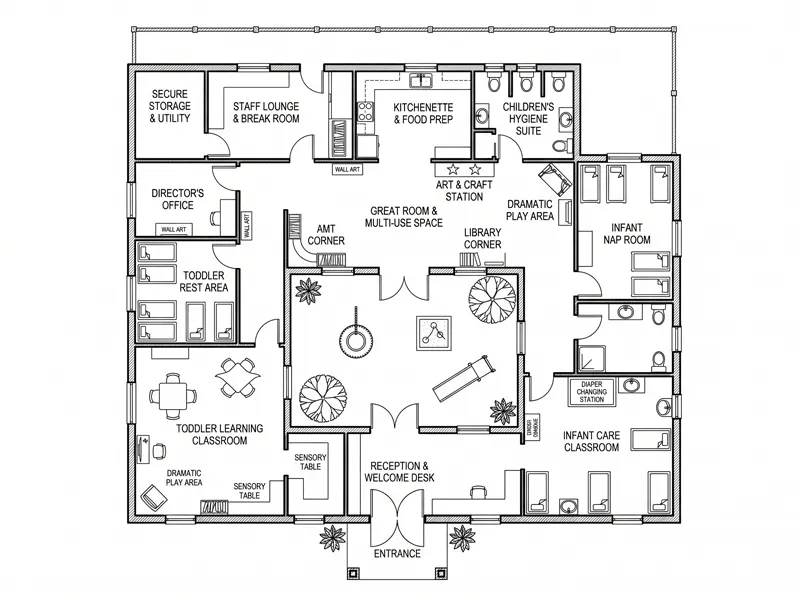
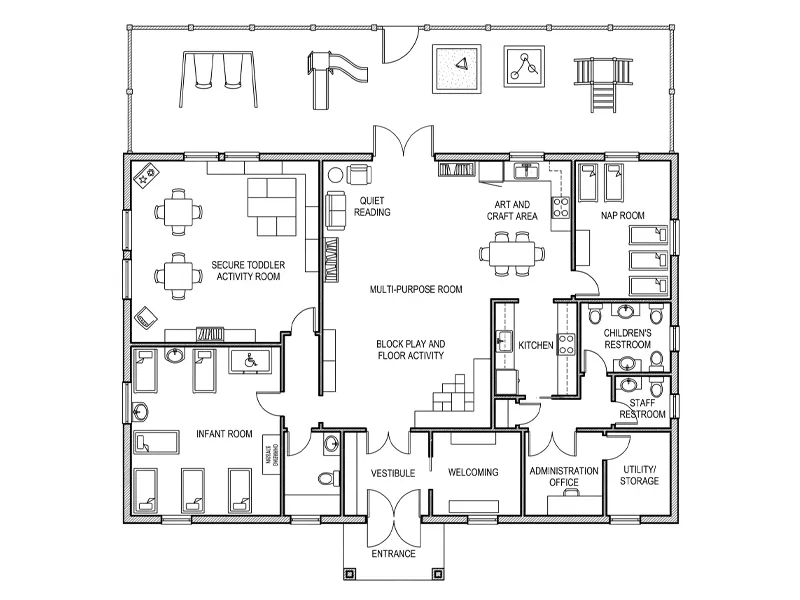
Planning priorities for small spaces:
- Keep only the most essential zones clearly defined
- Use furniture that can serve more than one purpose
- Avoid oversized pieces that block movement
- Leave enough open space for circulation and transitions
A small daycare floor plan usually works best when the layout is simple. The learning and activity area often becomes the main zone, while quiet use, storage, and flexible movement space are built around it. In many cases, the same area may need to support more than one function at different times of day.
Recommended Furniture:
- Compact preschool tables with stackable chairs
- Low open shelving units
- Mobile storage carts for shared materials
- Tables for multi-use areas
- Corner shelves to maximize unused space
Medium-Sized Daycare Floor Plan Layout Strategies
A medium-sized daycare gives you more freedom, but it still requires balance. This size of space usually works best when each main function has its own place without making the room feel too segmented.

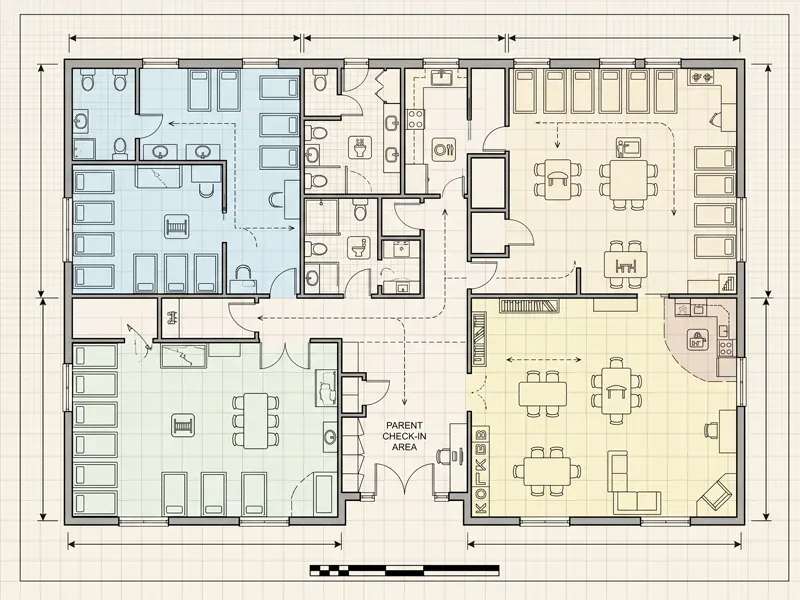
Planning priorities for medium-sized spaces:
- Create clearer separation between active and quiet areas
- Balance open space with defined functional zones
- Improve flow between learning, storage, and care routines
- Keep the layout easy for teachers to manage
This type of layout often allows for a more complete setup, including a learning area, quiet corner, nap space, storage, and open movement area. The challenge is making sure these zones support each other instead of competing for space.
Recommended Furniture:
- Classroom tables of different shapes
- Open cubbies
- Low-height partition shelves
- Soft seats or floor mats
- Nap cots or stackable sleeping mats
Large Daycare Floor Plan Tips
More space does not automatically mean a better setup. Without clear planning, large rooms often end up with weak zoning, wasted areas, or movement paths that feel too loose and difficult to manage.
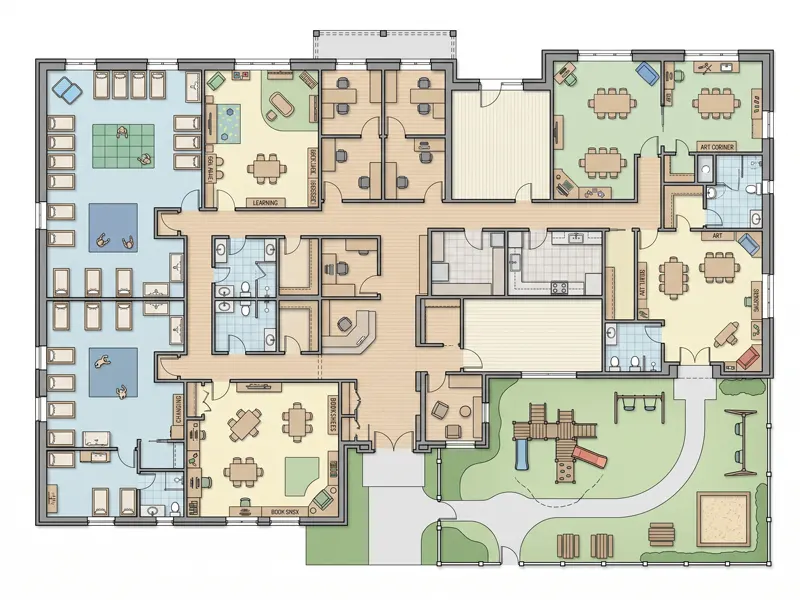
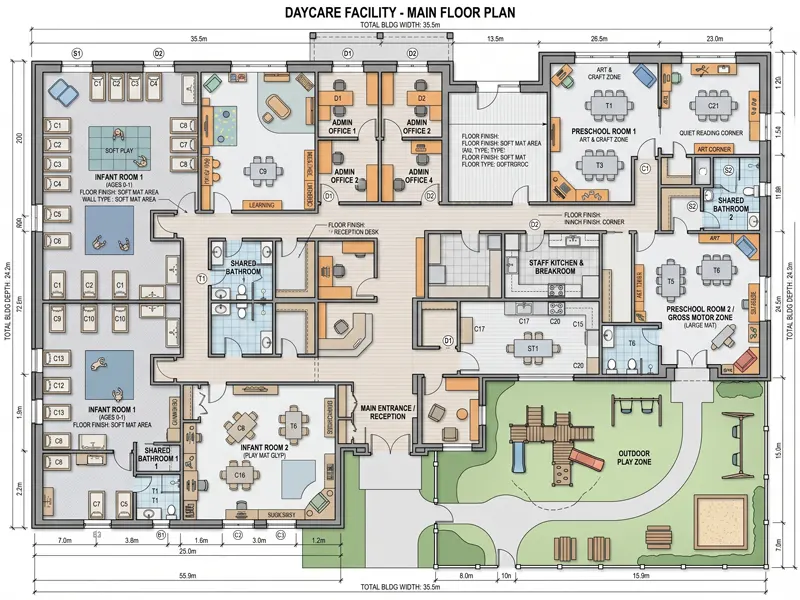
Planning priorities for large spaces:
- Define each zone clearly
- Improve overall space efficiency
- Prevent the room from feeling scattered or hard to supervise
- Organize circulation so movement stays predictable
In larger daycare layouts, the focus should be on creating strong functional structure. Children and staff need to understand how the room works, where activities happen, and how to move through the space without confusion.
Recommended Furniture:
- Full classroom furniture sets for each zone
- Larger shelving units
- Dedicated furniture for each function (art stations, reading corners, activity tables)
- Soft play equipment or gross motor furniture
- Clearly labeled storage systems
Floor Plan Ideas for Different Age Groups
Different age groups should not use the same layout. Children at different stages have different needs for care, movement, safety, and learning, so the floor plan should match how that group actually uses the space.
Infant Room Floor Plan
An infant room should focus more on care, sleep, and safety than on large active zones.
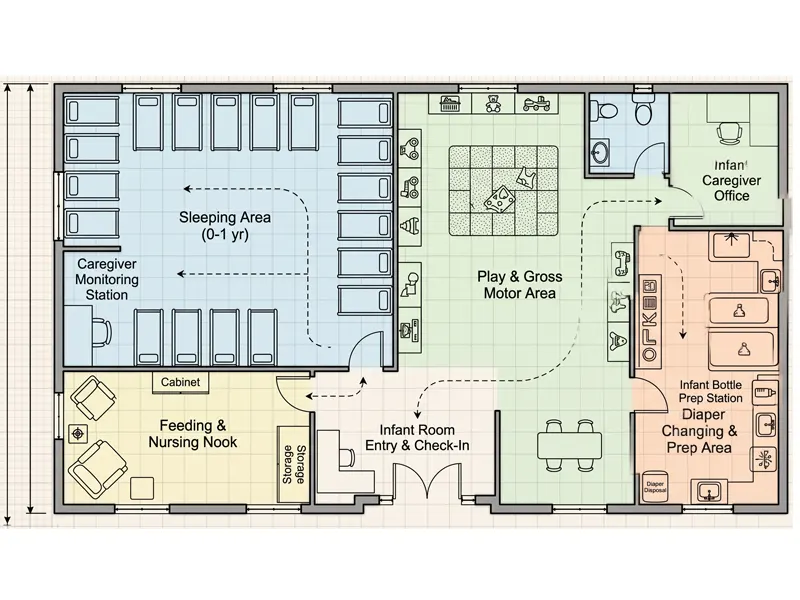
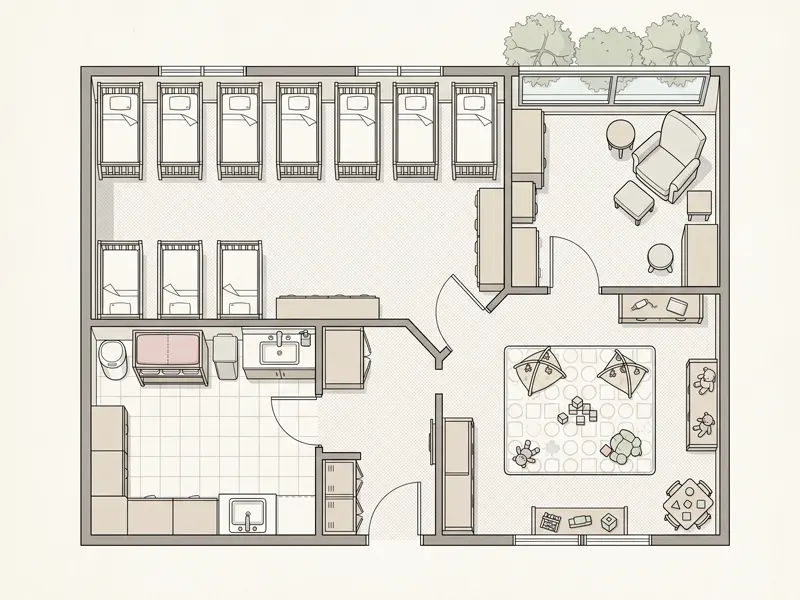
Layout priorities:
- Leave enough space for feeding, diapering, and daily care
- Keep nap areas calmer and more protected
- Make teacher movement smooth between cribs, changing areas, and activity space
- Use lower, softer, and more stable furniture
Recommended furniture:
- Low height cribs or infant cots
- Stable changing tables
- Soft seating or floor mats
- Low open shelves
- Compact storage units
Toddler Room Floor Plan
A toddler room needs to support more movement and exploration, but it still needs clear limits.

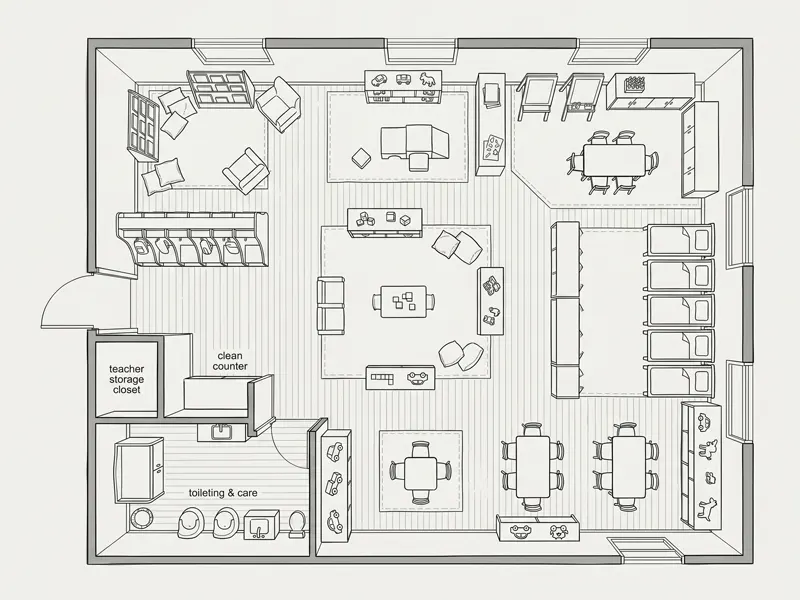
Layout priorities:
- Create open space for movement and simple activities
- Use clear boundaries to separate different zones
- Keep furniture stable and easy to access
- Balance active exploration with safe circulation paths
Recommended furniture:
- Low tables and chairs
- Open shelving units
- Soft play elements
- Clearly defined storage for toys and learning materials
- Lightweight furniture that can be repositioned when needed
Preschool Room Floor Plan
A preschool room usually needs more defined functional areas because children use the space in more varied ways.
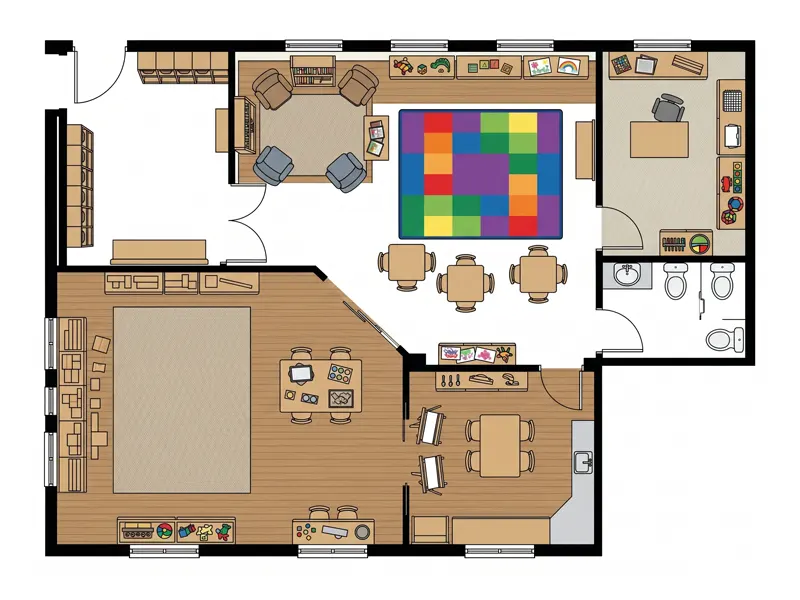
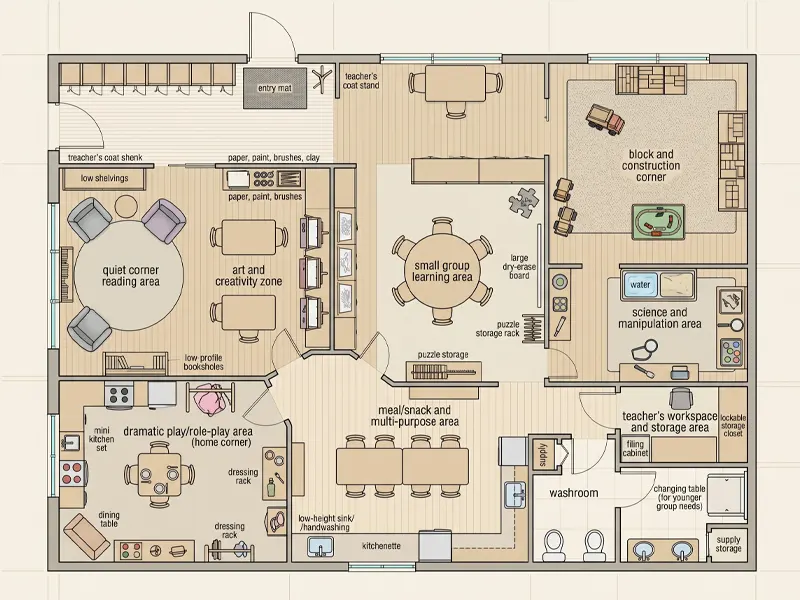
Layout priorities:
- Plan clear zones for reading, art, block play, and dramatic play
- Keep each learning center easy to understand and easy to access
- Leave room for both group activities and independent play
- Use more flexible furniture that can support changing classroom needs
Recommended furniture:
- Modular tables and stackable chairs
- Bookshelves and reading corners
- Art stations and storage for supplies
- Open cubbies for personal items
- Mobile or flexible furniture for multi-use spaces
Common Daycare Floor Plan Design Examples
Below are some daycare floor plan layout schemes to provide you with more layout ideas.
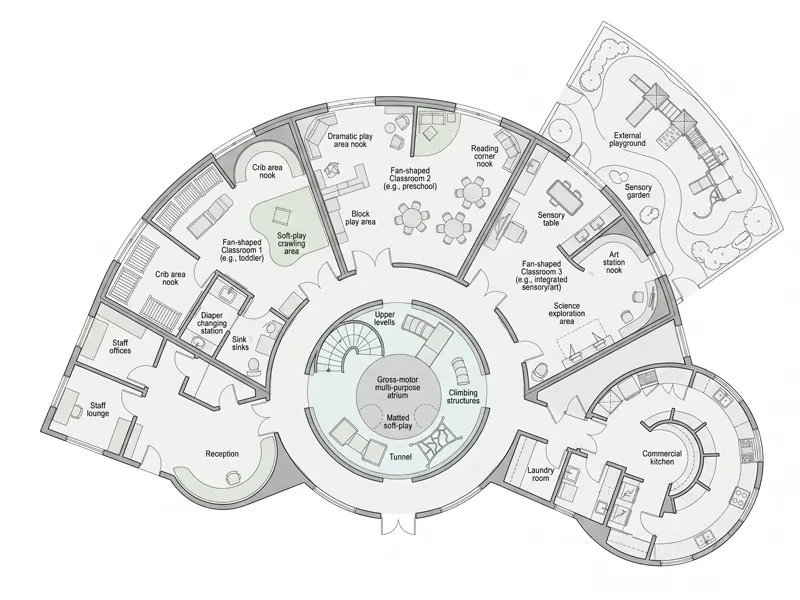
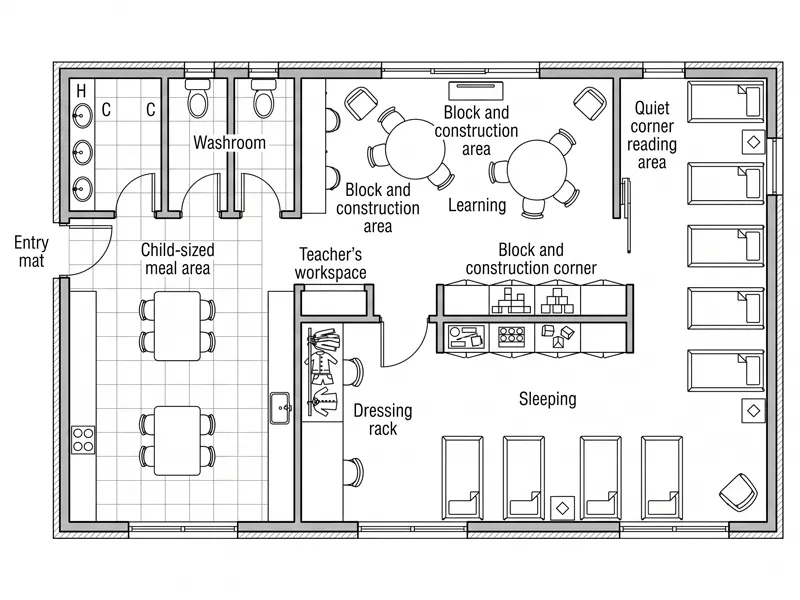
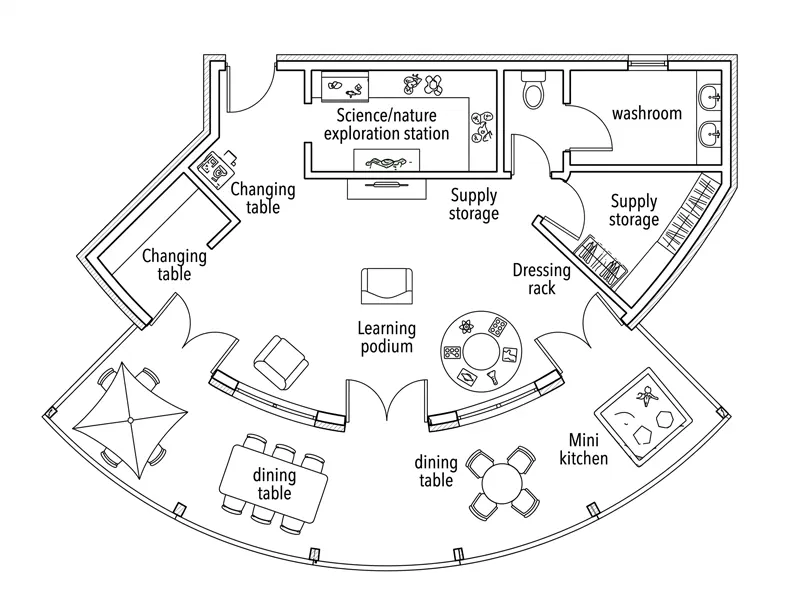
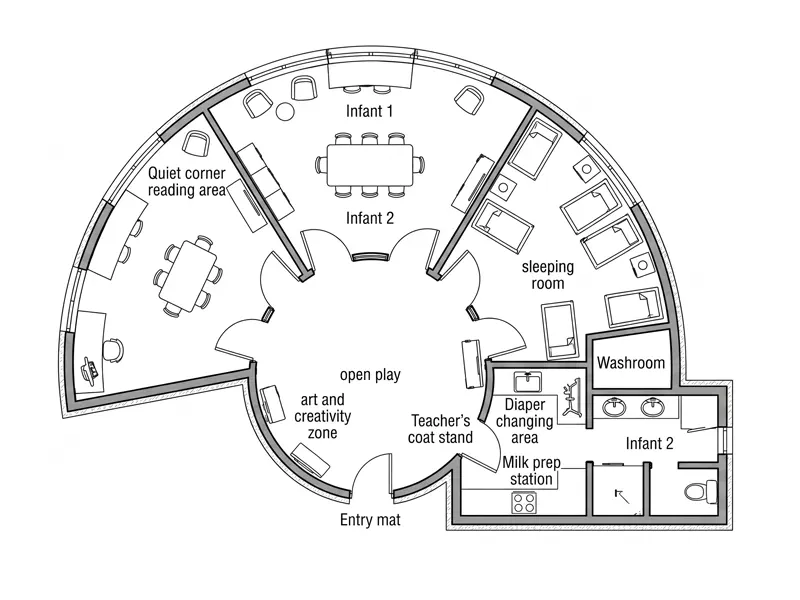
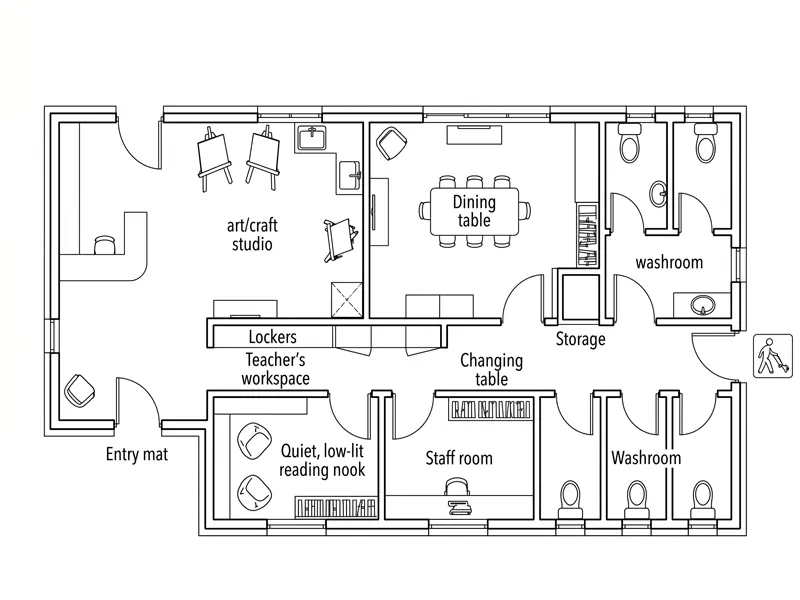
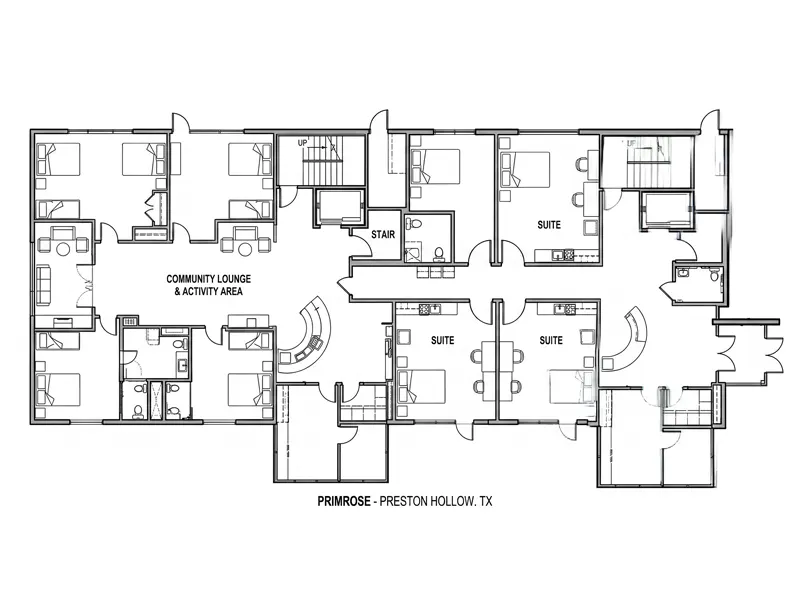
No matter the size or style, most effective daycare floor plans share a few key ideas:
- The space is easy to move through
- Each area has a clear purpose
- Quiet and active functions do not interfere with each other
- Storage supports daily use instead of creating clutter
- The layout makes supervision easier, not harder
When these principles are in place, the space becomes more practical to use, easier to manage, and more comfortable for children.
What Areas Should a Daycare Floor Plan Include?
While a daycare floor plan should feature clear spatial divisions, the objective is not simply to increase the number of zones, but to ensure that the primary spaces work together effectively.
The following are key areas that most childcare facilities should include:
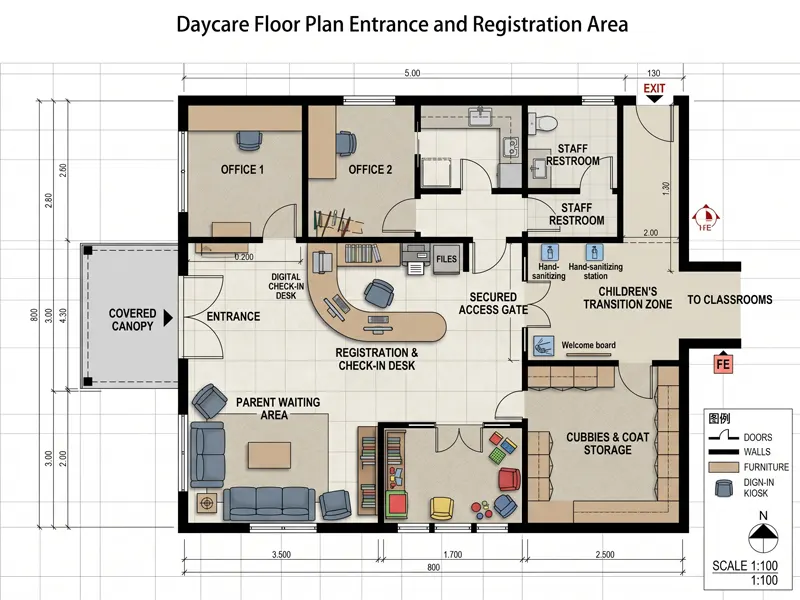
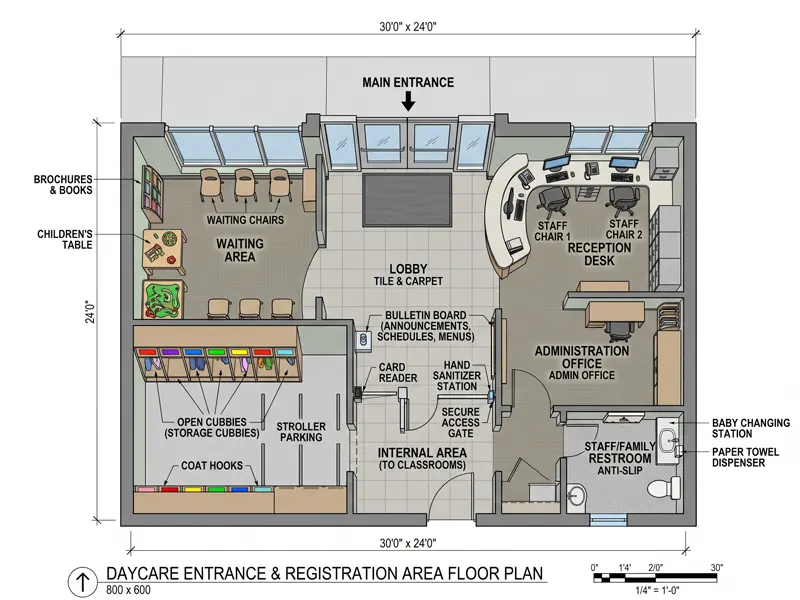
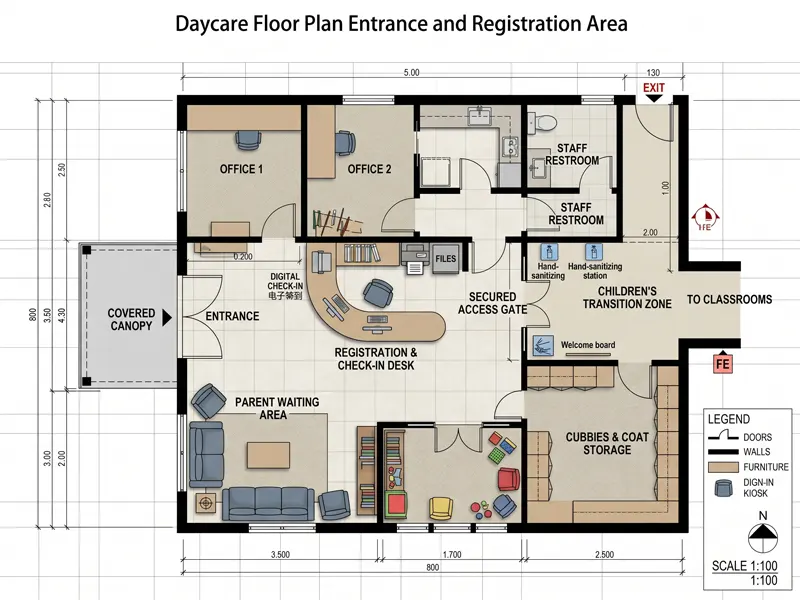
Entrance and Registration Area
This serves as the primary point of contact for children, parents, and staff members. The area should be kept clear and organized to facilitate efficient management and control.
Key functions:
- Parent drop-off and pick-up
- Basic access control and entry monitoring
- Waiting and transition space
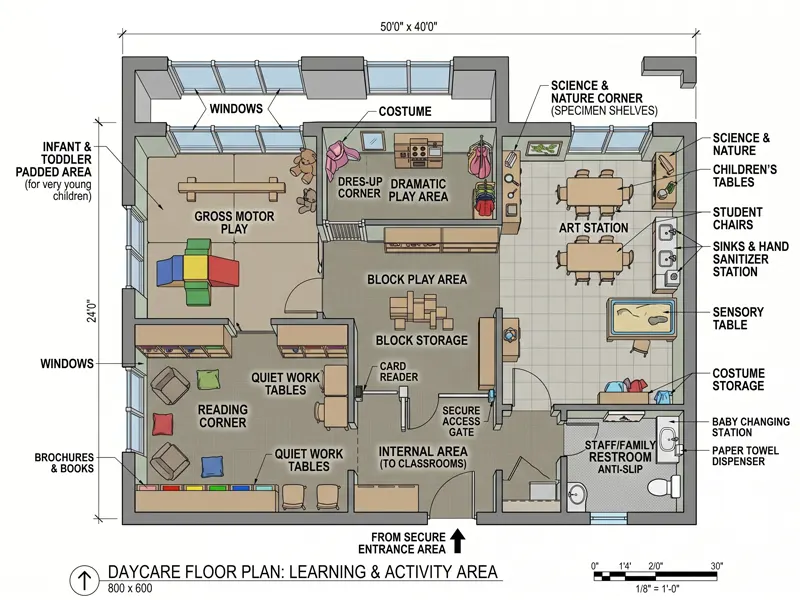
Learning and Activity Area
As this is the primary space where children spend the majority of their day, the layout should be designed to support both structured activities and flexible daily usage.
Key functions:
- Group activity
- Learning
- Age-appropriate use of space
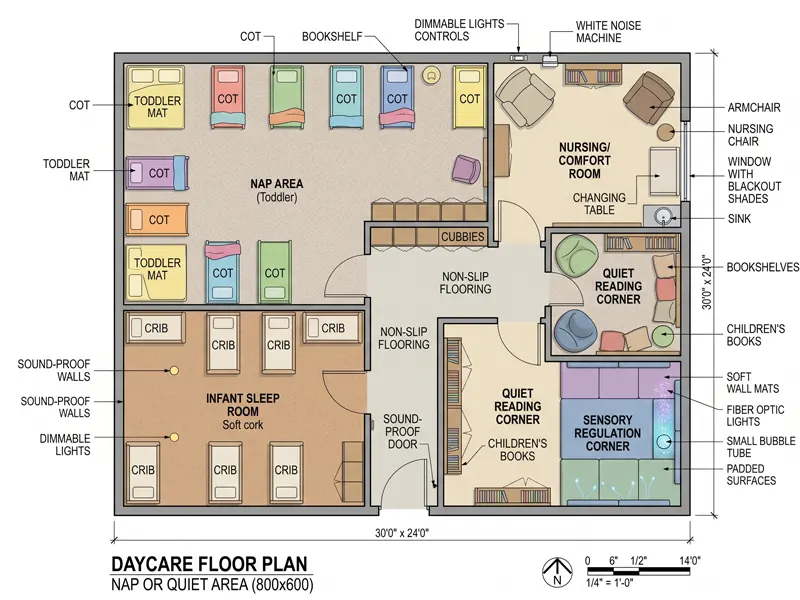
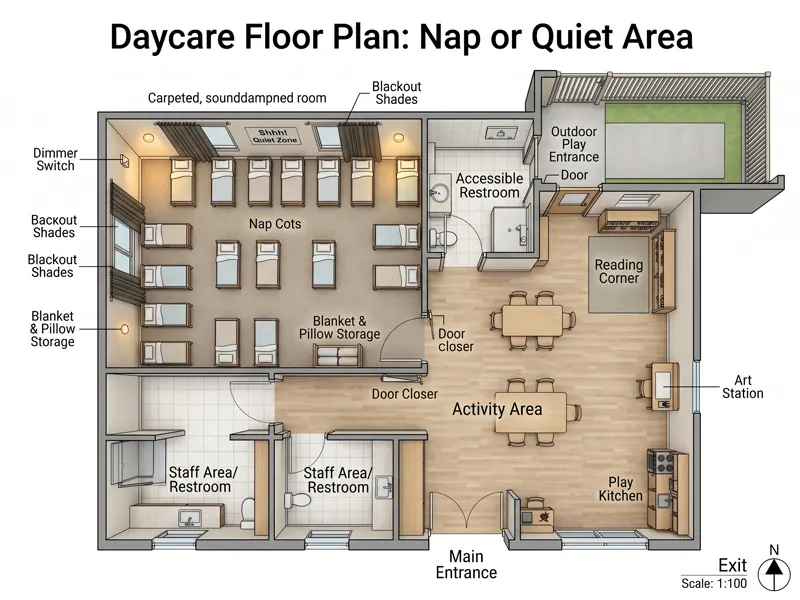
Nap or Quiet Area
Children need a space where they can rest without too much noise or movement from active parts of the room.
Key functions:
- Provide a quiet space for children’s naps.
- Provide a quiet corner for calming down.
- Clear relationship with active zones
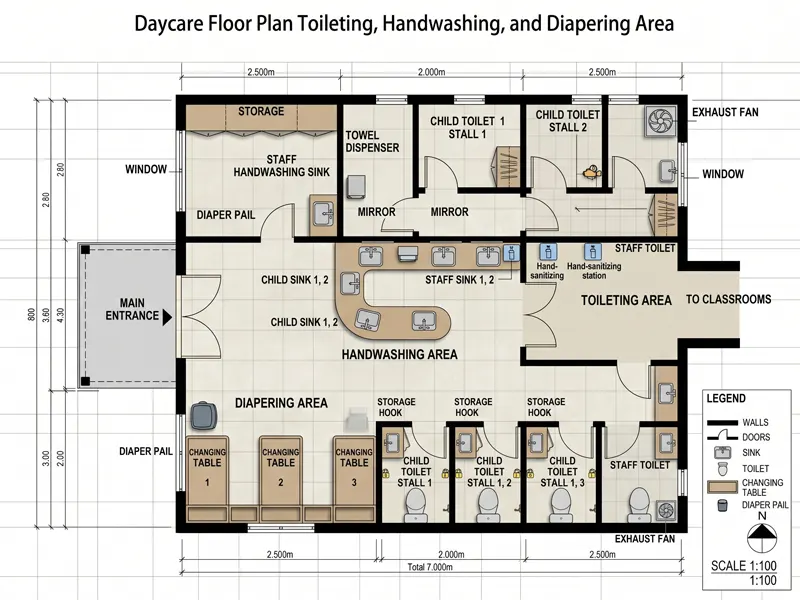
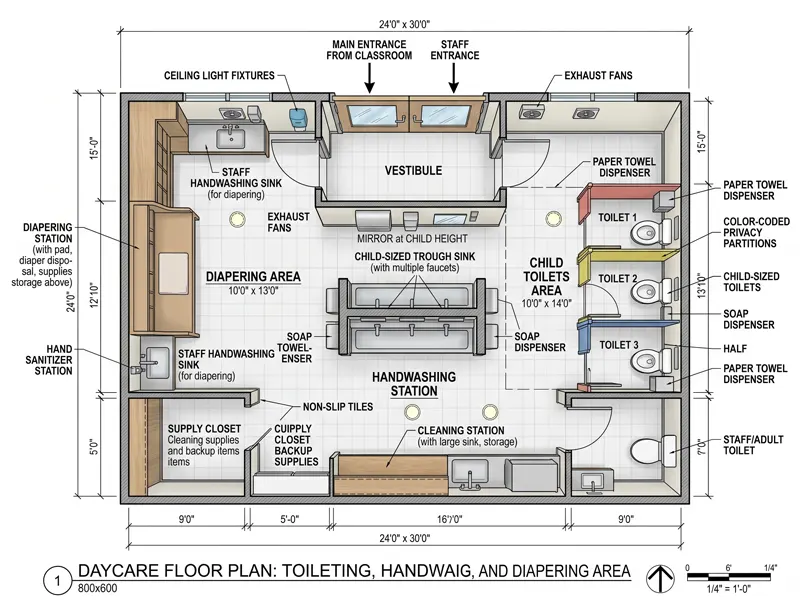
Toileting, Handwashing, and Diapering Area
Facilitates daily care tasks and helps maintain good hygiene habits.
Key functions:
- Infant and toddler care needs
- Hygiene workflow
- Easier teacher assistance
- Safe and clean daily use
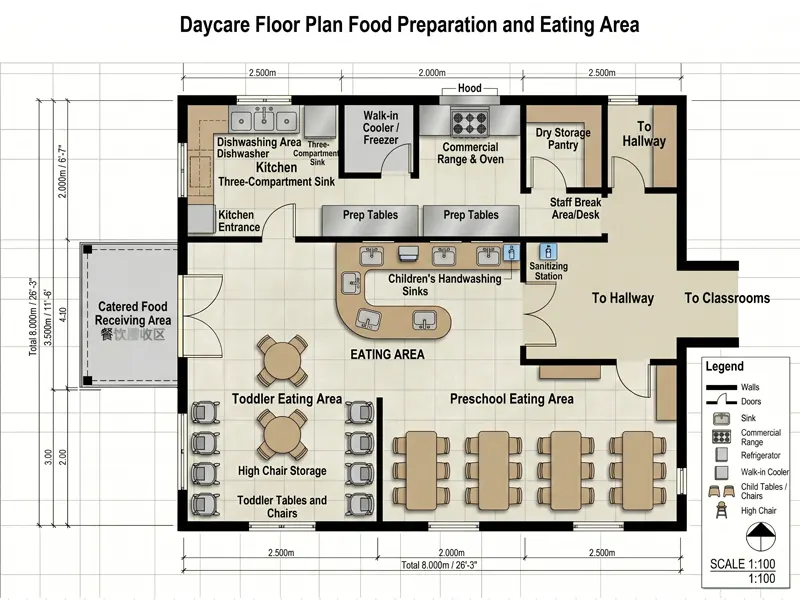
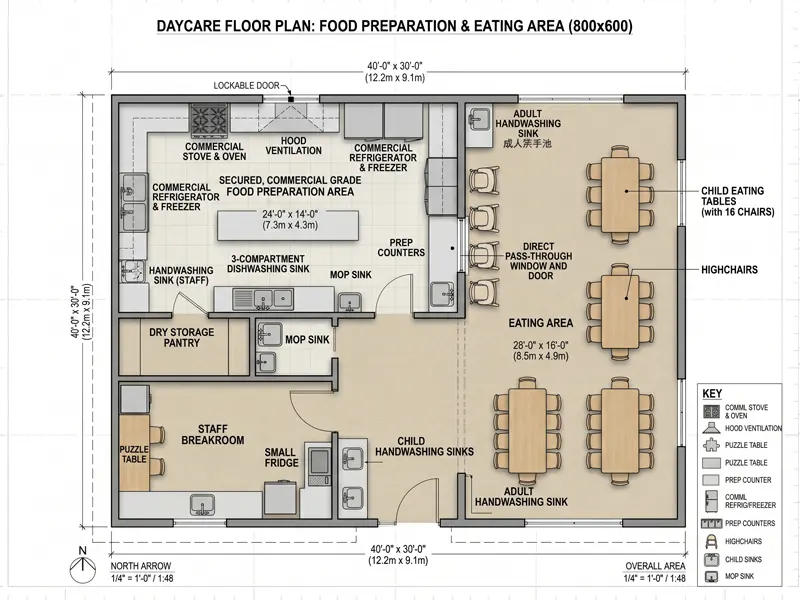
Food Preparation and Eating Area
These areas enable more efficient meal planning, reduce unnecessary movement, support food service operations, and facilitate smooth transitions before and after meals.
Key functions:
- Eating area
- Food preparation area
- Cleaning and storage flow
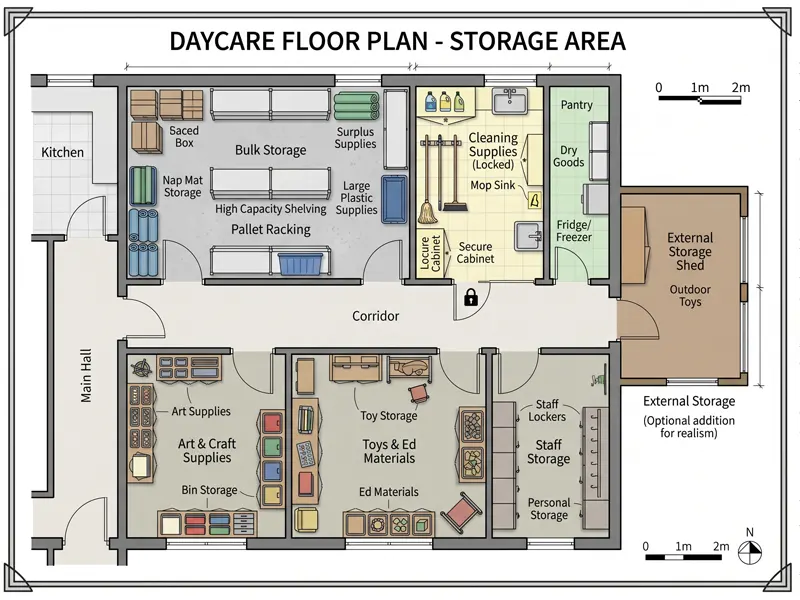
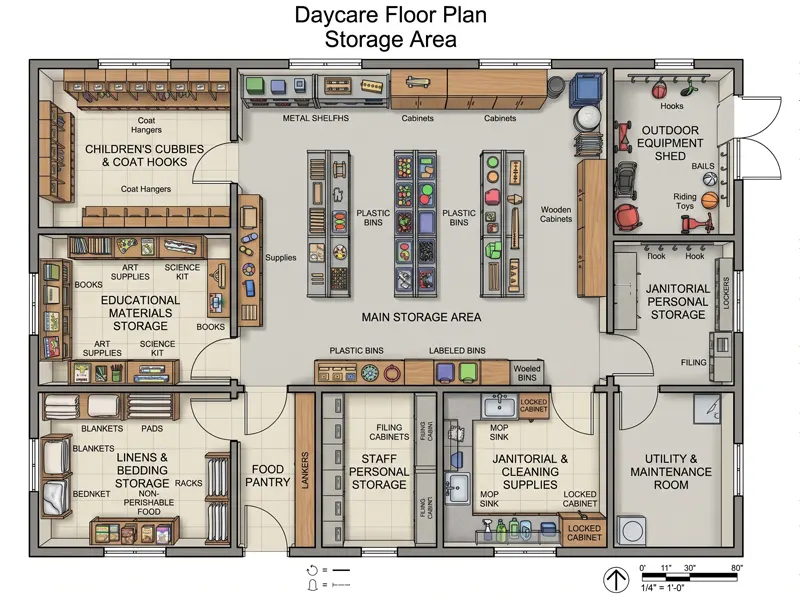
Storage Area
Storage space should be planned from the very beginning, rather than added after the room is already filled. Distribute storage areas near activity zones to facilitate the easy retrieval and return of items. Classroom storage solutions can help you organize your belongings effectively.
Key functions:
- Learning material storage
- Children’s personal item storage
- Separate storage for cleaning supplies
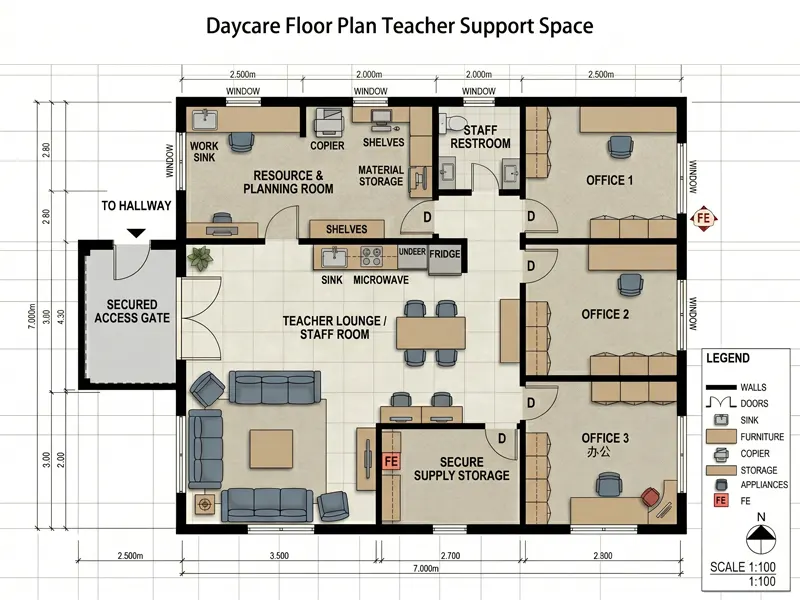
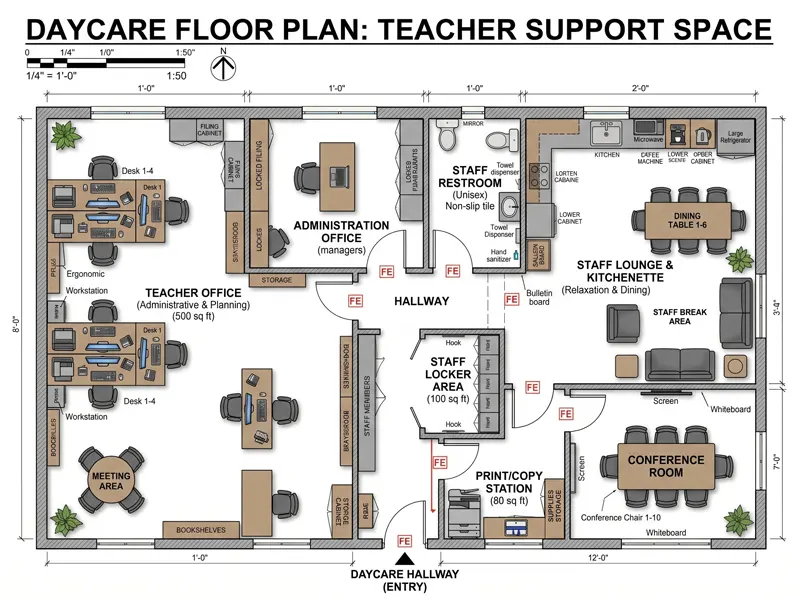
Teacher Support Space
Even in a child-focused environment, staff still need a small but practical area to support daily operations.
Key functions:
- Teacher records
- Short-term lesson preparation
- Supply management
- Observation and organization support
How Furniture Affects Your Daycare Floor Plan?
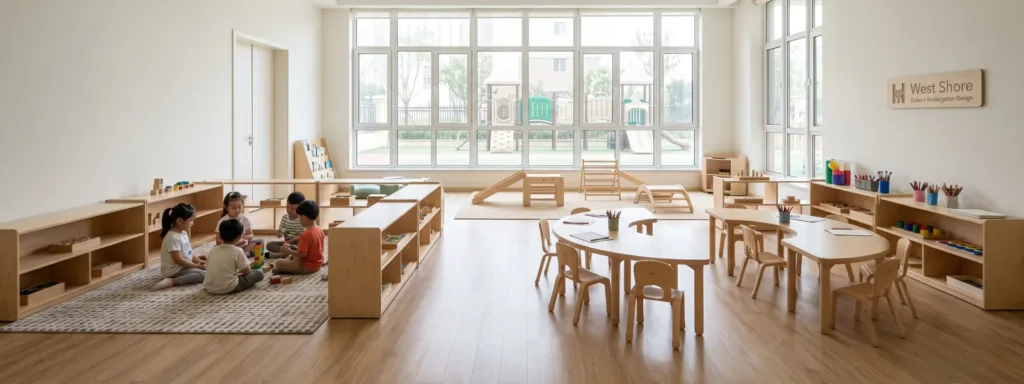
A daycare floor plan is not only shaped by walls and room size. It is also shaped by the furniture inside it. The size, height, function, and flexibility of furniture all affect how the space works in daily use. That is why furniture should be considered during layout planning, not after it.
- Furniture Size Affects Space Efficiency:
The size of daycare furniture directly impacts the actual usable space, making aisles narrower than expected. When furniture is the right size, the classroom feels more open, allowing for smoother daily activities. - Storage Furniture Helps Shape a Cleaner Layout:
Properly arranged storage reduces clutter, facilitates tidying, and supports the overall layout by dividing the space into different areas, preventing the room from feeling cramped. - Use Low Furniture Appropriately:
Low-profile furniture can be used to divide areas while maintaining a clear view, making supervision easier and preventing the classroom from feeling cramped. - Flexible Furniture Makes Spaces More Fluid:
Using flexible daycare furniture allows for different types of activities in the same area, making changes to the space layout effortless. - Age-Appropriate Furniture:
Using age-appropriate furniture enhances comfort and independence. The furniture needs of infants, toddlers, and preschoolers differ, so their furniture layouts will not be the same.
When to Get Help With Your Daycare Floor Plan?
Planning a daycare floor plan can be done independently, but in some cases, getting support early can save time, reduce mistakes, and lead to a more practical setup.
You may want to consider getting help when:
- You are opening a daycare for the first time
Without prior experience, it can be difficult to balance layout, safety, and daily operations - Your space has an irregular shape or layout constraints
Unusual room shapes, fixed features, or limited space often require more careful planning - You need to accommodate multiple age groups
Different age groups have different space and furniture needs, which can be challenging to combine in one layout - You are unsure about the furniture size and layout matching
Choosing the wrong furniture can affect circulation, storage, and overall usability - You want to improve space efficiency and overall organization
A better layout can help you make full use of available space without overcrowding - You prefer to plan the layout and furniture together
Working with a supplier who understands childcare spaces can make the process more efficient and consistent
In many daycare projects, combining layout planning with furniture selection from the beginning helps avoid rework and creates a space that is easier to use in daily operations.
FAQs
1. How much space is required per child in a daycare?
Space requirements vary by country and local regulations, but there are common industry reference ranges you can use for initial planning.
- Infants (0–18 months): about 3.5–5 m² per child (35–55 sq ft)
- Toddlers (18–36 months): about 3–4 m² per child (32–43 sq ft)
- Preschoolers (3–5 years): about 2.5–3.5 m² per child (27–38 sq ft)
For accurate planning and licensing approval, always confirm with local regulations. But using these ranges early can help you estimate capacity and design a more realistic daycare floor plan.
2. Do I need a professional floor plan for daycare licensing?
In many regions, yes. Licensing authorities often require a clear floor plan that shows room layout, exits, key areas, and safety considerations.
Even if a detailed architectural drawing is not required, a well-prepared layout can make the approval process smoother and reduce back-and-forth revisions.
3. Can I design a daycare floor plan for a small space?
Yes. Many daycare centers operate in limited spaces. The key is to prioritize essential areas, keep the layout simple, and use space-saving furniture. A well-planned small daycare can still function efficiently without feeling overcrowded.
4. Do I need a separate room for each function?
Not always. Some functions can share the same space if the layout is planned properly. For example, a classroom can serve both learning and play activities, as long as zones are clearly defined and do not interfere with each other.
5. Should I plan the floor layout before choosing a location?
Ideally, you should evaluate the space before committing to a location. Factors such as room shape, access to water, natural light, and entry points can all affect how practical your daycare floor plan will be.
6. How do I know if my daycare floor plan is safe?
A safe layout should allow clear supervision, easy movement, and quick access to exits. It should also avoid overcrowding and ensure that high activity areas and quiet areas do not conflict with each other.
7. What is the biggest mistake people make when planning a daycare layout?
One of the most common mistakes is focusing too much on fitting furniture into the space instead of planning how the space will be used. This often leads to poor flow, limited supervision, and inefficient daily routines.
8. Do I need professional help to create a daycare floor plan?
It’s not strictly necessary, but professionals can be very helpful, especially for new projects. They can help you avoid layout mistakes and improve space utilization.
9. Can I reuse the same daycare floor plan for different locations?
Even with similar overall concepts, each space is different. Differences in room size, layout, and entrances mean that floor plans often need to be adjusted rather than simply copied.
Conclusion
In reality, only holistic planning can ensure a truly effective layout. Room size, age group needs, daily routines, and furniture selection all require comprehensive consideration. Focusing on only one aspect often leads to small spatial layout problems that gradually become apparent over time,
If you are planning a new daycare or improving an existing one, thinking about the floor plan and furniture at the same stage can help you avoid common mistakes and make better use of your space.
If needed, West Shore can support your project with daycare furniture planning, space matching, and custom solutions based on your layout and age group needs.